Skip to content

Sulpicia 3.13

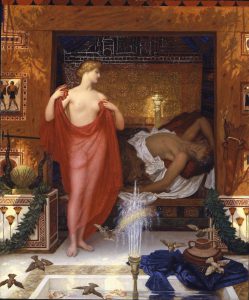
Hera in the House of Hephaistos (1902) William Blake Richmond

Tandem uenit amor, qualem

quam alicui , fama, magis.

Exorata meis illum

attulit in nostrum deposuitque sinum.

Exsoluit promissa Venus: mea gaudia ,                    5

dicetur si quis non sua.

Non ego signatis quicquam tabellis,

ne id nemo quam meus ante, ,

sed iuuat, uultus

taedet: cum digno digna fuisse .                         10

What form is texisse?
Perfect active infinitive from tego, tegere, texi, tectus 
Why is texisse an infinitive?
It is a substantive clause, with the infinitive serving as subject

What case is pudori?
Dative from pudor, pudoris 
Why is pudor in the dative?
Predicative dative, which is basically a dative of purpose with the verb to be. Pudori is a part of a double dative construction, which combines a predicative dative with a dative of reference, roughly translating as “It would be [for] a shame (predicative dative) to me (dative of reference).”

What form is nudasse?
Syncopated form of nudauisse, the perfect active infinitive form of nudo, nudare, nudaui, nudatus. 
Why is nudasse in the infinitive?
It is a substantive clause, with the infinitive serving as subject

What form is sit?
3sg present active subjunctive from sum, esse, fui, futurus 
Why is sit a subjunctive?
Potential subjunctive

What declension is mihi?
Dative from ego, mei 
Why is mihi in the dative?
Dative of reference. Mihi is a part of the double dative construction with a dative of reference and a dative of purpose roughly translating to “As a (dative of purpose) to (dative of reference).”

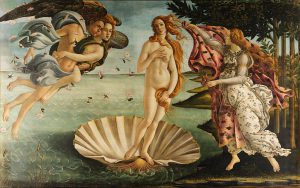
Another name for Venus, given to Venus due to her birth place of Cythera. Unlike the other poets who we have covered so far, it is important to remember that Sulpicia is a female, and as such her view of Venus is different from the male poets. Sulpicia does not view Venus or love as something shameful or something which should be hidden. She instead embraces both the goddess and her own feelings of love in a way most of the male poets do not.
The Birth of Venus (1482-5) Sandro Botticelli

Ablative feminine plural from Camena, Camenae. Camena can be referring to the Muses, but in this case it is referring to poetry.
What form is narret?
3sg present active subjunctive from narrow, narrare, narraui, narratus. 
Why is narret in the subjunctive?
Jussive subjunctive

What form is habuisse?
Perfect active infinitive from habeo, habere, habui, habitus 
Why is habeo in the infinitive?
Infinitive of indirect statement triggered by dicetur. 

What form is mandare?
Present active infinitive from mando, mandare, mandaui, mandatus 
Why is mandare in the infinitive?
In an object clause with uelim. 

What form is legat?
3sg present active subjunctive from lego, legare, legi, lectus 
Why is legat in the subjunctive?
Subjunctive of a negative purpose clause.

What form is uelim?
1sg present active subjunctive from uolo, uelle, uolui, – 
Why is uelim in the subjunctive?
Potential subjunctive, or conditional subjunctive with protasis unexpressed.

What form is peccasse?
Syncopated form of peccavisse, the perfect active infinitive from pecco, peccare, peccaui, peccatus 
Why is peccasse in the infinitive?
Subject infinitive of iuuat 

What form is componere?
Present active infinitive from compono, componere, composui, compositus
Why is componere in the infinitive?
Subject infinitive

What form is famae?
Dative feminine singular from fama, famae
Why is famae in the dative?
Dative of reference

What form is ferar?
1sg subjunctive present passive from fero, ferre, tuli, latus 
Why is ferar in the subjunctive?
Jussive or optative subjunctive