Skip to content

Propertius 1.12

Yes Or No
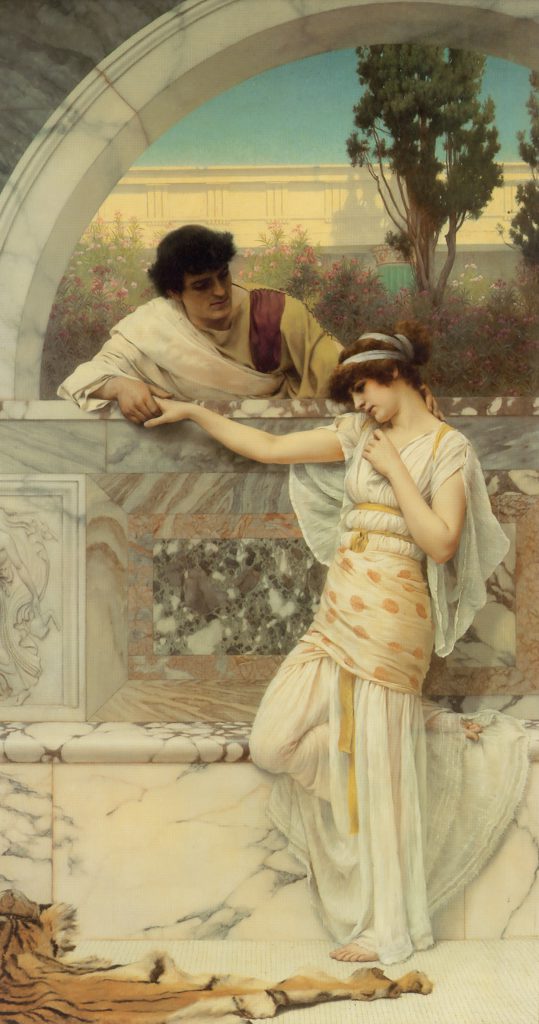
Yes Or No (1893) John William Godward. True to elegiac convention, Propertius presents himself as a lover-poet who cannot abandon the woman he loves no matter how miserable she makes him feel. Even if she has dropped him, he claims he will never turn from her.

Quid mihi desidiae non cessas fingere crimen,

quod nobis Cynthia, Roma, moram?

tam multa illa meo divisast ,

quantum Hypanis Veneto dissidet Eridano;

nec consuetos amplexu nutrit amores               5

Cynthia, nec nostra dulcis in aure sonat.

olim gratus eram: non ullo cuiquam

contigit ut simili amare .

fuimus: num me deus obruit? an quae

lecta Prometheis dividit iugis?                  10

non sum ego qui : mutat longa puellas.

quantus in exiguo fugit amor!

nunc primum longas solus cognoscere noctes

cogor et ipse meis esse gravis.

, qui potuit praesenti flere puellae                       15

(non aspersus gaudet Amor ),

aut, si despectus, potuit mutare calores

(sunt quoque gaudia ).

mi neque amare aliam neque ab hac desistere fas est:

Cynthia prima fuit, Cynthia finis erit.

What verb form is this?
3rd singular, present subjunctive active.
Why is it subjunctive?
As an alternative to the accusative and infinitive, occasionally Latin uses quod plus the subjunctive to convey an indirect statement.

What case is milia?
The form could be nominative or accusative plural neuter but it cannot be nominative in this sentence.
What kind of accusative is it?
Accusative of extent of space.

What case is lecto?
The form is dative of ablative singular but in this context it is ablative.
What kind of ablative is it?
Ablative of separation.
What case is mihi?
Dative singular.
What kind of dative is it?
Sympathetic dative.
What case is tempore?
Ablative singular.
What kind of ablative is it?
Ablative of time at which.
What form do we have here?
3rd singular, imperfect subjunctive active.
Why do we have a subjunctive form?
Result clause.
What case is fide?
Ablative singular.
What kind of ablative is it?
Ablative of attendant circumstances.

What case is invidiae?
Genitive or dative singular, but here only the dative makes sense.
What kind of dative is it?
Predicate dative (i.e. a dative of purpose with the verb esse).
Prometheus was chained to the Caucasus mountains because he had enraged Jupiter by giving fire to mortals. The region is generally associated with witchcraft but some have seen a particular reference to the the magical plant that sprang from Prometheus’ blood, dripping from the wound made by an eagle that daily came to feed on his liver. Prometheus Prometheus (1889) Briton Rivière
Propertius often uses pluperfect for imperfect.
In the previous poem, Propertius lamented the negative effect on their relationship of Cynthia’s trip to Baiae, a fashionable but notoriously decadent seaside resort. He imagined her lying around languorously waiting to be seduced by some passing man. Girl Girl In A Yellow Drape (1901) John William Godward
This looks familiar! What case is tempore?
Ablative singular.
What kind of ablative is it?
Ablative of time within which, this time.

What case is auribus?
Dative or ablative plural, but context here suggests dative.
What kind of dative is it?
Dative of judging.
This line recalls Vergil, Georgics 2.490 felix qui potuit rerum cognoscere causas
What case is nihil?
Accusative singular.
What kind of accusative is it?
Adverbial.
What case is lacrimis?
Dative or ablative plural.
Well, which is it, and what kind?
Ablative of instrument.
What kind of word do we have here?
Perfect participle passive
Does it agree with any word?
servitio – both are ablative singular neuter
What construction do they form together?
Ablative absolute

Note that in the poet-lover’s imagination, the alternative to Cynthia is servitude to another.