The Return of Tibullus to Delia (1868) Dante Gabriel Rossetti Hic mihi seruitium uideo dominamque
iam
et numquam misero uincla remittit
et seu quid merui seu nil peccauimus, urit. 5
uror, io, remoue, saeua puella, faces.
o ego
quam
stare uel insanis cautes obnoxia
naufraga
nunc et amara dies et noctis amarior umbra est:
omnia nam tristi tempora felle madent.
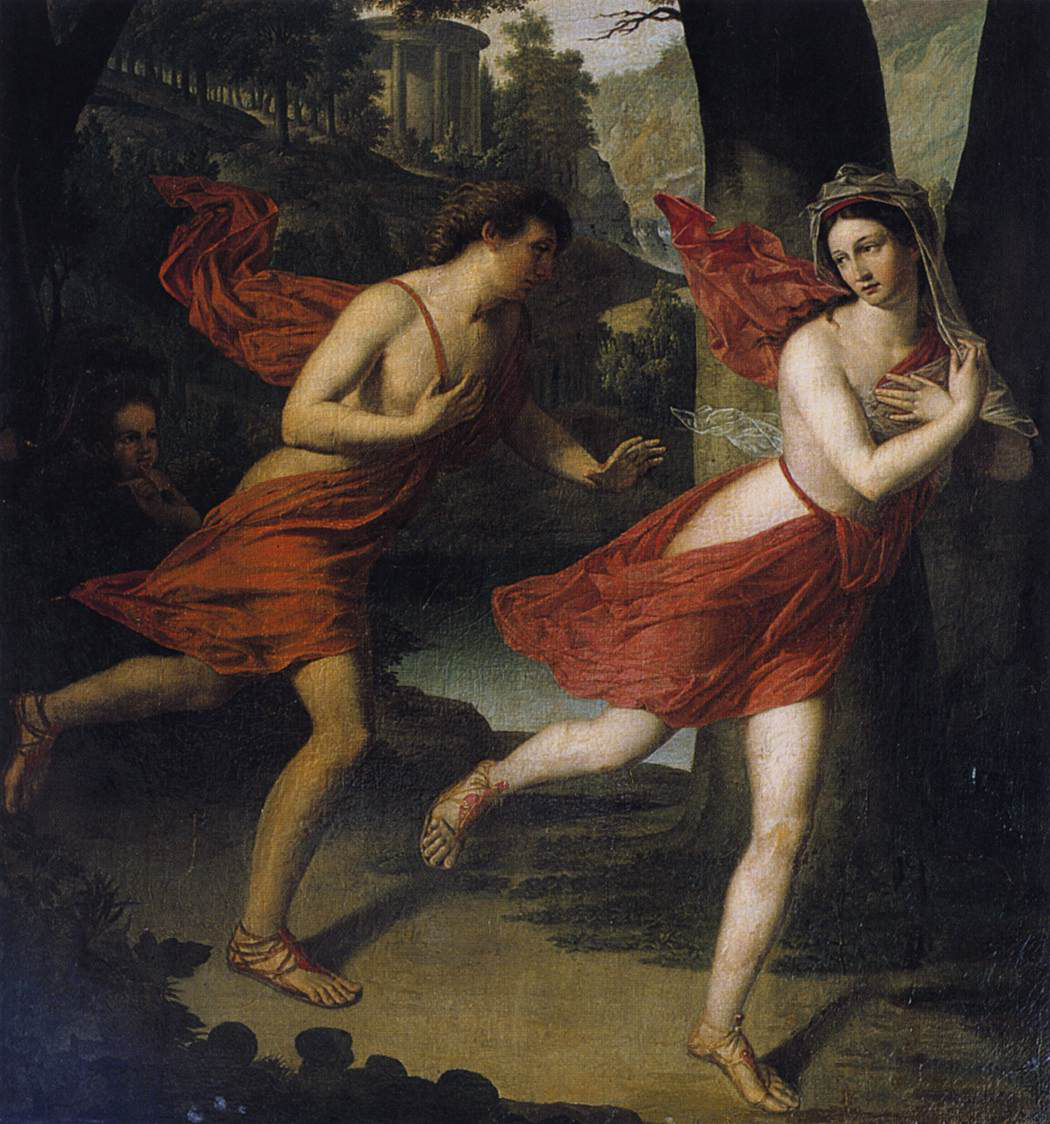
Pauline as Daphne Fleeing Apollo (1810) Robert Lefevre nec prosunt elegi nec carminis auctor
illa
ite procul, Musae, si non prodestis amanti: 15
non ego uos, ut
nec refero Solisque uias et qualis, ubi orbem
compleuit,
ad dominam faciles aditus per carmina quaero:
ite procul, Musae, si nihil ista ualent. 20
at mihi per caedem et facinus sunt dona
aut rapiam suspensa sacris insignia fanis:
sed
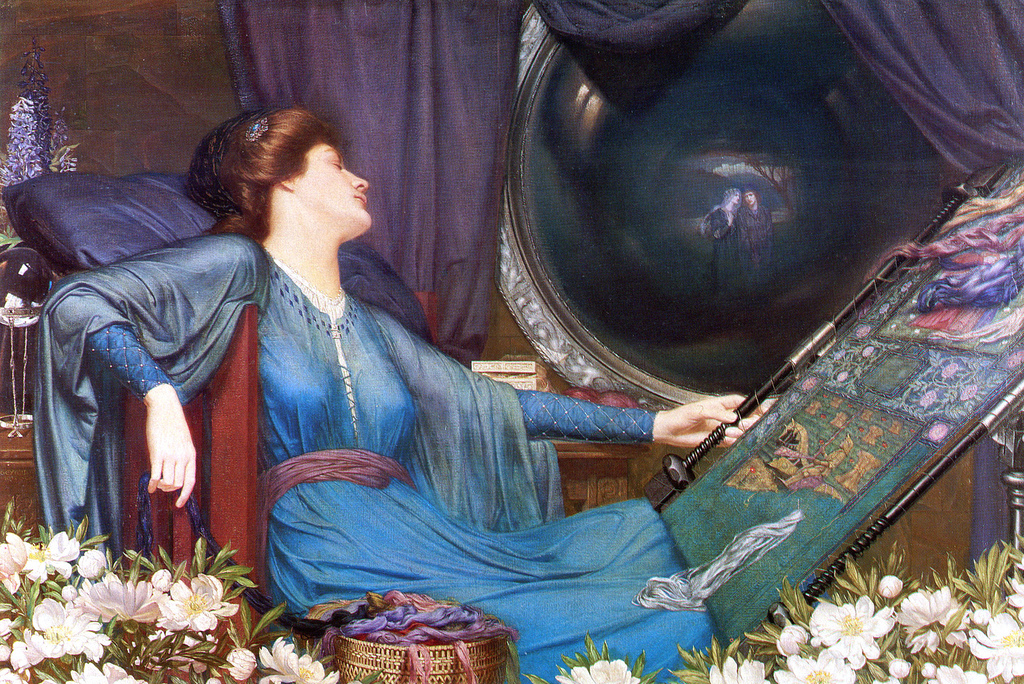
I’m Half-Sick of Shadows (1868-1947) Sidney Harold Meteyard illa malum facinus suadet dominamque rapacem 25
dat mihi: sacrilegas
o
et niueam
addit auaritiae causas et
uestis et e Rubro lucida concha mari. 30
haec fecere malas: hinc clauim ianua sensit
et coepit custos liminis esse canis.
sed pretium si grande
nec prohibent claues et canis ipse tacet.
heu quicumque dedit formam caelestis auarae, 35
quale bonum multis attulit ille malis!
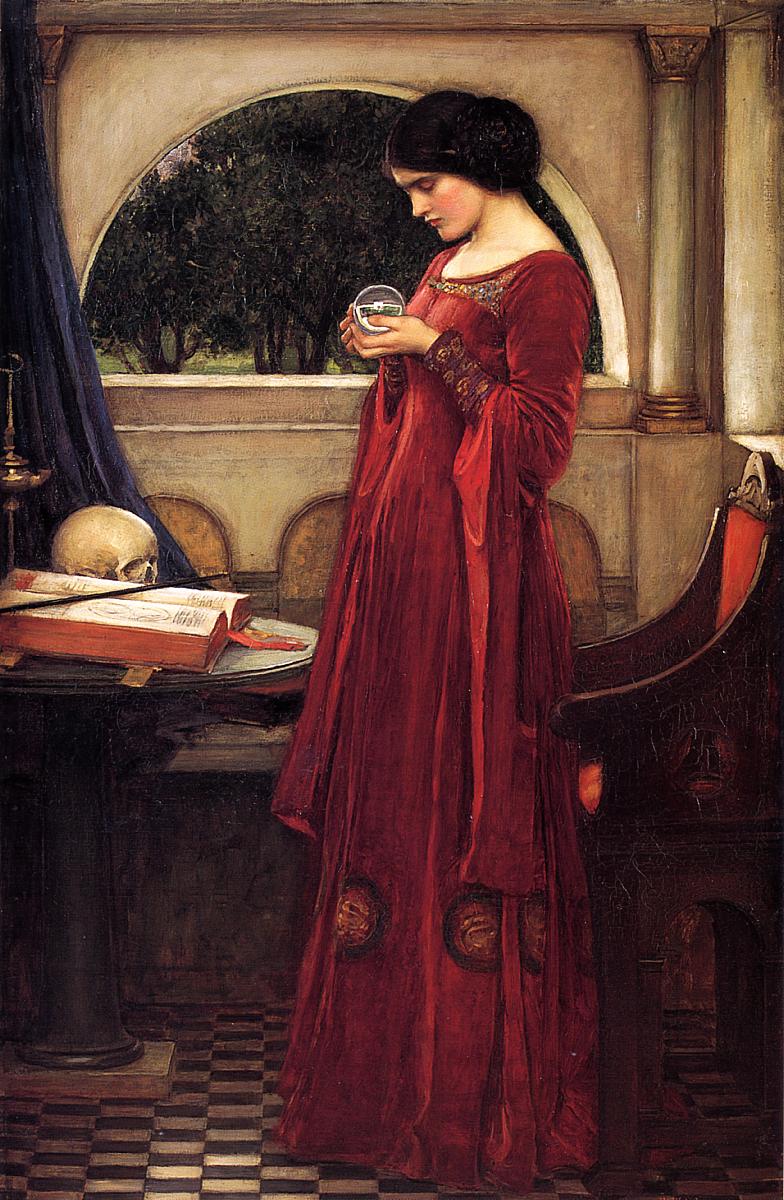
The Crystal Ball (1902) John William Waterhouse hinc fletus rixaeque sonant, haec denique causa
fecit ut infamis nunc deus
at
eripiant partas uentus et ignis opes: 40
quin tua tunc iuuenes spectent incendia laeti,
nec quisquam flammae sedulus
seu ueniet tibi mors, nec erit qui
nec qui det maestas munus in exsequias.
at bona
atque aliquis senior ueteres ueneratus amores
annua constructo serta dabit tumulo
et ‘bene’ discedens dicet ‘placideque
terraque
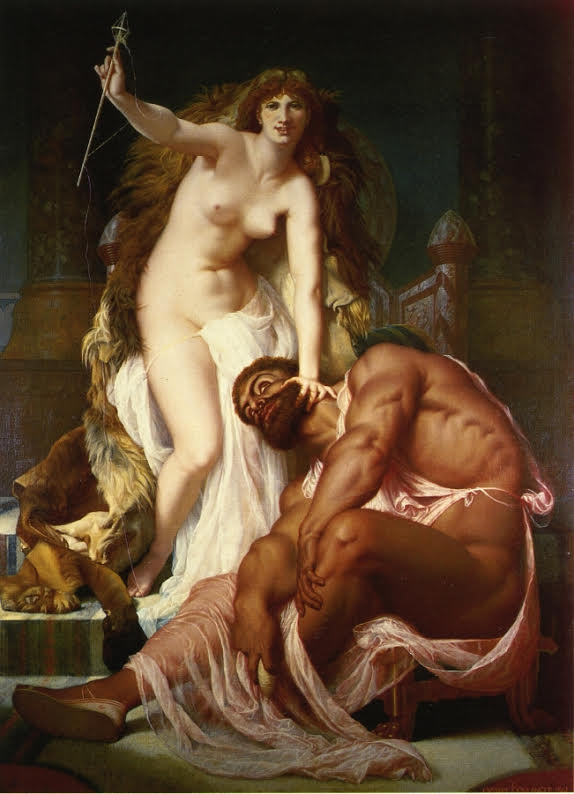
Hercules at the Foot of Omphale (1861) Gustave Boulanger
illius est
quin etiam sedes iubeat si uendere auitas,
ite
quidquid habet Circe, quidquid Medea
quidquid et herbarum Thessala terra gerit,
et quod, ubi indomitis gregibus Venus adflat amores,
hippomanes cupidae stillat ab inguine equae,
si modo me placido
mille alias herbas misceat illa, bibam. 60
What verb do we need to supply here?
esse (verb “to be”)
What does the combination of a perfect participle passive with the verb “to be” produce?
Perfect Infinitive Passive
Why would an infinitive be present here?
Accusative and Infinitive construction in Indirect Statement
What case do we have in mihi ?
Dative
What kind of Dative is this?
Ethic Dative. This special case of the Dative of Reference is limited to personal pronouns and shows a certain interest felt by the person indicated.
Chained Prometheus (1642-1650) Jacques de l’Ange
Within the first three lines of Tibullus’ poem, the theme of
servitium amoris , the slavery of love is introduced, and the imagery is sustained by words such as
vincla, domina , and
catenis .
What cases are possible here?
Ablative or Dative plural
Which one best fits the context?
Ablative plural
What kind of Ablative is it?
Ablative of Instrument
While this poem focuses on the relationship between Nemesis and the poet, and his inability to reach her even with the most compelling of verses, Tibullus here, and later in the poem as well, blames the gods of love, Venus, and her son, Love personified, for Nemesis’ total dominion over him.
From what verb does possim come?
possum posse potui
What form do we have in possim ?
1st person singular present subjunctive active
What construction be we have here? (Hint: take note of negation with ne )
Negative purpose clause.
From what verb does mallem come?
malo malle malui
So, what form do we have in mallem ?
1st person singular imperfect subjunctive active
Why is it subjunctive?
Optative Subjunctive (i.e. expressing a wish).
The imagery around Tibullus’ desires, much the same as his depiction of love as bondage, is beautiful and pointed.
Gustave Courbet (1870) The Waterspout
What form do we have in ventis ?
Dative masculine plural from ventus venti M
How can we explain the dative here?
Dative after compound verb obnoxia
Are there any other words in the line that agree with ventis ?
Yes, insanis
What gender, number, and case is quam ?
Feminine singular accusative
What construction is quam introducing here?
Relative clause
What is the antecedent of quam ?
cautes
From what verb does tunderet come?
tundo tundere tutudi tunsum/tusum
So, what form do we have in tunderet ?
3rd person singular imperfect subjunctive active
Why is it subjunctive?
Attraction of Mood (i.e. imitating the mood of mallem ).
As the god of the arts, who is often depicted singing with his lyre, Apollo is an appropriate foil for a poet. We may also remember that Apollo sometimes failed to “get the girl.”
What word does cava agree with?
manu
What form, then, do we have here?
Ablative singular feminine
What kind of ablative?
Ablative of means
What form of the verb to be is this?
3rd plural present active subjunctive
Why would we have a subjunctive here?
Following ut in a purpose clause
Does sint accompany any other words in the line?
canenda
What verb does canenda come from?
cano canere cani canitus
What form, then, do we see here?
Future passive participle in a passive periphrastic with sint
What is another term used to define a future passive participle?
gerundive
What verb does versis come from?
verto vertere verti versus
What form do we have here?
Ablative plural perfect participle passive
What construction do we have here?
Ablative Absolute
What form of paro parare paravi paratus is this?
Gerundive (a.k.a. Future passive participle)
What construction is formed when a gerundive is paired with a form of the verb “to be”?
Passive periphrastic
What sense does the passive periphrastic convey?
Purpose or necessity
What form do we see in iaceam ?
1st person present active subjunctive
What construction is formed with ne + subjunctive?
Negative purpose clause
Here, clausam domum touches upon the Greek motif of παρακλαυσιθυρον (paraclausithyron). Literally, a combination of the verb παρακλαυω meaning “to cry beside” and θυρον meaning “door”, it describes the kind of poem sung by a lover barred from his beloved’s home.
Here, the reference to Venus more likely stands as a representation of her shrine than a reference to the goddess, herself. Within that context, we can then understand the anger as a response to the plundering of the temple that has by extension violated Venus.
What form do we have here in violanda ?
Nominative singular feminine gerundive (a.k.a. future passive participle)
What construction does violanda form with est ?
Passive periphrastic
What does a passive periphrastic usually express?
Obligation or necessity: “should/ought to be ____” or “must”
1: What case is mihi ?
Dative
Why do we have a dative here?
Dative of agent is the norm after a gerundive. Poetry also permits a dative of agent after a passive verb.
What form do we have in sentiat ?
3rd singular present active subjunctive
What are the principal parts, and to what conjugation does the verb belong?
4th conjugation: sentio sentire sensi sensus
What kind of subjunctive do we have here?
Jussive Subjunctive
From what verb does pereat come?
pereo perire perivi peritum
What form of the verb is this?
3rd singular present active subjunctive
Why would we have a subjunctive in this instance?
Jussive subjunctive
What form do we have in quicumque ?
Nominative masculine singular
What its antecedent?
The antecedent of quicumque pareat
What construction do we have here?
Relative clause of characteristic.
In the ancient world, Purple was used to denote distinction and honor but was also associated with luxury because producing purple dye was a laborious and expensive process. Purple dye was made using a particular sea snail abundant in the region of Tyre, thus the color was deemed ‘Tyrian purple.’
Dolce Far Niente (1906) John William Godward
Coan silk, rather than silk in general, was not only a mark of luxury but also was an accepted way by which to sensualize both poetry and paintings. As pictured here, Coan silk was particularly popular material due to its transparent nature.
Athenais (1908) John William Godward
Feras takes what form here?
That’s right, another subjunctive! 2nd singular present active
How is the subjunctive functioning here?
Present subjunctive in a CTF (contrary to fact) OR future-less-vivid conditional
What form do we see here in victa est ?
3rd singular Perfect indicative passive
Why do we have indicative here? Shouldn’t it be subjunctive as part of the contrary to fact conditional indicated by feras ?
By switching to an indicative in the apodosis of the conditional sentence, Tibullus emphasizes the certainty of the positive outcome if he brings gifts.
From which verb does erret come?
erro errare erravi erratus
What form do we see here?
3rd singular present active subjunctive
What construction do we see?
Result clause following fecit ut
What case of tu do we have here?
Dative singular.
What kind of dative is it?
There are a couple of possibilities: dative of disadvantage (after eripiant ), AND/OR dative of agent with the perfect participle passive partas.
What are the forms here of pretium pretii N?
Ablative or Dative singular
Which case is more likely?
Ablative
What constructions could explain why we have ablative here? Answer 3:: Ablative of cause or instrument
What conjugation does addo addere addidi additus belong to?
3rd conjugation
We have another subjunctive; how is it being used here?
It is another jussive subjunctive, like eripiant in the previous line.
What verb do we have here?
lugeo lugere luxi luctus
What form of lugeo is this?
Present active subjunctive 3rd singular
How is the subjunctive functioning here?
Relative clause of result or attendant circumstance.
What the possible forms of quae ?
Nominative feminine singular/plural or Neuter plural nominative/accusative
What form is most likely given that bona is in nominative?
Nominative singular feminine of relative pronoun
How can we resolve the presence of two nominatives in this line?
bona is the predicative nominative of quae
What form of annus, anni M do we have here?
Accusative plural masculine
Does any other word in the line go with annos ?
centum
What construction do we have here?
Accusative of duration of time
What form(s) could we have in vixerit ?
3rd singular future perfect indicative active OR perfect subjunctive active of vivo, vivere, vixi, victum.
Could any word in the clause point us to the right choice?
Licet (although) takes the Present or Perfect Subjunctive.
What verb do we have here?
quiesco quiescere quievi quietus
What form of the verb is this?
2nd singular present active subjunctive
Why would we have a subjunctive verb here?
Jussive subjunctive
What are the two most likely forms here?
Gen.sg.f. or Dat.sg.f.
Which of the two is more likely?
Dative singular feminine is most likely here as the common form of this phrase has been: sit tibi terra levis
What kind of dative(s) could we have here?
Dative of possession OR dative of judging OR ethic dative
These words may at first seem disconnected from the preceding lines, but they are best understood as returning to the main subject of the poem. Likely, the
warning of
moneo is directed towards Nemesis in yet another attempt to make her change her ways. You’ll remember earlier that Tibullus lamented over the ineffectiveness of his poetry and of the gods, so these words were probably of no avail either.
The Roman Widow Gabriel Rossetti (1874)
What form is this?
Dative plural
How is the dative used here?
Dative of agent
What form of lex legis do we have here?
Ablative singular
What possibles ablative constructions could we name?
Ablative of manner OR attendant circumstances
What form of colo, colere, colui, cultum do we have here? In other words, what form ends in –ndus , –nda , –ndum ? We have had several of these already in this poem alone!
Gerundive (a.k.a. future participle passive)
What construction is formed when a gerundive is paired with a form of the verb “to be”?
Passive periphrastic
What sense does the passive periphrastic convey?
Purpose or necessity
Tibullus has circled back one more to the imagery of the enslavement of love. sub imperium is most closely taken to mean “into a state of subordination or subservience”
What case is veneni ?
Genitive singular
What kind of genitive is it?
Partitive, after quidquid ?
What form of video videre vidivi viditus is this?
3rd singular present active subjunctive
How is the subjunctive working here?
Protasis in a conditional following si modo
What kind of conditional?
Contrary-to-fact (CTF) conditional
What is this form of vultus vultus ?
Ablative singular
2: What kind of ablative?
Ablative of manner
Does anything else in the line agree with vultu ?
placido

 Within the first three lines of Tibullus’ poem, the theme of servitium amoris, the slavery of love is introduced, and the imagery is sustained by words such as vincla, domina, and catenis.
  Gustave Courbet (1870) The Waterspout
  Here, the reference to Venus more likely stands as a representation of her shrine than a reference to the goddess, herself. Within that context, we can then understand the anger as a response to the plundering of the temple that has by extension violated Venus.
 Dolce Far Niente (1906) John William Godward
  Athenais (1908) John William Godward
  The Roman Widow Gabriel Rossetti (1874)