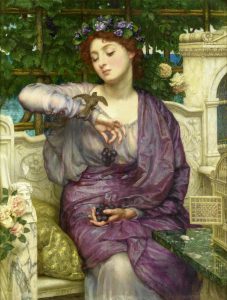
Dicebas quondam solum Catullum,
Lesbia, nec prae me velle Iovem.
dilexi tum te non tantum ut vulgus amicam,
nunc te cognovi: quare etsi uror,
est, inquis? quod iniuria talis
cogit amare magis, sed bene velle minus.
What gender is te here?
What form is nosse?
Contracted form of novisse
What form is made of the perfect stem plus –isse?
perfect infinitive active. Here we have the perfect infinitive active of nosco, noscere, novi, notus.
What construction pairs accusative and infinitive? You know this one!
Indirect statement
This simile initially seems bizarre. Can Catullus really liken his passionate love for Lesbia to a father’s love for his sons and sons-in-law? Perhaps we should remember that Aeneas’s devotion to Ascanius was so great that he abandoned Dido… 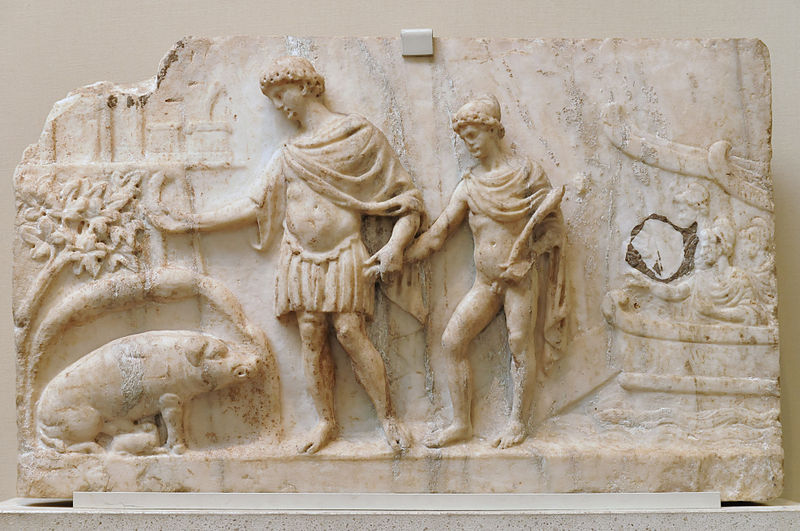 Aeneas and Ascanius find the Laurentian Sow, an omen that tells them where to found their city. Marble Relief, c. 140-150CE..
Aeneas and Ascanius find the Laurentian Sow, an omen that tells them where to found their city. Marble Relief, c. 140-150CE..This form looks like a nominative singular or plural masculine BUT it is an old ablative form (instrumental)
Here equal to pote. Rare to see this form in classical poetry.