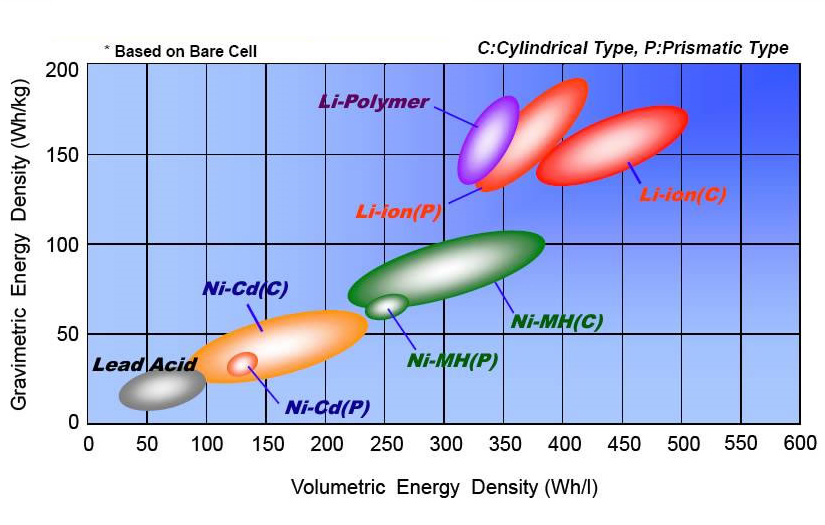
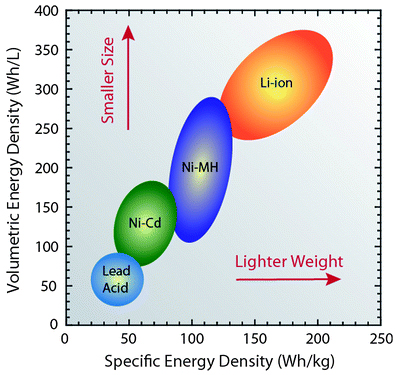
A good analysis of energy storage: Battery U
An example of Li ion Battery: Home Depot
Lithium Ion Batteries: Wikipedia

Power Wall: Specs
Pika Energy: Specs

A Scientific Approach to the Economics of Sustainable Energy Systems
A good analysis of energy storage: Battery U
An example of Li ion Battery: Home Depot
Lithium Ion Batteries: Wikipedia
Power Wall: Specs
Pika Energy: Specs
Evaluating Energy Systems in Cars
Energy storage has revolutionized how we produce and use energy. One of the best examples is the Electric Car. A few years ago King and Donihue each needed a new car. This is what we learned from our purchasing research.
As I was investigating car options I visited the local car dealerships and test drove a number of cars. Being an unrepentant techno geek I asked why the Prius gets better fuel efficiency in the city rather than the highway. I also wanted to know why the diesel VW Golf had better fuel economy than the gasoline version. The car sales folks were clueless. Clearly not a product of a liberal arts education. I started to do some digging to get the answers to my questions.
Cars move when we apply power to the wheels (Read about horsepower). Traditionally, the power came from an internal gasoline engine. Today we have cars powered with gasoline, diesel, and electric engines. This is what I learned starting with a conventional gasoline engine:
Another Example of the Hybrid Drive
If we assume the transmission is close to 100% efficient we can calculate the maximum efficiency of an internal combustion engine driven car based on the Carnot equation and the maximum temperature stability of steel. An ideal internal combustion engine would have an efficiency of 37%, but in practice it is often half this value (Read more about gasoline engines). Diesel Engines are more efficient than gasoline engines (Read about Diesel Engines). Electric motors have efficiencies of over 85% (reference).
The three videos below illustrate the engineering behind the superior fuel economy of hybrid electric cars.
https://youtu.be/4CFxQGWAaho
Read more about Toyota hybrid drive train. It is important to note that the Toyota V uses a combined electric/gasoline engine with 100% of the energy from the car coming from gasoline!
Lab, Monday April 16, 2018
Assignment: (due 4/23/18) Use SAM to model the energy production and financial return of the Beaver Ridge wind farm. Hand in an Excel file of the modeled cash flow for Beaver Ridge.
Beaver Ridge wind farm tour
2013 Sound Study
Modeling Wind Energy in SAM (instructional video)
Federal Tax Incentives to feed into SAM
Resources
LBL Home Energy Saver Pro
Department of Energy Home Energy Resources
Energy audit for Prof. Donihue’s home
4/5/2018
Developing a thermal heat storage model and an examination of potential food production
Bioshelter Introduction: Slides; Growing Spaces Video links
Green House Heat Budget diagrams
Green House Heat Budget 2018 V4
Exam Information
Your take-home exam is due in class on April 10th
Instructions
You’ll find the Excel spreadsheet from the March 15th lecture on evaluating a ground sourced heat pump system here.
The average Maine homeowner spends between $2000 and $5000 per year on fuel to heat a family home. Added to this annual expense is the amortized cost of purchasing and maintaining a heating system which can be as high 25% of the annual fuel price. Efficiency Maine has an excellent fuel cost comparison tool to allow consumers to compare current fuel costs for a typical Maine home, but not all heating system decisions come down to cost. The optimal heating system choice will depend on age and design of the home, existing heating system, fuel availability, service and maintenance costs, and home owner desire to reduce carbon production.
System 2000 Accel Gas Condensing Boiler: http://www.energykinetics.com/accel-cs-condensing-boiler.shtml
System 2000 Oil Boiler: http://www.energykinetics.com/system2000-quietest-most-efficient-boiler.shtml
Kedel Boiler: http://kedelboilers.com/meet-kedel/our-pellet-boiler/
Mitsubishi Heat Pump: http://www.mitsubishicomfort.com/
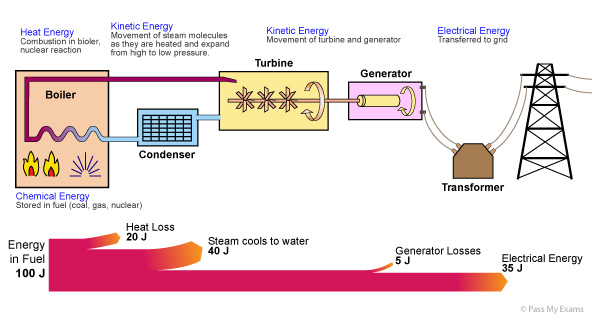
Electricity I: Electrical Power Generation
Electric Grid, Transformer, Household wiring, Electrical Panels 101
Other sources of Electricity: Fuel Cells, Solar Cells
Notes: DWK Notes
Geothermal HVAC systems

Ten Myths About Geothermal Heating and Cooling
Some environmental impact and payback period estimates for geothermal HVAC, GreenHouse-Gas-Savings
More examples of how a Heat Pump works:
Interesting readings on geothermal energy production
Iceland plans to get energy from magma
World’s first Magma-EGS system created
Geothermal power plants in California
 The second law of thermodynamics states that in a natural thermodynamic process, there is an increase in the sum of the entropies of the participating systems. The second law is an empirical finding that has been accepted as an axiom of thermodynamic theory.
Readings: The Carnot Limit
Internal Energy
First Law
Second Law
Carnot Efficiency
Gibbs Free Energy
Carnot Cycle
Lecture Notes: DWK Notes

NREL System Advisor Model (SAM)
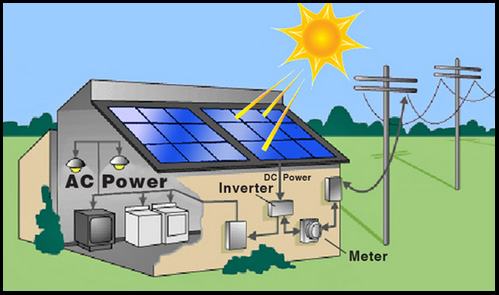
In this lab your will perform a full system and financial analysis of a residential solar installation. You will need the following.
1. Location of your home (or the property for which you are doing this analysis) – GPS coordinates preferred (use Google Earth)
2. Approximate angle of the roof
3. Compass orientation of the roof
4. A typical electric bill with 12 months of power consumption
Before lab review this tutorial for SAM
5. You should also be prepared to estimate the interest rate for any debt financing of the system and an estimate for the annual increase in the price of power.
6. Run the full SAM simulation on your project. Modify the model to test the range of reasonable assumptions for interest rates and electricity pricing.
7. Export the results of each run as a CSV file and import the date into Excel. Define the meaning of each row in the simulation and track the calculations. Build a new calculated row to calculate the total cash flow of the project as a function of year.
8. Tabulate the results from each simulation paying attentions to the output functions: Nominal LCOE, Net present value, Internal Rate of Return, and Payback period. Define each of these terms. Calculate the Net Present Value and Internal Rate of Return in Excel using the modeled payments for life of the solar system.
9. Now considering the results of your analysis, why wouldn’t every electricity customer consider solar?
Example Files from Lab:
King Example for Class 2018 this is the Excel file
King Example for Class 2018 this is the SAM report
Resources
Google’s Project Sunroof
National Renewable Energy Lab: System Advisor Model
GBS-pricing-schedule
Post Tariff PV pricing
Reports & Analyses
Professor King’s home:
– Solar Electric Proposal (Garage Roof 18 Renesola 255w)
– Solar Shade Analysis
– King PV system analysis.zsam
Professor Donihue’s home:
– Solar Shade Analysis
– Solar Electric Roof Project
– SAM analysis for roof project (Model file; Excel download)
– Solar Electric Tracking Proposal
– Solar Domestic Hot Water Proposal
– Electricity bill for January 2018
Go Solar!
Solar Cells Intro
Solar Cell Theory I: https://www.ossila.com/pages/solar-cells-theory
Solar Cell Theory II: https://en.wikipedia.org/wiki/Theory_of_solar_cells
Power Output of Panels
Panel Performance
Revision Energy Slide show
Solar Electric Tracker Proposal
Solar Electric Roof Proposal (305W PV system)
Solar Electric Roof Proposal (255W PV system)
Solar Electric Roof Proposal – King (255W PV System)
lSolar Electric Proposal – King (InSource, King PV Proposal 2016 Final)
Solar Pro: Levelized Cost of Energy explained
Resources
NYT April 18, 2015: Solar Power’s impact on electric companies in Hawaii
Bangor Daily News, March 12, 2015: The value of solar power
Maine Distributed Solar Valuation Study and Addendum
Micro-grids: The Stafford Hill Solar Farm in Vermont
NRG Energy, Green Mountain Power roll our micro-grid for Vermont
ISO New England
MIT Technology Review: The Great German Energy Experiment
MIT Technology Review: Solar Power and Somewhere to Store It
How long does it take for photovoltaics to produce the energy used?
Domestic and overseas manufacturing scenarios of silicon-based photovoltaics: Life cycle energy and environmental comparative analysis
Liquid Batteries for Solar and Wind Power, NYT 23-Apr-15
Action Spectra of Plants
