
Take-aways
KL-O: Today, we were able to discuss and tour the geothermal, solar, and other sustainable designs of the Shair-Swenson-Watson building. We had access to the SSW solar production numbers, which went online in 2015. In 20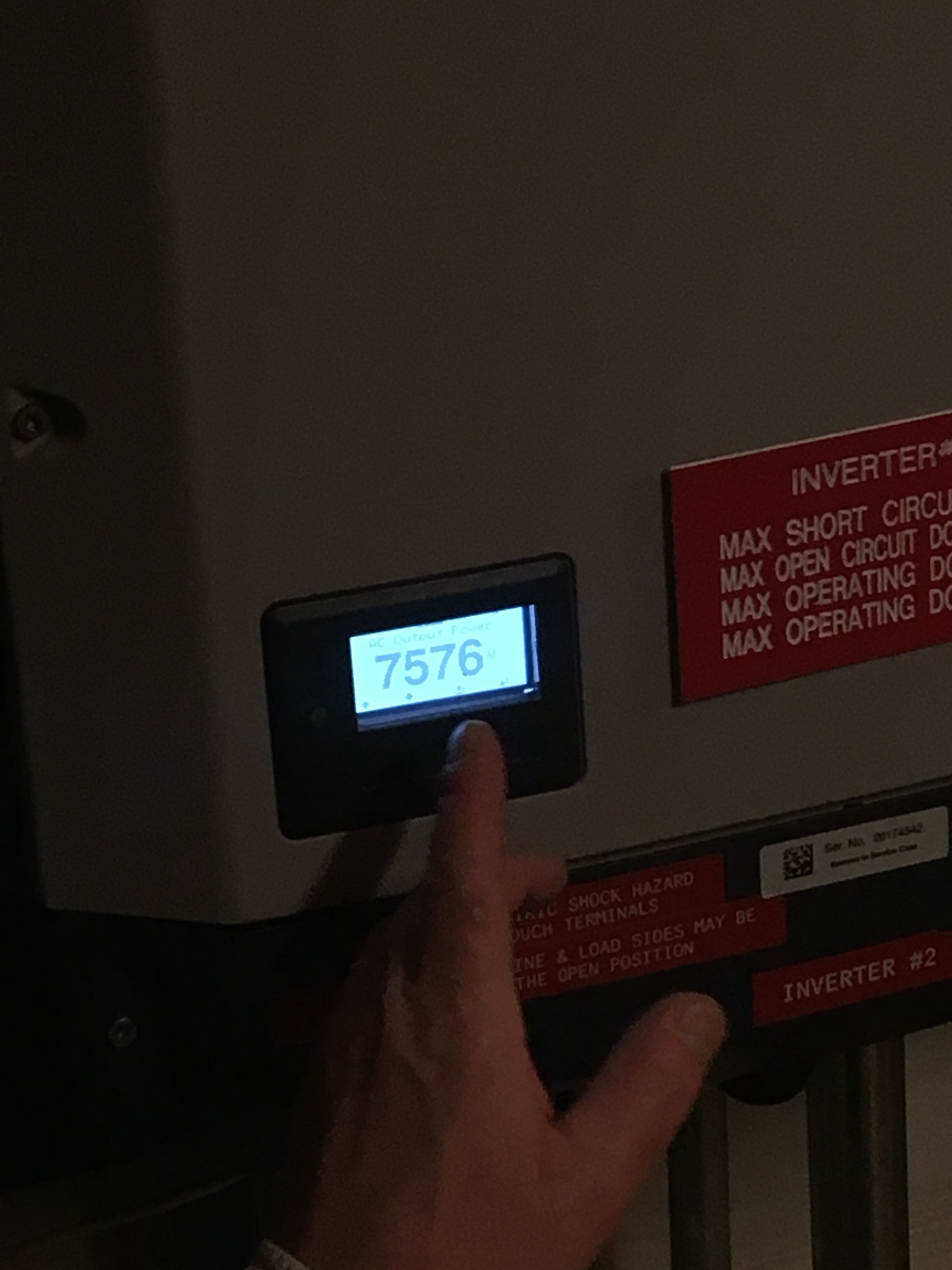 15, the total energy production was 22,541 KWh. In 2016, the panels produced 33,655 KWh and in 2017, production totaled 31,650 KWh. The energy production in 2015 was limited to the months of May through December, which could be the main reason for the decreased electricity production. The panels produce about 26 kW with 92 individual panels. This electricity theoretically all stays within the building, but the meters don’t run backwards in order to determine excess energy sent out of the building.
The SSW building was the first LEED building on campus, and it attained a silver rating. Some of the features that attained the certification were the improved building envelope, the geothermal ground source heat pump, the green electricity purchases, and the solar panels. Workers utilized spray foam as insulation, which led to a tightly sealed shell for air loss. According to the initial calculations, there should be a 42% energy reduction and a 62% water use reduction compa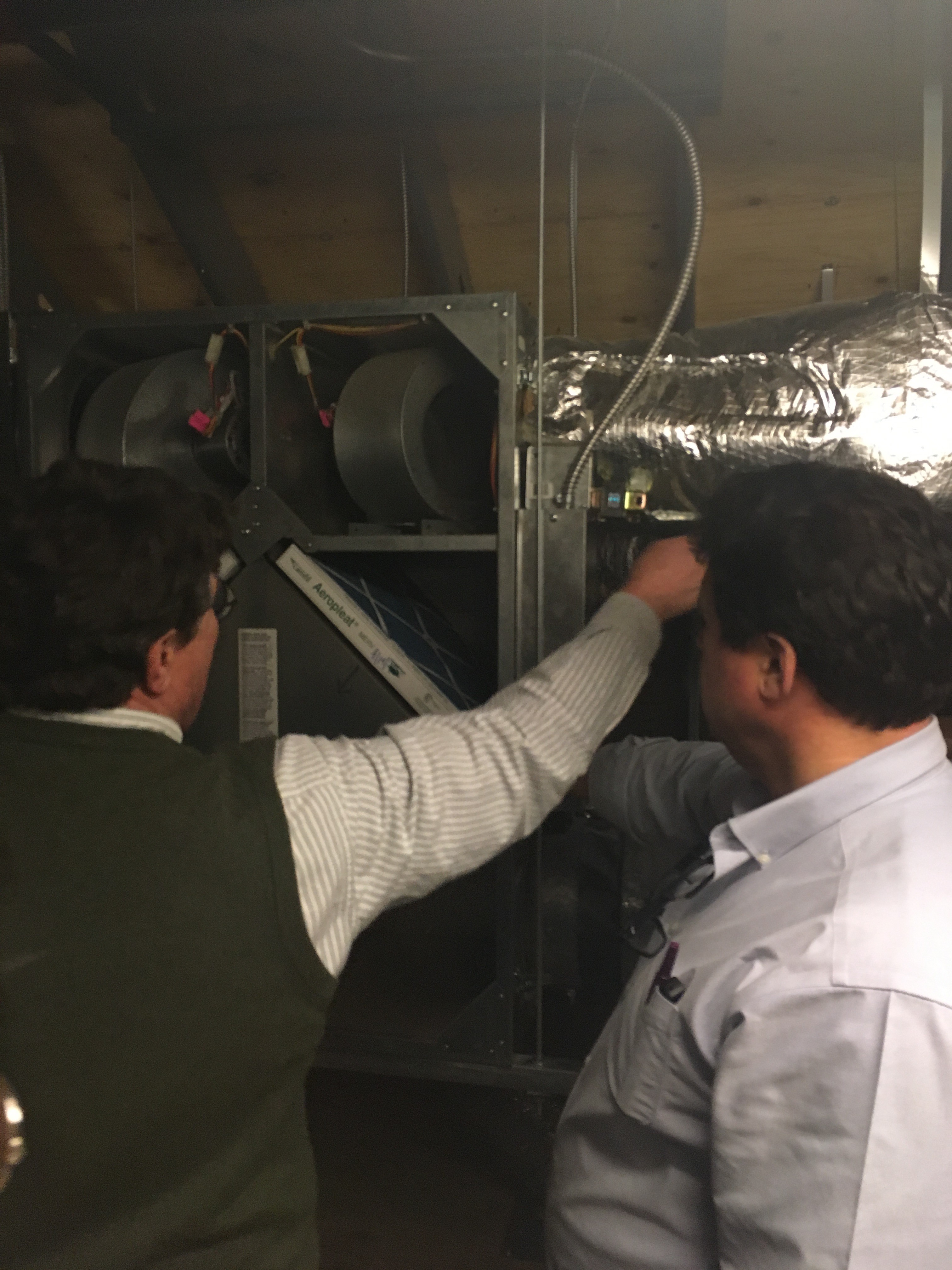 red to a standard building, but these numbers were not tested and provide an excellent source for a research topic. The geothermal pumps include three 1,600-foot deep wells that pump water from the aquifer to the heat pumps, where a heat exchanger transfers energy to water that heats the building. This pump is an open system, as water is pumped into and out of the aquifer directly. The soluble iron at the deep wells leads to deposits of insoluble iron once the water is oxygenated; this leads to decreased efficiencies when scaling occurs. The water stays in the range of 52-58°F all year. The heat pumps in SSW have a coefficient of performance of around 3.6-4.1. This is a measure of the amount of energy pumped in versus the amount of energy pumped out, so the pumps are making efficient use of the energy available. This coefficient of performance explains why water can enter the building around 50°F and rise to around 60°F for heating purposes.
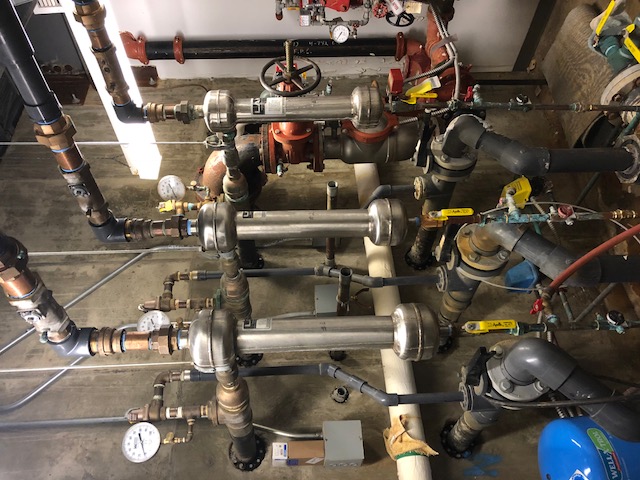
From a LEED viewpoint, the only energy input to SSW is electricity. Geothermal energy is “free”, excluding the initial fixed costs of the technology. We were able to see the heat pumps in the basement and the attic of the building, including where the air is pumped in and out (where heat transfer occurs for heating the building with air). Control by exposure and outside air can be used to transfer hot and cold air to different parts of the building, thus reducing energy and HVAC costs. A great takeaway point from one student was why the SSW building is not heated with the steam power from the power plant. It seems that using geothermal is a more economical way to heat the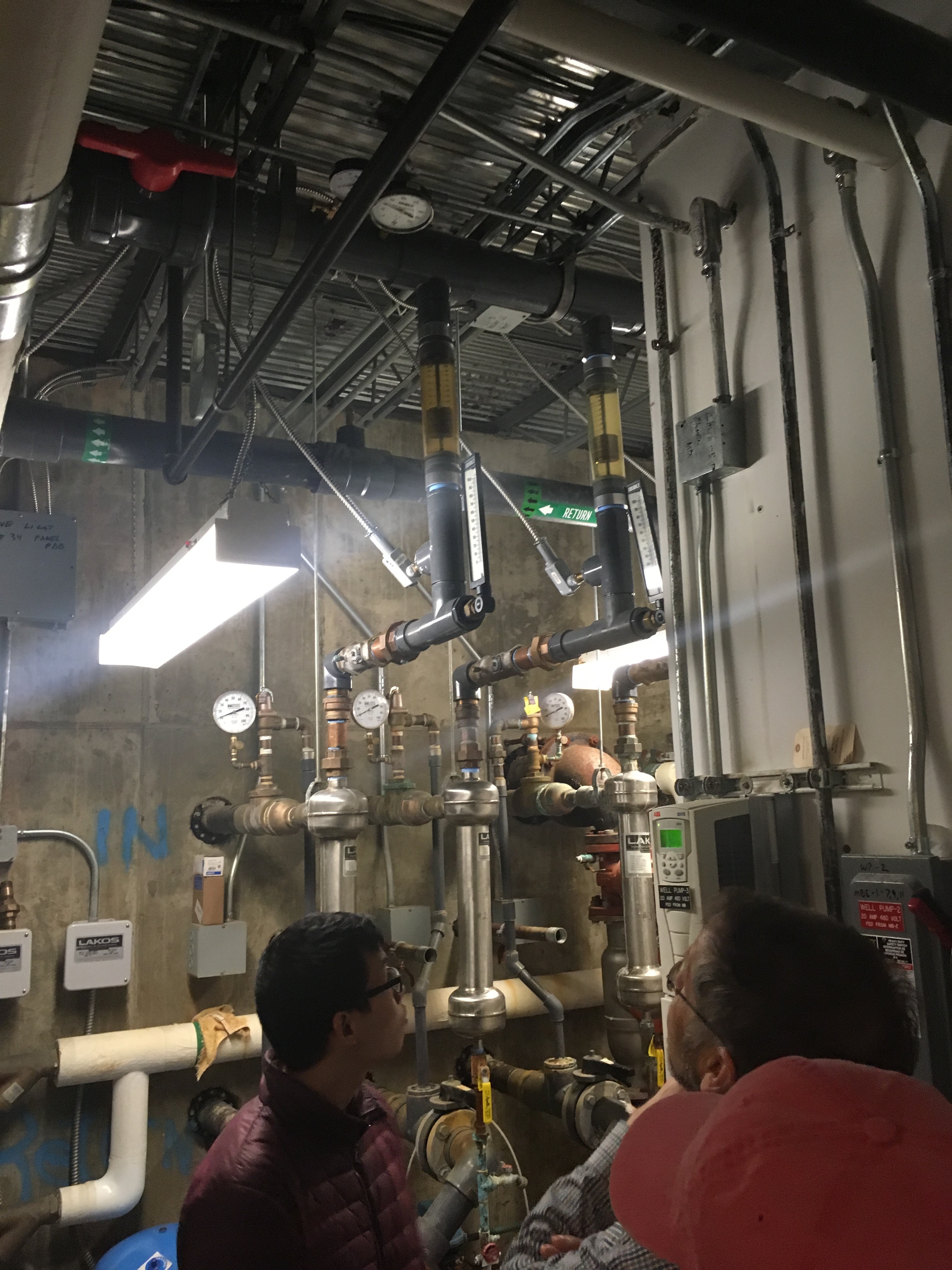 building individually, rather than piping the steam across the road. For future research, I hope our class can calculate the efficiencies of the building in terms of energy consumption relative to the original LEED standards. I am curious why this is not required, as LEED is supposed to be a standard maintained during the lifetime of the building, not just a certification during the construction phase. Is there a penalty of some sorts for not maintaining the attained LEED certification? Below are a few of the photos I took, including the air transferring “honeycomb” and a few of the pipes that circulate water, and a display from the invertor showing the current energy output (around 7.6 kWh)
PR: The biggest takeaway I got from learning about the energy systems of the SSW Alumni Center was that more goes into the building being LEED-silver certified than just the 96 solar panels installed on its roof. As it turns out, SSW is heated and cooled with geothermal energy. I thought learning about SSW’s open-loop geothermal process was really interesting including how the building’s heat pumps extract heat from the ground during the summertime, store the heat in the aquifer, and then later use that hot water to heat the building during the winter. Also I’ve been to the Alumni Center several times before, and I have not once noticed the air ventilators in each room allowing for air exchange.
I also liked exploring the ins and outs of the buildings to get a more in-depth look of its energy systems. We first went down to the basement whe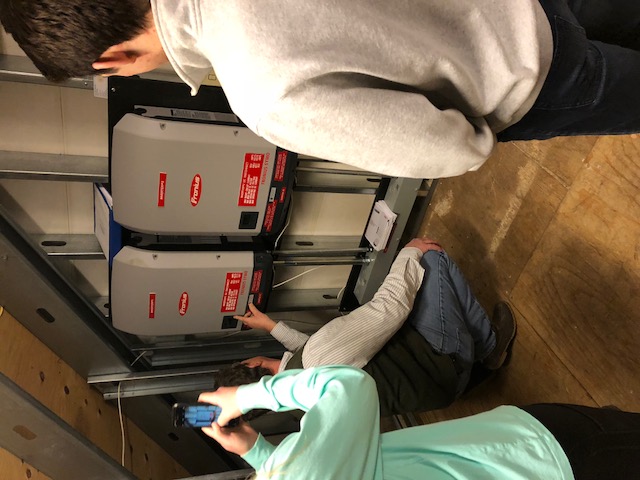 re we got to see the heat pumps that extract heat from the ground and then cold and hot water pipes that run throughout the building. My favorite part of the lab was when we had to climb up a pull-down ladder in order to get to the attic of SSW. In the attic we got to see the two inverters for the building’s solar panels and the amount of kilowatts they produce. I enjoyed this lab because it helped me realized the extent of green energy that the Alumni Center produces through its geothermal heating and cooling and solar panels.
ZK: Today’s fieldtrip consisted of an engaging and insightful energy systems tour of the Shair-Swenson-Watson building given by the wonderful Gus Libby and Sandy Beauregard. Interestingly, I have attended a plentiful amount of events and dinners at this building, but never inquired on the energy systems of this facility. Honestly, my prior knowledge of the building was limited to 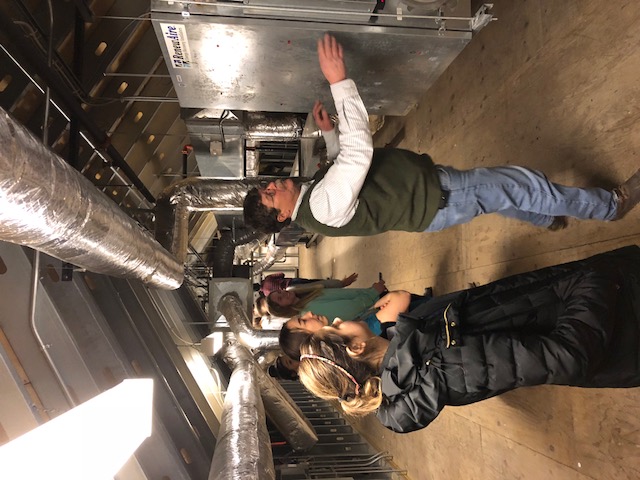 turning the lights on and off and that the lobby contained a plaque signifying the building was LEED accredited. Within the past couple of hours, I not only learned the meaning behind the acronym LEED, I previously thought they just misspelled LED and forgot to replace it, but I also discovered that Colby maybe in jeopardy of losing this accreditation title. Some facts I found quite interesting include that at initial opening, this was Colby’s first LEED certified silver building on campus, and the time and money cost to construct this building was extremely extensive. Unlike other buildings that use oil, natural gas, or boilers, this structure uses solar and heat pumps. During the warmer months, solar heat is extracted and then stored and conserved under the ground in heat pump tanks. During the colder months, the stored heat is extracted from the three water pumps located 1,600 feet below the ground and circulated throughout the building. This system is slightly different from the new and improved Davis building because it is runs on an open loop system. Based on my take-away of this system, it uses electricity to run the heat pumps, essentially heating up the earth. I was interested to find that this system not only is an environmental/heat hazard, but also is less efficient and has an increased possibility of iron contamination. In contrast, the Davis building runs on a closed loop and uses glycol as a
  method to prevent corrosion and plastic breakage by inhibiting the freezing of water through changing the heat capacity. While I feel like I could talk for hours about all the interesting take-aways I obtained from this lab, a few last pieces I would like to leave you with includes the question on whether the recent alterations Colby has made to this building’s energy system changes it’s previous status of being LEED accredited. Furthermore, if this system were to be redesigned, what changes would be made to increase its energy and cost efficiency. Finally, what would Colby save by reverting to its previous geothermal ground process of transferring axillary heat.
JS: One of the biggest takeaways I have from our tour of SSWAC is that Colby is constantly making adjustments to their systems to accommodate for both geothermal change and consumer preferences. Gus’ anecdote of, how guests’ complaints about the discoloration of toilet water later resulted in an alteration of the entire system even though using recycled water in the toilets was more sustainable, really stuck out for me. It demonstrated how both positive and negative aspects need to be taken into consideration when designing projects and making improvements. Another takeaway that I have is how important it is to view the challenges and adaptations made on the campus at a macro level. Because the building is on the opposite side of the road from the steam plant, a different type of ingenuity was needed to create a project that met the schools’ desire for sustainability.
CG: On Monday, the 5th, the Joules2Dollars class went on a tour of the energy and mechanical systems of the Shair-Swenson-Watson building. The building was opened in 2005 and is LEED-silver certified. It is heated and cooled with geothermal energy. We first met in a comfortable sitting room where we heard about the building design and the mechanisms that work to keep the building cooled and heated. It was interesting to hear that after the building achieved LEED certification it was never monitored again to see if it continues to meet those standards. 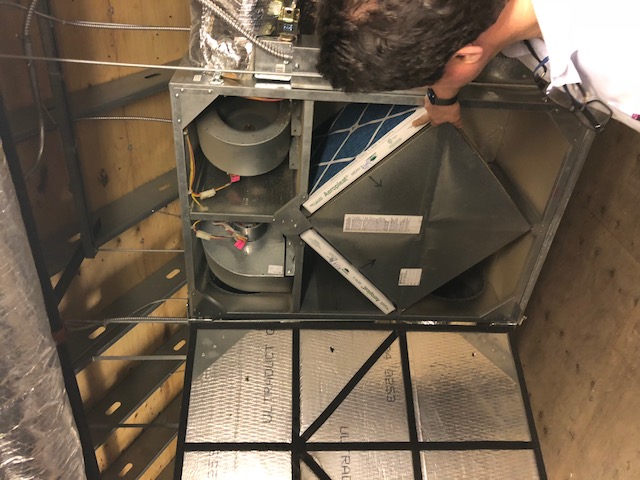

CC: The tour was very eye-opening for me because I was able to learn more about geothermal systems. Previously, I only knew about geothermal power plants and did not know that smaller scale systems could be used for heating like in SSW. Thus, when I first heard that SSW ran on geothermal systems, I imagined a large scale geothermal power plant hidden somewhere on campus.
When we toured the SSW building, I learned that geothermal systems could be solely used for heating in both open/closed loop scenario. This is not unlike water cooling systems in computers, but instead of using radiators to cool the liquid in the loops, heat dissipation into the groundwater or even the ground 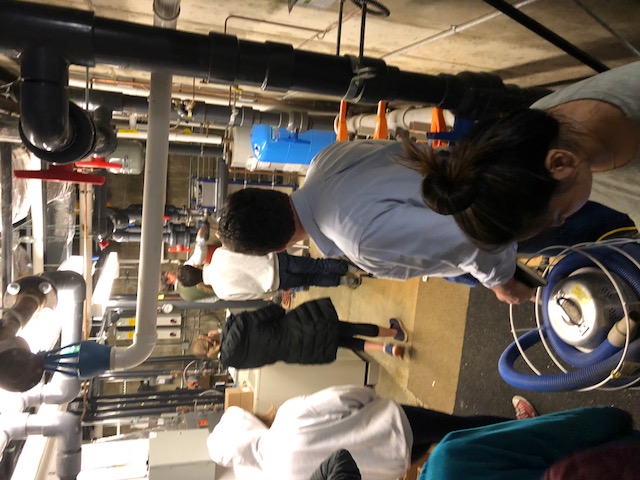 itself in the case of the Davis building. As SSW is the first LEED certified building on campus, it is remarkable that it is still regarded as one of the nicest buildings on campus as far as comfort levels are concerned. I really liked attending functions and dinners held there. Perhaps we could find out the specific areas that SSW has done well in terms of design and apply that to future developments such as the new Science or Art buildings.
The very detailed design surprised me. There were so many aspects to consider, up to even UV disinfecting lights that would keep intake air bacteria free.
When we found out about how the LEED system works, it was revealed that there is no follow-up to see how the building actually performs compared to estimates. There has also been an additional Solar Array since SSW was built. Hence, it would be really interesting to find out how the building has historically performed compared to estimations.
Another area that really puzzled me was how a heat pump works. With water that’s around 57 F, I’m not sure how this can be used to heat a building to well over that temperature. I will do more research to find out the science behind the thermal transfer in heat pumps.
AM: The tour of the Shair-Swenson-Watson building, commonly known around campus as the Alumni center, the random building next to Davis, or the building where fancy events happen, provided me with a lot of new knowledge about Colby’s sustainability practices. The first thing I found to be interesting and notable about this building is that it is Colby’s 1st LEED certified building. Part of the reason it received this certification is that it was designed and built to have a 42% energy reduction and a 62% water reduction in comparison to the numbers of a baseline building. However, since this certification was awarded in 2006, it seems as though those numbers were never confirmed or analyzed. That left me interested in finding out more about the maintenance of sustainability at Colby.
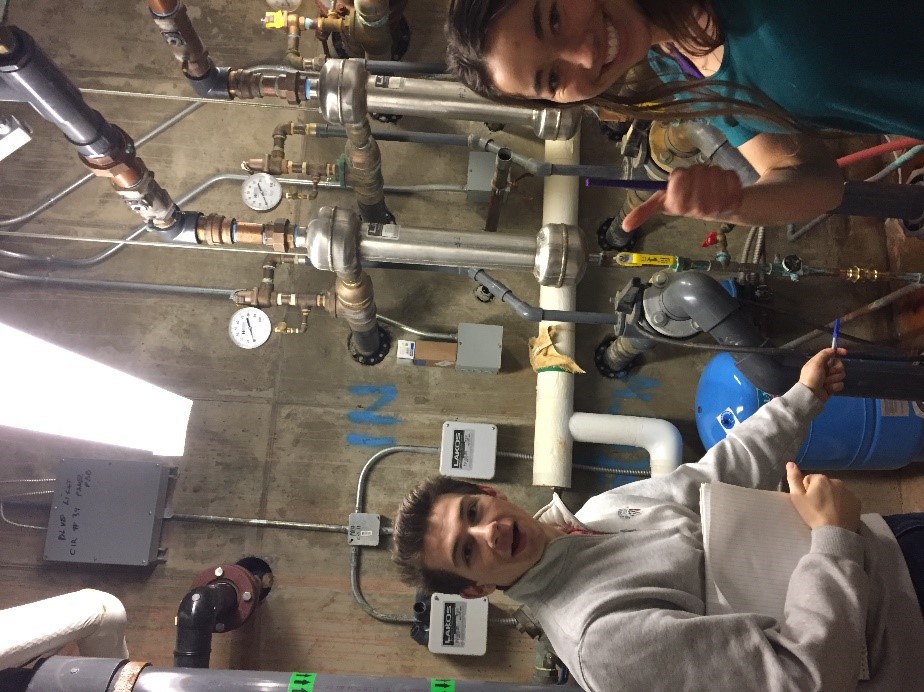 I also found the utilities of this building to be interesting. The heating system that SSW utilizes is a geothermal system, something that I was not familiar with prior to this tour. How this system works is by having 3 wells that pump water from the aquifer into the building. This water is then used to heat or cool the building, depending on the season. In the summer months, the building is cooled by pumping the cold water from the open system well into the building. In the winter months, the building is heated by pumping warm water into the building. The aquifer acts as a thermal battery for the building. In the summer, when heat needs to leave the building, it is pumped down into the aquifer by mechanism of heating water. In the winter, the reverse happens. In order to maintain efficiency with this system, the building was insulated using 4 inches of spray foam. Because the building became so air tight, they needed to add a ventilation system to circulate in fresh air. The ventilation system has air flow monitors which measure the CO2 levels in a room and adjust air flow accordingly. Another utility that this building has is, in 2015, it added a solar array to the roof. Housed in the attic of the building, the solar inverter works tirelessly to produce a portion of the electricity necessary to keep the building going.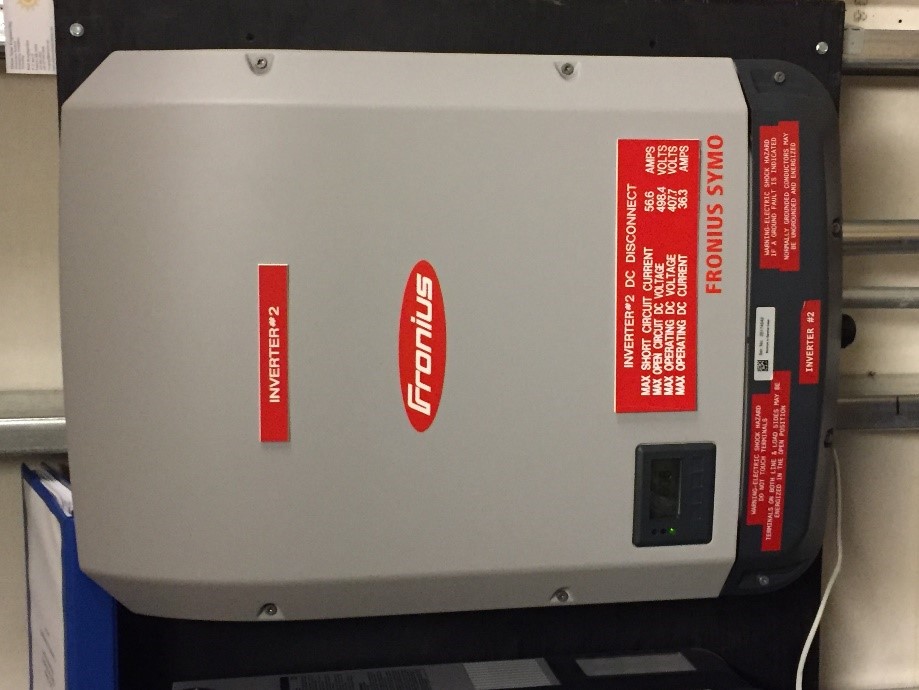
Overall, this tour was very interesting because it reminded me that the current technology we have to keep our utilities safe and sustainable is so sophisticated and fully automated. It left me wondering if, in the future, Colby can bring all their buildings up to the standards of SSW or become completely self-sustainable!
CZ: The tour to SSW this week in lab is not my first travel to SSW. I always enjoy the library because most spots on campus is crowded. But I do not know that SSW is using geothermal as its source of energy.
The energy system in SSW that is different from the main campus is it is using geothermal aside with solar power. To adopt the energy in the ground, 3 deep wells that are 1700 feet down are excavated so the water in the ground can come into the building and through heat exchanger the room can be heated or cooled. The good part of using geothermal is the water that is in the aquafer has much stable temperature, which is around 55 degrees. SSW has an open loop system which is not a closed loop. So, the water is first transmitted into the building, exchanged heat and sent back to the aquafer. Some of the water is also used within the building and that leads to the issue of bleed water as the iron in water are oxidized and has the yellowish color. So right now, instead of using water directly, the water does not go into building but interacts with glycol through heat exchanger and then the glycol will heat up or cool the building. Although this solves the problem of our usage, this is not a good solution from my perspective. As the water in aquafer has low replacement rate and it takes underground water 200 years to have all the water go through water cycle. By putting back oxidized material and warm water back into the aquafer, the outcome is still unknown and may not be sustainable.
We also took a visit to the basement and the roof where the heat exchangers, pipes are located. That is my first time to go into these rooms. And to be honest, it is interesting to see how this “automatically-working” campus sustain our everyday life. SSW is really a good place to work and study in the sense that the temperature can always be kept constant as the system can keep the air refreshed 3-4 times every hour and has constant energy supply with nice control over temperature. This is unlike dorms, which does not have the fans that can refresh the air in that frequency.
I think this tour enlightens me not in the sense that the system is sophisticated, or it is using different energy than the rest of the campus. But rather buildings can have some many variables between each other and serve the same function. Normally, if in the city, nobody will think of how to heat the room and how to generate electricity, as they are already built in there and everything is the same. But instead of having the high voltage lines that connect to your neighborhood and to your house, many other designs are also right there, and they can serve the same functions.
PS: At the end of the Colby Green stands the Schair Swenson Watson Alumni Center–a symmetric building which houses Advancement, Communications, and Alumni and Donor Relations. While the exterior design of the building appears to be thoughtful and interesting to the eye, little did I realize that the interior construction decisions were also of creative calculation. SSWAC was actually the first LEED-certified building on campus when it opened in 2006 a3nd was designed with efficiency systems, such as spray-foam insulation, to reduce electricity consumption by 42% on paper. However, both Gus Libby and Sandy Beauregard (our hosts) spoke candidly about the uncertainty associated with this value, since many changes have reshaped SSWAC’s operations, and nobody has bothered to collect field numbers verifying their theoretical data points.
Some of the especially interesting things to me about the energy systems within SSWAC included the open heat pump water system and the concept of a quasi-solar “flywheel”; both are features of the building’s geothermiality. At the center of the open heat pump water system are three 1600-feet deep heat pumps (way taller than Miller!). The open system taps into the aquifers in the earth to heat and cool the building on demand. Additionally, “quasi-solar flywheel” is how Mr. Libby described the practice of utilizing the earth’s stored heat by extracting it out of the ground, noting that the seasonality and dynamic climate of Maine mean that the flywheel takes one year to “turn” completely. I was surprised by the depth of the heat pumps, as well as the scale of the system itself in the basement of SSWAC since it was so small in size. It is also worth mentioning that there are a number of solar panels on the roof of the building after a student-led initiative for their construction, and they provide 10-15% of the energy use for the building, though the exact figure remains unknown.
LG: After the tour of the Shair-Swenson-Watson building, I learned about another one of Colby’s sustainable energy systems, only this time it is not connected to the steam pipes from the biomass plant. The alumni center was constructed in 2006 and at the time of completion became the first LEED building on campus, achieving a Silver rating. Because the building is on the side of the road opposite the biomass plant, the economic decision was made to create self-reliant energy systems rather than extending the steam pipes across the road. As a result, the SSW building was designed to run pri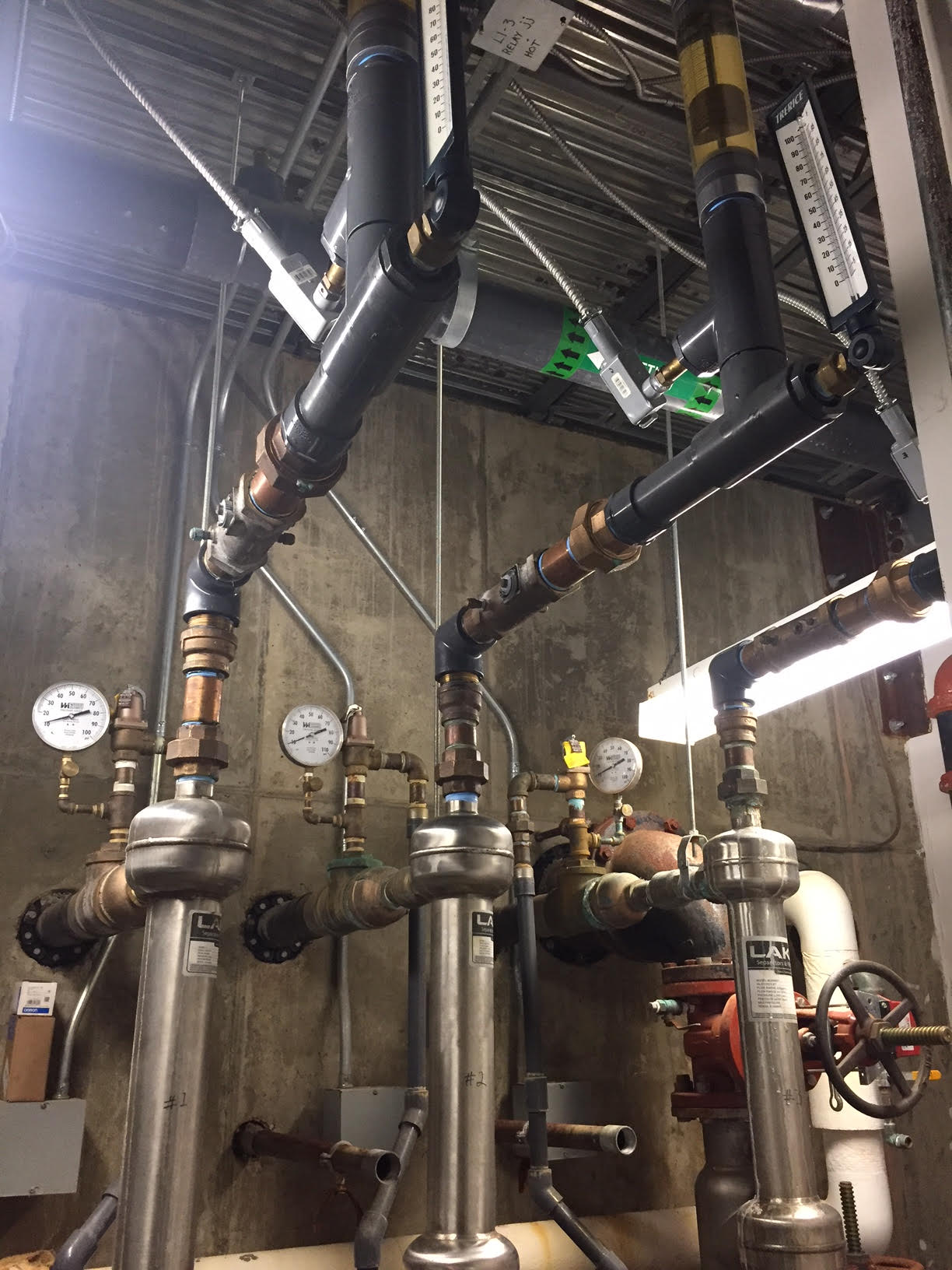 marily on geothermal and solar energy. Throughout the tour, we learned about how these energy systems contribute to the heating, electrical, and comfort systems of the building.
In addition to the tour, we obtained data about the solar production for the past three years. The total solar production in 2015 was about 22,541 kWh, and then it increased to 33,655 kWh in 2016, and decreased slightly to 31,650 kWh in 2017. The reason 2015 yielded a much lower energy total was because the data was only recorded for a portion of the year rather than all twelve months. Also, these numbers only account for the energy that contributes directly to the building and don’t account for the excess energy that leaves the building. The solar array on the roof includes 96 solar panels each producing about 26 kW. The other main source of energy comes from the geothermal ground heat pump system. This system is comprised of three wells 16,000 feet below the ground that pump water to the heat pumps, where the water is subsequently heated by a transfer of energy from the heat exchanger. This open system heats the building starting with the aquifer where water is pumped. The heat goes into the ground during the summer and then backs out of the ground in the winter. These heat pumps are constructed to have a coefficient of performance around 3.6-4.1 and are able to keep the water temperature between 52 and 57 degrees Fahrenheit. There are 36 heat pumps in the building and despite having a lifetime of about 10-12 years; they are replaced at a rate of about 1 or 2 a year.
Although the building was LEED certified based on its original design, it is unlikely that it would still achieve a Silver LEED certification due to changes in the building’s systems and untested numbers. For example, the designed numbers indicate a 62% reduction in water and a 42% reduction in energy but these values have never actually been examined. Furthermore, the building initially received credit for no usage of potable water, but has since changed the design and now uses potable water. Last summer they completely separated the well water from the building water (largely because of opposition to the tinted water in bathrooms). Overall, the building’s initial plans checked off the boxes to obtain a Silver LEED certification, and it will be interesting to discover more about the building’s energy systems and examine their current numbers.