Studying is effortful, and it can sometimes be hard to focus when you’re studying. So, the Program for Academic Success and Transformative Learning (the same folks who create these posters) is here to help! We’re hosting Structured Study Sessions 5 nights a week to help you make the most of your studying!
INTENSE STUDY SESSIONS
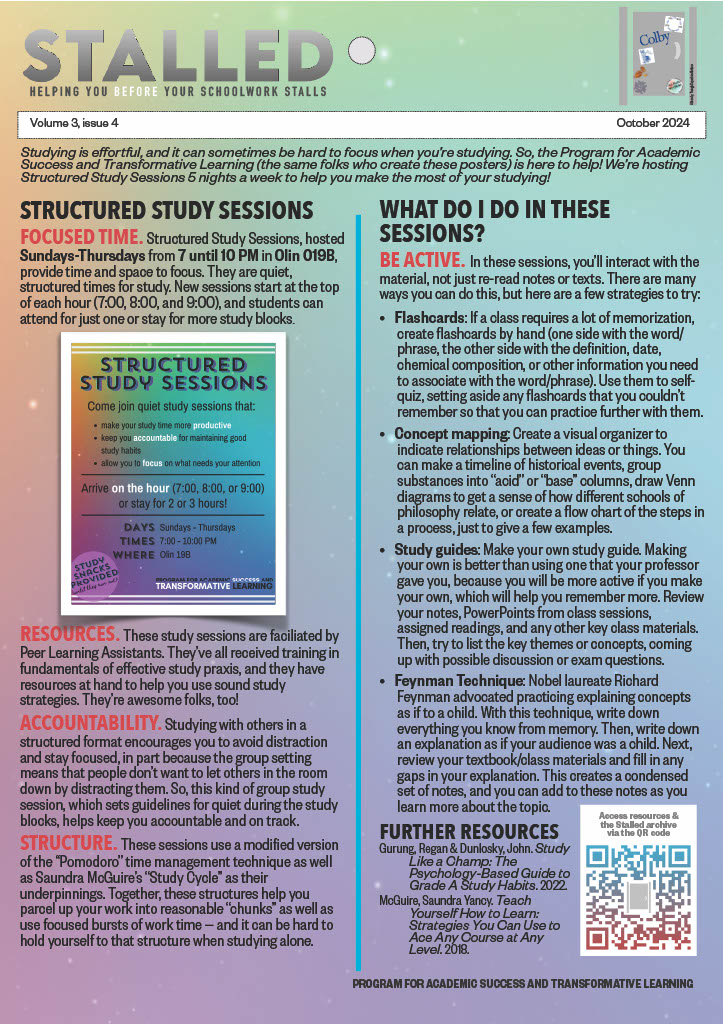
FOCUSED TIME. Structured Study Sessions, hosted Sundays-Thursdays from 7 until 10 PM in Olin 019B, provide time and space to focus. They are quiet, structured times for study. New sessions start at the top of each hour (7:00, 8:00, and 9:00), and students can attend for just one or stay for more study blocks.
RESOURCES. These study sessions are faciliated by Peer Learning Assistants. They’ve all received training in fundamentals of effective study praxis, and they have resources at hand to help you use sound study strategies. They’re awesome folks, too!
ACCOUNTABILITY. Studying with others in a structured format encourages you to avoid distraction and stay focused, in part because the group setting means that people don’t want to let others in the room down by distracting them. So, this kind of group study session, which sets guidelines for quiet during the study blocks, helps keep you accountable on better on track.
STRUCTURE. These sessions use a modified version of the “Pomodoro” time management technique as well as Saundra McGuire’s “Study Cycle” as their underpinnings. Together, these structures help you parcel up your work into reasonable “chunks” as well as use focused bursts of work time — and it can be hard to hold yourself to that structure when studying alone.
WHAT DO I DO IN THESE SESSIONS?
BE ACTIVE. In these sessions, you’ll interact with the material, not just re-read notes or texts. There are many ways you can do this, but here are a few strategies to try:
- Flashcards: If a class requires a lot of memorization, create flashcards by hand (one side with the word/phrase, the other side with the definition, date, chemical composition, or other information you need to associate with the word/phrase). Use them to self-quiz, setting aside any flashcards that you couldn’t remember so that you can practice further with them.
- Concept mapping: Create a visual organizer to indicate relationships between ideas or things. You can make a timeline of historical events, group substances into “acid” or “base” columns, draw Venn diagrams to get a sense of how different schools of philosophy relate, or create a flow chart of the steps in a process, just to give a few examples.
- Study guides: Make your own study guide. Making your own is better than using one that your professor gave you, because you will be more active if you make your own, which will help you remember more. Review your notes, PowerPoints from class sessions, assigned readings, and any other key class materials. Then, try to list the key themes or concepts, coming up with possible discussion or exam questions.
- Feynman Technique: Nobel laureate Richard Feynman advocated practicing explaining concepts as if to a child. With this technique, write down everything you know from memory. Then, write down an explanation as if your audience was a child. Next, review your textbook/class materials and fill in any gaps in your explanation. This creates a condensed set of notes, and you can add to these notes as you learn more about the topic.
FURTHER RESOURCES
Gurung, Regan & Dunlosky, John. Study Like a Champ: The Psychology-Based Guide to Grade A Study Habits. 2022.
McGuire, Saundra Yancy. Teach Yourself How to Learn: Strategies You Can Use to Ace Any Course at Any Level. 2018.