Understanding Elite Education from a Public-School Perspective
The very idea of researching globally elite schools forces me to reflect on my own educational experience. I have attended public school for the entirety of my career as a student. The individuals who walked across the graduation stage beside me were the same four-year-old’s in my preschool class. I am eternally grateful for my public-school education, as I feel I developed a unique sense of community with my school system and town– something I may not have received at a private or boarding school. When researching themes of privilege and elitism, I aim to compare my results with that of my own public-school experience, drawing parallels and indicating differences.

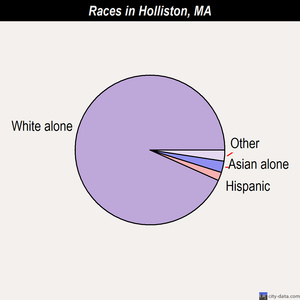
My small suburban hometown, Holliston, is roughly 94% middle-class white people. The students, teachers, faculty, administrators, and coaches at my high school all represented this homogeneity. Upon entering the Colby environment, my eyes were opened to a new concept of elitism and privilege. Much of the Colby population comes from elite schooling experiences. Through meeting so many incredibly gifted students at Colby, I have become more aware of the upper hand we all attain simply by attending this institution. Yet, like in any highly-competitive environment, the hierarchy of social class, race and ethnicity is ever-apparent on Colby’s campus. Had I attended a public state school, I would not have been exposed to the degree of privilege and homogeneity present at Colby.
This brings me back to the questions; Do “elite” schools shape their students to become elite individuals? Or are inherently “elite” individuals the target population for small private institutions like Colby? Considering the lack of diversity I experienced throughout my own public-school education, do universities have more power over depicting a culturally, economically, socially, and politically diverse environment? Is this power truly utilized? A never-ending thread of questions drives my passion for our upcoming research project.
Privilege is rooted in every social institution, whether privately or publicly funded. Beginning my research for the elite Australian school, Everdeen, I immediately noticed striking differences between Everdeen and my former high school. The student interviews depict an intensely competitive academic and athletic environment. Everdeen’s student demographics also stood out to me. Students at Everdeen belong to over 60 nationalities, and many are children of Everdeen alumni. The diverse, service-driven student population at Everdeen appears to be tremendously different from the environment at my high school.
I feel a subtle sense of discomfort when researching such a prestigious international school. I try to remind myself of my privilege, having received a rewarding public-school education that shaped who I am today. However, the disparities between Everdeen and my public high school prove just how different educational institutions may be. Academic and athletic funding, quality of teachers, availability of resources, and attention to extracurricular programs all demonstrate how dissimilar the education of any two students may be. Moving forward, I wish to learn just how these privileges available at Everdeen have positively (and negatively) influenced the academic and athletic success, mental health, and social awareness of students. I wonder how certain programs available at Everdeen could be implemented into publicly-funded schools. Global citizenship is a reappearing concept within the Everdeen environment. Does this concept only have a place in elite international schools like Everdeen? Can smaller private and public schools promote a similar concept? Upon answering these pressing questions, I hope to compare the environment at Everdeen to that of Colby and other private institutions in the United States.
The opportunity to delve into the elite educational systems of other countries is exciting to me. I aim to learn about how culture, socioeconomic background, gender, race, ethnicity, and other factors contribute to the formation of character amongst young students. I plan to analyze how privilege, in addition to these factors, plays a part in an elite educational environment. Additionally, I will compare themes of privilege in globally elite schooling systems to that of which I noticed throughout my public-school education.