
Global Justice? Social Justice in a Global Context
Over three years of taking social justice classes at Colby, psychology seminars, and doing civic engagement, I believe I’ve come to the beginning of my senior year with more questions than I began with. While this realization is at times overwhelming, it also seems to suggest a more optimistic path for the future, both for what it means to be a young educator in a politically chaotic atmosphere, as well as for ways to understand how today’s climate may dictate shifting needs within the classroom, with “classroom” taking on broader definition.
It is a strange juxtaposition to be diving into critical discussions on social mobility (or lack thereof) and perpetual elitism when I am taking part in an enterprise (a small, private liberal arts school) that seems to be doing just that. In beginning our research on a private, international school, I keep coming back to the same question — how are we to criticize these systems as people who are simultaneously benefitting from them? So true and interesting!

I think this is where allowing for liberal definitions of “social justice” or “classroom” can be most beneficial to the greater community. For example, while Merriam-Webster’s dictionary defines social justice as “a state or doctrine of egalitarianism” aimed towards “the removal of inequalities among people,” it seems critical that, as social justice advocates and activists, we also consider the context of the society we are discussing (ranges of class, race, sexual orientation, etc…) (Dolan-Reilly, 2013). Perhaps to clarify, I mean that, coming from a background of a private liberal arts education, the acknowledgement that we will not be able to understand, say, the experience of someone who attends a large public university. However, in defining and then enacting social justice principles and policies, specifically in the field of education, it is necessary for us to accept this inability to understand what it is like to be in another’s footsteps, and instead do all we can to collect information and hear experiences that give us the widest perception of another’s perspective.
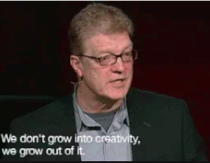
In the context of this year, and more specifically, this research project, taking these goals of listening and empathy, may allow for more effective and creative ideas to emerge regarding new meanings of the classroom, and what education looks like. Thinking of the “classroom” as a backyard, a playroom, or a dinner table, and reevaluating our ideas of what it means and who gets to be an “educator,” keeping in mind ideas of privilege, accessibility, and elitism, could provide important insight as we continue our research through an international lens.