
Foreign Language as a Social Tool (And Learning That The Hard Way)
The main focus of my group’s research project revolves around the different language policies of the Takau English School, in Taiwan. Many elite international schools see globalization as an important issue in today’s world; therefore, our research will look into how various language policies affect students on their paths to becoming global citizens.

The study of foreign language holds a pretty important place in my heart. As a high schooler, I used to think studying French was trivial. I believed it was merely a fun class to go to each day, where I could practice a new accent. However, Colby shipped me off to Dijon, France my first semester Freshman year, and that experience allowed me to discover the true benefits of studying language. It is important to note that I was not a happy camper when I received my acceptance letter from Colby and read “Congratulations! You’ve been accepted into our Global Entry Semester program in France…etc.” My dream had been to go to Colby… not France. I was unable to see at the time how influential starting college in a foreign country would be.
Whenever I describe my experience abroad, I always use the phrase “fast-tracking maturity,” because it’s the best way to describe how that semester impacted me as a student, and as a global citizen. The Fall of 2016 was a heated time politically as well, which impacted my understanding of what it even meant to be a global citizen. Elections in both the United States and France were simultaneously occurring, and the antics of the U.S. election had a major impact on France. It was intriguing listening to my French host family talk about how they felt and listen to how concerned they were. This is the moment I began to realize how connected our world is.
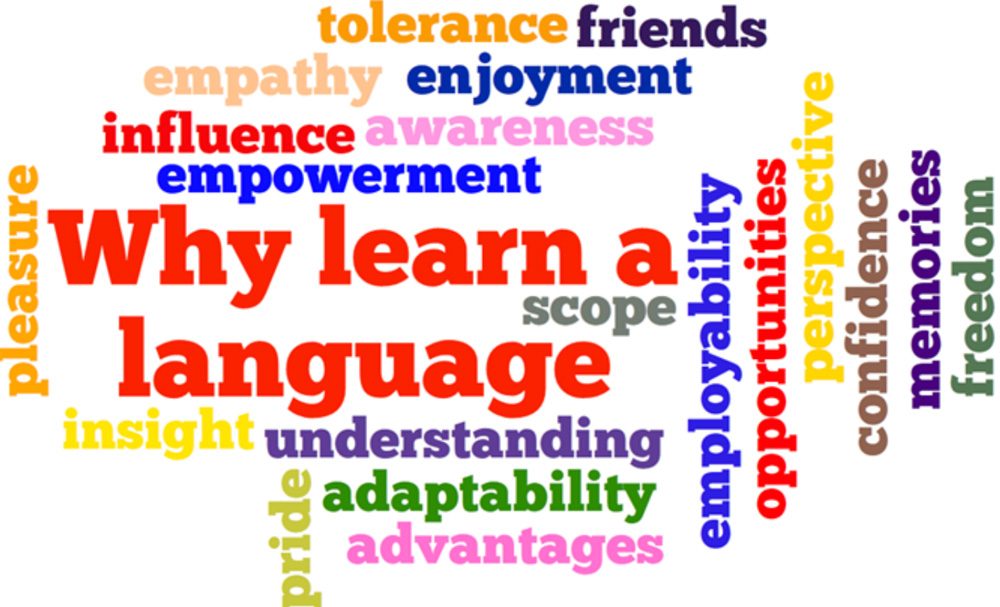
So while looking through the data of the TES school, I began to find a similar sentiment being shared. At TES, they practice many different languages, and one student mentioned that students may face language barriers while trying to connect with other students. By studying foreign languages together, it allows the school to become closer, “like a family.” Another student mentioned that they planned to go to Germany after high school to study language, which I thought was reassuring in terms of how beneficial the students saw the study of languages and culture. A third student even described language as being a “tool, or an instrument,” which I thought seemed like an accurate description.
In conclusion, when you study foreign language you’re not simply memorizing words and letters. Rather, you’re learning about a new culture and new customs or ideas. This certainly depends on how willing the teacher is to discuss more cultural aspects of the language; however, I think it’s pretty common. It certainly helps when you’re studying the language in its actual country of origin, although there are ways to create a global experience wherever you are in the world.