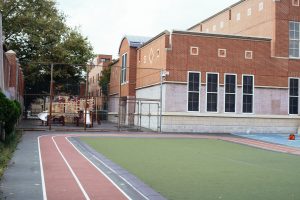
At Everdeen, global citizenship is considered a crucial aspect of their curriculum. Amelia, a former student at Everdeen, says the administration did a good job promoting acceptance of different cultures within Australia due to changing demographics in a global society. However, she believes that business and economic opportunities motivated the school’s focus on global citizenship. Although there was a focus on accepting other cultures, Amelia thinks that most of the ways Everdeen focused on global citizenship was through opportunities abroad for their students. For example, the school offers plenty of opportunities for students to network with overseas business owners. Everdeen has also prioritized expanding its campus to other countries, such as China, to provide more international opportunities for students.
Harrison, a student from Everdeen, disagrees with Amelia’s viewpoint about the school lacking a focus on global citizenship. Harrison says he would not define himself as a global citizen based on his experience at Everdeen. Therefore, this raises the question of whether Everdeen is creating global citizens or providing experiences where students fail to retain the crucial aspects of being global citizens.
Regarding global citizenship in the curriculum, students are required to take a foreign language such as French or Japanese. Along with learning the language, each class would have a cultural day where students would spend time at a restaurant with the traditional cuisine of their studied language. For example, students taking French would go to a French restaurant to eat crepes, and students taking Japanese would go to a Japanese restaurant to order bento boxes. While this event does promote learning about other cultures, this is not a reoccurring experience throughout a student’s time at Everdeen.
Another way Everdeen promotes celebrating other cultures is through schoolwide events. A student describes events promoting different cultures, such as a lunar new year dinner celebration. These events aim to promote multiculturalism, but students say they hardly fulfill that purpose. Instead of making multiculturalism a vital topic, students felt as if it was something they happened to come across if they happened to talk to someone about it.
Although students mentioned multiple events each year, this was the only all-campus multicultural event worth mentioning. The assemblies focus on respecting different cultures and religions, but students said there was no lesson or discussion on implementing these practices. Instead, these assemblies were made by the administration.
Everdeen prides itself on having international students, of which plenty are from China. Although Everdeen promotes acceptance and interaction with other cultures, students mention a strong divide between international and local students. Harrison said this divide tends to happen due to discomfort from being around a group that’s a different nationality. If Everdeen’s goal of creating acceptance and global citizens through cultural events, assemblies, and campus expansion were working, the divide between native Australians and international students would not be so strong. Daily, students do not feel the promotion of global citizenship, and teaching global citizenship through the business perspective may be contributing to the failure of breaking down cultural barriers within their school.
In researching the Australian education system, I was intrigued to learn the little differences between public and private schooling. Specifically, I was surprised to learn that public and private/independent schools receive government funding (Courtney Facts 2023). I found this fact about the Australian education system interesting considering the advantages many private school students receive.
As someone who has only ever attended public school, my knowledge of private education consists mainly of stories from friends who attended elite schools or stereotypes about such educational institutions. Before formally learning about elite education, I assumed that private schools were mostly funded by generous donors and through tuition payments. After learning about the Australian education system, however, I now understand that the government is responsible for contributing to all forms of schooling in the nation. Additionally, I learned that Australian private schools must follow the same guidelines as public schools (Exfin 2022). With this in mind, I wonder what attracts students and their families to private schools when they could receive the same academic information at public schools.
To answer my own question above: perhaps privileged families are attracted by the promise of fancy bells and whistles that private schools offer on top of the standardized forms of education across Australia. According to our research, Australian private schools boast of modern sporting facilities and excellent teaching staff (Courtney Facts 2023). That said, are these private school resources the only attractive qualities of elite education? While top-of-the-line sports fields and intelligent teachers are impressive, perhaps elite families are choosing Australian private schools over public schools to stay within a particular social and cultural circle. Indeed, as we have learned in class, Pierre Bourdieu suggests that elite class cultures are reproduced by the exclusivity of achieving high status in society (Bourdieu 1996). Through attendance at private schools, Australian elite students are receiving particular lessons in social and cultural capital that less advantaged students at public schools receive. Here, young elites maintain their elite status by attending private institutions where they have access to specific knowledge and resources that are only accessible to the upper classes.
Ultimately, learning about the Australian education system has brought up questions about the equality of private and public schools. It appears to be a case in which private schools attract students and families with higher economic capital. In the case of Everdeen, students are urged to embrace their global citizenship. However, by attending a prestigious private school, are these students really engaging in a culturally diverse community?
Works Cited
Bourdieu, Pierre. 1996. The State Nobility: Elite Schools in the Field of Power. Cambridge, UK: Polity Press.
Courtney Facts. 2023. “Are Private Schools Better Than Public Schools?.” ABC News Australia.
Last modified January 19, 2023. https://www.abc.net.au/news/2023-01-20/ are-private-schools-better-than-public-schools/101867070.
Exfin. 2022. “State or Private Education.” Accessed March 13, 2023.https://www.exfin.com/state-private-education