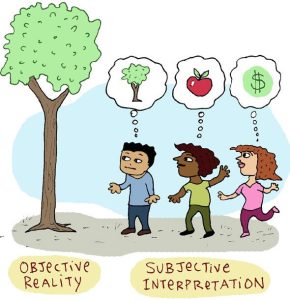
We’ve all known that usually people in elite schools are from wealthy families who get advantageous resources and opportunities. As a result, I am curious about whether or not they can sense their privilege and how they think about their privilege. For this blog, I will mainly focus on interviews with a student called Kwabena Dankwah from Sankofa International College in Ghana and use them as examples to explain how elite students understand their privilege.
How do elite students feel their privileges in daily life at school?
According to Kwabena, “around April or May people start talking about what they are doing for the summer and where they are going” in the school and his family is able to afford traveling abroad, such as going to Europe. Another thing that draws Kwabena’s attention is the college application. “When people were applying for colleges and people were applying for financial aid,”, he had more privileges in choosing whatever colleges he wanted based on his academic performance because he “was one of the few” that did not need to consider and worry about applying for financial aid. As a result, the awareness of being privileged appears in daily conversations with peers, such as topics about traveling or college applications.
How is the elite family involved in the generation of the awareness of being privileged?
Kwabena’s family emphasizes his privileges a lot. “They always refer to the fact that thousands of other people of Kwabena’s age aren’t getting the same privileges that he is getting.” His family wants him to recognize and appreciate his privilege and uses this awareness to study harder as they want him “not to waste his opportunities”, “take his education seriously”, and “not take things for granted.” From here we can see how this awareness of being privileged turns into a family pressure that the privileges are provided by the family so the elite students need to take responsibility to use those resources and opportunities properly.
Another interesting observation is about the future career planning of elite students. Kwabena’s father works in the bank and his mother is a pharmacist. Following his family’s pathway, Kwabena considered himself “more of a science person” and he also mentioned, “everyone else in my family is more economics and finance minded.” It is noticeable that all the children in his family choose to follow their parents’ careers. Therefore, the elite family also indirectly provides an example of the success that their children can continue to honor.
How does the school guide their understanding of being privileged?
In Sankofa International College, the pedagogy of the school is to “develop Pan-African minded leaders.” The school’s mission statement is “knowledge in the service of Africa”, showing a huge focus on service and leadership. The school brings students to do community service a lot. For example, Kwabena was working on a project to “refurbish a school for blind and deaf kids.” The outcome of this leadership pedagogy is very successful. Kwabena said he “believes he upholds these values” and he believed that “if you are not suffering, then you have the moral obligation to give back to where you came from.”
In general, schools use students’ awareness of being a privilege and guide them to step into a leadership role. And then schools transform students’ awareness of being a privilege into a sense of social obligation to use their power and to help more people. School should be a setting for justice so it is very important to guide students to understand their privilege in a positive way in elite school settings.
Elite students recognize their privileges in many different settings, including daily conversations with peers, family pressure, and school pedagogy. And they may have different impacts on the students, making students work hard to achieve individual success and care about services and social injustice at the same time.
The rise of social media enabled by the Internet has significantly hastened the spread of information across the world. But even as social media consumption continues to grow, television remains a predominant form of media consumed by many individuals across all ages. Spanning from children’s cartoons and adult sitcoms to nightly news segments and commercial advertisements, TV programming can fulfill a range of entertainment and informational purposes. Reading through interviews with students at Takau English School in Taiwan, I was particularly interested to see television emerge as a strong personal influencer in a conversation with one of the students. When asked about his future plans given his status as a twelfth year student, Lee shared that he’s looking to pursue college in Germany based on inspiration from watching a German TV show at home. To prepare for this possibility, Lee began devoting an additional six hours per week to private tutoring for German, which he started learning to speak only a month prior to the interview in the spring of his final year in school.
As a domestic college student in the US, I can’t help but wonder whether I could be convinced by a foreign TV show to study in the country of its setting. In recent decades, much attention has been given to the power of television in shaping the beliefs and behavior of individuals. At the surface, media biases in what news sources preferentially choose to share and the political tones through which this information is delivered can significantly influence the audience’s perception of outside events, whether at a local, national, or international level. But even more casual programming with stricter entertainment purposes, such as crime shows and TV dramas, can also drive certain motives or directions in those who watch them. In the US, several studies have supported the “monkey-see, monkey-do” tendency in childhood learning, which upon further applications, linked childhood consumption of TV shows depicting violence to higher rates of aggression and crime during adulthood.1 However, not all aspects of TV influence are negative. Although occupations are rarely depicted perfectly on the screen, TV shows were reported to have some influence on the career decisions of roughly one in every five adults –and nearly two in every five millennials of ages 18 to 24– in a study from the UK.2 For many, seeing others on TV in positions of importance and authority, such as lawyers, doctors, and law enforcement, can confirm interests in or amplify concerns for pursuing these careers.
The case of foreign television is arguably even more intriguing than domestic programming because these shows showcase not only the underlying themes intended for the domestic viewer but also an entirely new cultural framework to the foreign audience. In Thailand, watching foreign Chinese TV programs has unsurprisingly been found to improve general cultural awareness and knowledge.3 More unexpectedly, however, viewing these series also fostered greater acceptance and understanding of “not only the external cultures that could be seen, but also the internal ones, including beliefs, attitudes, norms, and values”.3 The power of internalizing cultural perspective reminds me of a similar context in America with the show “Dora the Explorer”. Dora has become an icon in American childhood for embodying not only a female Latina presence in a television industry that strongly underrepresents these identities, but also many of the characteristics that are most prized in American culture, such as being kind, social, independent, and clever.4 For those outside the US, watching “Dora the Explorer” provides a strong basis for familiarizing with important themes in American society.
So how does TV programming, and particularly that of foreign nature like that which Lee watched, fit into the elite context? For many families of upper class background, economic limitations are likely not a concern for creating international experiences. Foreign shows may give general audiences a glimpse into a different world that is thrilling for the new social lens it provides, but elite audiences have the financial mobility to experience this lens for themselves through travel. Additionally, upper class families may be better-suited to take further preparations for immersive experiences using their elite resources, such as connections to a private language tutor in the case of Lee. But the impacts of foreign TV could extend further than just cultivating travel destinations. I wonder whether these TV programs may in part captivate elites with a glimpse into the lives of other elites distant from those which they’ve grown up around in their home country. Although Lee never had the chance to elaborate more on the details of his motivation, I’d be interested in hearing how the characters in his show may have reflected German elites –or non-elites– and how his experience with others in Germany, given he pursued it, compared to the culture portrayed on the show.
Tirasawasdichai, T., Obrenovic, B., & Alsharif, H.Z.H. (2022). The impact of TV series consumption on cultural knowledge: An empirical study based on gratification–cultivation theory. Frontiers in Psychology, 13. https://doi.org/10.3389/fpsyg.2022.1061850
Entering an elite schooling environment can have a profound effect on individual perspective and identity. The experience of transitioning from a public education to an elite private education can shift not only a student’s understanding of the world around them, but of themselves. There can be tremendous changes, like a realignment of values or expansion of worldview, but there are also small tweaks–what clothing you wear and what slang you use. These changes ultimately transform an individual, shaping them to be ‘elite.’ But what happens once you make this transition? And how are you distanced from your former peers and values?
Coming to Colby from a small montessori public school in the midwest, I experienced great shifts in my individual self, and the way I perceive the world around me. I was introduced to new concepts: what is a “Country Day School,” and did kids really go to those fancy boarding schools in the movies? I began to conform to Colby’s culture, I didn’t completely change, but I saw shifts. I filled my cup from the dining hall with “soda” instead of “pop,” and looked online for a sale on boots called “Blundstones.” Moreover, I began to think about things on a macro-level, applying theories to realities and practicing that ever so important skill of “critical thinking.” After a semester at Colby, I returned home for winter break to realize I had experienced a lot of personal change. I spoke with big words and talked to my parents about philosophy, heck I even bought a ski pass. These changes created distance between me and my peers from home, consciously or subconsciously.
Kayla, a student at Olive Grove Academy–an elite private boarding school in Jordan, experienced a similar transition when entering the elite private school from her former public school in Jordan. Kayla prided Olive Grove Academy on educating their students on issues of global importance, ensuring the students had multicultural opportunities and immersed themselves in diverse perspectives. Kayla expressed how her entire worldview had shifted since attending Olive Grove. She now considered multiple religious, racial, and ethnic perspectives when investigating global issues, issues in her own country, and issues of the Arab region. After leaving her public school, Kayla found her life goals, aspirations, and standards changed. Olive Grove Academy changed not only her individual perspective and personal standards, but also the trajectory of her future. When asked about old friends from her public school, Kayla says she can no longer “relate to them.” They don’t understand Jordanian issues the same way she does, and they don’t have the same life focuses as her:
“You see, our mentalities now are really different. If I stayed in [my old school], I would have been in their shoes. I would have said the same thing. So you see, I can’t even argue with them because they won’t understand what I’m talking about. And I will certainly not understand what they’re thinking.”
Kayla perceived an obvious distance between herself and her former peers, a distance established through her experience at Olive Grove Academy. The experience of elite education has altered her perspective and understanding of the world so deeply she no longer relates to, or understands, her former peers. For Kayla, this increased distance has produced a sense of superiority over her former classmates. Kayla has a new understanding not only of the world around her, but of her position in this world now that she benefits from an elite education. This position is one that benefits from social and cultural capital. Kayla’s future no longer aligns with those of her former classmates. She is prepared to become a successful global leader. Kayla finds security and superiority in this acknowledgement. Transitioning to an elite education at Olive Grove Academy granted her with this security and superiority.
Kayla understands her position in society in relation to her old friends. Her experience at Olive Grove Academy has shown her what she is capable of when endowed with a global elite education: an education that stresses diverse perspectives and global connectivity. She holds the social and cultural capital to completely diverge from her former peers, intellectually and physically.
As I read through student and alumni interviews of Everdeen students, I noticed that the students were involved in many extracurricular activities. To name a few, these activities include athletics, music, community service, and leadership roles within the school. Some activities, such as community service and athletics, are compulsory and promoted as a pillar of the school’s curriculum. In contrast, some extracurricular activities involving leadership roles are reserved for deemed-worthy students, or as a former Everdeen student puts it, “perfect students.” As I read through their interviews, I noticed that these activities are helping students build impressive resumes for when they leave Everdeen, allowing them to occupy positions at elite universities across the globe.
Moreover, throughout his time at Everdeen, Harrison was on the rowing team, played multiple instruments, and was selected for a prestigious leadership position within the student body. Over holiday breaks, he continues to build his impressive college resume through internships in prospective career fields. After graduation, Harrison hopes to attend university in the United States. To be clear, his goal is to attend one of America’s most prestigious universities. The prospective list includes Ivy League schools, Stanford, and UCLA. It is not a coincidence that many of these schools have the most competitive crew universities in the country, as Harrison hopes to row crew for one of these elite universities. While these schools are still incredibly selective for rowers, he believes his interest in crew and other accomplishments throughout his time at Everdeen could give him an advantage in the admissions process.
While a resume like this one seems like a dream applicant for many universities, he admits that his focus on rowing and other activities impacts his schoolwork. As a result of crew practice, he must wake up at 4:30 am and does not have the opportunity to start homework until 9 pm when he returns home. His commitment to rowing, academics and other activities requires spectacular organization skills. With this commitment to various activities, a student dances a fine line between being a dream applicant and dealing with the consequences of spreading oneself too thin.
Like Harrison, a former student at Everdeen named Amelia was also selected for a leadership position within the student body. In addition to being selected as a house captain, Amelia participated in swimming, soccer, choir, and debate teams. In addition, Amelia was a Duke of Edinburgh Award recipient, a prestigious program that can significantly boost a college application. Like Harrison, Amelia felt she was in too many extracurriculars and had little time for academics. By her senior year, Amelia cut down her extracurricular involvement and put all her focus on leadership activities and academics other than compulsory athletics.
Providing the resources and access to building a solid college application filled with various experiences and activities is a crucial aspect of elite schools. While elite schools promote and encourage extracurriculars, reviewing the consequences of involvement in many activities is vital to ensure the process does not backfire on the student.
Research in any field aims to expand our knowledge and understanding of the world around us. In the context of education, research is critical for improving teaching practices, student learning, and educational policies. Choosing the appropriate research methodology, qualitative
or quantitative, is essential to a successful research investigation. As a primarily STEM student, I often think of research from a numerical perspective because I’ve been accustomed to the notion that research provides hard answers and is supposedly more “scientific” than qualitative research. However, while reading the interview data for the Globally Elite project, I realized that qualitative research, unlike quantitative, has the ability to capture the complexity of human experiences. Instead of focusing on the “what,” qualitative research can look into the “why” and provide insight into more subtle, underlying patterns. With a newfound understanding and appreciation for qualitative research, I began to wonder about the role of subjectivity and what it means to stay objective in qualitative research.
Qualitative vs. Quantitative Research in Education
Quantitative research in education, like any other field, focuses on collecting and analyzing numerical data, for instance, test scores or survey responses, to test hypotheses or identify patterns. This methodology is often used to measure the effectiveness of educational programs, identify best practices, or compare different teaching methods. Quantitative research is highly structured, and researchers use objective measures to ensure the data’s reliability and validity.
On the other hand, qualitative research is an exploratory approach that aims to understand the experiences and perspectives of individuals in different educational settings. This methodology involves collecting data through observation, interviews, or focus groups and analyzing the data through themes, patterns, or narratives. By nature, qualitative research is highly subjective, with conclusions relying primarily on researchers and their interpretation and analysis of the data.
Staying Objective in Qualitative Research in Education
Staying objective in research, in general, is crucial to ensure that the data collected is reliable and valid. In quantitative research, maintaining objectivity is relatively easy, as the methodology is highly structured and standardized measures are used to collect data. However, in qualitative research, staying objective is more challenging due to its innate exploratory nature.
One way to stay objective in qualitative research is triangulation, a method that involves cross-checking and comparing data from different sources to ensure that the findings are consistent and reliable. By incorporating multiple perspectives or data sources, triangulation increases the comprehensiveness and depth of results, thus proving itself an effective technique for maintaining objectivity in qualitative research.
Should You Stay Objective in Qualitative Research in Education?
However, given qualitative research’s ability to discern multifaceted trends, the question of whether or not researchers should stay objective in qualitative research in education is a well-purposed topic of debate. Some argue that objectivity in qualitative research in education is near impossible, as researchers’ interpretations and data analysis will always be subjective. Instead, they emphasize that researchers should embrace subjectivity and use their experiences and emotions to understand the data fully.
Conversely, others argue that objectivity is essential in all research, including qualitative analysis. Staying objective ensures that the data collected is reliable and valid and can be used to develop theories and make decisions. Objectivity also allows for replication, where other researchers can replicate the research to confirm the findings.
The Role of Subjectivity in Qualitative Research in Education
While staying objective is essential in qualitative research in education, subjectivity also has a role in understanding the data fully. Qualitative education research aims to understand individuals’ experiences and perspectives, and subjectivity can help researchers gain a deeper understanding of the data collected. In accepting the role of subjectivity, researchers may be able to identify themes, patterns, and narratives that may have been missed if they were to remain completely objective.
I’ve learned that qualitative education research provides a unique opportunity to explore complex human experiences and perspectives, whereas quantitative research can often be limited to numerical data. While staying objective in qualitative research is essential to ensure the data collected is reliable and valid, subjectivity can also play a vital role in understanding the data fully. Therefore, I believe that a good mix of subjective and objective methods of analysis and interpretation is necessary to conduct successful qualitative research in the education field. This approach can help researchers identify patterns and themes in the data while maintaining objectivity, thus leading to meaningful insights that can inform educational policies and better understand educational practices.





 or quantitative, is essential to a successful research investigation. As a primarily STEM student, I often think of research from a numerical perspective because I’ve been accustomed to the notion that research provides hard answers and is supposedly more “scientific” than qualitative research. However, while reading the interview data for the Globally Elite project, I realized that qualitative research, unlike quantitative, has the ability to capture the complexity of human experiences. Instead of focusing on the “what,” qualitative research can look into the “why” and provide insight into more subtle, underlying patterns. With a newfound understanding and appreciation for qualitative research, I began to wonder about the role of subjectivity and what it means to stay objective in qualitative research.