At Croft, their teachings surround four pillars that are central to students’ experience and education. These pillars include sports, academics, arts, and service. Croft believes that the combination of these four pillars promotes “citizen participation, self-discipline, Fair Play, and consideration for others.” Croft prides itself on preparing their students for life after school and setting their students up for a successful, influential position in society. With that said, Croft’s pillars along with a futuristic perspective demonstrate a connection to the Bourdieuian concept of habitus and Philip Jackson’s theory of the “hidden curriculum.” Thus, in this blog post, I focus on Croft’s pillars, mission statement, and strategic plan (“Our Manifesto”) to analyze how these components of their school display their elite status.
To start, we can look at the headmaster’s message that addresses the aim of Croft and how they intend to teach their students. In this statement, he says, “The skills our pupils learn on their educational journey here are as important as the examination results, they achieve when they leave.” The headmaster also establishes that he has a background in a couple of England’s international schools, bringing forth the concept that this school is entirely based on an English curriculum. In a Spanish-speaking country, the concept of an English curriculum brings up numerous questions of “whitewashing” and globalization; however, in the context of Bourdieu’s ideas that elite institutions reproduce elites, it is important to note the piece of this message that includes achievement after schooling. One of Croft’s main goals is to prepare students for the world outside of Croft and to make their students prosperous and hold influential positions.
Following the headmaster’s message is Croft’s mission statement. This statement says, “Inculcating in youngsters a love for work is crucial, both for their own advantage and for the common good; initiative and team spirit are encouraged in all activities…they are taught at every opportunity to be respectful and display good manners.” This section of the mission closely relates to Jackson’s concept of the hidden curriculum and Bourdieu’s habitus. Jackson’s theory of the hidden curriculum was developed in his book titled Life in Classrooms (1968). This term is used to encapsulate the unspoken rules that a student learns during their time in school. Oftentimes, this can be found in a school’s expectations. Jackson explains this as a type of “secondary socialization” (Perera, 2023). For example, the requirement of uniforms or a certain hairstyle (both a requirement at Croft) would constitute as parts of a hidden curriculum as the school enforces conformity and homogeneity. Marx is another theorist who spoke on the hidden curriculum, believing it “…reinforces social inequality and maintains ruling class ideology. Education encourages students to blindly accept capitalist values, through the hidden curriculum” (Perera, 2023). While Marx took a more argumentative stance on this idea, Croft shows attributes of wanting to reproduce a ruling class.
Similarly, Bourdieu often talks about habitus, which is the idea that people who share a similar amount of capital embrace a similar lifestyle, and can also be applied to Croft’s mission statement. In the context of elites, Bourdieu (1996) explains that habitus is, “…the shared turns of phrase, the particular kinds of jokes, and the characteristic ways of moving, speaking, laughing, and interacting with others, and especially with like-minded individuals, that create and forever sustain the immediate complicity among schoolmates…” (p. 83). Croft students are expected to act a certain way and begin to develop a sort of “other” culture compared to outside of the walls of their school. Croft identifies what they believe to be “respect” and “good manners,” again reiterating this idea of a shared culture and habitual way of being in the world.
Doing more research on Croft and their school’s aim at educating students surfaced many connections to theoretical work we have surfaced in this class. I found that through their mission statement and the direct message from their headmaster demonstrated aspects of habitus and the “hidden curriculum” that are prevalent in elite institutions.
While learning about Croft and elite schooling across the globe, I noticed that most of them place an emphasis on learning the English language. At Croft, they pride themselves on their four pillars: sports, arts, academics, and service. On their website, within the academics portion, they include how they choose to involve the English language. “An emphasis is placed on English language immersion in Lower and Upper Prep, with the aim that pupils become bilingual by the time they finish School.” To accomplish this goal, Croft’s classes are taught in English and base their teachings on the “traditions of English Public Schools.” The interviews that I analyzed by a Croft student began with the student asking if he could conduct his interview in Spanish since that is his first language and was more comfortable with answering questions in Spanish. After reading this interaction and having the background knowledge of Croft’s attention to the English language, I did not expect the student to have this request. Continuing with this curiosity and finding that 99.3 percent of the Chilean population speaks Spanish, I decided to look further into the influence the English language has on elite schools’ curriculum, what it means to be classified as the “global language,” and how language can be sold as a commodity.
Before looking into other elite schools, I wanted to understand the role of the English language in the world today. In this search, I found Rao’s (2019) article mentions English as the fastest-growing language in the world and analyzes how that affects international relations. In numerous scholarly articles, writers are declaring English the “global language” or “World English.” Due to this rapid growth, linguists have been critical of the effects, including Robert Phillipson, who called this expansion “linguistic imperialism” (p.70). Finally, Rao (2019) also highlights the basic needs of language and what it does in terms of communication, which is to convey thoughts, feelings, emotions, ideas, etc. Therefore, “language exercises cultural transmission, socialization, status, sharing power, politics, and knowledge and so on” (p. 70). Language constitutes various functions in society, making it an extremely powerful tool.
As I was researching the English language in elite schools, I found that in Taiwan, there is a relatively new phenomenon of private English language schools that are deemed a “necessary part of life for many Taiwanese people” (Chang, 2021, p. 54). In these private schools, students are simply there to learn the English language, which they find critical for their success in society and developing linguistic capital. Chang’s (2021) article on Taiwanese schools introduces the concept of the English language being sold as a commodity. They refer to private English schools as sellers of this commodity (English) which they market as desirable and essential. In this study, Chang (2021) refers back to Bourdieu’s theories of capital to support the idea that language holds power in our society. Bourdieu’s theories are intertwined with this topic of language because language is a form of cultural capital. Furthermore, the article states that “the position of English as a language that dominates the discourse on a global scale imbues the English language with an immeasurable weighting of symbolic capital…the possession of English is an issue of power or stratification, which is an ideology since English teaching and learning are viewed not being from an educational perspective” (p. 55). Many countries choose to invest in English language education because it is seen as a means of power. There are many countries similar to Taiwan that support English being the global language, so they choose to embrace learning this language to continue engaging in international competition. Further, into Chang’s (2021) study, they discuss the effects of English-centered policies and schools, which were not found to be as effective as they had hoped in creating proficient English language learners. Chang (2021) also found that these private English schools reproduce western-centric globalization ideals (p. 62). Thus, English in countries without it as their first language are experiencing high levels of globalization and pressure to invest in English language learning as a way to stay in the game of international competition.
To begin my research on the Croft School in Chile, I analyzed multiple transcripts from a student at this elite school. Relatively quickly, I found that this particular student frequently spoke about his negative relationships with his teachers and the persistent disciplinary action they would take on incidents that he deemed minor or a mistake. Once my research team was given the task to come up with common themes within our interview data, I found that teacher-student dynamics were not as prevalent in the rest of our interviews; therefore, this topic lacked validity and credibility to discuss in our research moving forward, prompting me to learn about a concept called triangulation.
The first reference to the interviewee’s teachers was when he was asked by the interviewer who his favorite teacher is. He answered with a short description of this teacher, but one piece to note about his response is that he felt like she was not “hard,” and was more like a friend to him. He also mentioned that “because she was in the school, she like understands what it means to be a student. Like in the school,” meaning she was once a student at this school, as well. This quote first caught my eye because this is the reason why she was his favorite teacher. She understood him and what he was going through as they shared the experience of being a student at the same school. Since this was a broad description of a teacher-student relationship, I read the rest of my student’s transcripts with the intention to find out more about these dynamics. Later in the interview, the interviewer asks “Are you willing to defend your own views when they’re different from others?” to this, the interviewee says, “Yes, but normally if you defend your own views um, you get punished.” This was his first reference to punishment and disciplinary actions, which soon became a recurring theme throughout his four interviews. After being asked to expand on this answer, he explains that “you get the worse punishment. Because when they go to decide your punishment when you do something bad, you go to a meeting with the counsel…if you start to say like I disagree, or I didn’t do anything wrong, he gives you a very harsh punishment, in my opinion.” In the next few interviews, he doubles down on his perception of teachers in the Croft school and how he perceives their disciplinary approach.
One of the most interesting interactions with this interviewee was when he was asked if there were any questions he wished the interviewer had asked. In response, he said “I think I would like if you had asked how do your teachers treat you. Do your teachers treat you with respect?” When prompted with a broad, open-ended question, the interviewee immediately brought up teacher relationships and was hoping to talk about his experiences more, on top of the other questions where he would frequently bring the subject back to disliking his teachers. In the following interviews, he talks more about teachers’ lack of understanding of students and feeling there are no personal connections between staff and students.
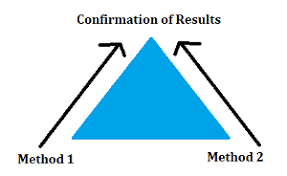
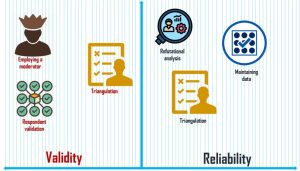
As I previously mentioned, I felt this topic of poor teacher-student relationships was felt amongst more than this interviewee and was going to be a crucial theme moving forward with this research project; however, almost none of the other interviewees spoke about this issue. This led me to learn about the importance of triangulation in qualitative research. By Carter et al.’s (2014) definition, triangulation “refers to the use of multiple methods or data sources in qualitative research to develop a comprehensive understanding of phenomena…[and] has been viewed as a qualitative research strategy to test validity through the convergence of information from different sources” (p. 545). In this article, the authors identify four main types of triangulation, but the one that correlated closest to my research process is called “method triangulation.” This form of triangulation requires the researcher to find at least three forms of data that fall under the same theme for it to be considered legitimate. Thus, my findings would not fall under the classification of a phenomenon or theme that we should continue to explore. While teacher relationships and the student’s perspective on punishment was an interesting part of the interviews that I analyzed, through the use of triangulation, I decided to look for more widespread themes across all interviewees to create a more manageable research question.