To begin my research on the Croft School in Chile, I analyzed multiple transcripts from a student at this elite school. Relatively quickly, I found that this particular student frequently spoke about his negative relationships with his teachers and the persistent disciplinary action they would take on incidents that he deemed minor or a mistake. Once my research team was given the task to come up with common themes within our interview data, I found that teacher-student dynamics were not as prevalent in the rest of our interviews; therefore, this topic lacked validity and credibility to discuss in our research moving forward, prompting me to learn about a concept called triangulation.
The first reference to the interviewee’s teachers was when he was asked by the interviewer who his favorite teacher is. He answered with a short description of this teacher, but one piece to note about his response is that he felt like she was not “hard,” and was more like a friend to him. He also mentioned that “because she was in the school, she like understands what it means to be a student. Like in the school,” meaning she was once a student at this school, as well. This quote first caught my eye because this is the reason why she was his favorite teacher. She understood him and what he was going through as they shared the experience of being a student at the same school. Since this was a broad description of a teacher-student relationship, I read the rest of my student’s transcripts with the intention to find out more about these dynamics. Later in the interview, the interviewer asks “Are you willing to defend your own views when they’re different from others?” to this, the interviewee says, “Yes, but normally if you defend your own views um, you get punished.” This was his first reference to punishment and disciplinary actions, which soon became a recurring theme throughout his four interviews. After being asked to expand on this answer, he explains that “you get the worse punishment. Because when they go to decide your punishment when you do something bad, you go to a meeting with the counsel…if you start to say like I disagree, or I didn’t do anything wrong, he gives you a very harsh punishment, in my opinion.” In the next few interviews, he doubles down on his perception of teachers in the Croft school and how he perceives their disciplinary approach.
One of the most interesting interactions with this interviewee was when he was asked if there were any questions he wished the interviewer had asked. In response, he said “I think I would like if you had asked how do your teachers treat you. Do your teachers treat you with respect?” When prompted with a broad, open-ended question, the interviewee immediately brought up teacher relationships and was hoping to talk about his experiences more, on top of the other questions where he would frequently bring the subject back to disliking his teachers. In the following interviews, he talks more about teachers’ lack of understanding of students and feeling there are no personal connections between staff and students.
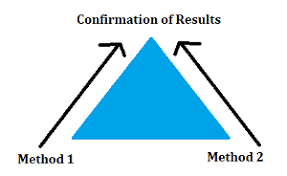
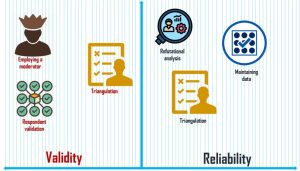
As I previously mentioned, I felt this topic of poor teacher-student relationships was felt amongst more than this interviewee and was going to be a crucial theme moving forward with this research project; however, almost none of the other interviewees spoke about this issue. This led me to learn about the importance of triangulation in qualitative research. By Carter et al.’s (2014) definition, triangulation “refers to the use of multiple methods or data sources in qualitative research to develop a comprehensive understanding of phenomena…[and] has been viewed as a qualitative research strategy to test validity through the convergence of information from different sources” (p. 545). In this article, the authors identify four main types of triangulation, but the one that correlated closest to my research process is called “method triangulation.” This form of triangulation requires the researcher to find at least three forms of data that fall under the same theme for it to be considered legitimate. Thus, my findings would not fall under the classification of a phenomenon or theme that we should continue to explore. While teacher relationships and the student’s perspective on punishment was an interesting part of the interviews that I analyzed, through the use of triangulation, I decided to look for more widespread themes across all interviewees to create a more manageable research question.