
Exploring the Characteristics of an “Elite” and “Globally-Oriented” Curriculum
Everdeen, like many other elite schools around the globe, prides itself on having an individualized, well-rounded curriculum paired with innovative instructional techniques that, together, contribute to the development and the success of each student. One theme that is woven throughout the curriculum, both academic and extracurricular, is establishing a global outlook among the students. This helps to prepare students for successful engagement with the international community at both universities abroad and in the global job market after graduation. To get a glimpse into the academics at Everdeen, I examine the “Curriculum” section on the official school website. Everdeen educates all age groups from “Early Learning Centre” to “Senior School,” and each school has a set of designated practices and goals that are specific to the age they serve. That being said, Everdeen uses the Australian Curriculum as its framework for all levels.
The Early Learning Center, which serves ages three to five, is focused on exploration and the development of a love of learning. This is accomplished through activities that encourage creativity, develop social skills, and contribute to the emotional wellbeing of the child. Given their young age, the curriculum is “play based,” but is said by Everdeen to include “Language and Literacy, Numeracy, Social Thinking, and Diversity and Inclusion.” The values of the school which include trust, unity, and respect are instilled in the children from a young age. Another important feature of the Everdeen school system that they aim to establish at the Early Learning Center is the relationship between the school and the families of the children. Through this partnership, educators are able to learn the interests, needs, and dispositions of each student and cater the learning process accordingly.
In the Junior School which goes up to year four, the values introduced in the Early Learning Center continue to be emphasized with new age-appropriate goals introduced such as decision making, self-sufficiency, problem solving, and independence. At this level, the Explicit Teaching Model, which becomes a trademark of future levels of schooling at Everdeen, is introduced. The explicit teaching model has two main components: the warmup and the “I Do, We Do and You Do.” The warmup is a small chunk of time, about ten or fifteen minutes at the beginning of class, in which students receive instruction that is centered around foundational skills in the given subject. The “I Do, We Do and You Do” component represents the transition from reliance on one’s teacher to independence. First, the teacher gives the lesson, next they work collaboratively to understand and apply the concepts learned, and finally the student is able to engage independently with the material.
As a whole, the goal of the explicit teaching model is to “move learning from short-term to long-term memory, so students effectively retain what they are learning” which also prepares them to apply what they have been taught to various future contexts. This system, which promotes independence, allows for students to work at paces and through mediums that work for them rather than assuming a one size fits all approach to instruction. This individualized approach can also be seen in the nature of assessments which, rather than setting a universal standard, provide an opportunity for each student to look at their results and set personal goals for feasible improvement.
At the middle school level, the parallel education model that Everdeen is well known for begins. In this model, boys and girls take classes separately from one another. This model is based on evidence that, especially in this formative period of years five through eight, boys and girls have different social, emotional, and educational needs. By separating the sexes, the school attempts to cater to the distinct needs of each group and to promote “learning, personal growth and self-confidence” through creating an environment where “intellectual risk-taking can occur and optimal academic outcomes can be achieved.” The curriculum at the middle school level begins to take on a global outlook. This can be seen, for example, through the language program which teaches Chinese to years five and six and then provides the options of Chinese, French, and Japanese for years seven and eight. Beyond this, the aim of preparing students from the globalized world can be seen in “Everdeen Startup,” an entrepreneurship program, which teaches “work-ready skills” like teamwork, digital literacy, critical thinking, and presentation.
At the pre-senior level, year nine, the parallel education model continues, but the students are provided more occasions to socialize with the opposite gender. Opportunities to strengthen one’s global outlook are further expanded at the pre-senior level through the option to engage personally with the international community. Student often use their Chinese language learning skills to navigate time at the Everdeen International School in Tianjin, China or they can opt for alternative short off -campus trips to locations such as the United States. At the pre-senior level, the curriculum features a blend of compulsory subjects— English, Mathematics, Science, Humanities and a language— and elective courses students select based on their personal interests. This prepares students to be able to successfully navigate the flexibility of the VCE program that students follow in Senior school, years ten through twelve.
The VCE, short for Victorian Certificate of Education, is the credential that students in Victoria receive for completing secondary education, and it allows them to pursue employment or higher education after graduation. Typically, the requirements for VCE are covered in years eleven and twelve, but Everdeen takes a three-year approach which allows for the required courses to be more spread out and therefore feel more manageable. In year ten, students work with the Everdeen staff to pick a VCE program that suits their individual talents and interests, satisfies their needs, and is appropriate given their academic record. Success in VCE is measured by the ATAR, or Australian Tertiary Admission Rank, which ranks students on a scale from zero to 99.5 to indicate each student’s position relative to all the other students in their age group. In 2020, the VCE results published on Everdeen’s website indicate that the passing rate for the VCE was one hundred percent. Fifty-one percent of students attained an ATAR of ninety and above, placing them in the top ten percent in Australia. Beyond that, a solid thirty-two percent of students attained an ATAR of ninety-five and above, placing them in the top five percent of Australia.
In addition to strong academic studies, co-curricular engagement is also highly encouraged in the Senior school. This takes a variety of forms from sports, which are compulsory, to art, chess club, music, and outdoor activities. Beyond these typical high school offerings, though, Everdeen also offers co-curricular activities that will build the cultural capital of their students and put them at a competitive advantage in the international work force. Such opportunities include public speaking and debating, commerce, and social justice club.
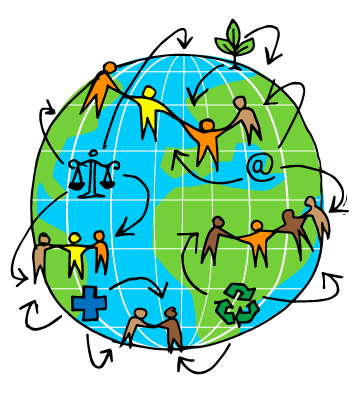
Social justice is presented as a significant focus of the Everdeen school, with the “obligation to develop high-achieving students who are connected globally to each other and the communities in which they will serve” at the center of their mission. Social justice curriculum is taught with a focus on generosity, protection, forgiveness, inclusion, sharing of resources, and more. With these values in mind, students are considered empowered to change the world around them.
As a whole, the curriculum at Everdeen is designed to ensure success among all students both during their time at the school and in their future endeavors. This is accomplished in several ways such as individualized learning approaches, the explicit teaching model, the breadth of co-curricular opportunities, and more, all of which help the students grow into a well-rounded individual and gain cultural capital. This development is furthered by the focus on the global which is emphasized in the classroom through learning about international social justice, studying various foreign languages, and exploring unique cultures around the globe as well as through opportunities to travel. Together, these elements of the curriculum serve to create a student body of well-educated, elite critical thinkers and global citizens.
https://medium.com/@aprilrinne/10-resources-to-cultivate-inspire-global-citizenship-a077d2e351df