As I mentioned in my first blog post that discussed the lack of socioeconomic and ethnic diversity at The Croft School, one of my main worries was that Croft students are not able to experience this diversity therefore creating a superiority mindset. This has in fact resulted in larger societal outcomes such as further class reproduction with elites holding the top power positions in Chilean society. Thus, students at The Croft School, as a result of a lack of experiences with people from diverse backgrounds, has led to a misunderstanding about the value of money and hard work thereby developing a “culture of moral superiority” (Ilabaca & Corvalán, 2023).
So what does a “culture of moral superiority” mean, and how does it manifest in elite schooling? Moral superiority is defined as a feeling of being “higher up” and more valued than others in society (Ilabaca & Corvalán, 2023). This feeling may stem from the jobs that elites hold, or the schools, such as The Croft School, that they attend. However, it is within the hidden curriculum of these elite schools where one finds moral superiority being preached to their students. For example, one of the ways that elite schools do this is through some of the messaging they give to their students such as “Serve the Country” or “Be the best in all areas” (Ilabaca & Corvalán, 2023).
This idea of being the best in all areas or going and serving the country, while it can look nice on the surface, actually has a lot more meaning. While many elite schools, such as the Croft School, pride themselves on global citizenship education and engagement with those in their community, this can cause more harm than good. Throughout the course of reading the interviews many students touched on how they felt as though the community service was superficial. It almost felt as though the community service was more so benefiting the students and their resumes then it was actually helping those in the community who they were “serving.” The positionality of these elite students, who are in positions where they can create a social change, and yet aren’t really doing so, goes to show how “minimal” these acts of community service can be.
One of the students interviewed spoke about how the activities they were doing felt minimal, and while they have the resources to make a substantial impact in these communities they still aren’t doing so. I think that the “minimalist” effort that is being made with community service in these schools is reflective of how elites interact with other groups in society who may be from different socioeconomic backgrounds. This “culture of moral superiority” is bred from the fact that they are “too good” to contribute at a high level and be highly contributing to these communities. I think that if these schools who pride themselves on global citizenship education actually want to make a change in the world then the first step should be to actually make the community service meaningful. This would be a way of addressing and diminishing this superiority mindset.
One of the other ways in which this “culture of moral superiority” is fostered is through the students’ and their families’ transformation of economic capital into social capital. The economic capital of these families to even gain access to these prestigious schools sets their children apart and gives them an advantage from the get go. Roughly 60% of students from elite schools in Chile will go on to access four of the most prestigious careers – economics, engineering, law or medicine in two of the most elite universities in Chile (Ilabaca & Corvalán, 2023). Thus, the economic capital is transformed into the social capital by gaining entrance to these elite universities (Bourdeiu, 1996). Aside from the economic and social capital that the students hold, the school also fosters symbolic capital. Upon walking into elite schools in Chile one of the first things that you will see are displays of former students from the school who then went on to hold prestigious positions within society (Ilabaca & Corvalán, 2023). Therefore, not only is this a mindset of superiority, it is an expectation that is promoted by the schools. When things such as success in society are an expectation, students will then begin to view it as a right- anything less than the utmost success is viewed as a failure, and that is a problem.
Ilabaca, T., Corvalán, J. (2023). The School Segregation of the Chilean Elites and Its Consequences in the Socialization of Class Subjectivities. In: Dupriez, V., Valenzuela, J.P., Verhoeven, M., Corvalán, J. (eds) Educational Markets and Segregation. Evaluating Education: Normative Systems and Institutional Practices. Springer, Cham. https://doi.org/10.1007/978-3-031-36147-0_11
Bourdieu, Pierre: The State Nobility: Elite Schools in the Field of Power. Stanford, CA: Stanford University Press, 1996.
Sankofa International College creates a community that challenges traditional roles of class in education, fostering a unique culture of unity and social consciousness. Sankofa International College is a school in Ghana where half of the students come from at least some degree of privilege, and the other half are orphans who are native to different countries across Africa. The school’s culturally and socioeconomically diverse makeup fosters a clear sense of cultural and social awareness in its students.
At many elite academic institutions, students are often somewhat ignorant of their privilege. Social class is frequently seen as a taboo topic, and there is a discomfort around conversations about economic disparity and class differences. Students at Sankofa, though, deviate from this norm, approaching conversations with interviewers about class openly and comfortably. But what is it about Sankofa that encourages students to engage in such dialect? This openness reflects a distinctive culture at Sankofa, where students are encouraged to embrace those different from them. When interviewed about themselves, students welcomed questions about not only their own class standing but also class dynamics within the school, especially as a result of the orphan integration program.
At Sankofa, all students receive the same education, regardless of their background. The school follows an IB curriculum that prioritizes global-mindedness, collaborative and creative thinking, and academic excellence. There is a strong emphasis placed on global citizenship, with a specific focus on Pan-Africanism. As Sankofa hosts students from 23 different countries across Africa, African unity and pride are a cornerstone of the school.
Sankofa takes significant steps to integrate orphaned students with the rest of the student body, providing every student with the same devices, uniforms, housing, and food to minimize the factors that may distinguish students based on their backgrounds. The school discourages conversations—specifically negative conversations—about class but encourages students to educate themselves on different backgrounds. A prime example of this is Sankofa’s bonding orientation program before the school year begins, which helps Ghanaian students to learn about orphaned peers, encouraging students to move beyond preconceived biases to build meaningful relationships and bridge the gap between them.
One Sankofa student talked about how the orphan integration program influences students’ relationships with class. She referred to the program as a “leveler,” creating a sense of unity between students from both impoverished and affluent backgrounds. She explained that building close relationships with peers from disadvantaged backgrounds changes the way that wealthier students think about money and privilege. She discussed how this exposure to different experiences helps students to see beyond their differences, stating that “[they] become so close that [they] sort of forget that there is this difference between the two of [them].” Instead of flaunting their wealth or using it as a social clutch, many well-off students feel a desire to support their less fortunate peers by bringing them home for holidays.
This culture of social responsibility is further cultivated through the school’s mandatory community service requirements. Though service requirements are common at private institutions, Sankofa’s compulsory two-year fundraising project takes this further by encouraging students to truly immerse themselves with underprivileged communities. Unlike most traditional service requirements that are often seen as a box to check, students at Sankofa build intimate and long-lasting relationships with the communities they serve. These relationships provide them with a complex and intricate understanding of diverse cultural and economic backgrounds, helping them to develop an understanding of the world beyond their own environment. Students expressed that the service work they did through this program helped them to gain a greater cultural awareness as well as a recognition of their own privilege and societal standing.
Students credited the orphan integration program, the emphasis on Pan-Africanism, and the school’s foundation of community service for helping them to develop a sense of cultural consciousness and social responsibility, reflecting the school’s goals of Pan-Africanism and global citizenship education. An overarching theme amongst the students interviewed was a desire to use the skills they obtained at Sankofa to pursue higher education in the United States with the intention of returning to Ghana to contribute to the development of the country as well as the continent of Africa as a whole. Sankofa shapes students to look at social class from a new lens, empowering them to actively contribute to the growth and development of African society.
According to the Australian Bureau of Statistics, in 2015, roughly 11 million adults in Australia regularly participated in recreational sports (Australian Bureau of Statistics, 2015). With a national population of 23 million at the time, this means that approximately 47% of Australia’s adult population played sports. This raises the question: why do so many people play sports, and what is it about sports that drives participation?
To begin, being physically active often reflects an interest in maintaining physical fitness. While fitness alone can generate social capital, sports—especially team sports—offer a sense of belonging. Teams provide opportunities for friendship, leadership, and personal growth. As sports become more competitive, athletes also learn to navigate adversity, thereby developing resilience. Reflecting on the true impact of sports, I’m struck by how transferable these skills are to the workforce. Resilience, leadership, perseverance, and social competence are all qualities that employers highly value.
The social capital cultivated through sports can open doors to upward mobility. However, this raises concerns about access. Those with the financial means to participate in sports, who can afford equipment, transportation, and membership fees, gain an advantage in developing these desirable qualities. On the contrary, individuals without the necessary resources are often excluded from these opportunities, which may affect their ability to present themselves as competitive candidates in the job market.
The Australian Bureau of Statistics also notes that participation in sports tends to decrease with age (Australian Bureau of Statistics, 2015). One possible reason is that the workforce begins to fulfill some of the roles that sports once played: offering a sense of purpose, opportunities for growth, and the development of resilience in the face of challenges. As I compare trends in sports and workforce participation across age groups, the parallels become more apparent. However, still, it’s still important to acknowledge that many adults must work to support themselves and their families in Australia’s society, often leaving little time or energy to participate in recreational sports. Physical limitations may also prevent adults from participating in sports at the same level they once did.
While sports can offer mobility and opportunity to younger individuals, I’ve considered how those same benefits tend to decrease with age, and I wonder if that decrease is tied to the workforce being a filler of the void that sports once were to athletes? The mobility that sports offer to younger people is greater than the mobility that sports offer people when they are older people. For example, students can leverage sports in order to get into top universities and position themselves to get a higher-paying job in the future as a result.
In conclusion, sports in Australia are an indication of class, and being able to participate in sports positions younger generations to go into the workforce.
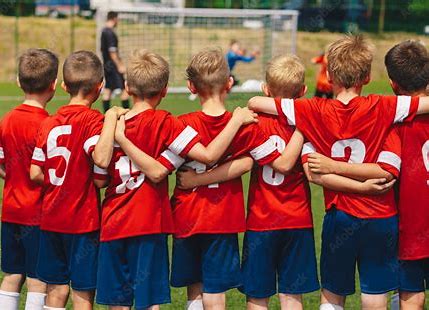
Today’s society gives status to people who score goals in soccer games, run fast on the track, or win the most tennis matches. In effect, our world is defined by excellence and a need for people to “be the best” as a result of physical talent and skill. According to the University of San Diego, there are mental and physical health benefits to participating in sports (University of San Diego, 2023). However, I would argue that through my research on Everdeen Academy, social benefits come along with being an athlete, particularly at elite schools. Everdeen Academy places a significant emphasis on the importance of physical education for all of its students. Their school policy of making sure all students participate in athletics made me think about how physical health and athletic ability are a form of capital.
If children excel at sports, then children at Everdeen are rewarded. One student from Everdeen shared how Everdeen has general excellence scholarships, which are based on the student’s academic performance and their sports performance. By rewarding athletic performance through scholarships, students not only learn to associate excellence with athletic performance, but they also associate money with being something they should want to desire. Not to mention, these students are particularly elite students who come from high-income families and do not necessarily need the scholarships, but they are taught to appreciate the pursuit of money, which is in itself an elitist concept that reinforces both elitism but also ideologies related to wealth and status.
Through reflection, Everdeen’s sports requirement for their students has made me think about how another way that physical capital can reinforce generational class disparities can be through the soft skills students develop in sports. Teams foster community and the development of soft skills relevant to careers, such as teamwork, resilience, perseverance, and communication. By requiring students to participate in sports, the school not only recognizes and encourages the value of teamwork and physical hard work, but the students learn how to follow rules, communicate, and act for others over themselves on their teams. These daily practices are also inherent skills needed in powerful, high-income jobs in the real world. Reinforcing the practice of teamwork at Everdeen is an example of how sports perpetuate elitism and wealthy ideologies in their students that non-elite institutions do not have.
Sports and athletics play an essential role in the Everdeen School experience. Students at the Everdeen School are required to participate in sports, making it a key part of many students’ social lives as well as their developing identities. The required nature of sports also situates athletics as a key value of the Everden School. Although they are elite in an academic context, they also further their eliteness through extracurricular activities. The school offers many different sports at eight different levels. Each season, the school offers countless options for sports students can take part in, ranging from swimming and sailing in the summer to basketball and soccer in the winter, to golf and rugby in the spring. As students get older and progress through their Everdeen education, the sporting options become more expansive, allowing students to follow their specific interests.
Sports was one of the key topics in the interviews that were conducted with Everdeen students. When asked about sports at Everdeen, the interviewed students discussed the key role that sports and athletics play in defining their daily routines and social circles. Athleticism at Everdeen works to further enhance the elite nature of the school, creating smaller elite social circles within an already elite institution. Elitism grows and creates divides within the student body by including some and excluding others. Furthermore, it continues to allow students to develop their cultural and social capital through experiences and increased social connectivity. Sports teams create networks among students and alumni that provide students with access to a more robust social life at school and a more interconnected network after graduation. Although sports are required for all students, those who are more talented and take it more seriously are privy to a more elite social circle and experience.
In one of the student interviews, a 16-year-old describes the ways that her social life is defined by her sports teams by saying, “All of my friends have always been athletes.” For this student, it is not just about participating in sports but also being a self-identified “athlete” that distinguishes her and her friends from other students at their school. Although all students participate in sports, not all students identify with the label of being an athlete. She continues by saying, “it tends to be kids who do sports are more civilized with other kids who do sports.” It’s clear through her experiences and her interviews that her time as a member of the crew team has shaped her social circles and allowed her access to a certain elite status at Everdeen. Furthermore, her social circles are defined by students who are athletes, showing that sports and athletics are dominant factors in Everdeen’s social scene.
Another student who was interviewed discussed his relationship with sports at Everdeen. When asked to describe himself to the interviewer, he immediately discussed his role on the school’s football team and said, “[I’m] A bit of a sport—sportsman. Apart from that, nothing really.” When he was asked if he did any other extracurricular activities, he said, “I don’t really do anything else, like, I can’t do instruments or anything like that.” Like the first student I discussed, this student also feels that playing sports and being an athlete are key parts of his identity and place in the school community. It is clear through these quotations that being an athlete is one of the sole ways that he identifies himself, with little else to talk about. This sheds light on the priorities of students, but more specifically, athletes at Everdeen, as it can serve as a somewhat limiting factor of students’ identities.
Being a part of a sports team as a form of social capital is also a pattern I’ve noticed during my time at Colby. Like Everdeen, Colby is a highly elite institution where sports play a key role in the experience. Although Colby does not require sports, they are essential to the social scene because about one-third of Colby students are athletes. The mere amount of student-athletes at Colby creates a social culture that is dominated by student athletes. For most athletes at Colby, their team is who they spend most of their time with and, therefore, make up their primary social circle. Upon arriving at Colby as a non-athlete, I immediately felt as though I was behind socially due to not being on a sports team and not having an immediate social circle.
At both Colby and Everdeen, being a student-athlete grants students status and access to a social scene that boosts them above the rest of the student body. This allows students who hold this position to gain social capital in a schooling setting, which often sets them up for social capital that transcends schooling.
The social capital that is seen among athletes can also be converted into other kinds of capital, such as economic capital. Although the Everdeen School does not provide financial aid to students, they do have a scholarship for “excellence” that encompasses athletics. This once again clarifies the priorities of the institution and allows students who hold the identity of “athlete” to advance and gain access to elite education while other students are not afforded the same opportunities. Overall, at elite schools, especially Colby College and Everdeen, being an athlete plays a key role in gaining social capital and status as well as economic capital.