
Discovering The Global Citizen in Me
What is global citizenship? These were the first four words that popped in my head when I first read 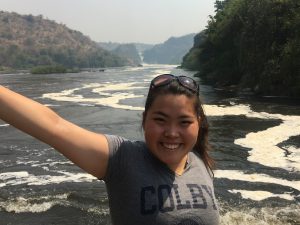 the interviews from Everdeen. Amidst the confusion, the next thing to hit me after these four words was emotions —- a mix of excitement and jealousy. Maybe it was because of the realization that, amidst my confusion a high schooler on the other side of the globe could not only define it, but also apply it. Maybe it was because I could not understand why there was such an emphasis on global citizenship within the research. Maybe I was just impressed that a high schooler named Jake went all
  way to Papua New Guinea to contribute as a global citizen (which I have never done or even thought of). Or maybe this entire research project has pushed me to confront whether or not I am an active global citizen.
This moment was powerful because I realized that these six elite schooling systems had this type of citizenship embedded and thus promoted within their mission statements. Yet this type of citizenship across the many interviews I have read made me feel as if they came across a bit like the superior trying to help out the needy through building houses or raising money for charity. The main reason why I missed out on such an opportunity to discover global citizenship was because I am a product of my local public schools. This also forced me to confront this clear lack of conversation about global citizenship within my public school education.
This sentiment is what educator and theorist Fazal Rizvi discusses in his article about global interconnectivity. He emphasizes that in order for students from individual nations to fully comprehend their history and current societal systems, they need to address how their national 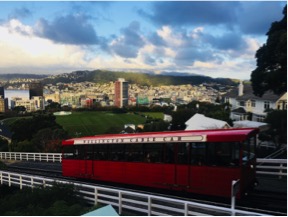 curriculum intertwines with experiences of other countries. A student, through Rizvi’s described, would not only gain insight of what is occurring within their own nation, but also gain this notion of their identity as a global citizen.
Yet from the students at Everdeen, I learned a lot about what is a global citizen and how the definition is not just “someone who is aware of and understands the wider world” (Oxfam, 2018) rather it is how each student had created their own definition through their experiences. For example, Ruby from Everdeen believed global citizenship was present through global charities whereas Harrison and Violet from Everdeen believed global citizenship was fostered through their travels to other countries in the world. Within these conversations, I found myself more comfortable with the idea of what exactly a global citizen is. I realized that I was slowly discovering the global citizen in me.
Similar to Harrison and Violet, I have traveled far and wide for a person in their early 20s (I mean how many people can say they have already been to 5 continents). I’ve been to countries such as Uganda and Western Samoa that have made me aware of my social class within this 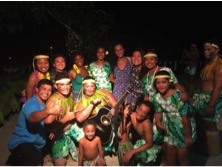 world. It has also made me aware of this “superiority” complex where we use globalization as a means to go to an impoverished country to
 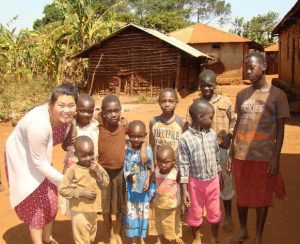 “help” but really make no lasting impact or consider more permanent options. I also have realized the privilege that I hold going to a world-class private elite university that provide the opportunities and resources that allow me to go to all corners of the Earth are just next door. So after all this time, I learned that analyzing this research was not to make me feel like my education was lackluster, instead it pushed me to discover the global citizen within me.
References:
What is Global Citizenship?, Oxfam 2018