
Am I Elite?: A Reflection
If you had asked me 3 months ago what it means to be elite, I would have told you a similar, albeit less well-formed, answer that I would give today about wealth and privilege. However, if you had asked me if I was elite, my answer would be a hesitation but ultimately followed by “no”. After studying the true definition of what it means to be this seemingly elusive term of elite, I realized that regardless of my position before I got to college, the sheer factor that I attend this institution and will earn a bachelor’s degree from Colby College makes me irrevocably ELITE.
I spoke in my first blog post about the strange space I filled as a not wealthy student at a expensive, Catholic high school, where I was unsure of my status based on the relative wealth I possessed based on the peers I was surrounded with. And although upon entering Colby I did not, and still do not (college student problems), possess the economic capital that many of my classmates have, with a diploma from Colby, I now possess the social and institutional capital that comes with the cap and gown including networks, knowledge, and prestige.
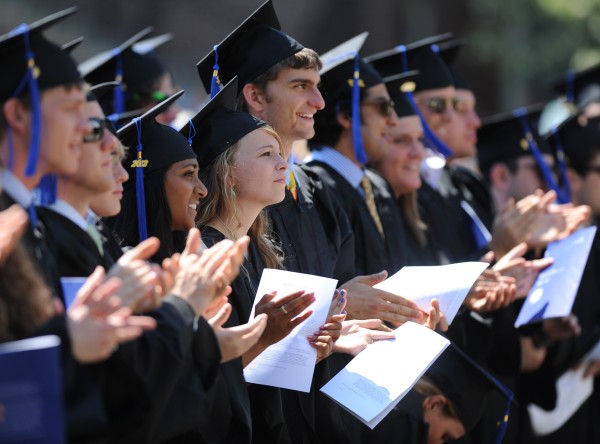
As a senior, this eliteness of a Colby degree is not something I am complaining about… In the competitive job market of the “real world”, an elite education is what puts you above the rest of the applicants. So why is being elite so bad? Is there a negative stigma that comes with being elite that stems from elites being oblivious to their dominance? So are we to think that because we are aware of our privileges that we are somehow exempt from the elitism? It’s impossible to deny our eliteness as we sit in a classroom situated on a beautiful campus paying $60,000 a year to be here. And even though I am on financial aid and have student loans totaling a scary amount of debt, my eliteness gives me the confidence and assuredness that I will pay back those debts and be okay. And at the end of the day, isn’t that exactly what elite means??
Once I stopped trying to deny my eliteness, I realized that I can embrace it, learn from it, and do the best I can to use it for good. I feel particularly responsible to use my eliteness to further my successes because of my dad and his background. When my dad was 7 years old, his father died. His older brother and sister were already out of the house because they were much older than him. This left my dad, a young child, as “the man of the house”. With only one parent working, my dad and my Memere struggled financially. So, when my dad was 18 he dropped out of high school to join the navy. With just a GED, my dad entered the work force in the federal aviation administration branch of the government. Through hard work and perseverance, my dad now is able to provide for my family and prides himself on this. Because my parents have sent me to Colby, I feel a sense of responsibility in producing economic capital to pay my parents back for all they’ve done and more.
 Because this project involves so much personal participation for us, especially for those who have to form connections with students through interviews, ending our work without ending the project is a little challenging. In contrast, in my English seminar in queer theory this semester, I designed my own research questions, workshopped the paper with classmates, and eventually came to a satisfactory conclusion through my exploration of the poetry I was studying. Though we may have answers to our immediate questions about Chile and Croft School, we don’t get to stay with Adam to see the end result of this whole, multinational project. How do all these schools perform the same and different functions? What is global citizenship, anyways? Ending the semester without getting closure on these guiding questions is a little tricky.




 I was the interviewer in my group, which meant that I had the fortune of having direct contact with Kostas (the student from the Croft School). We were incredibly lucky to have been paired with such a responsible student. He was online on time, never rushed through the questions, asked for clarification when he needed it, and overall was just a really fun, intelligent, engaging guy to talk to. Hearing some of my classmates’ experiences I know that this wasn’t necessarily the case across the board, but my interaction with Kostas could not have gone smoother. I can’t help but be in awe at how small technology has made this world. Kostas was thousands of miles away, and yet we talked about everything from the breed of his dog to Donald Trump’s election like he was right in the next room. As Tyson says, we are all so fundamentally interconnected. Particularly given the climate of this increasingly globalized world, those of us fortunate enough to have the technological means have opportunities to make incredible transnational connections in a way that would not have been possible 20 years ago.

 The Croft School is homogenous in a number of ways. First, the school provides a standardized, homogenous education to all its students; the curriculum is rigid and does not give students very many opportunities to take electives. Second, the social class standing of students at the Croft School is homogenous since most come from upper class backgrounds. Third, the Croft School fosters a particular environment, and upholds specific values, in order to develop a certain type of student — one that is well-rounded, responsible, prepared to attend university anywhere in the world, and equipped to become a trustworthy leader in the future.
