How have we forgotten her,
the dreamy-faced girl
on this strange evening
at her grandparents’ farm?
How have we forgotten
the mad aunt
who rejected her
for having such blue eyes?
Both are difficult to make out
at first, the aunt
standing in twilight
by the kitchen stove,
the niece watching how she stares
and turns to go upstairs
to her room, thinking then
she sees a woman
inside the old woman. And so,
the voices of younger sisters
and neighbor girls coming through
the window from the far
field, she rises
to follow the aunt,
and finding the tall closed
barrier between them contains
a small keyhole, kneels down
to look right through,
searching she does not know
for what—a secret woman
combing out her hair?
The photograph of a man
placed on a throne
of bureau and doily?
In that door’s eye she sees
old repetitious pears across a wall
and, reaching inside the small,
bare bureau to pull
a nightdress out,
her naked aunt,
now turning to show
in the very place where she
herself has just begun
to darken, a gray, matted
and forgotten V. This is the secret
the niece carries into the hall
with old furniture
losing itself in the dusk,
and into her own dim
room with its pattern
vanishing on the wall,
and deep into her brain
where she will never forget
the color that will one day
be her own color.
From some other world
her sisters call and call
her name, which she hardly knows,
lying there with both hands
between her legs, listening
to the shivering trees.
Going uphill toward her house in snow so deep
the road is gone, the lover walks the tops
of fence posts. Thoughts about his dying child,
or how to keep the farm after the fire
never enter his mind. Not that he’s so
preoccupied with balancing himself
in his workboots, but that the deaths of child
and farm haven’t yet happened, couldn’t happen
on such a luminous night, the gauzy moon
just rising over her father’s roof as if
to guide him there. The only howling comes
from her dog, Shep, who has already heard
his lurching steps, and perhaps even smells
the hurt bird he holds in his coat, a gift
he can hardly wait to give. No need to hurry.
Soon, farm boy become impresario,
he’ll lift his goat back from the kitchen table
and leave a creature there, dragging its wing.
Soon, cooing softly at its box, she’ll shoo
her younger sisters out and shut the door
and draw him close, finding in his grave, dark eyes
how well they’ve known each other all along.
Soon their long climb together will begin.
Climbing on top of him and breathing
into his mouth this way she could be showing her
desire except that when she draws back
from him to make her little cries
she is turning to her young son just
coming into the room to find his father my brother
on the bed with his eyes closed and the slightest
smile on his lips as if when they
both beat on his chest as they do now
he will come back from the dream his is enjoying
so much he cannot hear her calling his name
louder and louder and the sons saying get up
get up discovering both of them discovering
for the first time that all along
he has lived in this body this thing
with shut lids dangling its arms
that have nothing to do with him and everything
they can every know the wife listening weeping
at his chest and the mute son who will never
forget how she takes the face into her hands now
as if there were nothing in the world
but the face and breathes oh
breathes into the mouth which does not breathe back.
Again it is the moment before I left home
for good, and my mother is sitting quietly
in the front seat while my stepfather pulls me
and my suitcase out of the car and begins
hurling my clothes, though now
I notice for the first time how the wind
unfolds my white shirt and puts its slow
arm in the sleeve of my blue shirt and lifts them
all into the air above our heads so beautifully
I want to shout at him to stop and look up
at what he has made, but of course when I turn
to him, a small man, bitter even this young
that the world will not go his way, my stepfather
still moves in his terrible anger, closing the trunk,
and closing himself into the car as hard as he can,
and speeding away into the last years of his life.
It is not what,
carrying that
afterthought of legs,
he runs to, and not
what his interrogative, foldy
face detects
on the floor, because
it is always changing, always
turning out to be
some other bug
or bush his nose wanted,
leaving his tail
smoldering
behind, and
it is never,
after all that scratching
and lifting of leg,
enough; not even
after he joins
the dinner party, smiling
upside-down
and rolling
his testicles, not even
in his whimpering sleep,
dreaming in the tips
of his paws
that he is chasing
it, that very thing
which, scratching,
he can’t quite
reach, nor sniffing find,
because in the perfect
brainlessness of dog,
he will never know
what it is.
The main streets of towns
don’t go uphill,
and the houses aren’t
purple like that
tenement with one eye
clapboarded over. Never mind
how it wavers
backward, watching you
try to find second gear.
You’ve arrived
at the top of the town:
a closed gas station
where nobody’s dog
sits, collarless,
and right next door
a church that seems
to advertise Unleaded.
Who’s hung this
great front door
above no steps? No one
you’d know.
And what suspends
the avalanche
of barn? Nothing,
and you will never
escape the bump,
lifting shiny with tar.
And you won’t
need the sign that says
you are leaving Don’t Blink,
Can’t Dance,
or Town of No.
There is a moment when they turn
into the ads that are meant for them
and are happy, a moment when the fat woman
thinks of melting her body away in seven days,
and the shut-in imagines big money
without leaving his home. Slowly,
as if for the first time, they read
the italics of their deepest wishes: Made $5,000 in first month,
Used to call me Fatty, and all
the people with no confidence,
no breasts, or hair in the wrong places,
find pictures of the amazing results
in their own states. They have overlooked
the new techniques and the research
of doctors in Germany, they know that now,
suddenly so pleased they can hardly
remember being sad in this, their moment,
before, just before they lie back on the beds
in their small rooms and think about how foolish
they are or how farfetched it is or anything
except the actual photographs of their dreams.
Once, on the last ice-hauling,
the sled went through the surface
of the frozen pond,
pulling the son under
the thrashing hooves
of horses. Listening for himafter all her tears was perhaps
what drew the mother
into that silence. Long afternoons
she sat with the daughter,
speaking in the sign language
they invented together,
going deaf to the world.
How, exactly, did they touch
their mouths? What was the thought
of the old man on the porch
growing so drunk by nightfall
he could not hear
mosquitoes in his ears?
There is so much no one remembers
about the farm where sound,
even the bawling of the unmilked cows,
came to a stop. Even the man’s name,
which neighbors must have spoken
passing by in twilight, on their way
to forgetting it forever.
In the only story we have
of Shorty Towers, it is five o’clock
and he is dead drunk on his roof
deciding to fetch the cows. How
he got in this condition, shingling
all afternoon, is what the son-in-law,
the one who made the back pasture
into a golf course, can’t figure out. So,
with an expression somewhere between shock
and recognition, he just watches Shorty
pull himself up to his not-so-
full height, square his shoulders,
and sigh that small sigh as if caught
once again in an invisible swarm
of bees. Let us imagine, in that moment
just before he turns to the roof’s edge
and the abrupt end of the joke
which is all anyone thought to remember
of his life, Shorty is listening
to what seems to be the voice
of a lost heifer, just breaking
upward. And let us think that when he walks
with such odd purpose down that hill
jagged with shingles, he suddenly feels it
open into the wide, incredibly green
meadow where all the cows are.
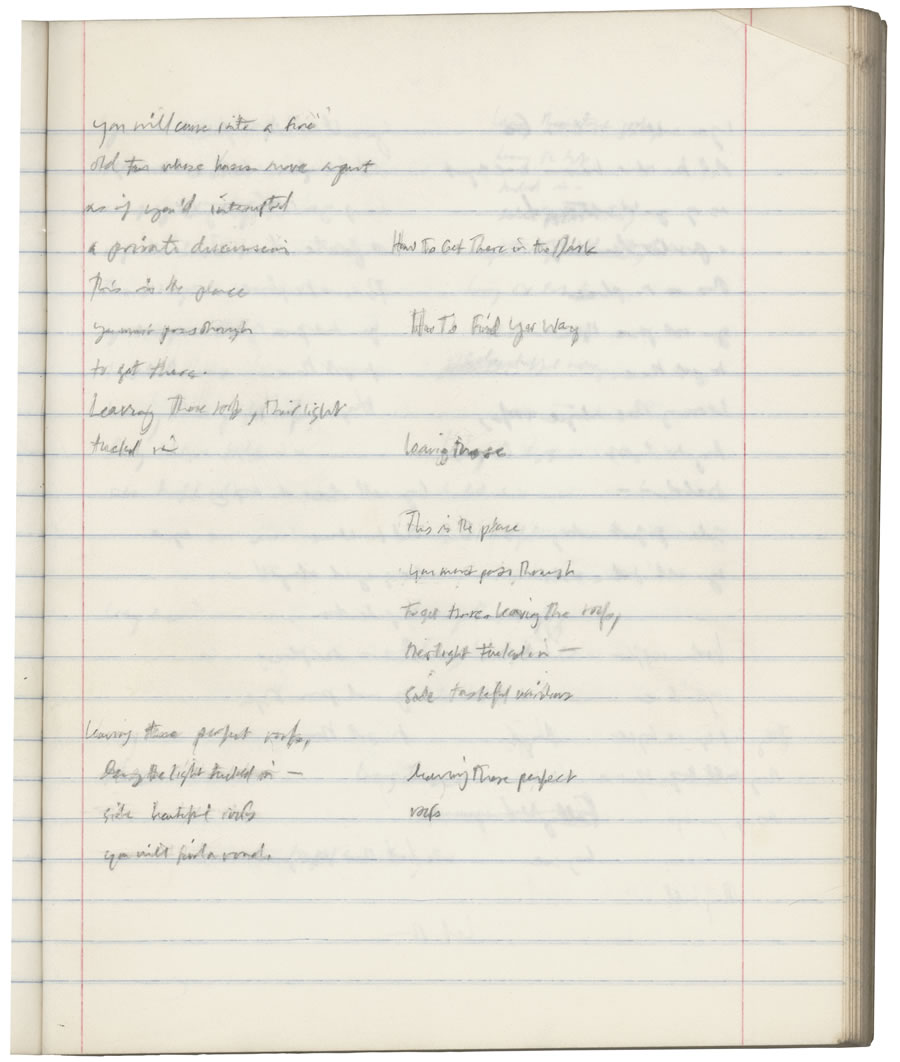
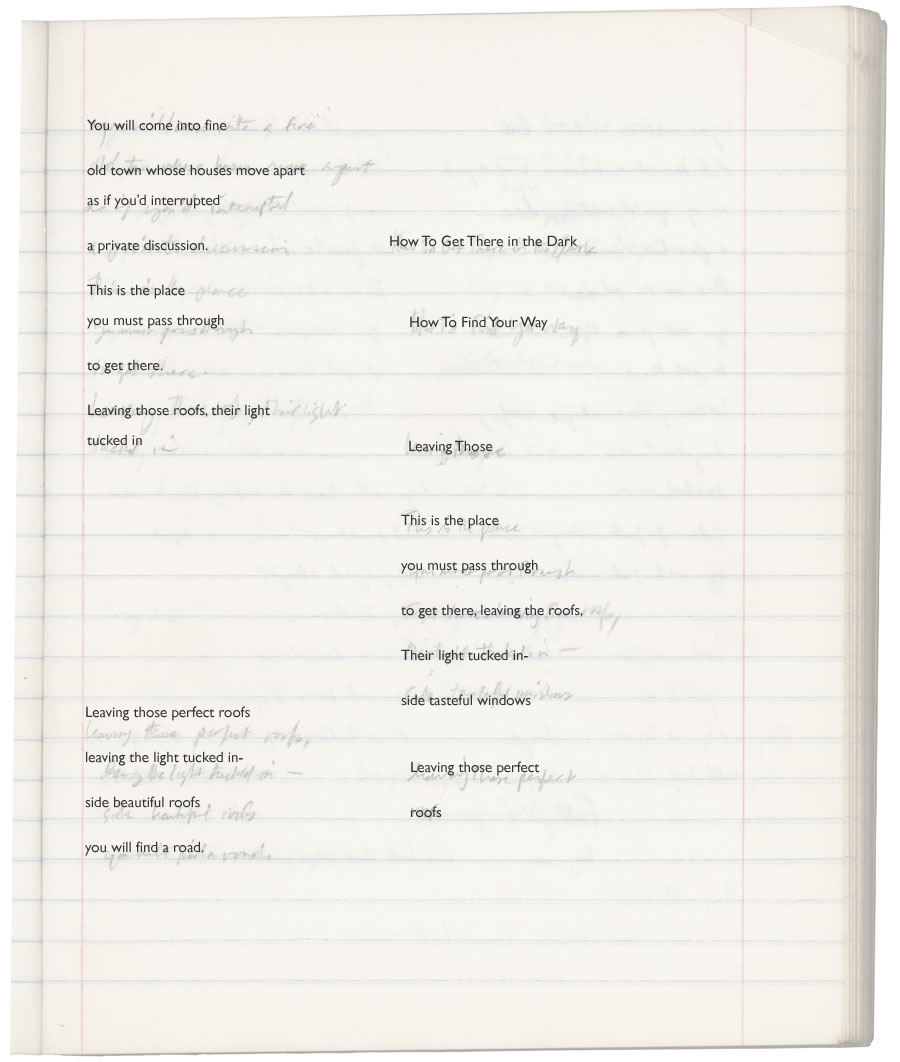
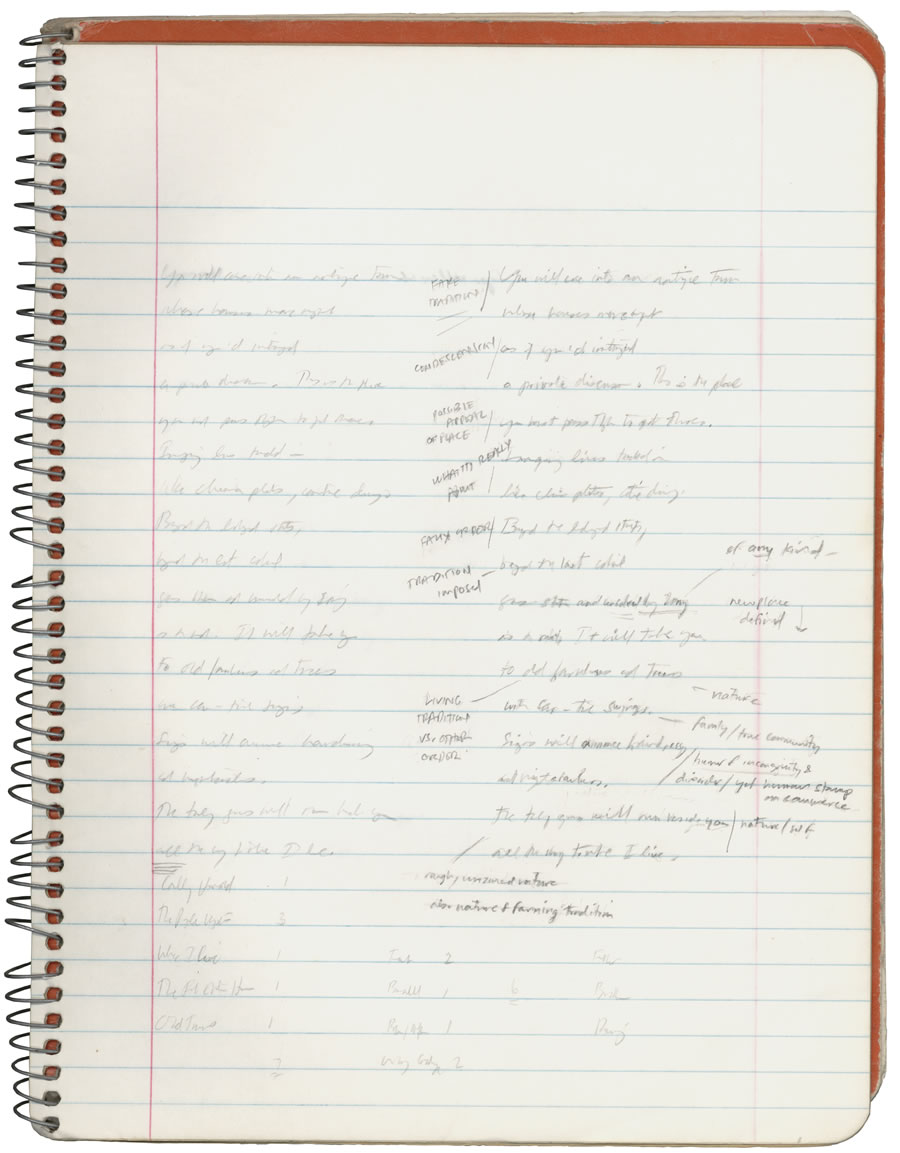
You will come into an antique town
whose houses move apart
as if you’d interrupted
a private discussion. This is the place
you must pass through to get there.
Imagining lives tucked in
like china plates, continue driving.
Beyond the landscaped streets,
beyond the last colonial gas station
and unsolved by zoning,
is a road. It will take you
to old farmhouses and trees
with car-tire swings.
Signs will announce hairdressing
and nightcrawlers.
The timothy grass will run beside you
all the way to where I live.