What is your thought process when you see someone’s face for the first time? This is a tough question, and quite honestly I could not think of anything specific myself. Upon perceiving a face, it only takes us a few seconds to cognitively process it and gather all the necessary information about it. For something so seemingly easy and quick, one would not expect any difference between how different people perceive and process faces, right? Wrong. What if I told you that women processed males and female faces differently? If you are a woman like myself, you are probably puzzled, as you probably never had a difficult time recalling and identifying faces of your peers regardless of their gender. Evidence suggests that women are better at remembering female faces than they are at remembering male faces. In the paper titled “Women Own-gender Bias in Face Recognition Memory: the role of attention at encoding,” researchers investigated the role attention played in women’s ability to better remember faces of fellow females than faces of males. Read more…
There are 1.23 billion people worldwide who spend an hour a day, on average, playing video games, reported by Time.com. I used to be one of those game players when I was in elementary school. However, my parents enforced me to quit playing games by setting up strict time limits, and even locked the computer with a password that I have never successfully cracked. My parents are not the only ones who are of the belief that playing video games is not beneficial at all, but a waste of time. Searching “video game playing” on Google, the top 10 search results are on how to quit playing video games and why video games can ruin one’s life. On the contrary, recent bestseller books and psychology studies argued against this common belief that playing video games is in fact not a total waste of time. When people play games, they are “wholeheartedly engaged in creative challenges,” said Jane McGonigal, a game designer and bestseller author, cited in Time.com.
Is there a specific event in your life that you will always remember, no matter how much time passes? What about a public event, a tragic one, one that your whole community experienced? Is there a specific event that comes to mind? For many people, the tragic September 11, 2001 attacks in New York City come to mind when asked this question. Ask just about anyone alive during this time, and they can probably tell you where they were when the attacks occurred, or what they were doing, or how they were feeling. Oftentimes, when such an important or prominent event takes place, people can recall it very vividly. A person’s recollection of how they were feeling during such an event is called a flashbulb memory, while their recollection of specific details of the event is called an event memory.
Flashbulb memories are interesting because of how very detailed and vivid they are, even years and years after an event occurs. The question being debated by many psychologists is, how much do flashbulb memories change over time? How can the long-term retention of flashbulb memories be characterized? For example, after 9/11, one might initially recall being at work when he/she hears the news of the plane crashes. However, a month later, when asked again, the same person could report being at home making breakfast. Typically, you wouldn’t expect flashbulb memories to ever change at all because of how detailed, and vividly they are recalled. Nonetheless, changes in flashbulb memories occur quite often. How much and how often do flashbulb memories really change? Why do they change? These are the questions psychologists are seeking to understand. Read more…
An overtime loss. It wouldn’t be so bad if it wasn’t all your fault. Now you sit in the library trying to finish your research paper due in an hour; you can’t concentrate as visions of the puck slowly sliding through your goalie pads into the awaiting net behind you consume your thoughts. Do you ever find yourself helplessly replaying events that you’re upset about while trying to focus on something else? But why do we have so much trouble thinking when something is bothering us, yet we can work so productively the rest of the time?
If only we could effectively think about multiple things at the same time. You could process the events of the game last night while writing your paper; you could replay that upsetting fight you had with your boyfriend while studying for your Spanish vocab quiz. Essentially, our lives would be that much more efficient, if only we could process multiple thoughts at once.
Have you ever worked on a homework assignment with your cell phone near you so that you can hear when you get a notification? I know I have. Cell phone use has become widespread in today’s society. Everywhere you go, you see people with cell phones in their hands, and they commonly try to use their cell phones as they do something else. You might see someone looking down at a cell phone while driving, texting while chatting with a friend, and scrolling through a social media app while doing homework. Research has shown that the use of cell phones during a concurrent task can be very distracting and can impair performance on that task, but what about when you receive a notification and do not check or respond to it?
Many people carry their phones with them almost everywhere they go. For example, you might bring your cell phone to class and store it in your pocket, or leave your cell phone lying on your desk while you work on a homework assignment. So what happens when you hear a ring or feel vibrations from your cell phone, alerting you that you’ve received a notification? Does it affect your attention? Does simply getting a notification on your cell phone, without checking it, have a cost to your attention? Researchers Stothart, Mitchum, and Yehnert (2015) conducted a study to examine this question.
Do you still remember the bedtime stories your parents read for you when you were little? Well, most of us just have a vague impression about what was told. Even if we read the story by ourselves, we are unlikely to remember much. However, it is not the same case for our parents: they are likely to remember very much about story, even specific details such as the characters and how you felt about them. Now think back again, comparing the textbook you read aloud for the class in the morning and a message on your cell phone that you read ten minutes ago, which one do you remember better? In my personal experience, I found it easier to recall the sentences from the book rather than the text message. This raises the question: is there a relationship between how people read information and how much is actually remembered? Read more…
Imagine that you go to a magic show. You spend the $10 entry fee at the entrance of the theater. You sit down among the throng of eager audience members waiting to see the dazzling, awe-inspiring tricks that will not just bend your mind’s perception, but also the very laws of nature. Eventually, the magician takes the stage, and everybody including yourself suddenly becomes silent and still in anticipation. Then, he starts to perform tricks ranging from pulling rabbits out of hats to hoops that magically can become bound and unbound together at the flick of the wrist. Before you know it, the show is almost over, but the magician has prepared for the audience a grand finale involving two mysterious doors. What happens next cannot be described with words as eloquently as this following clip:
So it’s a Sunday afternoon and you are walking to lunch, the library, or the gym, and all of a sudden you start to sing the words to a song and it seems to come out of nowhere! Has this ever happened to you? I can testify to this and say that numerous times I find myself singing a song and I have no idea why. In fact, why do we still remember childhood songs such as “the wheels on the bus go round and round” or start singing a song we once loved in the 8th grade? The idea that song melodies seem to stick in our memory for long periods of time is an interesting concept.
Weiss et al., 2012, investigated the impact that melodies have on our memory. In their study, a group of participants listened to melodies, either vocal or instrumental, and were later asked to recall what they had heard. The participants listened to melodies from four categories: voice, piano, banjo, or marimba. In addition, the participants had to rate whether they felt happy, sad, or neutral while listening to the melody. They completed a recognition task in which they heard the same 16 melodies and then a set of 16 new melodies. They were asked to rate which ones were old or new. The results of their study concluded that the melodies that had been presented vocally to the participants were better remembered than those that were presented instrumentally, even if the participant liked an instrument more than a vocal melody. There was no difference of recognition or liking among the instrumental timbres.
According to the National Sleep Foundation, adults need seven to nine hours of sleep a night. Sure, we all know sleep is important for our health, but life always seems to intervene and these ideal seven to nine hours turn into four to five hours. Lacking sleep like this may make many of us feel tired and irritable, but we often fail to recognize how it may impact our memory for a day’s events. Sleep deprivation makes it tougher to remember things, such as witnessing a car accident or remembering a friend’s story. It is even possible for it to cause us to make up memories for events that never happened!
Researchers Frenda, Patihis, Loftus, Lewis, and Fenn (2014) strived to investigate this and conducted a combination of experiments about sleep deprivation’s effect on false memories. False memories are memories of an event that either occurred differently from how you remember it or never occurred at all. These can be as extreme as believing you have a memory for visiting a city you never did or as mundane as construing a memory for a video you have never seen before. Making up memories like this can yield dire consequences, especially with eyewitness testimonies where an individual may be wrongfully charged because of a witness’ false memory. However, can a lack of sleep make this more likely to happen? Read more…
If you had asked the high school version of myself about some of the parents of my peers not allowing their children to play football because of the sports dangers, I would have laughed at the idea. To me this was the greatest game in the world, a game that teaches the values of hard work, perseverance, and a humbleness that is hard to learn other places in life. How can you simply tell someone who has dedicated countless hours and years to their craft that they can no longer do the thing they love the most? But the dreaded “C word” whispered in both high school and college locker rooms across the country is doing just that, as the length of recovery for athletes with a history of concussions is being questioned.


 nt that comes to mind? For many people, the tragic September 11, 2001 attacks in New York City come to mind when asked this question. Ask just about anyone alive during this time, and they can probably tell you where they were when the attacks occurred, or what they were doing, or how they were feeling. Oftentimes, when such an important or prominent event takes place, people can recall it very vividly. A person’s recollection of how they were feeling during such an event is called a flashbulb memory, while their recollection of specific details of the event is called an event memory.
 library trying to finish your research paper due in an hour; you can’t concentrate as visions of the puck slowly sliding through your goalie pads into the awaiting net behind you consume your thoughts. Do you ever find yourself helplessly replaying events that you’re upset about while trying to focus on something else? But why do we have so much trouble thinking when something is bothering us, yet we can work so productively the rest of the time?
 ust have a vague impression about what was told. Even if we read the story by ourselves, we are unlikely to remember much. However, it is not the same case for our parents: they are likely to remember very much about story, even specific details such as the characters and how you felt about them. Now think back again, comparing the textbook you read aloud for the class in the morning and a message on your cell phone that you read ten minutes ago, which one do you remember better? In my personal experience, I found it easier to recall the sentences from the book rather than the text message. This raises the question: is there a relationship between how people read information and how much is actually remembered?
 Researchers Frenda, Patihis, Loftus, Lewis, and Fenn (2014) strived to investigate this and conducted a combination of experiments about sleep deprivation’s effect on false memories. False memories are memories of an event that either occurred differently from how you remember it or never occurred at all. These can be as extreme as believing you have a memory for visiting a city you never did or as mundane as construing a memory for a video you have never seen before. Making up memories like this can yield dire consequences, especially with eyewitness testimonies where an individual may be wrongfully charged because of a witness’ false memory. However, can a lack of sleep make this more likely to happen?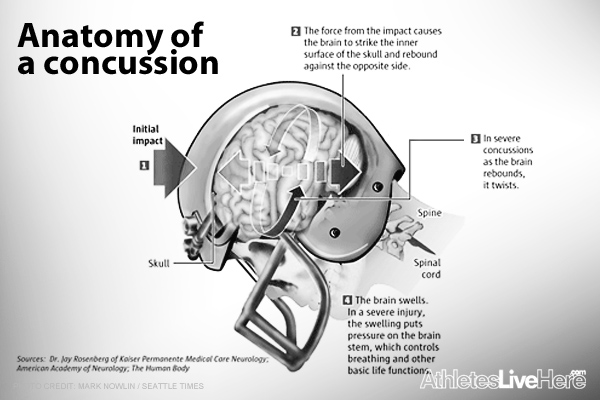
Recent Comments