February 23rd, 2015 · Comments Off on Anonymous Student: Circumcision
Dr. Peter Millard recently came in for a talk about HIV and preventative measures in Africa, specifically discussing circumcision and its effects in nations severely affected by HIV within Africa. Dr. Millard actively supports circumcision and has equated the procedure with vaccination. There are serious issues with this claim. Circumcision and vaccines can not be equated. The amount of mental acrobatics it requires to compare a quick needle stick with a 15-minute unanesthetized surgical alteration of the genitals is ridiculous. Unlike vaccinations, botched circumcisions are common. Immunization prevents disease but circumcision is 100% chance of mutilation (Rebecca Grey). Vaccination also does not deprive an individual of any functional body parts. The foreskin is not just skin as Dr. Millard alluded. It is composed of mucous membrane, also called a prepuce, analogous to the eyelid or the inside of the mouth. People designated female at birth have a foreskin equivalent called the clitoral hood which evolved from the same tissue as the foreskin. Circumcision within US history has been tied to various fleeting reasons. The procedure was popularized by Dr. Kellogs during the Victorian era (the same person who co-invented corn flakes) to curb masturbation. He said:
“ The operation should be performed by a surgeon without administering an anæsthetic, as the brief pain attending the operation will have a salutary effect upon the mind, especially if it be connected with the idea of punishment.”
This masturbation hysteria was then replaced by fear of sexually transmitted infections followed by prostate cancer, and now urinary tract infections. Parents believe that circumcision helps with cleanliness, but they do not realize that there is something called a bath or a shower. Taddio et al. performed a meta-analysis observing the pain responses to subsequent vaccinations of circumcised infants and uncircumcised infants. They found that circumcised infants showed a stronger pain response than uncircumcised infants. The trauma of circumcision has lasting effects on these children. This logic of removing a functional body part to prevent disease is the same as selling a car to prevent a car accident (Men’s Health). Safe sex practices are what stops HIV transmission.
Dr. Millard mentioned that circumcision decreased transmission of HIV by 50-60%, but did not mention that a vaccine has essentially a 95% efficacy rate. Vaccination is about immunization, circumcision is not about immunization. The US has the highest HIV transmission of all the westernized countries and the highest circumcision rates. Evidence points to insufficient education about safe sex practices. In 1992, 410,00 cases of chlamydia was reported, 20 years later, 1.3 millions cases were reported. In 2000, there were 31,618 cases of syphilis, 10 years later, 45.834 cases were reported. It seems sex education among the general population is low. Instead, doctors are telling parents to circumcise their children instead of teaching children safe sex practices. Media now takes over where various sitcoms commonly have circumcision as a plot device which actively shames those who are not circumcised. Circumcision has become naturalized and not questioned.
Within the US, infant circumcision is still endorsed and is now supported by the WHO and the CDC which is backed by data from adult circumcisions in African countries performed on “consenting” adults. Infant circumcision forcefully separates the fused foreskin from the glans which results in the tearing of the synechia (the tissue that connects the foreskin to the glans) and keratinization of the affected areas. Circumcision is commonly used as treatment for phimosis, but infants can not get phimosis as their foreskins are not naturally retractable. The loss of protective mucosal membranes and various nerves denies the child of their own bodies and decisions. Before a child can even consent to having sex, they have their bodies permanently altered.
The voluntary medical male circumcision in African countries which is backed by the WHO is packaged with connecting men to health care, access to safe sex education, condoms, HIV testing, counselling services, and links to HIV care and treatment. These incentives behind the procedure drive safe sex practices which prevent HIV transmission. Proper habitual condom-use alone prevents HIV transmission by 95%. Circumcision can not be considered voluntary when access to safe sex tools and practices that prevent HIV are contingent upon this procedure. The institutionalized industry of circumcision is backed by ministers of health, policy makers, program managers, health care providers, and donors (e.g. PEPFAR and the Bill and Melinda Gates Foundation) who fund supporting programs. HIV transmission can also be transmitted through circumcision if the tools are not sterilized. Stopping circumcision means stopping access to health care. Of course the HIV transmission rates decrease when patients are educated on safer sex practices. The studies done in Africa were decided to be unethical after two years, but did not mention the unethical issues behind the actual circumcision itself. Long term follow-up should be required for these patients.
The exporting of circumcision results in growing acceptance of this procedure “in communities, among men and their partners, adolescents and parents” (WHO). Although studies have been done on adult men, the WHO supports influence on adolescents who are not given complete informed consent especially when their parents and the institutions manipulating the conditions favor circumcision. Many nations curtail to the US when it comes to health policies. Circumcision has become tool to normalize and impose Western standards of bodies on peoples that can not fully consent.
Circumcision in African countries are funded by western imperialism which exports this practice outside to different nations only to import the “results” back into their own countries to continue non-consensual practice of genital mutilation. This dangerous cycle impacts bodies in very specific ways to normalize cognitive dissonance. Babies do not have consent over circumcision. Continued practice of circumcision normalizes a dangerous environment for those designated male at birth. Why must this procedure be made by doctors paid to cut off foreskin? The infant has no agency over their bodies. Circumcision is a practice that attempts to manage disease, but does not answer the question of how disease can best be managed. Cultural bias coming from Dr. Millard reflects normative nontherapeutic circumcision sentiments within the US.
Sources
- https://www.psychologytoday.com/blog/moral-landscapes/201109/more-circumcision-myths-you-may-believe-hygiene-and-stds
- http://www.ncbi.nlm.nih.gov/pubmed/9057731
- http://pediatrics.aappublications.org/content/early/2013/03/12/peds.2012-2896.full.pdf
- http://www.parenting.com/blogs/pop-culture/shawn-parenting/circumcision-vaccine-against-bad-parenting
- http://www.cbsnews.com/news/circumcision-rates-declining-health-risks-rising-study-says/
- http://www.who.int/hiv/topics/malecircumcision/male-circumcision-info-2014/en/
Tags: Guest Speakers · Human Health
February 23rd, 2015 · Comments Off on Rachel Bird: The End of My Gymnastics Career

I used to be squeamish. I was the kid who’d cover their face during movie fight scenes and feel nauseous at the sight of a bloody hangnail. Then I hurt myself — badly — during gymnastics practice, and I realized that as queasy my innards made me, it was worth it to understand them. When I fell on the trampoline during a routine in April 2012, I shattered my left radius and ulna. The repeated bouncing after the initial fall damaged the soft tissue and left the bones in a compound fracture, puncturing my skin halfway up the forearm. Although the initial reconstructive surgeries were able to salvage some of the bone and repair the structure of my arm, the massive soft tissue damage made my arm swell under the surgical dressings. My fingers grew so puffy with edema that they pressed together, despite the dressing that kept them spread as wide as physically possible. My elbow swelled to the size of my knee, and the staples holding the skin on the inner side of my forearm split open and the wound started oozing.

Eventually, the doctors diagnosed me with compartment syndrome, a condition that is common in crush injuries, but not frequently found in the type of break I had. Because of all the damage to the muscle tissue, my arm had swelled so much that the blood vessels were squeezed almost shut, preventing oxygen from getting to the nerves and muscles in my hand. Unfortunately, by the time I was diagnosed with compartment syndrome, the damage had already been done. The typical treatment for compartment syndrome is a WoundVac, which is essentially a vacuum that attaches onto an opening in the dermis and sucks out all the excess fluid before it can cause a problem. However, by the time the nurses had removed my surgical wraps and determined the cause of the swelling and burning sensation in my arm, the swelling had already begun to subside. Initially, the doctors believed that the nerves would be able to regrow, and most of the damage could heal on its own. However, after two months of daily occupational and physical therapy, I still had no sensation in my wrist, palm, or fingers. Even worse, the build-up scar tissue had cemented my fingers into a fist, and I only had roughly 15 degrees of mobility in my elbow and even fewer in my wrist. My hand was so stuck that I was unable to open my hand to trim my fingernails, so they were starting to grow into the skin on my palm. I didn’t even notice until it started bleeding, because I had no functioning pain nerves in my hand. I also had no proprioception, so when I wasn’t looking at my hand, I would have no idea where it was. This led to some funny encounters, because I would all-to-frequently end up with my hand in my food, or touching a stranger’ back!

After visits to numerous specialists, Dr. Barth, an orthopedic surgeon who specialized in hand and foot injuries suggested an unusual fix. He planned to surgically open up my forearm and scrape the scar tissue off of the joints and tendons in my hand. He would also remove the dead muscle tissue, but leave the muscle bellies (the central portion of a muscle), in the hope that the few remaining muscle fibers would be able to grow. Hopefully, without all the scar tissue blocking blood flow, some of the nerves in my arm would be able to grow back.
Luckily, the surgery was mostly successful, and I was able to open my hand. Less than two weeks after I was discharged from the hospital, I was able to feel deep pressure in my wrist and in parts of my palm! Nerves regrow at approximately five millimeters per day for larger nerves, so as my median nerve inched up my palm, my occupational therapist could track its growth with touch charts and a photocopy of an anatomy textbook. However, so much muscle and tendon was removed, that even though I was slowly able to feel the proximal areas of my fingers, I didn’t have the strength to move them. My arm was so weak that I had to wear a sling for most of the day because I couldn’t support my hand. Even worse, because I couldn’t feel scratches or cuts, two small paper cuts on my fingers got infected.
Dr. Barth proposed another surgery. He wanted to transfer a tendon from my upper arm into my forearm, in the hopes that I could “retrain” my brain to use one tendon for a different purpose. The surgery transferred the brachioradialis tendon and attached it to my extensor pollicis brevis, so when I wanted to move the distal joint of my thumb, I would have to think about bending my elbow. He also transferred the flexor carpi radialis and attached it to the flexor digitorum superficialis, so when I wanted curl or flex my fingers, I would use the muscle that had previously bent my wrist.

Although the process of recovering from this surgery and relearning how to use my hand to nearly two years, I am now able to type this paper using both hands (admittedly, it’s kind of awkward)! Unfortunately, having blood flow cut off to my nerves for so long had left me with permanent nerve damage, and I deal with chronic nerve pain and pretty limited strength and mobility. However, I can tie my shoes, dress myself and function in a classroom setting in ways that I couldn’t have dreamed of in the months following my accident, and I am so thankful to modern medicine for that!

Tags: Human Health · Personal Story
February 23rd, 2015 · Comments Off on Rachel Bird: My Concussion
Let me preface this by saying that I do not know how to ski. However, I’m a decent snowboarder, and I (mistakenly) thought that the two skills were relatively similar. Apparently I’m quite incorrect. The result is that this entire blog post is hearsay. I have absolutely no memory from Saturday, January 17 until Monday, January 19. According to my friends, on Sunday morning, we all got up early to drive up to Sugarloaf mountain to enjoy Colby Ski Weekend, with discounted lift tickets. The morning skiing was decent, but crowded. I was slowly (but surely) figuring out how to ski, and when we stopped for lunch I was feeling pretty confident. After a few successful runs in the afternoon, it was starting to rain, and the slopes had become slick and icy. We decided to do one last run and then head home. Our group got split up on one of the turns, and I ended up going ahead. When I hit a particularly icy patch, my right ski slipped out from under me and I rolled down a hill. I ended up at a fork in the trail and I went right, following a skier in black who I assumed was my friend. At the next fork in the trail, the only options were two different black diamonds, and the woman I had been following was clearly not a fellow novice skier! I reluctantly chose the path to the right and crossed my fingers. Initially, I was doing fine, slaloming side to side and avoiding the smooth icy patches in the center. Then I came on a steep slope and started to lose control. I tried to slow down, but the rain and melting ice didn’t offer any traction for my rental skis. I careened off the trail and down a hill into the woods, banging my skin on a branch and knocking the base of my head against a tree stump. I blacked out.
I woke to an old man in a green jacket poking me with his ski pole, “Are you okay, sweetheart?”
“Yeah, I’m fine, just give me a second.”
I crawled out of the woods and adjusted my goggles on my too-big rental helmet. I clamped my skis back on and gingerly slid the rest of the way down the mountain to the lodge. I mechanically returned my skis, boots, and helmet, and returned to our picnic table to change into dry clothes. I felt fine — a little drained, but that’s understandable after a long day at the mountain. As we waited for the shuttle to take us back to the parking lot, sleet and rain pelted down. The shuttle finally showed up, but on the way to the parking lot, my head started to pound. I blinked the snow out of my eyes, but my vision stayed blurry.
“Hey Chris — I think I’m seeing double.”
My boyfriend’s face swam in front of me, his mouth splitting into two identical sets of lips and then merging back into one.
“Do you feel okay?” Michaela’s voice piped up from my periphery, her head smearing into an unidentifiable mass.
“Um… I don’t know. I think I hit my head pretty hard when I fell.”
“We’ll get you to the health center when we get back to campus.”
“Ok.”
The shuttle pulled up to the parking lot, and I slouched into the backseat of Tenzin’s car. The sleet kept pouring down as we inched down the steep road. I slumped over on Chris’ shoulder, but he kept shaking me awake.
“Rachel, I really don’t think you should go to sleep yet, you might have a concussion.”
Then the car swerved and Tenzon overcorrected and the wheels slid and the road curved and we were in a snow bank. My head whipped forward and hit the seat in front of me with a resounding thump. Tenzin and Katie climbed out the front doors to survey the damage. The car was fine, but we were clearly stuck in the snow on the side of the road. Luckily, an ambulance happened to be passing by and the EMTs pulled over to see how we were doing.
“We’re all fine, but our friend is in the back seat, and we think she’s got a concussion.”
I crawled out of the back window, and stumbled over the the ambulance. The EMTs chattered between themselves, and apparently reached some consensus, because I was loaded into the back of the ambulance and barraged with questions.
“What year is it? What’s your name? Who is the president? Where do you live? Do you know your address? Are you taking any medicines?”
“Um. I don’t remember… I’m really sorry. I don’t know… uh… I don’t remember.”
Everything was fuzzy as the EMTs started an IV, and I dry-heaved into a plastic bucket.
“Zofran for the nausea and fluids for dehydration.”
I slumped onto the stretcher and blinked in time with my head’s pounding. Somehow I made it to Farmington Hospital and into a hospital bed, but I was too busy focusing on the peculiar way my forehead was pulsing. More nurses with more questions that I couldn’t quite conjure the answers to, more bright lights and beeping noises that made my head pound, more medical terminology that I was sure I had heard before, but I couldn’t quite place. The tall doctor called for a CAT scan, but I needed to give a urine sample first to prove I wasn’t pregnant, and my head hurt too much to get up and use the bathroom. But I gave the sample, and got the scan, and went back into my hospital bed, and tried not to fall asleep with my eyes open, because I was so damn tired. Hours or maybe seconds passed and the tall doctor sauntered back into the room. My boyfriend jumped up and began badgering him with questions. I took the opportunity to promptly fall asleep while sitting up.
“No internal hemorrhaging, which is good, but she’s got a pretty severe concussion…”
The doctor’s voice trailed off into technicalities, but I was already fast asleep.
Tags: Human Health
February 23rd, 2015 · Comments Off on Laurel Edington: My Experience in Bi265j

This January, I was given the opportunity to take the Introduction to Human Anatomy and Physiology janplan class. I’m a senior biology major and have finished all of my major requirements so I didn’t need to take this class, but I’m interested in the material and figured that it would be helpful to be at least familiar with human A&P when I’m eventually in medical school.
During the first week of class, I thought that the workload was too much and I considered dropping the class. Throughout this week, Dr. Klepach kept reinforcing that the first week was the hardest and that he really just wanted us to learn how to deal with a heavy workload and learn the material while still eating three meals a day, working out each week, getting eight hours of sleep each night, and keeping our stress level low. At first, I thought this was insane. How was I possibly supposed to learn all of these bones and muscles and not be stressed?! However, throughout the month, I realized that this was possible. The way the class was set up allowed work to be spread out so that we continued to reinforce the material through quizzes and preparing for lecture and class. By doing this, studying for a bigger exam or working on a bigger project ended up not being as stressful or time consuming as I imagined it would be.
The following weeks were still intense but were more manageable. Although we had quizzes before most lectures, another lab practical, a grand rounds presentation, and a few lab assignments left, Dr. Klepach’s advice of studying to learn the material and not for the grade really helped to make the class less daunting. As a premed student, I’m used to focusing only on the grades I receive and my GPA, but this class made me focus on actually knowing the material. Out of all of the classes I’ve taken at Colby, I’ve learned the most in this class. I don’t think this is because of the sheer amount of material thrown at us and if only a little stuck with us, it would be more information than some classes teach in a semester, but rather that I was actually working to learn the information and not just studying so that I could remember the material only in order to do well on the next test.
I highly recommend this class. I think it’s a great class for any premed student, any biology major, as well as any student who is just interested in anatomy and physiology. We were given so many interesting opportunities that no other class really offers. I can’t think of another biology class that performs any sort of dissection, that teaches the important skill of giving a grand rounds presentation, or that has lectures from specialists such as Dr. Zak Nashed and Dr. Peter Millard. During this month, we learned so much and we only just scratched the surface. I found this class so fascinating and wish that it could have been a semester long, or even a year long, course.

Tags: Bi265j
February 23rd, 2015 · Comments Off on Chris Lee: What I Gained From BI265

This year I decided to sign up for BI265 (Introduction to Anatomy and Physiology) for my Jan Plan course. Going into it, I had no idea what to expect. I knew from my experiences with high school anatomy that it would require a lot of memorization. Given the fact that the class would only last for a month, I also expected the class to move at a very rapid pace. With these thoughts in mind, I walked into the classroom on the first day, ready to begin my second Jan Plan at Colby.

On the first day, Dr. Klepach told us that one of his goals in the course was to teach us to maintain healthy lifestyles, despite the rigorous nature of his class. According to him, this would be an important lesson to learn, especially for those of us who entered the health professions field. Maintaining a healthy lifestyle, especially while taking a course like BI265 at first seemed impossible. We were exposed to a lot of information each class and it was not uncommon for us to have quizzes the day after we were introduced to new material. During the first week, I spent nearly all my time outside of class in the library going over lecture notes and stressing over whether or not I had studied enough. I wondered how it was possible to fit in time for sleep, activities outside class, and three meals a day without stressing out. As it turned out, it was possible to achieve all three of these things and succeed in the class. All it took was some self-reflection and time management.

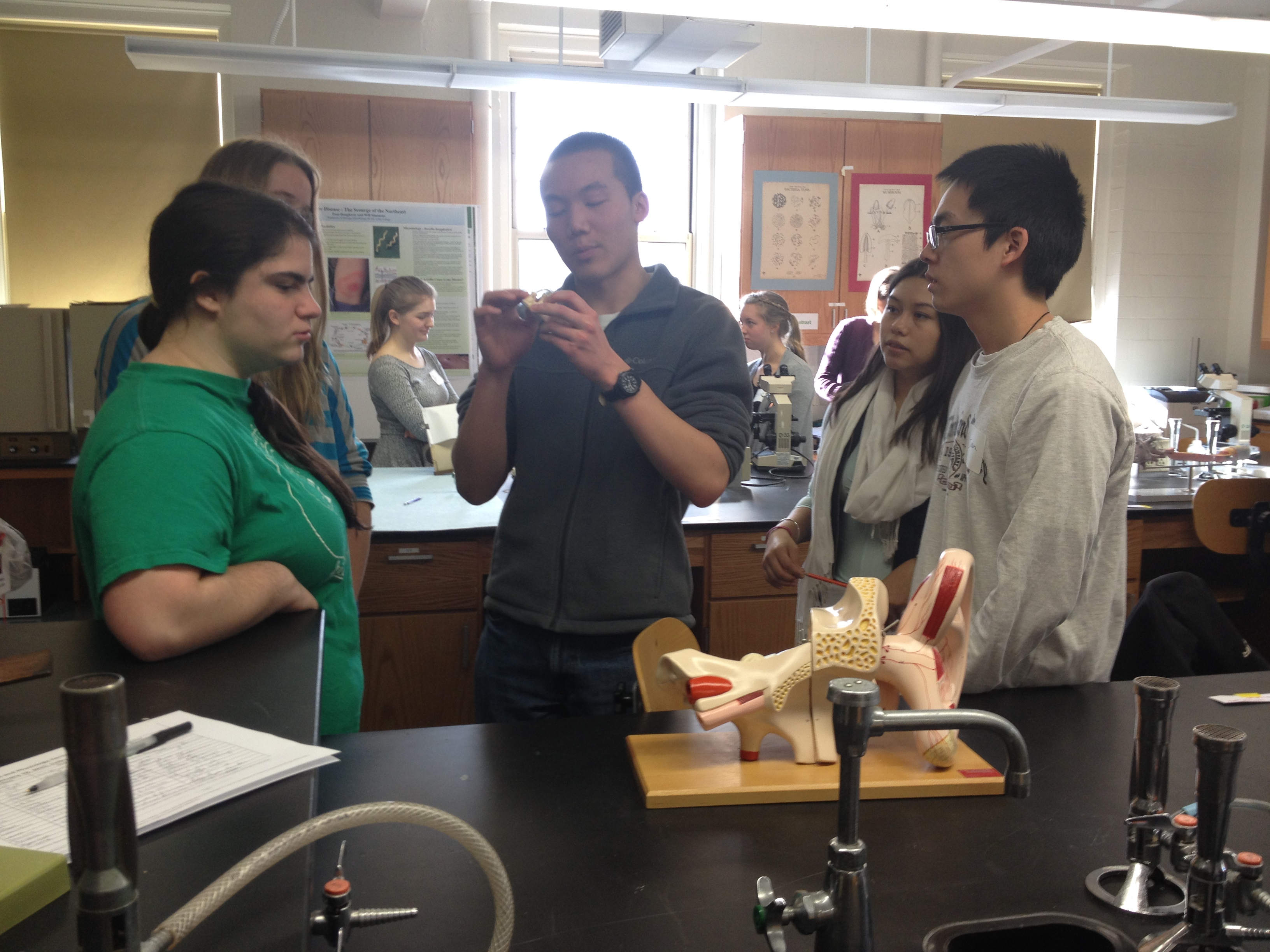
Self-reflection is an all-around good skill to have. It lets you evaluate where you are in the process of trying to accomplish something and lets you see where your strengths and weaknesses lie. In my case, self-reflection let me see a major weakness in my approach toward the class: my study habits. Usually, my approach to studying would be to re-read my notes until the information sank into my head. For a Jan Plan course, this is inefficient because time is very limited. After an unsuccessful performance on the first lab exam, I sat down and thought about how I was studying. I concluded that I needed to implement a more active style of learning. For instance, when studying the different parts of the eye, heart, and ear, I looked at anatomical models of these organs in addition to looking at the diagrams in my notes. Our lab exams asked us to identify structures on anatomical models, which was why it was more beneficial to study the models in conjunction with diagrams. Being able to self-reflect on my performance in the course helped me make the necessary changes to how I approached the material and improve my performance.

In addition to self-reflection, time management was another important skill that helped me get through BI265. In order to fit in time for sleep and other activities outside of class, I had to stay focused and be more efficient when it came time to work. Doing this allowed me to be productive while allowing for more time to enjoy myself outside of class. A technique I used to help with time management was setting up an organized schedule. Through this method, I was able to see when I could devote time to study, keep track of deadlines, and plan ahead. I attribute my decrease in stress levels to an improvement in my time management skills. Being more organized helped me get more done sooner so that I was not left with an overwhelming amount of work in the wake of an imminent deadline (which is very stressful situation). While I learned a lot about the cardiovascular, skeletal, digestive, and other body systems in BI265, I also learned the importance of self-reflection and time management. I have no doubt that these two skills will be beneficial to me for the rest of my college career and ultimately the rest of my life.

Tags: Bi265j · Human Health
February 23rd, 2015 · Comments Off on Chris Lee: Dissecting a Sheep Heart
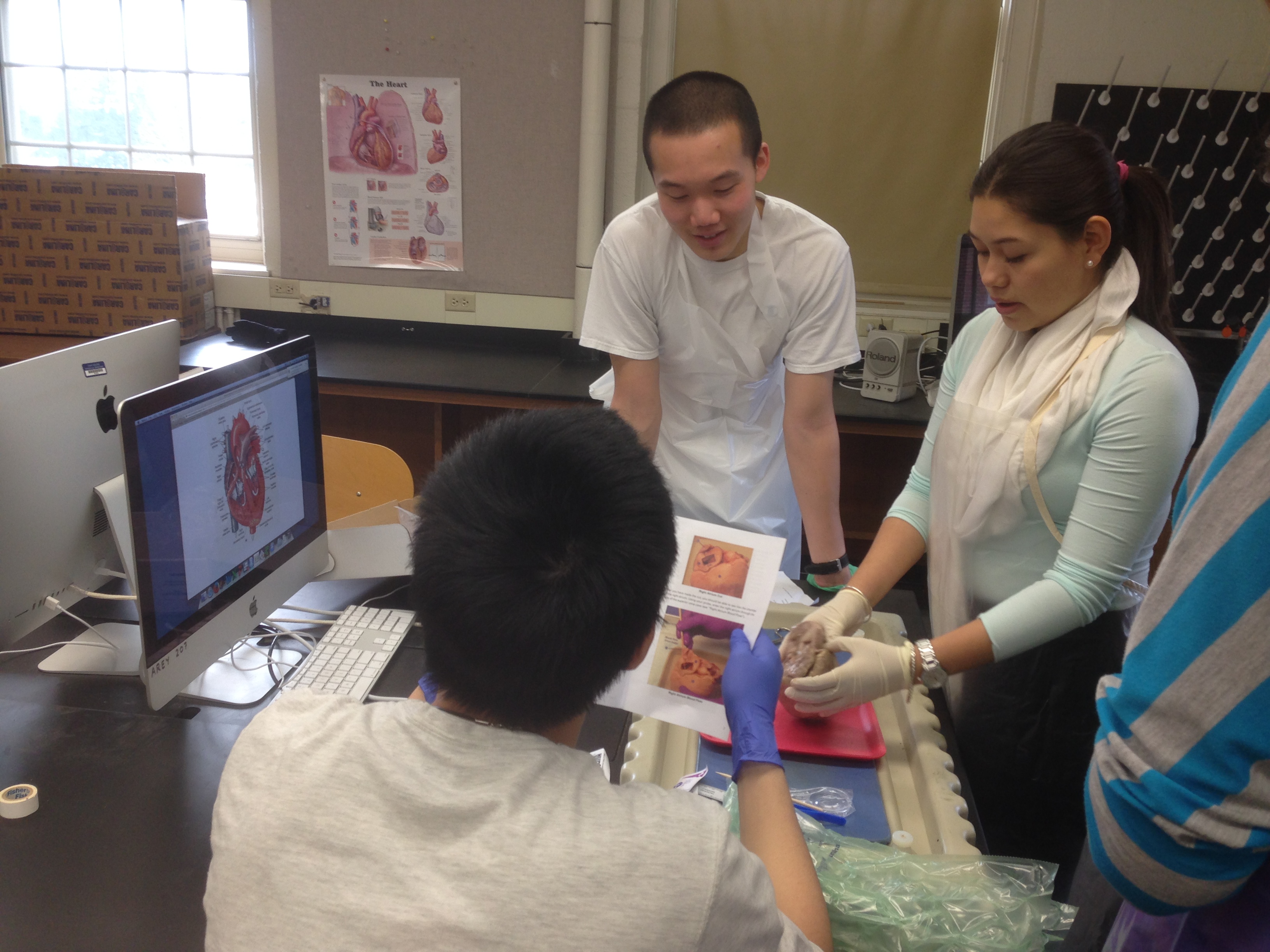
I cut the plastic bag open and was immediately hit with a strong odor. Inside the bag was a sheep’s heart, sitting in a pool of preservative chemicals. Immediately after taking the heart out, I went over to the sink to rinse off the chemicals. I could tell that this was going to be a messy lab. Still, I was excited to do a sheep heart dissection because it was an opportunity for me to see a real heart. For about a week, I had been studying diagrams and models of hearts, but not a real version of the organ itself. The anatomical models we used were helpful in learning where structures of the heart are located, but nothing beats seeing the real thing.
After washing the heart, my lab partner and I located its apex (tip) and figured out where the left and right sides were. It was immediately apparent that not all the structures were intact which was unfortunate (both the inferior and superior vena cava had been cut off). However, we discovered a well-preserved depression known as the foramen ovalis behind the right ventricle that had not been damaged in the preservation process of the heart. The foramen ovalis marks the former sport of the foramen ovale, a hole in the pig fetus’s that helps with blood circulation. After the pig’s birth, the hole is sealed, leaving behind the foramen ovalis.

Next, we started cutting the heart open. Cutting through the walls of the heart was difficult. The heart’s function, to pump blood throughout the body, requires it to be a tough, durable organ and I was reminded of this as my lab partner and I tried to cut through its walls. Pulling apart an incision on the right side revealed a small chamber with a hole in its lower end covered by three flaps. This was the tricuspid valve, the covering between the hole connecting the right ventricle and right atrium. I stuck my fingers through the valve, pushing my way past the three flaps into the larger space known as the right ventricle and felt around. Brushing against my fingers were the stringy cordae tendinae that connected the flaps of the tricuspid valves to the papillary muscles.
Over on the left side of the heart, we saw structures such as the left atrium, bicuspid valve, and the left ventricle. While making a cut on the left side of the heart, I immediately noticed how much thicker the muscular walls were on this side. Something that occurred to me during this dissection that I never really thought about before was how the heart’s form fit its function. Its thick, muscular walls (particularly on the left side) gave it the necessary power to pump blood to different parts of the body. The cordae tendinae, though somewhat thin and stringy, still felt strong and durable, which was necessary for them to be able to keep the bicuspid and tricuspid valves shut. Even the layout of the heart itself is essential to its function. It contains four chambers linked by a straightforward path that enables deoxygenated blood to enter, get pumped to the lungs to pick up oxygen, return, and then get pumped to other parts of the body. The sheep’s heart dissection was definitely my favorite activity from anatomy class. I enjoyed the hands-on aspect of it and being able to explore the layout and structure of a real heart.


Tags: Bi265j · Lab
February 23rd, 2015 · Comments Off on Laurel Edington: Grand Rounds – Celiac Disease
During the last week of class, we presented our grand rounds talks that we’ve been working on all semester. This was a great experience because it allowed us to practice giving a grand rounds lecture, which is a common presentation in the medical community. Each group of three picked a topic, which could be a case study or an overview of a disease or medical treatment, and then presented as if they were doctors talking about an interesting patient, new procedure that they’re performing, etc.
This year, the weather didn’t exactly cooperate with us. We were supposed to have a practice session during class on Tuesday and then go to Augusta to present our talks along with Kents Hill students at Maine General. Because of the snow day and horrible driving conditions, neither of these events happened and we had to present our final product with little group practice. Thankfully, my group was able to practice together before the weather was too bad, but practicing during class and at Maine General would have been helpful.
My group decided to present a case study on a 42 year old man with chest and abdominal pain. We found this study through the New England Journal of Medicine and it was used as a hugely teaching moment instead of a typical grand rounds talk. In this case study, the man’s symptoms were textbook for celiac disease but physicians performed a number of tests, including an invasive and non-diagnostic procedure, before even thinking of the possibility of celiac disease. This case study was not used to teach medical students and medical professionals about a rare disease or an interesting case, it was used to enforce the fact that celiac disease is becoming increasingly common and physicians need to be aware of it and perform the simple diagnostic blood test for the disease when a patient comes in presenting characteristic symptoms.
Through this presentation, we learned the difference between celiac disease and non-celiac gluten sensitivity. With celiac disease, there is damage to the intestines and an IgA tissue transglutaminase and IgA endomysial antibody tests can be performed to diagnose the condition, this is not the case with a gluten sensitivity. Both conditions, however, are treated with a strict gluten-free diet. This is becoming a popular new diet in people who don’t suffer from celiac disease or non-celiac gluten sensitivity. People who are using this fad diet and who don’t have celiac disease or a gluten intolerance are at risk for developing new gastrointestingal problems.
This project was a great way to expose us to this sort of presentation since the majority of the class is interested in the medical profession and grand rounds are a common occurrence. This was an especially interesting experience because we were able to present in front of nurses and doctors, which made the experience that much more real. It also reinforced the material we had learned throughout the class because we had to explain the disease based on the anatomy and physiology. I’ve been to multiple grand rounds during my summer internships and I never thought that I would be able to understand a case as well as those doctors, but this experience showed me that I am more than capable and therefore, was an awesome experience.
https://www.youtube.com/watch?v=DiKDOyG6Olg
Tags: Grand Rounds
February 23rd, 2015 · Comments Off on Ivan Yang: Musings on the Fetus vs. Mother Battle

One of the best yet most challenging parts of this course is the sheer volume of knowledge that can be gained in these four weeks. I learned a spectacular amount of information about the human body during the course, giving me a greater appreciation for the ingenuity of evolution and the delicate intricacy of the body’s structures and mechanisms. In addition, Dr. K has a knack for sprinkling little bits of knowledge throughout his lectures that, when given time to soak in, can stimulate a great deal of critical thinking.
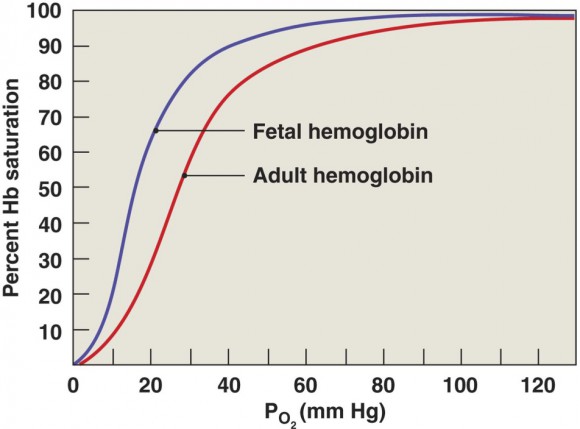
For example, when Dr. K lectured on the respiratory system, he briefly mentioned that fetal hemoglobin has higher oxygen saturation than adult hemoglobin does at the same oxygen levels. While this assertion can be explained by the fact that the fetus has higher demand for oxygen and must compete for oxygen in slightly deoxygenated blood, it reminded me of an article I read in a previous biology class on imprinted genes.
Imprinted genes are genes which are “marked” by the maternal or paternal parent and which are expressed over other versions of the same gene. Mechanisms of imprinted gene expression and evolutionary reasons for their existence are mostly obscure due to their relatively recent discovery. In fact, the existence of imprinted genes was only verified through cloning experiments in the late 80s. Scientists attempting to create a uniparental mouse (a mouse with two paternal or two maternal sets of DNA) found that it was impossible to create a fully-developed uniparental embryo. When the embryo was created from two maternal sets of DNA, its cells were properly organized, but the placenta was insufficient. When the embryo was created from two paternal sets of DNA, it was able to form a very healthy placenta, but the fetus itself was a disorganized mass of cells.
These results flew in the face of Mendelian genetics, which suggested that genes are merely strands of information with no history of origin. To the contrary, genes do, in a sense, remember their parental origins. The studies in the 80s suggested that the expression of certain genes in the paternal genome is responsible for making the placenta, while the expression of certain genes in the maternal genome is responsible for organizing the embryo. One of the first explanations posited that the placenta should be thought of not as a maternal organ designed to support the fetus, but rather as a fetal organ designed to parasitize the mother. While the mother and the fetus both have the common purpose of perpetuating the continued survival of the fetus, they disagree over how much of the mother’s resources should be dedicated to the fetus. In a sense, maternal genes are “selfish” and only the genes necessary to organize the fetus are expressed. Hence, the uniparental mouse embryos made of two maternal sets of DNA were unable to create a sufficient placenta.
This competition for resources between the fetus and the mother, clearly observable through research on imprinted genes, is strikingly similar to the competition for oxygen between the fetus and the mother. As previously mentioned, fetal hemoglobin has a higher oxygen affinity than adult hemoglobin does. To ensure its own survival, it is entirely conceivable that the fetus robs oxygen from the mother’s bloodstream. Perhaps this is but another example of a battle of wills between the fetus and the mother.
Tags: Human Health
February 23rd, 2015 · Comments Off on Calvin Robbins: Lyme’s Disease

In the last decade, occurrences of Lyme Disease in Maine have been increasing at shocking rates. Colby is a school with a very outdoor-oriented student body, so information regarding Lyme Disease and its effects on the human body is something that everybody should take the time to look at.
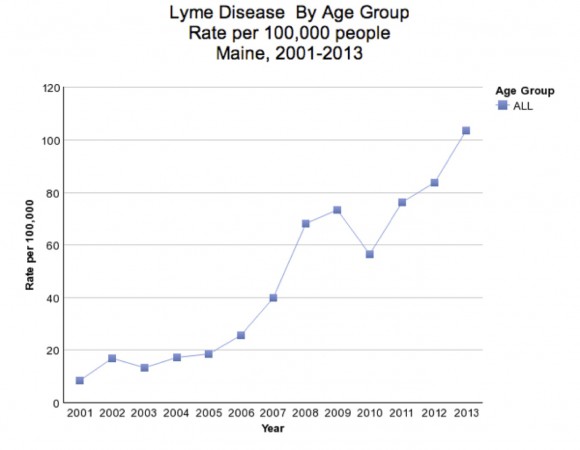
Maine.gov reference
Lyme Disease is a bacteria based disease which affects several body systems. The bacteria is transferred via the bite from an infected tick, usually (although not always) resulting in a rash in the surrounding area. The classic sign of Lyme disease is this “bull’s eye” shaped rash, although recently many cases have gone undiagnosed as people with a solid rash do not suspect Lyme Disease.
The first stage of the disease is called the Early localize stage, which begins with the rash which can take up to 30 days to appear after being bitten. Early symptoms tend to present similarly to the flu, with fatigue and joint pain being key identifiers.
The next stage, Early Dissemination begins around a week to a few months after the bite. During this stage, the disease spreads from the muscles, joints and skin into the nervous and cardiac systems. Heart problems due to Lyme disease can include blockages and weak heart muscles, thus creating symptoms such as easily induced fatigue that you would expect from poor heart function. Nervous system effects, while relatively rare, are generally serious. Common issues include meningitis and numbness or pain in certain affected nerves. If treated in or before Early Dissemination, the disease generally has no lasting effects. If the disease progresses past Early Dissemination, the patient is likely to experience lasting effects.
The Late Disease is generally many months or years after the bite. The most common symptom at this stage is arthritis of the joints, usually one or both knees.
When Lyme disease is suspected, a simple blood test can confirm Lyme Disease, although they are rarely effective within the first six weeks of the disease, and even after that can often read as a false positive. If the patient is experiencing Late Disease symptoms, they are tested for septic arthritis which presents similarly, but generally with a higher fever. A final decision on this can be achieved with an analysis of the synovial fluid, which, as we learned in BI 265, is produced by the synovial membranes, which line joints. The synovial fluid is used as a lubricant for the joint.
Treatment is relatively simple and consists of a regiment of antibiotics, which are administered via IV in more severe cases. Most patients experience lasting symptoms even after antibiotics have killed the bacteria, these patients often experience joint pain and nervous system problems for months after treatment. For patients with severe joint swelling, a synovectomy (removal of a portion of the synovium from the damaged joint) is recommended to ease some of the pain.
Fortunately, this is a very easily preventable disease. When you go outside, make sure you cover your lower extremities by wearing pants. On top of this you can also use tick repellants to deter ticks from even getting on you to begin with. At the end of any outdoor activity, make sure to check all areas of the body (especially inside joints and other warm moist places). If you ever find a tick attached to you, carefully remove it with tweezers and continue to monitor the area of the bite over the course of the next few weeks. There is no vaccine for Lyme Disease so the best way to prevent it is to be aware of the signs and symptoms and to avoid tick exposure in the first place.
Tags: Human Health
February 23rd, 2015 · Comments Off on Calvin Robbins: The Science Behind Run Til You Puke
Have you ever heard of somebody exercising to the point of vomiting? Or have you done it yourself? I never have, but during the digestive system lecture of the BI 265 Human Anatomy and Physiology class this Jan plan I had a sudden realization as to why this happens.
While nausea may be a common feeling when working out due to food or liquids in the stomach being bounced around, that is not usually why we actually end up vomiting during hard exercise. In fact, one of the biggest causes starts with the respiratory system. The job of the respiratory system is to remove CO2 from the blood and replace it with O2. During exercise, cells produce CO2 as sugars are broken apart to make ATP, which the cell uses for energy. Some of the CO2 byproduct goes into the blood and attaches to hemoglobin, but the vast majority of CO2 is actually transported as carbonic acid, which induces respiratory acidosis. When a person is doing anaerobic activity, such as running at full speed for a long enough time, their lungs are unable to get all of this accumulating CO2 and carbonic acid out of the bloodstream thus creating increasingly acidic blood. It is not due solely to lactic acid as many people believe, but the inability to exchange enough gas in the lungs.
As the blood gets increasingly acidic, the body has to find a way to get rid of all of this acid. One of the main ways the body has of releasing acid, as you may have already guessed, is through vomiting. As you vomit, the hydrochloric acid used for digestion is expelled from the stomach, which is lined with highly vascularized rugae. As the acid is forced out of the stomach, the acidic contents of the blood are pulled out to replace the Hydrochloric acid that was lost from vomit. Following the same thought process, this is why excessive puking will produce alkalosis (high pH) in the blood.

If you vomit frequently after heavy exercise you should take a few steps to achieve a healthier and more beneficial workout:
- Base your workouts on a heart rate range. This will force you to stay within a set range for aerobic exercise, which can be roughly calculated based on your age. Usually 85% of max heart rate is the highest you should be going for an aerobic workout to prevent acidosis.
- Drink plenty of water; if you are vomiting due to dehydration, it is a much more severe issue than acidosis. Steadily drinking water before, during, and after exercise will help, as well as a small amount of sports drink to replace some of the ions lost during the work out.
It takes a lot of anaerobic exercise for the body to get to the point of vomiting. This kind of activity, contrary to what some may think, is very bad for your body, and is not something to strive for in a hard workout. Remember to drink plenty of water and keep a reasonable heart rate target in mind for a healthy and effective workout.
Tags: Human Health · Lab · Special Activities
February 23rd, 2015 · Comments Off on Rebecca Gray: Substance Abuse Isn’t F*cking Funny

I swear like a sailor around my parents. And I always have. Because my parents pick their battles, and the battle they picked was substance abuse. Substance abuse is not a joke to them. To them, impersonating the voice of a chain smoker is not funny, and the incoherent ramblings of a drunk friend are not comic storytelling material. My mother lost her brother to a drunk driver when she was thirteen, and my father lost all four of his grandparents to tobacco-related illness. Thus, they’ve always been strict with me, and the overwhelming message under their roof remains: the use of alcohol, tobacco, and other illegal, mind-altering substances is absolutely, positively, unacceptable. They spent so much time enforcing this rule and communicating its importance. Not only did I never get away with drinking in high school, I never had the inclination to; I knew how hurt my parents would be if they were ever to find out, and I couldn’t put them through that. And so, in return for 100% sobriety and transparency about where I was, who I was with, and how I was getting there, they let me swear.
I am glad this was the hill they chose to die on; I believe that I am a healthier and happier (as cheesy as that sounds) person for it. That is why Colby surprised me. The idea of drinking to the point of memory loss every weekend freaked me out. Did my friends not get that when their blood alcohol level rose too high, their brains actually couldn’t form long term memories? That when they woke up feeling like they couldn’t remember the night before, their brain in fact hadn’t truly experienced it at all? I couldn’t believe how many people my age smoked. Did they not know their skin was yellowing, wrinkling? That their lungs were turning black and their bodies becoming reliant on nicotine to function comfortably? I’ve had many a conversation with a fellow Colby student who is not familiar with the physiological effects their substance use has on their body. It is surprising and saddening to see.
Specifically, I recall a weekend last spring, during which a friend drove home with me to meet my family. That Friday, she consumed a lot of alcohol–too much– and vomited. A lot. Saturday morning, she awoke, hungover as all get out, and we trudged through the March sleet to my house. As my mom served us some soup, we chatted and caught up. It was around this time that I swore. My friend audibly gasped. “You can say that in front of your mom?” she asked.
Yeah. I can. My mom doesn’t care. What she does care about is that I don’t try a cigarette, that I don’t use marijuana without first understanding the side effects it might have on my psyche, that I don’t drink more alcohol than my liver can handle, and that I don’t rely on any mind-altering substance to feel happy. This brings me to BI 265. Having learned about the intricate system that is my body, I am even less inclined to mess around with its equilibrium. While cigarettes never tempted me before Jan Plan 2015, my newfound knowledge of arterial disease has made sure I will never get near one. I wish more parents choose to battle substance abuse with their kids, because it is so important and valuable. But even more so, I wish more people would choose to know about how their bodies work. How the things they put in their bodies, the things they do with their bodies, the things they let their bodies get near, affect their mental and physical health. Because only with this knowledge can we change substance abuse culture, both on Mayflower Hill and in general.
Tags: Human Health · Personal Story
February 23rd, 2015 · Comments Off on Rebecca Gray: Healthy For All The Right Reasons
I love infomercials. I know it’s weird, but really I don’t think it’s any more shallow than tuning in to E! every week to see what the Kardashians have been up to. I remember being eight, and waking up at 5:30am to catch the Magic Bullet program on channel 8, which aired just before the Shark vacuum cleaner, which came on at 6. I’ll watch any infomercial–a brownie pan that cuts the brownies for you, a humidifier that cures asthma, a bra that somehow fits everyone. But what I’ve never been able to wrap my mind around are the fitness oriented ones: zumba work out tapes, overcomplicated pilates machines, a CD that somehow makes you lose weight if you fall asleep listening to it. I’ve thought a lot about this, and I think there are two reasons why I don’t find fitness programming engaging.
First, I’ve always felt generally okay with my body. I eat when I’m hungry and stop when I’m full. I eat leafy vegetables every day and drink mostly water. Throughout high school, I was always an athlete, and even now, I get outside pretty often, whether to ski or run or walk around a bit. In general, I’ve always been okay with my body and pretty proud of what it could do. These fitness programs prey on insecurity. People who feel okay about how they look aren’t going to spend money on a 30-day-shred work out DVD, and people who enjoy their exercise aren’t going to invest in an extravagant treadmill with separate tracks for each foot–they’re just gonna throw on their sneakers and head outside.
But second, and I think more importantly, I’ve never thought of eating or training as something I do for appearance. When I dragged myself out of bed at five in the morning to lift in high school, it was so I could shred my next ski meet. When I took up running last year, it was so I could get fast enough to train with my dad, who’s a speed demon, and spend time with him. One of the most important principles I learned in A&P is that there is more to health than looking the right way or weighing the right amount. Getting enough sleep, exercising the right amount and in the right way, eating the right things at the right times, drinking gallons of water, and limiting stress are all key. But attitude is also important. Worrying night and day about whether you’re eating the right things or running enough miles is not healthy. Obsessing over ever calorie or every hour of sleep lost is not conducive to a well-rounded life. What I’ve learned is to aim for a sustainable lifestyle of health. This includes being aware of things that are good for me (skiing and hearty, unprocessed meals) and things that are bad for me (pumpkin-chocolate chip cookies and staying up all night watching Friends on Netflix), but also being gentle with myself when things don’t go perfectly. Sometimes I’m going to have weeks where I don’t get to exercise, or nights where I stay up until 3 in the morning, contemplating the universe with friends. This is okay. It doesn’t mean I’m terribly unhealthy, and it doesn’t mean I’ve doomed my body. It means I’m human.
So yeah, I love infomercials. And I’m okay with that, even though I know TV is basically melting my brain and there are more productive, fulfilling ways to spend my time. I still find solace in the fact that I can change the channel when vapid fitness programming comes on, because I am happy with my health, both physically and mentally. I am confident that I can live well, doing the right thing for my body for the right reasons (health and fun, not aesthetic), and be gentle with myself when I am not perfect. Because let’s face it, the only perfect thing in this world is the Magic Bullet, which chops a whole onion in less than 20 seconds and is still on my Christmas list.
Tags: Human Health · Personal Story
February 23rd, 2015 · Comments Off on Ariel Oppong: Flipped Lectures Were a Plus for Me

I am pre med and am also interested in public health especially decreasing health disparities. With these future career goals in mind taking a class such as Anatomy and Physiology could be a beneficial course choice. For the field of medicine Anatomy and Physiology is not a pre-requisite, however once a student matriculates into a medical program he or she will have to take anatomy and physiology to graduate. Thus, taking the course now could be advantageous to my schooling in the future.
A lot of past students warned me earlier that this course was very hard and time consuming, but I was still unsure if I might need it in the future so I decided to give it a chance. The first couple days were rough to say the least. We had three quizzes and a lab exam within the first week. Class was almost four hours long from 9-1pm on most days. We had lecture first and then lab for the first week and then lab first and then lecture after for the last three weeks. We were asked to sleep for 8 hours a night, to eat a balacnced diet and to try to exercise as well as complete the class at an optimal level. Prof. Klepach thought it was very much feasible but by requiring that we follow the lifestyle and do well in school what he was really encouraging was for us to find a way to study more effectively, learn better time management skills, and take our well –being seriously. For the most part I was able to exercise more regularly and eat three balanced meals but I still felt stressed and was not able to get eight hours of sleep every night.
My lack of sleep was probably at first due to the fact that we were operating on a flipped lecture style. In flipped lecture the students and I would watch youtube.com videos of pre-taped lectures and pre-taped lab lectures prior to class. Then the class would be operated with the assumption that we had done our part and had done the pre-work. During class we would complete group exercises including an overview of questions we individually came to class with. Afterwards Prof. Klepach would give us group quizzes and reviews. I found out that I really like flipped lectures. As someone that does not really learn very well by auditory means I was really happy to be provided with the pre-taped lectures because it provided me with the option to play back things that I might not have caught the first time. Moreover, the flipped lecture style allowed me to reinforce what I knew or did not know with the in class group quizzes and daily individual quizzes.
I plan to try to integrate some of the components of flipped lectures into my spring semester. I am already a junior but it seems like there are some study techniques that I have to start implementing on a daily basis. For an example I am going to try to spend more of my evenings prepping for the upcoming class instead of reviewing material that I had previously put off.
Tags: Bi265j
February 23rd, 2015 · Comments Off on Ariel Oppong: What is the Best Way to Study?
For Intro Into Anatomy and Physiology we had to complete both lectures and a laboratory component. For the lab part we were provided with at least an hour and a half to review the components of various models and structures displayed around the microbiology laboratory. During the first week I was excited to see the models and to see how much I remembered from the Anatomy and Physiology class I took my junior year in high school (about four years ago). The first day I realized that what I had retained from my past Anatomy and Physiology class was more broad physiology than college- level anatomy details. We had our first lab exam on day four of the class. I was shocked to find out we would have an exam so early but I do not think that it really hit me until the first Tuesday night. That night I actually came to terms with the fact that I only had one more night before the exam. Panic definitely was a feeing that immediately surfaced. I had never taken a pervious class with Prof. Klepach and I did not know how he tested so I was really worried.
Nonetheless, I had to start studying something or I was going to feel defeated before I even started. My fried Jay and I really focused our studying on the various parts of the human skull. We spent about two hours in total on that skull and we were pretty good after numerous quizzes and checks with the professor. The only issue is that by spending so much time on the skull we really did not get to study the other models as in depth. Even in the moment, I knew I was taking a risk by focusing on that body part for so long. I was just hopping that at least five or so questions would come from that region so I could reap the benefits of my studying. Haha I guess I was hopeful. My Wednesday a lot of people were over the amount of work. I think we lost about 7 people in the first week. But I was intent on finishing the class.

But was I studying appropriately? I really was not sure. In addition, I finished the previous semester pretty late, December 22nd , so when JanPlan January 5th, I was only home for around 10 days and I was pretty tired of school already. Was I putting in the appropriate amount of time? On average I was studying for at least four hours a night if you included watching the videos or podcasts for the next class, still it felt like that was the bare minimum. My first practical was really supposed to show me where my study skills were improving, okay at or lacking.

Whoa was the first lab practical hard! I did not actually study even close to the amount I needed to study in order to do well. Slacking off would be an understatement. I did poorly on the exam and the answers I got right were mainly give –away or identifications that I probably could have made even as a high school student. Disappointment was my main feeling during and after the exam. I just felt like with an exam like the lab practical- your performance is in direct correlation with your study skills. All the answers are predetermined and you just have to recognize the anatomy and regurgitate the medical terminology.

Basically my first lab practical taught me a hard lesson about slacking off plus it motivated me to try new methods and lastly it gave me a starting place that was so low that for my second exam I had no where to go but up.
Tags: Bi265j · Lab
February 23rd, 2015 · Comments Off on Rebecca Gray: Sociology of Epidemiology
Today, I met an epidemiologist. He spoke about disease control: how germs traverse continents, how we respond to global health crises, and how we can prepare for future epidemics, because, “after all,” he said, “they are inevitable.” To begin, he offered a bit of a crash course on HIV in America; while the subject matter was grim, the bottom line felt overwhelmingly hopeful. In a nutshell, we learned that HIV, at one time the leading cause of death for men ages 25-40 in the U.S., is now a condition well-controlled with proper medication. So yes, while HIV remains a gravely serious diagnosis, and continues to spread rapidly in underdeveloped regions of Africa, the vibe of this speech was uplifting, full of the promise of research, breakthrough, and medical revolution.
But I am skeptical. I am skeptical because this crash course glossed over the very gritty history of HIV in America. It glossed over they way AIDS (Auto-Immune Deficiency Disorder) used to be called GRID (Gay-Related Immune Deficiency). It skipped the years that HIV drugs (AZT and others) spent in gridlock, waiting to be clinically tested, because policy makers refused to fund medical initiatives for “perverts” with “homosexual tendencies”. It did not mention that the decline of HIV-related deaths in the U.S. correlated exactly with the mobilization of the gay rights movement. In short, it did not admit that disease control intersects with issues of social justice on nearly every level: race, class, gender, and sexuality.
The outbreaks we hear about, the drugs we are sold, the preventative measures we are asked to take, are carefully calculated. Information can be manipulated to reassure or scare us, to rile us up or calm us down. Our recent preoccupation with the ebola virus is a textbook example of this. As midterm elections drew near, political candidates used a health crisis occurring in Africa as ammunition in an American political debate. Articles citing the ways in which ebola can be contracted, pictures depicting its unsavory symptoms, and bold political promises to end this epidemic pervaded our lives. Then, suddenly, voting season passed, effectively closing the door on ebola discussion. This happened because government officials, now secure in their jobs, could no longer bank on public fear. In fact, our speaker did acknowledge this, and made admirable efforts to include social discussion in his lecture. It is not my intention to discredit him; I understand that in a single hour, it’s impossible to cover the field of epidemiology and all its intersections with sociology entirely. I found his presentation to be smart, well researched, and engaging. Rather, I just hope to use this blog post as a means to discuss the social implications of epidemiology in a way that we were not quite able to in class. Medicine cannot function outside the realm of social intersectionality. To say that medical information and technology are the only roadblocks, or even the largest roadblocks between ourselves and global health solutions is to be sadly mistaken. As important and exciting as medical advancement is, we must also tackle poverty and discrimination when taking on issues of global health. Class, race, gender, sexuality, age, and ableism all affect a person’s access to proper healthcare and health education.
Tags: Guest Speakers · Human Health