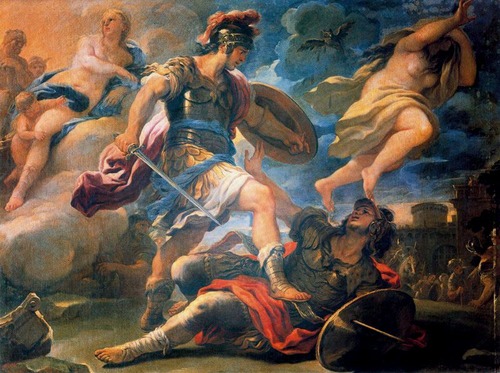
The Romans now have a reputation for dominance and ruthlessly efficient conquests but Vergil has ensured that we also see their founding father Aeneas as a defeated refugee. So, how did they see themselves? How did they imagine that indigenous Italians and others saw them when they first arrived in Italy: aggressive colonizers or pathetic exiles? Either way, they began as migrants. We can observe and explore the complex impact of migrations as they apply to the major role players in the Aeneid. Like when Aeneas and his crew of survivors flee Troy, land in Latium, and claim their own territory. How did Aeneas and his followers’ journey as pathetic migrants early on in the Aeneid morph into the eventual conquest of the Latins in later books? The lot of native tribes such as the Etruscans in the Aeneid may reflect what many in Vergil’s time experienced – displacement from their homelands. A look at broad patterns within the overarching theme of migration will shed light not only on Vergil’s Aeneid but more importantly on the complex nature of Roman identity.

Romans as Imperialist Colonizers
Defining what it means to be Roman to a Roman
 Before we look at how Vergil imagines the indigenous response to the destructive nature of the Trojan founders of the Roman race, it is important to consider what Romans thought of themselves. In other words, what did it mean to be Roman? Status and a reputation for moral virtue were everything to the Romans. It was highly encouraged for Roman citizens to embrace the and to aspire to be an . This was not an easy task achieved overnight. Embodying this Roman ideal would take a lifetime. They wanted to adopt the virtues associated with the past, live by those ideals in the present, and leave a moral legacy for the future. More specifically, “a Roman individual was one who universally acted as a Roman or did Roman things; a single act of allegiance to Rome could not be sufficient to establish an individual as a “true” Roman”, that is one who exercised full rights in Roman politics and was accepted by some of the most prominent families in Rome. According to Cicero and other members of the elite, key characteristics in defining what it meant to be Roman included but were not limited to:
What if Vergil had made this list? What sort of qualities would he have added? Perhaps the most important to Vergil that does not feature on Cicero’s list, is . Vergil consistently describes Aeneas as dutiful, whether describing his responsibility to his family, his fellow countrymen, or the gods. Some scholars even suggest that his pietas is depicted as the driving force behind the success of his journey in escaping Troy, and eventually reaching Italy. What do you think?
Romanitas
 Romans put a heavy emphasis on the idea of . Originally pertaining solely to the people of Rome and its neighboring communities, the definition of a Roman identity vastly changed with the expansion into other parts of Italy, bordering countries, and beyond the Mediterranean. Nonetheless, Vergil communicates the message of spreading what is Roman in the Aeneid, depicting a people who “voyage incidentally for administrative purposes and who see any given place as part of a vast whole” especially in his list of peoples and places in the third book.
Interpretations of ‘Roman’ Expansion
If someone came into your backyard, marked your ground with their and demanded you comply with their rule, how would you feel? Although this wasn’t exactly how the Romans came to rule their empire, the of land was a very common practice during Vergil’s time. Many who do not know the story believe that the refugees from Troy landed in Italy and established Rome with little resistance. As we will see though, the indigenous Italians did not welcome the aggressive migration of the Trojans.
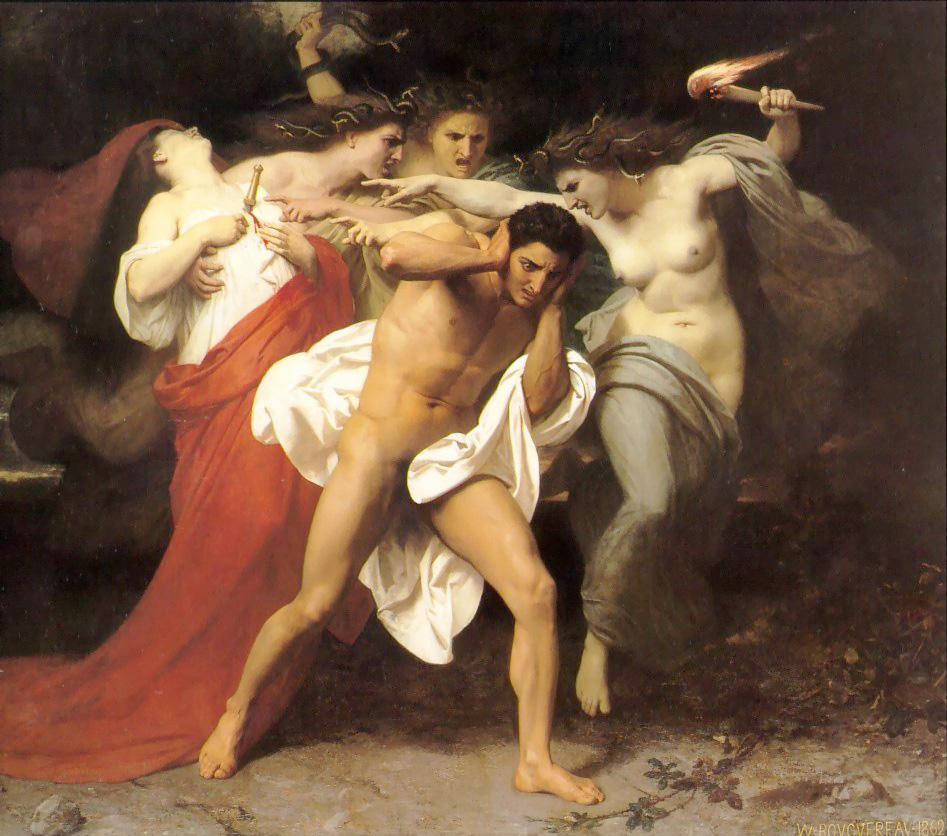 In the Aeneid, Vergil depicts virulent anti-immigrant feelings in both Amata, the mother of the native princess Lavinia, and Turnus, the leader of the indigenous Etruscan tribe. The goddess Allecto, one of the dispatched by Juno, instills these emotions through dreams and enchantment. Juno’s call to Allecto emphasizes the Fury’s special power to ruin family loyalties, and the Fury moves from the private to the public jurisdiction in executing her task. After Allecto successfully infuriates Amata, the wife goes to her husband King Latinus and says
exsulibusne datur ducenda Lavinia Teucris,
o genitor, nec te miseret nataeque tuique?
nec matris miseret, quam primo Aquilone relinquet
perfidus alta petens abducta virgine praedo?
Lavinia is being given to be led away by exiles from Troy,
oh father, does it not move you to pity your daughter and yourself?
does it not move you to pity for the mother whom the faithless pirate
will abandon with the first north wind, seeking the depths
with the virgin maiden having been carried off?
(Aeneid 7.359-362)
After successfully arousing the queen, Allecto moves on to Turnus. She provokes him with the idea of losing his betrothed, Lavinia, and having to submit to a Trojan king. In the appearance of an old woman, Allecto says to Turnus
Turne, tot incassum fusos patiere labores,
et tua Dardaniis transcribi sceptra colonis?
rex tibi coniugium et quaesitas sanguine dotes
abnegat, externusque in regnum quaeritur heres.
i nunc, ingratis offer te inreise, periclis;
Tyrrhenas, i, sterne acies, tege pace Latinos.
Turnus, will you endure so many labors having been
scattered in vain, and will you allow your scepter to
be transferred to Dardan settlers? The king refuses a
marriage to you and denies the dowries sought by
blood, and a foreign heir is sought for the kingdom.
go now, you having been mocked, present yourself to the
thankless dangers, go smash the Tyrrhenian battle lines,
protect the Latins with peace.
(Aeneid 7.421-426)
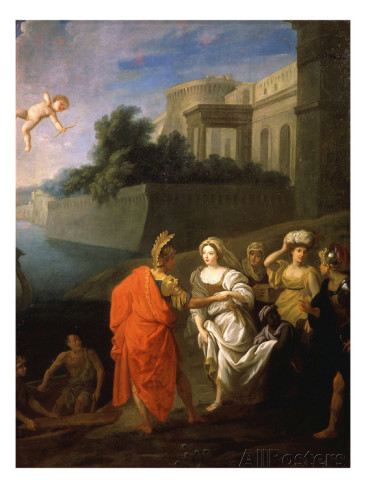 Vergil uses compelling language to depict the strong emotion opposing the immigration of Aeneas and the Trojans. His emphasis on words like and vividly color Amata’s resistance to the marriage of her daughter to foreign blood. Furthermore, she is under the impression that he is going to take Lavinia away from her, recalling Helen’s abduction from Sparta, the crime that sparked the Trojan War.
In the passage about Turnus above, the Fury Allecto begs him to take action on behalf of the Latins, urging him to fight the Trojan immigrants. Her words paint a vivid picture of Turnus transferring his scepter, the symbol of his power and authority over the local tribes, to an of all people. These words portray accepting Aeneas’ marriage to Lavinia as an appalling act of surrender to an outsider. While modern society struggles to quell xenophobia, nobody likes to be displaced by another. But is it worse to lose to a stranger or someone you know well?
Migrating Peoples: Good or Bad?
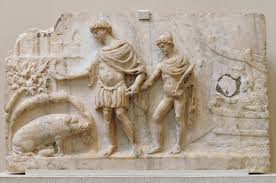 Passages such as these emphasize a view of the Romans as assertive and imperious, taking what is not theirs. The theme of migrating people in the Aeneid helps to explain “the concept that the world can be controlled [as] a powerful motive… as it could not have been before this time and would seldom be again after the fall of the empire”. As one of the great foundation myths, though, the Aeneid communicates the importance and complex interrelationship of migration and identity. Take a look at the melting pot we call America today. Would you be here had a relative not migrated from another ‘country’ or ‘tribe’? In fact, “the explicit message of the Aeneid claims that Rome was a happy reconciliation of the natural virtues of the local Italian peoples and the civilized might of the Trojans who came to found the new city. But… the formation of Rome’s empire involved the loss of the pristine purity of Italy. Thus the plot of the closing books of the poem centers on Turnus, Aeneas’s antagonist, who is made the embodiment of a simple valor and love of honor which cannot survive the complex forces of civilization”. This shift of focus highlights how the simplicity or innocence of indigenous people can often be undermined by a foreign force. Whatever Turnus and the Etruscans might have felt, do you think the legacy of Aeneas, as both an exile and immigrant, loser but eventual winner, ultimately contributed to the Roman sense of identity?