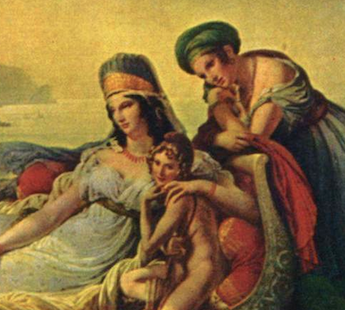

In Vergil’s epic, Aeneas and his band of Trojan refugees seem to embody all aspects of the migrant cycle: they are forced to leave their homeland, experience many challenges on their travels, and eventually find a new land where they can settle. However, the Aeneid includes another group that faces the same trials and in many ways parallels the Trojans’ journey. Vergil writes that the were also migrants before settling in North Africa. Interestingly, they also play the part of an established population that receives outsiders when they host the exile Trojans. Given the Carthaginians’ travels, why do they have such a prominent role in the Aeneid? More importantly, how did Rome’s with Carthage impact Vergil’s description of these people?
Tyrian Migrants: the Origins of Carthage
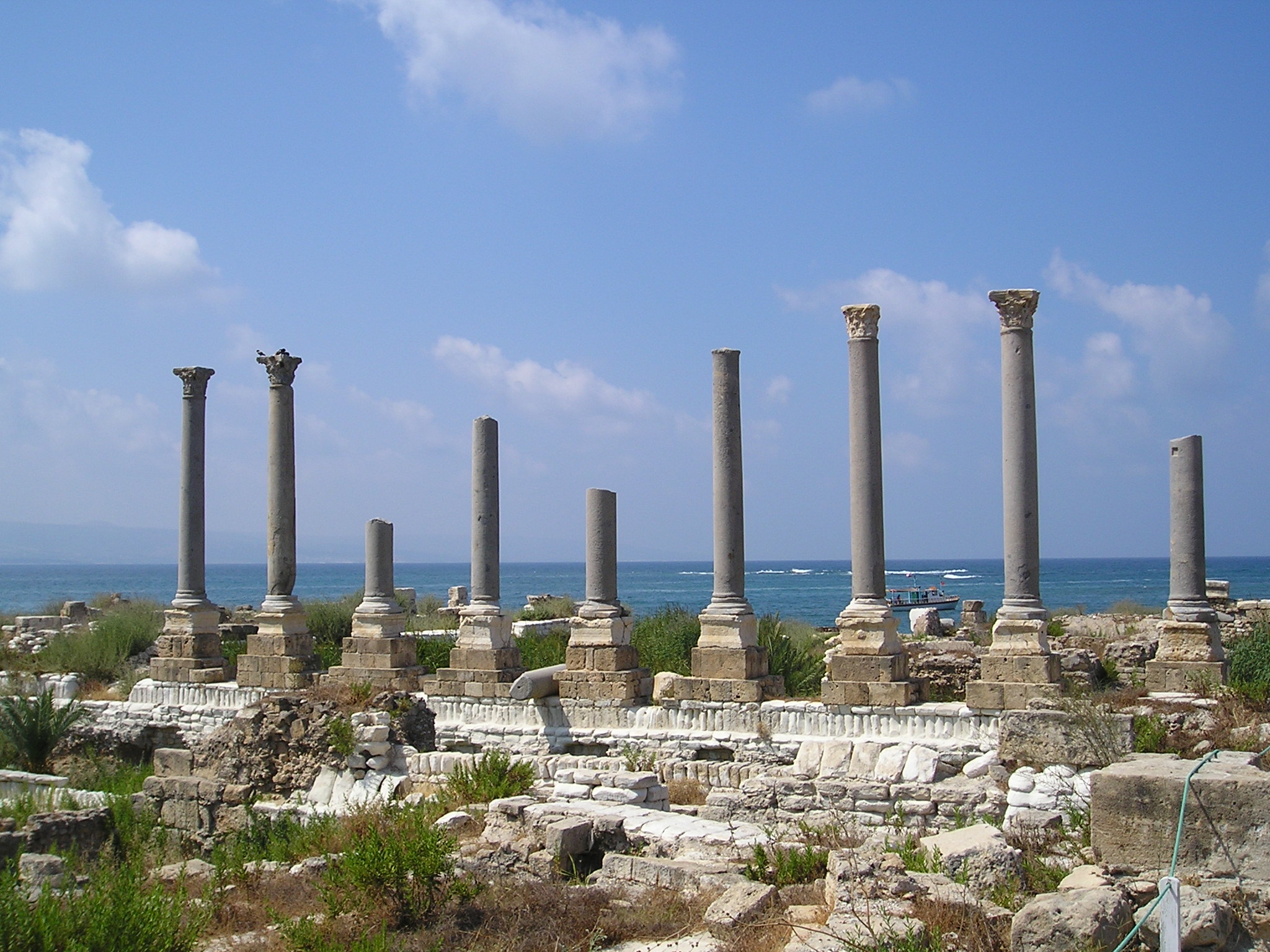
In the Aeneid, Vergil uses the most popular foundation myth for Carthage to provide a background for Queen Dido and her people. According to a number a Greek sources dating back to the third century BCE, Carthage was founded by settlers from . Supposedly, upon his death in 831 BCE, King Mattan bequeathed the kingdom of Tyre to his son Pygmalion and his daughter Elissa, whom Vergil refers to as Dido. After the Tyrian people protested this division of power and established Pygmalion as the king of Tyre, Pygmalion secured his dominance by killing Elissa’s husband Acherbas, whom Vergil calls Sychaeus. Elissa hid her hatred of Pygmalion for his deed, and requested to live with him. In order to help Elissa move in with him, Pygmalion sent her on a ship with a number of his attendants to retrieve her belongings. However, while at sea, Elissa threw a few bags of what she claimed to be Acherbas’ gold overboard, and convinced Pygmalion’s attendants to join her flight from Tyre by arguing that Pygmalion would kill them for the loss of the gold. Elissa and her followers then sailed to Cyprus, where they were joined by a high priest and eighty girls, who would serve as wives for the men, before traveling to North Africa and founding Carthage.
When Aeneas and his companions are shipwrecked in North Africa in the first book of the Aeneid, Venus appears to them disguised as a Tyrian hunter, and recounts Carthage’s origin story with a few small variations. She describes how Pygmalion killed Sychaeus to get access to his gold, and Dido was unaware of this murder until the ghost of her husband revealed the deed. Venus describes how Dido then fled Tyre with Sychaeus’ gold and sailed to North Africa.
his commota fugam Dido socios parabat.
conueniunt quibus aut odium crudele tyranni
aut metus acer erat; nauis quae forte paratae,
corripiunt onerantque auro. portantur auari
Pygmalionis opes pelago; dux femina facti. (Aeneid 1, 360-364)
“Having been roused by these things Dido was preparing her escape and her companions.
the ones to whom there was either fierce hate of the tyrant
or sharp fear assemble; they seize ships, which by chance
were prepared, and load them with gold. The wealth of greedy
Pygmalion is being carried by the sea; the leader of the deed is a woman.”
It is unclear how true this myth is to the actual events leading up to the founding of Carthage, since much of Carthage’s own records of its past were lost when the Romans sacked the city in 146 BCE. While the details of the daring story may have been manipulated by Greek and Roman historians, it is believed that Carthage was indeed founded by Phoenician settlers. Nevertheless, the version that Vergil presents makes the Carthaginians’ flight from their homeland seem extremely similar to that of the Trojans. Both groups were forced to leave homes they loved and were destined to found great cities. The travels that both the Carthaginians and Trojans have to endure in the Aeneid emphasize the similarity between the two groups and the powerful role of migration in the human experience.
Indigenous African Response: the Carthaginians as Colonists
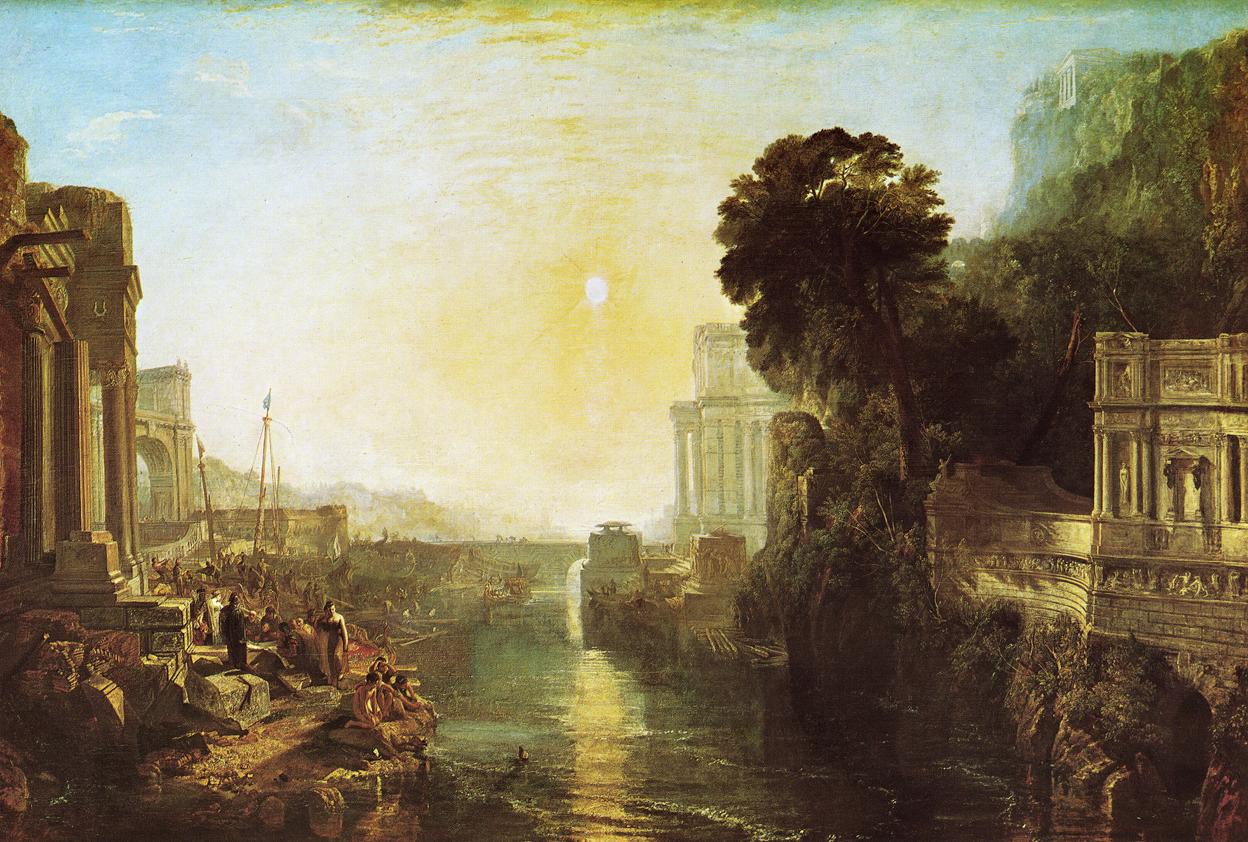
The poet further heightens the shared humanity between the migrant Carthaginians and Trojans by describing each people’s interactions with indigenous populations. Much like the Trojans interacting with the native peoples of Italy, Dido and her fleeing Tyrians faced challenges with the peoples of North Africa in founding their city. According to the Aeneid, when Dido first arrived at the site of Carthage, the native leaders allowed her to claim all the area she could cover with a , which she cleverly tore into thin strips to surround the largest area possible. In most accounts, the North African peoples lived in peace with Carthage, until the city rapidly developed into a powerful mercantile center. The native populations who once granted the exiled Tyrians a site to build a humble city began to show resentment as Carthage surpassed their own towns. According to legend, the Libyan king Iarbas, who initially allowed Dido to peacefully enter his city, threatened to attack Carthage with a superior military force unless Dido agreed to marry him. Dido first complies with his ultimatum to save her city, but then commits suicide.
While Dido does not kill herself to avoid marriage with Iarbas in the Aeneid, Iarbas displays a great amount of hostility towards Carthage. Spurned by Dido’s rejection of his marriage proposal and her acceptance of Aeneas, he complains to Jupiter about the situation.
femina, quae nostris errans in finibus urbem
exiguam pretio posuit, cui litus arandum
cuique loci leges dedimus, conubia nostra
reppulit ac dominum Aenean in regna recepit. (Aeneid 4, 211-214)
The woman, who wandering in our territory set up
a puny city for a price, to whom we gave the shore to be plowed
and to whom we gave laws of the place, she rejected
our wedding and accepted Aeneas into her kingdom.
Iarbas’ tirade is one of the most notable cases of anti-immigrant convictions in the Aeneid and is comparable to the hostility hurled at Aeneas and his company when they arrive in Italy. It shows an important stage in the migrant cycle and further extends the parallels between the Trojans and Carthaginians.
Relationship with the Trojans

The shared migrant histories of the Carthaginians and the Trojans draw the two peoples closer together in the Aeneid. However, their specific behaviors and interactions in the epic establish contrasts between the two groups. The Carthaginians immediately welcome Aeneas into their city and show sympathy for the Trojans’ plight. They serve as generous hosts to their shipwrecked guests. Eventually, due to intervention by Venus, a develops between Dido and Aeneas, and Dido requests that the Trojans stay with her people. However, driven by Zeus’ commands, Aeneas leaves Carthage to fulfill his destiny of founding a city in Latium.
The Carthaginians are gracious hosts, but they display several qualities that oppose the values of the Trojans and their eventual Roman descendants. Their opulent buildings and the importance of a treasure of gold in their background story suggest an excessive propensity for luxury, at the expense of military security and religious piety.

Even though Vergil’s Carthage is bordered by warlike peoples and Dido has a strained relationship with the violent King Iarbas, the Aeneid downplays the Carthaginian military forces or a preparedness to deal with their neighbors. Furthermore, while their city is sacred to and possesses a temple to the goddess, Aeneas never shows discomfort with Carthaginian worship of the goddess who hates his race and caused him to become shipwrecked. Instead, the Carthaginian temple seems to celebrate wealth more than Juno, and Dido never offers honors to the city’s patron goddess specifically. Finally, the fact that Dido is maddened by Aeneas’ departure to fulfill Jupiter’s divine plan shows her vulnerability to earthly desires and suggests ignorance of the gods. The Carthaginians’ focus on wealth and material possessions instead of military power and religious piety directly conflicts with the Roman ideals embodied by Aeneas and his followers.
Relationship with the Romans
Despite the initial period of friendship between Dido and Aeneas, destiny demands an unfavorable ending to the relationship between the Carthaginians and the Trojans. Following Aeneas’ cold departure, Dido goes mad and commits . In some of her last words, she curses Aeneas and his people and plans to haunt him as a shade. While no fighting between the two groups occurs in the Aeneid, the epic sets the stage for future rivalry and violence.
felix, heu nimium felix, si litora tantum
numquam Dardiniae tetigissent nostra carinae. (Aeneid 4, 657-658)
Happy, alas I too would have been happy, if only
the Dardanian keels had never touched our shores.
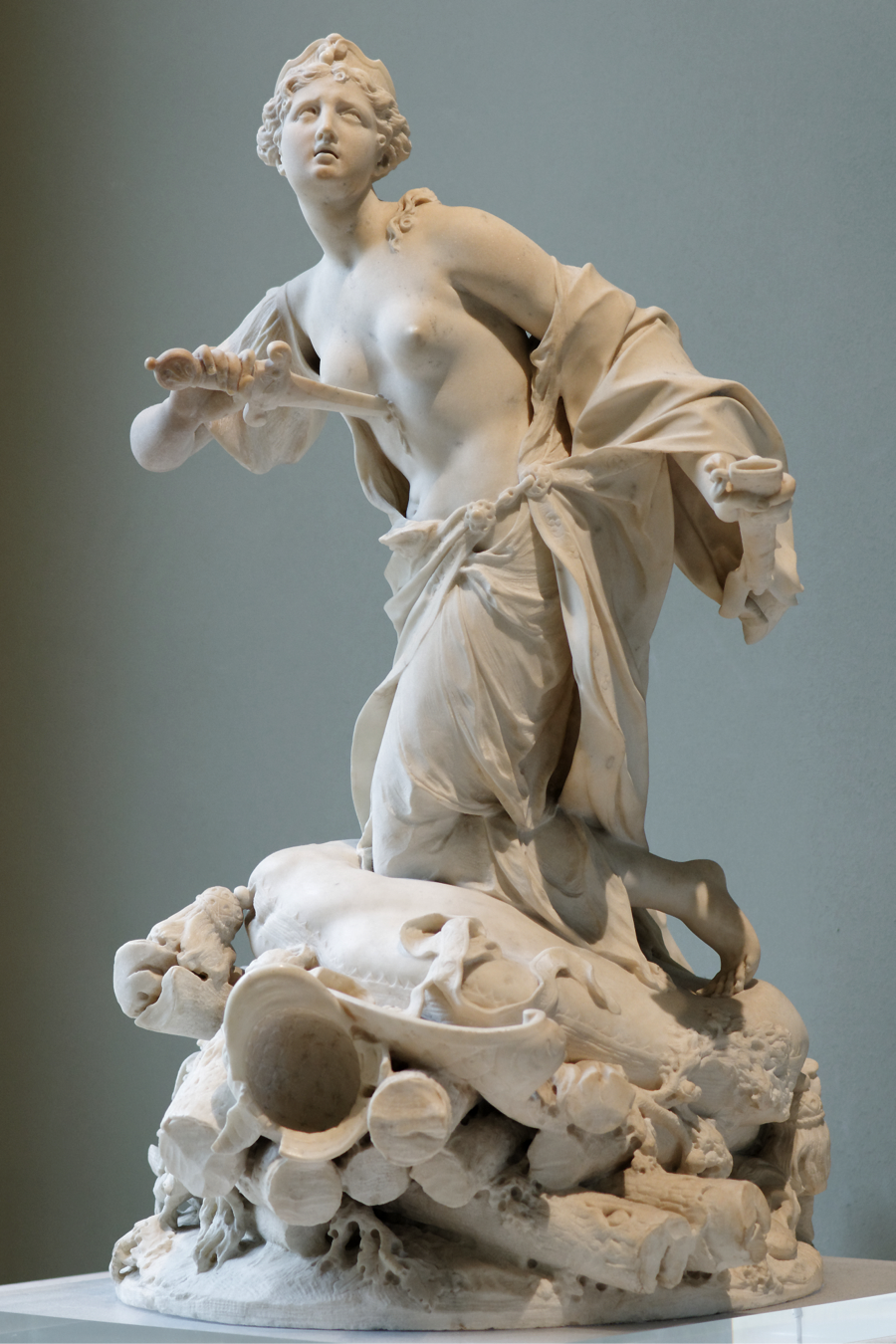
The Aeneid shows the Carthaginians and Trojans as relatable peoples sharing a similar human experience defined by migration, and the tragic character of Dido likely aroused feelings of sympathy for the Carthaginians in Vergil’s Roman audience. Nevertheless, the epic sets the stage for future conflict between the two groups. Vergil mentions their fated rivalry in some of the first lines of the Aeneid.
progeniem sed enim Troiano a sanguine duci
audierat Tyrias olim quae uerteret arces;
hinc populum late regem belloque superbum
uenturum excidio Libyae; sic uoluere Parcas. (Aeneid I, 19-22)
But in fact (Juno) had heard that descendants were being drawn
from Trojan blood who would turn over the Tyrian citadels;
from here a people ruling extensively and proud in war
would come for the destruction of Libya; thus the fates were rolling.
Therefore, by the time Vergil has finished writing about the Carthaginians, they appear as worthy rivals of the Romans, and in many ways the epic celebrates Rome’s long history of conflict with and eventual conquest of these people .
Conclusions
Recounting the history of the Carthaginians almost immediately after Aeneas’ flight from Troy establishes migration as a dominant theme in the Aeneid. Since the Aeneid meticulously recounts their experiences as exiles, migrants, colonizers, and hosts, the prominence of the Carthaginians in the beginning of the epic highlights the importance of movement in the human tradition.
The high profile of the Carthaginians in the Aeneid serves a political purpose. The Carthaginians experience similar trials as the Trojans and their Roman descendants. However, the Carthaginians display distinct divergences from Roman values that allow them to serve as a foil for the Trojans. In addition to emphasizing the Trojans’ virtues, the Carthaginians’ characteristics and their strained relationship with the Trojans at the end of Book 4 make them appear as worthy rivals to Aeneas’ company. The description of the Carthaginians as similar to Trojans celebrates Rome’s historic rivalry with Carthage and its eventual conquest of the great North African city.