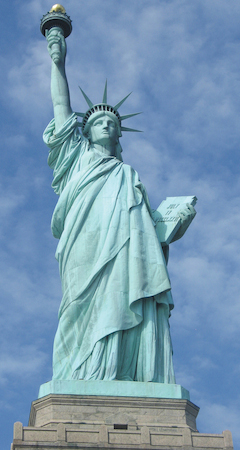
From as early as the 17th century, America has been depicted as the epitome of immigration to a new and better world. “Give me your tired, your poor, your huddled masses yearning to breathe free… I lift my lamp beside the golden door!” The Statue of Liberty, given to the United States by the French and depicting Libertas, the Roman goddess of Freedom, bears this sonnet engraved on its interior. Over the years, this statue, standing about 93 meters high, has become a globally recognized symbol of immigration for those who need a new world. However, finding freedom from an oppressor was not a new ideawhen Europeans colonized this new world. When the Trojans had fallen to the Greeks and needed a new home, they turned to Aeneas, who not only gave them hope but led them to establish one of the greatest cities to ever exist.
The Aeneid in American Education
For the beauty of the poetry, the perspective on language, the patriotic themes, and many more reasons, Vergil’s Aeneid has been considered one of the greatest literary masterpieces in history. Certain colleges have even required applicants to read the epic before permitting entrance. However, it has not always been received this well. Meyer Reinhold cites many examples in 16th through 18th century America when Vergil’s Aeneid was considered to be worthless for the poetry and only useful in learning grammar and syntax. Students were overwhelmed by Vergil and could not enjoy it for the beauty in the language. Not until the 19th century did The Aeneid start becoming a favorite  among classicists and the average American alike. However, Reinhold tries to understand why this is true, considering the undeniable parallels between the Trojans and American immigrants. She notes their shared experiences: “the birth of a new nation in a new land, the wandering of a divinely guided people, the struggle between the settlers and the native people, [and] the transplantation of culture.” For hundreds of years, Vergil was considered only valuable for the Eclogues and Georgics but has this feeling really changed at all in modern American students?
In modern day America, AP Latin students typically in their fourth year of high school are required to translate 4 books of The Aeneid: Books I, II, IV, and VI. According to the College Board, this curriculum deals with many themes, two of which are “Roman Values” and “Views of Non-Romans”. Perhaps, this early education leads these Latin students to make their American lives fit the Roman template that Vergil offers. So what are these Roman-American values? Could does this educational emphasis on “Views of Non-Romans” affect the way we view immigrants?
Honor and Sacrifice
Just as Roman ideals are taught in the classroom, Vergil’s Aeneid extends its influence beyond the classroom into other arenas of American society. The September 11 Memorial Museum opened in the Spring of 2014 and a controversial quote from The Aeneid made headlines.
nulla dies umquam memori vos eximet aevo. Aeneid 9.447
“No day shall erase you from the memory of time.”

This line of The Aeneid comes from book 9 when Nisus and Euryalus die by Rutulian hands. These two friends carry out a night raid on a Rutulian camp, killing numerous soldiers in their sleep. When the enemy rallies to confront them, Nisus escapes but Euryalus is not so lucky. As the enemy encircles Euryalus, Nisus returns to save his friend and attempts to attract the attention of the assailants. It doesn’t matter though. A Rutulian fatlly stabs Euryalus throwing Nisus into a rage. He attacks the soldier with all the force he can muster. As he gets revenge by killing the Rutulian soldier, he dies at the hands of the same man. Mortally wounded, he then leaps onto the corpse of his dead friend to die by his side. 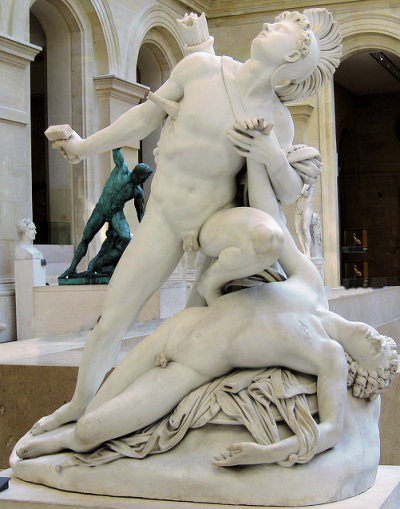
Tum super exanimum sese proiecit amicum
confossus, placidaque ibi demum morte quievit. Aeneid 9.444-5
“He having been stabbed then threw himself onto the body [of his friend] and there at last he became still in a peaceful death.”
Nisus could have and would have gotten away but he went back to defend his friend. He sacrificed himself for another when he returned to save Euryalus. Some modern Americans disagree with the decision to use a quote with such a brutal context in a place for grieving. However, the story holds more than just gore and murder. The two Trojan soldiers of Aeneas die fighting for each other and fighting for their country. Nisus in particular sacrificed his life for a loved one. His death represents those who die as selfless patriots. His courageous rush to the side of his dying friend recalls the first responders rushing into World Trade Center inferno. The attacks on 9/11 were tragic, yes. However, these words from Vergil, which some have called “hollow,” do not diminish but rather celebrate courage, self-sacrifice, and patriotism. There is nothing more honorable than dying for something you love. Just as Nisus returned to save Euryalus, the first responders at the World Trade Center ran into a dangerous situation, illustrating the best of this country and human nature.
Views of Immigrants, New and Old
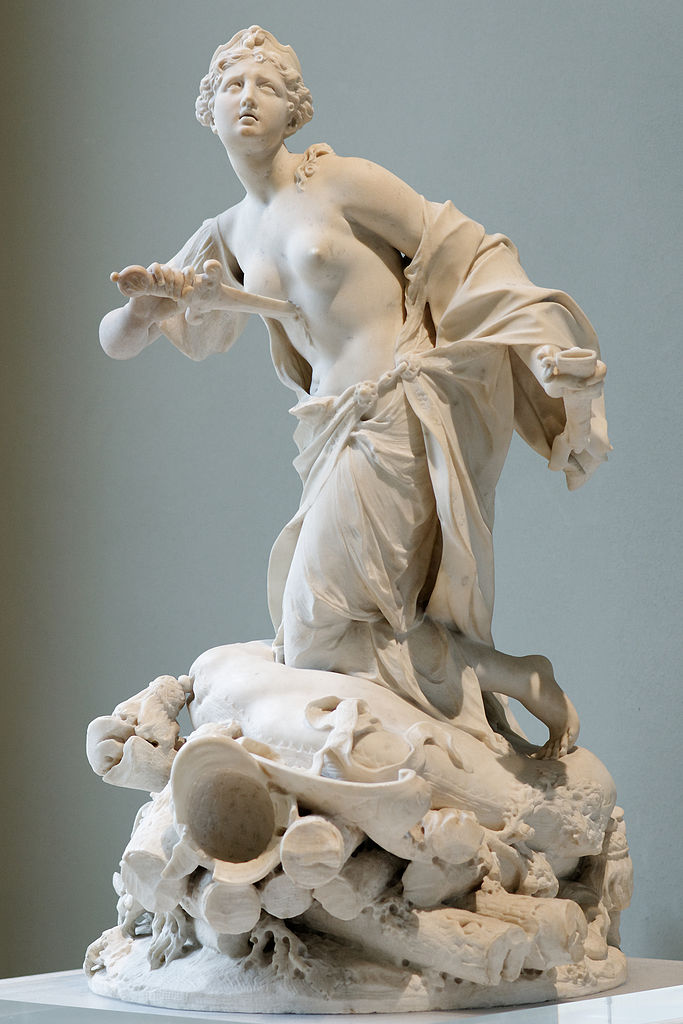
When is one no longer an immigrant? How do we see a new influx of immigrants once we no longer consider ourselves immigrants? These questions arise in book 4 of The Aeneid after Dido welcomes Aeneas and his men. Aeneas is gracious and loving but when he is told to leave, pious Aeneas abides by the wishes of the gods. Dido becomes heartbroken.
 nusquam tuta fides. eiectum litore, egentem
excepi et regni demens in parte locavi.
amissam classem, socios a morte reduxi
(heu furiis incensa feror!). Aeneid 4.373-6
“Faith is safe nowhere. I accepted that needy man having been tossed up on the shore and foolishly I placed him in a part of power. I brought back his lost fleet, his companions from death. (Oh! Mocked I am overcome with rage!)”
Dido took in this immigrant who needed help and he ended up leaving her. Even though he has a good excuse (a direct order from the gods!), Dido dismisses it, and quickly makes his immigrant status an issue. Her reaction raises important questions about the contemporary tendency in some quarters to be highly suspicious of and hostile to immigrants. Dido has every right to be hurt and angry but is Aeneas really to blame? Dido’s perspective might steer some people to lock the door and throw away the key when an immigrant comes knocking. This view suggests that, if a great man such as Aeneas could disregard the hospitality of Dido, no foreigner can be trusted with power or possessions. However, we must remember as a nation that Aeneas is not acting selfishly but piously, obeying the will of the gods. Furthermore, while Aeneas and the Trojans desperately needed the help of Dido, they did not set out to deceive her. Riddle points out that America was initially to be an “experiment of democracy”, a way to escape the oppressor but also build something new and innovative. In Vergil’s account, the tragedy for Dido and Aeneas, and even for Carthage and Rome, is that forces outside their control set their interests at variance. The idea of what could have been, a united Trojan/Roman and Carthaginian nation, is displayed as a potential alternative only to be snatched away. Those who fled to this new American world were researchers looking to take what they liked about the old world and use it to build something great. We must remember the good it does to welcome foreigners with open arms. This melding of ideals and customs that immigrants and natives can share is reminiscent of an old Troy in a new world. America was founded on both the cultural past of the immigrants and the nature and novelty of this new land. It is both past and future. Aeneas was not traveling to found a new city or to rebuild an old city. He embarked on his epic journey to found a great race. A great race can only exist if it combines knowledge of the past with hope for a bright future.
Natives and Foreigners
This idea of accepting immigrants is further cemented in place when the Latins and Trojans engage in battle over Lavinia and the land where they would eventually settle. America grew into the most powerful nation on earth by accepting, absorbing, and eventually Americanizing wave after wave of immigrants into the nation’s melting pot: English, German, Irish, Chinese, Mexican, French-Canadian, Kenyan, et al. Just as the Latins felt pressure to allow the Trojans into their lands, Typically the most hostile response to the latest wave of immigrants came from the preceding wave. Eventually, they were forced to accept that the new immigrants were here to stay and they recognized that the nation had benefited from their arrival. This somewhat reluctant acceptance of what the immigrants have to offer has often been forced by the immigrants angrily demanding recognition. Again and again, Americans have arrived at a conclusion similar to the one reached by the Latins. After King Latinus fears they will be defeated, he offers to the Latins a proposition:
haec omnis regio et celsi plaga pinea montis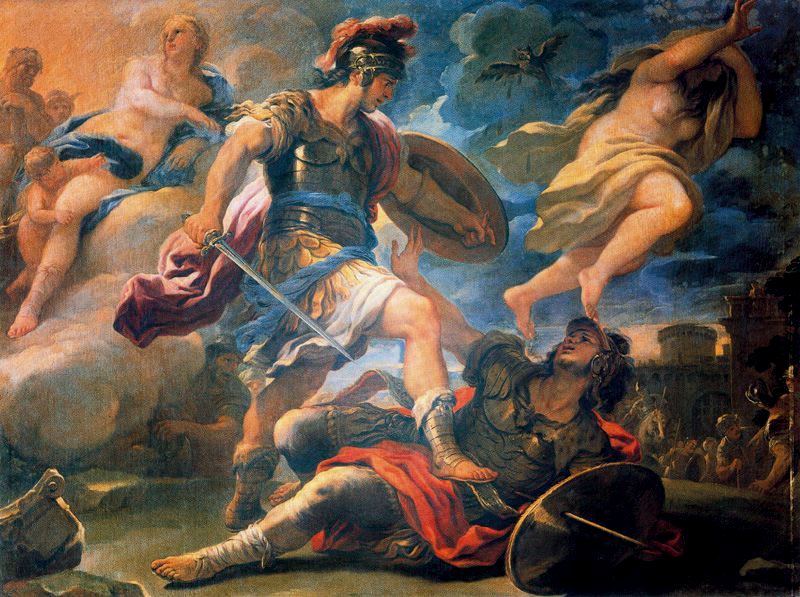
cedat amicitiae Teucrorum, et foederis aequas
dicamus leges sociosque in regna vocemus;
considant, si tantus amor, et moenia condant. Aeneid 11.320-3
“Let all this land and the piney country of the high mountain pass for the friendship of the Trojans; let us name just terms of treaty, and invite them into our kingdom. Let them settle, if their desire is so great, and build their city.”
Latinus felt as though this was their only option: to forge a treaty of peace. Vergil’s Roman audience knew that these two races, Trojan and Latin, would eventually combine to became one great Roman people. Immigrants and natives came together to build their great nation. Neither side could have done it alone, and continued hostility would have come at great cost. Likewise, we modern day Americans would do well to remember the lessons offered by our own history and Roman myth: how much there is to gain by welcoming the energy, innovation, and enthusiasm of new immigrants.
RECAP
- Even in the classroom, we are absorbing ideals and customs from the material we are taught
- A controversial quote from the 9/11 Memorial Museum allows Americans to find solace at the graves of their loved ones
- There are many parallels between migrating to America and to Troy: Are they finding a new world or establishing the old world in a new location?
- When are we no longer immigrants? Have we more to gain or lose by welcoming immigrants?