My group’s next step in completing the research project was to create the outline. For our analysis, Adam asked us to pick two themes that emerged from our coding analysis of the data. This was the first challenge: to limit our list of 32 codes into two common themes. The themes we decided on were the differing understandings of the service conducted within the Croft School and the lack of personal commitment to service and how students only engage in service within the Croft School and not during their free time. After deciding on our two themes we began to discuss how the data fit into each theme. During this discussion we ran into our second problem. Our two themes are pretty similar, which made separating the data to assign to each theme was difficult. For example, Anya had a quote she pulled from one of the interviews with a student, Angelo Muñoz, who said, “kids were not really supportive of the fundraisers. They were kind of against it, they’re um, they were fed up with the fundraisers…these kids didn’t really empathize with the cause. They didn’t care. They went to work with these younger kids at these vulnerable schools and they just went cause they had to. Not that they wanted to.” At first we thought that this would belong under our first theme, of how students viewed their service, but upon further discussion we realized that this quote showed a lack of personal commitment to the service.
This realization led us to have another discussion about our definitions of each theme and how they differ from one another. We decided that the first theme would include data from teachers, students and administration that explores their different viewpoints about the community service that students at the Croft School undertake. We also would include data under this first theme that discusses how the administration, teachers and students have different views on the level of impact that their service has on the greater community. Differently, our second theme would analyze how students did not feel committed to engage in service. When they did do community service, it was because the school required it. The students did not do service on their own outside of school in their free time. Even though most students did recognize that the service they did within the school had minimal impact, most did not take it upon themselves to do more service outside of school. Overall, we recognized as a group that our data might support both our themes and it was ok to choose one theme, which it would support.
A lot of our data fits under both our themes and will help us study how studying community service within the Croft School will illuminate how elitism can be reproduced through artificial attempts by the school to promote service that ultimately fall short of instilling the value of service to others within students. However, something that came up in our class discussion was how to deal with data that does not fit our themes or data that goes against our themes. It does not seem right to leave this data out of our analysis, so as a group we will have to decide how to work this into our paper.
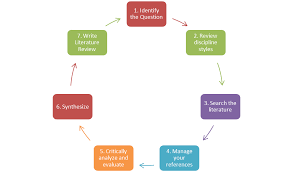
My role for our final research paper is to write the literature review. I have written one literature review before in my Government Research Methods class here at Colby. I was pretty sure even before asking Adam how to formulate a literature review for an education paper, that it may look slightly different than the one I had written for my Government Class. Sure enough, the format was slightly different. Adam told us that the purpose of a literature review is to come up with a thesis about the existing literature on your topic. The goal of the literature review is to ultimately inform your analysis. The focus of our literature review would focus on the role of community service in the elite school context.
(https://iupui.campusguides.com/literaturereview)
Luckily our group had already done the work of compiling relevant existing sources of research done on topics relating to our research question. Our six topics of focus were: the reproduction of elites, the role of community service in elite schools, the impact of short-term/low-impact community service, the relationship between Elite Schools and Public Schools in Chile, and the Socioeconomic Gap in Chile. We divided up the topics per person, assigning two topics per person and we were suppose to find a source for each. My topics were the relationship of elite schools and public schools in Chile and the Socioeconomic gap in Chile. Thus, when I went to write the literature review these were the only two sources I was familiar with. I read through the other notes on the sources Anya, Nick and Julia compiled and somewhat understood what they were about. I guess this is one of the challenges in doing group work. It is hard to write an analysis including sources that you did not personally find. After reading through the sources I started to get a relatively good idea of how to combine all the sources into a smooth analysis in the form of a literature review.
As instructed, we limited our literature review to six outside sources. This is something that definitely feels contradictory as the purpose of the literature review is to gather all existing outside literature that is relevant to your research. I found myself wondering if I had enough sources to make a convincing statement about existing literature on the role of community service in elite schools. Ultimately, I have to accept that for this particular project the literature review is not the focus and thus it is ok that it is limited in quantity.
As I was writing the literature review, another challenge that arose was the temptation to relate the literature findings to our own findings. For example, if something in the outside literature contradicted our findings I found myself wanting to make note of that in the analysis. After questioning this with Adam, he reassured me that the literature review was not the place to discuss any of our own findings, that was the purpose of the discussion. As a group we will write the discussion together, which I am sure will pose challenges as we are all only familiar with parts of the data. This is something that I have learned about group work from this project, you must rely and trust the work of others to inform your own role and work.
In recent weeks, we have been diving into different articles related to global interconnectivity, how the class is recreated in a global context that direct us to the concept of elite and social classes. Bourdieu’s text is really overwhelming since concepts are explained with five-line long sentences. However, after unpacking some of his theories in class, I realized that it was very helpful to the coding process and started to make sense of emerging themes in different ways.
When we first started to look into the data, we were drawn to the fact that a lot of the students in the school share the same quality, which is mobility. This mobility we are referring to is not social mobility but simply physical mobility that students and their family have, the ability to travel across the world relatively easily. Therefore, we identified a couple of codes like “move”, “travel”, and themes related to immigration. We knew that this list of codes is of great significance but we couldn’t find a category to define it. Then it came Bourdieu’s concept of habitus, which provides a possible interpretation of traveling.
There are people in the world who have to leave their home due to various reasons like natural disasters, political instability or even loss of human rights in their home countries. Their travel is not derived from their own will, differentiating them from those whose physical mobility contributes to social mobility and resulted from their capital as the elite class. The elite class’s moving from one country to another one is a skill, is a way of solving problems with the freedom to choose the environment. The student’s family might have moved across borders for better-paid jobs, or for a higher quality of education. They even have the financial capital to gain access to multiple cultures by frequent traveling. By considering the theme of mobility as a habitus of the elite class, it was much easier to understand why it has been occurring repetitively.
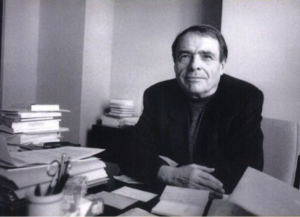
Ragged University: Social Capital and Pierre Bourdieu: A Digest
Bourdieu’s theories of fields and boundary also helped me to gain knowledge of another list of codes especially the IB curriculum. To stand out in this Scandinavian country, the International Baccalaureate curriculum sets the boundary of the community that has more diversity and is different from the commonplace. Like many of the interviewees stated, they were aware of being exotic and not fitting in in the society due to this country’s homogeneity. The outside society has created a boundary that is actually strengthened in KIS with a variety of means, like using IB curriculum, assigning characteristics to this group (more respectful, better cultural understanding). Although the initial boundary is not set to benefit this group of people, they have successfully utilized it to create an international elite class in KIS.
Coding is very challenging because we are new to research. For those who are experienced, it might be manageable to identify codes and possible themes while we are hesitant if certain codes would be repeated and helpful for us to analyze the data. After learning Bourdieu’s theories, I think it started to make sense of how and why an elite class behaves in such ways. Therefore, it provides us with tools to code in the process. We are looking forward to finishing the coding and moving onto analysis in the next two weeks.
In a past blog post, I have addressed just how challenging it can be to work with data that you did not collect yourself. By not having the ability to control the questions asked or be present for the interviews, it can be hard to truly wrap your head around what message they were trying to convey to the interviewer, or more importantly, what they communicated by not explicitly sharing some information. Yet, this is the hand you are dealt with this research project. Knowing that I have no control over the data I have has made it quite challenging to synthesize it for the narrative findings and pull out the relevant quotes, as I was never too sure if I was interpreting the content of their speech correctly. In the process of writing up one of the narrative findings for our paper, I have been navigating the challenges of finding the correct way to interpret what students and teachers are trying to say through the content of their interviews and determining how to navigate contradictions in the data that go against our general findings.
The narrative finding that I am writing about has to do with the fact that students at the Croft School know that service work is important, but they do not do it outside of the school context and that they know it has little impact, demonstrating their lack of personal connection to this work. In order to represent this view, I am pulling quotes about what service work students do, how they feel about the impact that it is having, and why they feel that this work matters to them. The main challenge with this process is making sure that when I am pulling quotes, I am not putting words into these students mouths or assuming what they want to say so that I can make their quote fit into my data. In order to do this, my method of choice was to lay out all of my relevant quotes and read through my narrative findings with just the quotes first to ensure that after reading, I had conveyed the message that I was hoping for. Once I felt that I had successfully done that, I went in and added my own text to connect and introduce each of the ideas in my narrative findings and each of the quotes individually. Although I could not have been there when collecting the data to know exactly what they meant, I felt that this process was allowing me to be most true to the data. Through this process, I felt that I had allowed the quotes to speak for themselves, meaning that the best process for analysis was actually offering minimal formal analysis, ensuring that the message conveyed was that of the students and teachers experience, and not the message that I had decided I wanted them to share.
While it took me some time to determine the best way to go about this part of the writing process, it was not the most difficult thing I had to do. While so many of my quotes represented exactly what we were trying to argue in our paper, that students have a lack of connection to service work, there were some outliers. Some quotes talked about how students are all aware of how important service work is, and some mentioned that some students graduate from the Croft School to do service work as a profession or in college. With these examples, it was hard to say that students did not care about their service work in a cut-and-dry way. There were obviously some contradictions that needed to be navigated here. I struggled long and hard with what to do with my contradictions. I knew it wasn’t right to ignore them, as they had some meaning to them in the grand scheme of this research. I chose to add them towards the end of my section, using them to point out that this work does have a positive impact on some students who do it. Yet, as it says in “Analyzing Qualitative Interview Data: The Discourse Analytic Method” by Sanna Talja, the process of analyzing and interpreting qualitative data has to do with putting together what is called the “jigsaw puzzle” and acknowledging significant and strong patterns that are found in the data (Talja, 1999, p.467). While some of the Croft students acknowledged that some students allowed this service work to have a positive impact on their life post-Croft School, the overwhelming majority of students and teachers seemed to note that this work is not being done in a genuine way. This idea, one of our main ideas, had not been disproven. It had its contradictions but that did not make it invalid.
http://www.quickmeme.com/meme/35pt2d
By noting that this pattern had some contradictions, I feel that I will have more to work with when moving on to my analysis section of the paper. In being able to state that some students do go on to do this work, we can show through Bourdieu’s work on capital that they are taking the forms of cultural capital that the Croft School gave them and bringing them into their future, allowing their capital the potential to shift, change, or increase (Bourdieu, 1996). What this shows is that this service work is benefitting them in many ways that will extend beyond their time at the Croft School. They can take this cultural capital and use it to demonstrate their morality and humility to job prospects and universities. In looking at this data in this way, we can finally show how this idea supports our main idea: these students do not have a deep connection to the service work that they are doing. Whether they do this work while only at the Croft School or beyond, they are using their time and experiences with service to provide them with more cultural capital that will benefit them in the future, not in respect to their character and care for others but in the professional realmto advance their advantages. Therefore, while this example did explicitly contradict our main point, in examining it as part of the pattern and puzzle that is our data, we can see that it not only fits in with the data, but further proves our point as well.
As I mentioned, the fact that I had no part in collecting this data was an added challenge. When I went to use the data, I had to interpret, analyze, and sometimes it felt like I had to assume. So much lies in the words of the participants, but I worried that I was missing other important aspects, such as their body language, intonation, or perhaps some diverted eye contact. This process of figuring out how to interpret the data and navigating its contradictions has been one of finding the best way to take the data at its word and doing everything that I can to allow it to speak for itself while also finding its patterns and ensuring that these commonalities were made visible by noting interesting trends within the data.
References:
Bourdieu, Pierre. (1996). The State Nobility: Elite Schools in the Field of Power. (Clough, L.C., Trans). Stanford, CA: Stanford University Press. (Original work published 1989)
Talja, S. (1999). “Analyzing qualitative interview data: The discourse analytic method.” Library & Information Science Research, 21(4), 459-477.
It was a long and arduous process, but the data is coded, and the themes have been found. My groups members and I have chosen to write about community service at the Croft School and how it is considered important but the work they do is not actually impactful or meaningfulto the communities they are working in. Now that we have this idea solidified, the next step is to find sources for our literature review that we can use to analyze and theorize the data we have coded. I began looking through a number of databases to find sources on how community service serves the function of reproducing elites and allowing them to maintain their eliteness. I wanted to find sources that showed, more specifically, how this practice of doing service positivelyimpacted those that are doing it more than those that they are trying to help. I wanted to see what theories other authors had used and how they connected these ideas of community service and social reproduction.
https://imgflip.com/i/162×48
In my search, Bourdieu was a very relevant source. Many scholars have written on this topic, and as I plan to, many have used Bourdieu’s ideas to theorize their findings. His work on how elites doing service work allows them to maintain their eliteness is very relevant to our project. The students at the Croft School do service work so that the school can emphasize how deserving their school and students are of praise. They have so much, but they give back as well so it is all justified. Bourdieu’s concept of invisibility is very important as well because it shows that the only reason why this process is allowed to continue is because it is so secretive. If people were aware that elites were doing this work to maintain their position in society, they would be appalled. So, the elites do their service work and gain more and more cultural capital while the communities that they work on suffer at the hand of their reproductive practices (Bourdieu, 1996). This source has an obvious link to our project, as Bourdieu even explicitly speaks of the reproductive power of elites doing service work.
However, Bourdieu was the obvious choice. Even Yoda agrees that Bourdieu is always relevant when talking and writing about the reproduction of different forms of capital! To deepen my understanding and analysis, I wanted to find another source as well. I browsed countless databases, looking for articles on how service work reproduced eliteness and the negative effects of service work, but was finding it so much easier to find sources on the benefits of service work. So many of the articles were examples of how service work can be good for those that do it and the schools that require it.
At first, I was feeling at a loss. How could these types of articles help me in my analysis of the Croft School? I was looking for articles on how service work reproduces elites, and these articles were all showing service work to be a great thing that schools offered their students. However, I finally came across an article and I could instantly see how I could use it to further my analysis. This article was titled, “Doing Well by Doing Good: A Study of the Effects of a Service-Learning Experience on Students Success” and it is about how having service-learning experiences in a school’s curriculum results in students performing better academically in other subjects (Berson et. al., 1998). I could use this article to articulate one specific way in which service work wasbenefitingthe students who do it over others. Because service work was allowing them to perform better academically, it was providing them with yet another advantage over those that they were working on. This work was allowing elites to not only distance themselves from those in underprivileged communities, but it was also allowing them to get ahead of the members of those communities academically, giving them even more resources in their lives. This article would factor nicely into our paper, showing just how much the students of the Croft School were benefiting from the service work they were doing, with no notion that they were doing much good for the communities that they were going into.
Finding articles and papers that are relevant to what you wish to write about can be a challenging task. There are so many works out there, but it can often feel like there is not one that says exactly what you want it to say. What I have learned through our exploration of theories with Adam is that the theory does not always fit perfectly. Oftentimes, the work of applying theories and using the works of others to further your analysis is about finding connections between your work and that of the other person so that you can use what they found to make sense of what you have found. Additionally, sometimes, it can be useful to employ multiple theories. In my case, I will use Berson et. al.’s article to show how the Croft School is using the practice of service-based learning to further the knowledge and prestige of its students. By making its students more elite, it makes the school itself more elite as well. In Bourdieu’s eyes, through the practice of service-based learning, Croft students can gain even more academic capital which they can turn into other forms of capital and in turn, increase their elite status. The practice of service-based learning is a means for them to reach their eventual goal of being as elite as possible. Therefore, by combining the ideas of Berson et. al. and Bourdieu, I can most effectively analyze the practices at work at the Croft School.
While it is not always easy to apply theory to further analysis, it is the theories that allow the reader, and the author themselves, to make sense of what is happening in the analysis. By finding theories that apply to our paper, I have found it easier to make sense of what I want to say in the paper and how I will show that what our paper is about matters. It is not a work that stands on its own, but rather part of a long and complicated dialogue between works. It is another voice among others, trying to make sense of this cycle of reproduction of elites, moving closer to an answer of what this process truly entails.
References:
Berson, Judith S. and Younkin, William F. (1998). “Doing Well by Doing Good: A Study of the Effects of a Service-Learning Experience on Student Success.” Higher Education. Paper 184. Retrieved from https://digitalcommons.unomaha.edu/slcehighered/184/.
Bourdieu, Pierre. (1996). The State Nobility: Elite Schools in the Field of Power. (Clough, L.C., Trans). Stanford, CA: Stanford University Press. (Original work published 1989)