
From Bourdieu to coding
In recent weeks, we have been diving into different articles related to global interconnectivity, how the class is recreated in a global context that direct us to the concept of elite and social classes. Bourdieu’s text is really overwhelming since concepts are explained with five-line long sentences. However, after unpacking some of his theories in class, I realized that it was very helpful to the coding process and started to make sense of emerging themes in different ways.
When we first started to look into the data, we were drawn to the fact that a lot of the students in the school share the same quality, which is mobility. This mobility we are referring to is not social mobility but simply physical mobility that students and their family have, the ability to travel across the world relatively easily. Therefore, we identified a couple of codes like “move”, “travel”, and themes related to immigration. We knew that this list of codes is of great significance but we couldn’t find a category to define it. Then it came Bourdieu’s concept of habitus, which provides a possible interpretation of traveling.
There are people in the world who have to leave their home due to various reasons like natural disasters, political instability or even loss of human rights in their home countries. Their travel is not derived from their own will, differentiating them from those whose physical mobility contributes to social mobility and resulted from their capital as the elite class. The elite class’s moving from one country to another one is a skill, is a way of solving problems with the freedom to choose the environment. The student’s family might have moved across borders for better-paid jobs, or for a higher quality of education. They even have the financial capital to gain access to multiple cultures by frequent traveling. By considering the theme of mobility as a habitus of the elite class, it was much easier to understand why it has been occurring repetitively.
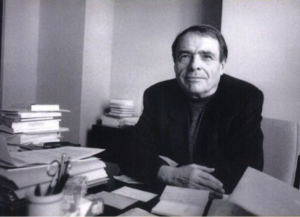
Ragged University: Social Capital and Pierre Bourdieu: A Digest
Bourdieu’s theories of fields and boundary also helped me to gain knowledge of another list of codes especially the IB curriculum. To stand out in this Scandinavian country, the International Baccalaureate curriculum sets the boundary of the community that has more diversity and is different from the commonplace. Like many of the interviewees stated, they were aware of being exotic and not fitting in in the society due to this country’s homogeneity. The outside society has created a boundary that is actually strengthened in KIS with a variety of means, like using IB curriculum, assigning characteristics to this group (more respectful, better cultural understanding). Although the initial boundary is not set to benefit this group of people, they have successfully utilized it to create an international elite class in KIS.
Coding is very challenging because we are new to research. For those who are experienced, it might be manageable to identify codes and possible themes while we are hesitant if certain codes would be repeated and helpful for us to analyze the data. After learning Bourdieu’s theories, I think it started to make sense of how and why an elite class behaves in such ways. Therefore, it provides us with tools to code in the process. We are looking forward to finishing the coding and moving onto analysis in the next two weeks.