
Bursting The Bubble
While in one of my previous posts I wrote about how I was sitting outside in 70º weather, the flurries of snow currently falling outside my window make Colby feel less like a bubble and more like a snow globe. For the past two years, I have experienced the Colby bubble: not feeling up to date on current events, feeling extremely validated in all my opinions, and the strangeness of being able to drive back to Colby after CCAK in a small, rural, poverty-stricken town. I simply accepted the Colby bubble; I never questioned it- until now. Through researching elite schools, I now feel as though I understand why and how the bubble exists.
After the election, SNL made this clip, entitled “The Bubble.”
This sketch highlights so many of the aspects of what living in a bubble, especially the elite bubble, encompasses. Here are some of the sketch’s most noteworthy and poignant lines:
“The bubble is a planned community of likeminded free-thinkers… and no one else”
Bourdieu notes that elite spaces are often “as internally homogenous and as externally heterogeneous as possible with respect to a number of fundamental criteria.” I remember that when I first read this earlier in the semester, I felt as though Bourdieu said exactly what I had been thinking and struggling to put into words. The promotion of “free-thinking” within elite institutions is ironic since 1) most of their members are like minded (internally homogenous), 2) they often prevent people with different views and backgrounds from entering.
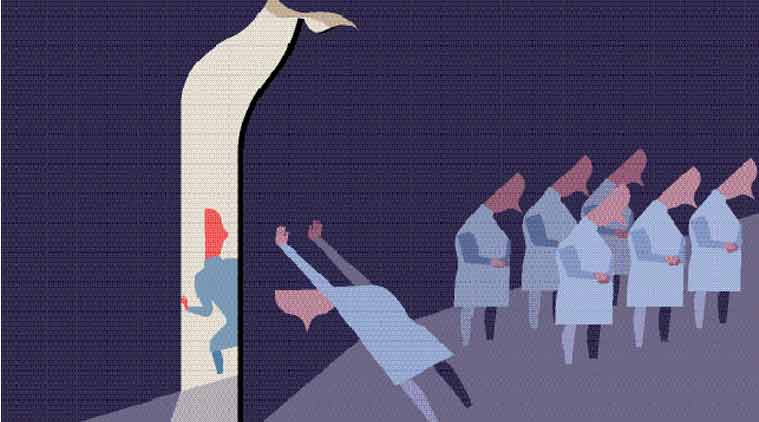
Eliteness is built upon the foundation of exclusion, and the process of researching the Croft School showed this. There were a few scares this semester where we feared our access to the Croft School could potentially dissolve and we would be excluded from their world. Thankfully this didn’t happen and we remained on the inside. While I previously knew that gaining access to elite school was tricky, experiencing it for myself brought a realization of the cyclical nature of needing to use your own elitness in order to gain access to elites.
“Anybody is welcome to join us, 1 bedroom apartments start at 1.9 million dollars”
Exclusion doesn’t only apply to like-mindedness, but economic capital as well. Over the course of this semester I have come to truly understand that while economic capital does not encompass the entirety of social class or eliteness, it is an extremely significant aspect. The idea that anybody can be elite if they work hard and make money is a singularly meritocratic viewpoint that doesn’t acknowledge the systematic forces working in favor of elite reproduction. One of the most mind-blowing findings in researching the Croft School was that it has no financial aid. That automatically eliminates a large group of people from attending, leaving it open to only the most economically elite.
“Join us, starting in 2017”
Clearly, the development and execution of any major project takes a long time. I have never been involved in a research project that 1) has spanned months, 2) is so collaborative, and 3) is a contribution to a much larger work. Taking our time with the research, theory, interviews, case studies, and discussions allowed myself, my group, and I think the whole class, to deeply explore our topic from all angles. After dedicating so much time and energy to the research, I feel not only extremely invested in what I’m doing, but also highly knowledgeable. I thus find myself bringing up Bourdieu and the mindset of elites and reproduction into the most random conversations.
While I’m definitely still in the bubble, I now recognize both its comforts and harmful aspects, and I’ve definitely pushed myself from safely in the middle to a place closer on the edge.

