There are a few things to keep in mind while preparing for your internship in Malawi.
Documents and Embassies
You’ll need a valid passport to travel abroad. The US Embassy also recommends it be valid for a minimum of six months beyond your expected return date.
Consider registering your trip with US embassy at: https://travelregistration.state.gov/ibrs/ui/index.aspx. Alerting the embassy means you can receive Warden Messages with political updates and the US authorities will know where you are in case of an emergency (such as a political emergency or national disaster).

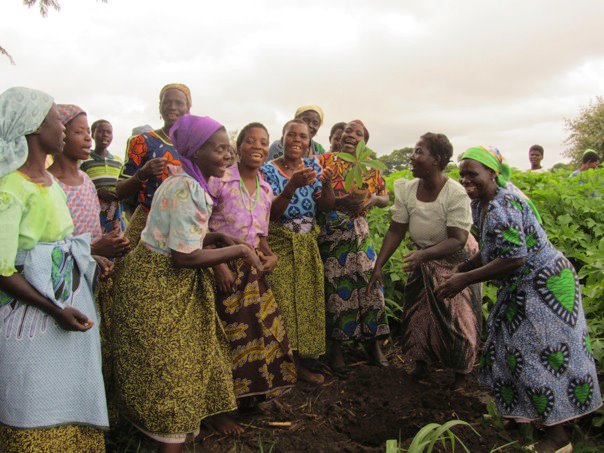
Audrey, a member of Chadika
You should also leave a copy of all important documents with your emergency contact. This should include a copy of your passport and vaccination card, your bank information, travel insurance information, flight itinerary, etc.
Health and Insurance
Before leaving for Malawi, you should talk to your doctor to discuss your health status and the necessary vaccines; plan to meet with your doctor as soon as possible as some vaccines take up to a few months to collect and administer. Use the Center for Disease Control’s Malawi page for further reference. Your doctor should give you a yellow vaccination booklet that will list your vaccines. This can be used to proved you are up to date and have been vaccinated for all the necessary illnesses.
Although yellow fever isn’t found in Malawi or on the CDC’s list of recommended vaccines, interns have had to prove vaccination for yellow fever at the airport upon arrival in Malawi as well as at the Zambian border.
Make sure you have enough of all medications when leaving for Malawi. Although there are pharmacies in town, access to every medication cannot be guaranteed. Brining a basic kit of standard medications is smart (anti-diarrheal, ibuprofen, motion sickness, etc.). Sunscreen and mosquito repellent are also a must!
Consider buying travel insurance for your trip as well. STA offers the most cost-effective student insurance, as their $22 student plan is affordable and includes basic yet comprehensive coverage.

Money
Before leaving, make sure you tell your bank and credit card companies that you will be traveling abroad. Make sure you list all countries you will be traveling through, including in transit, so that your cards and accounts are not frozen for suspicious international activity.
While in Malawi, you will get the best exchange rate when you exchange US dollars (Euros, or another foreign currency) for Malawian Kwacha, the local currency. Although there are ATMs in Area 3 where you’ll be staying, they give a worse rate and charge additional fees (check with your personal bank to learn more) than what you’ll experience at an exchange bureau. Most money exchange bureaus in Malawi no longer accept travelers checks. Most large businesses in Malawi accept credit cards, although there is often a service charge (around 5%) associated with the transaction.
Please also note that you will get a better exchange rates for 50 and 100 bills ($20s, $10s, $5s, and $1s will get you a worse exchange rate). Many exchange bureaus only accept USD that have the “big head” on them, so request large bills that have been made within the last 5-7 years to get the best exchange rate!
Misc.
Electricity in Malawi is 230V/50 Hz compared to 120V/60 Hz in the US. The plugs in Malawi are also shaped different than US plugs. Adaptors change the shape of the plug but not the voltage; they are useful for electronics such as laptops and iPods that have built-in converters. Converters change the voltage of the electricity coming out of the wall and entering the electronic; they are most useful for smaller electronics that do not include converters. When in doubt, read the labels on electronics to learn their output and input values; use a converter if the input range does not include 230V.