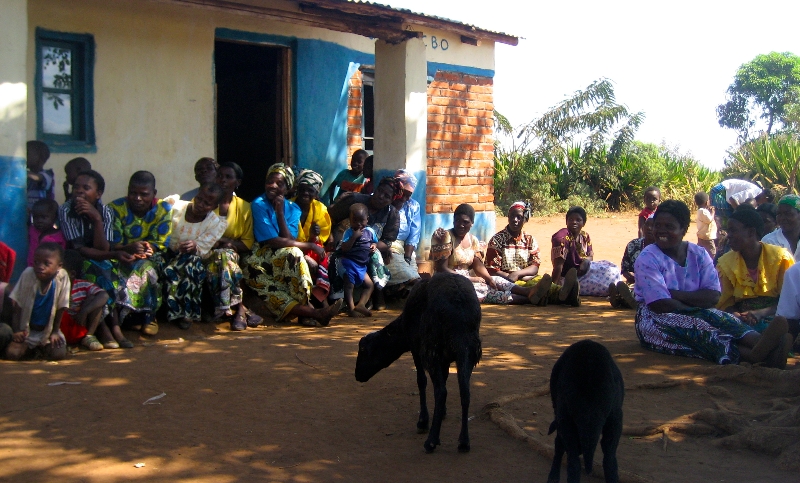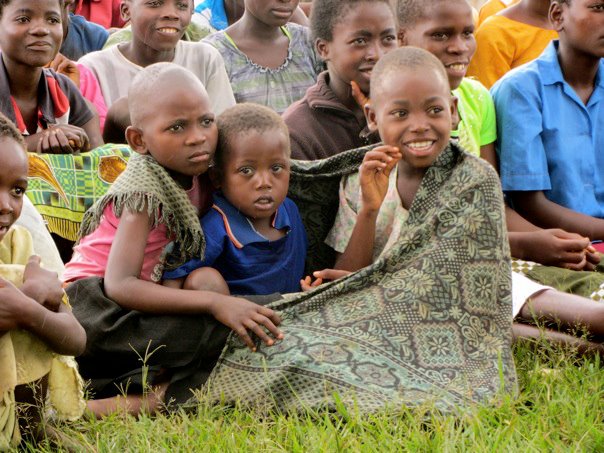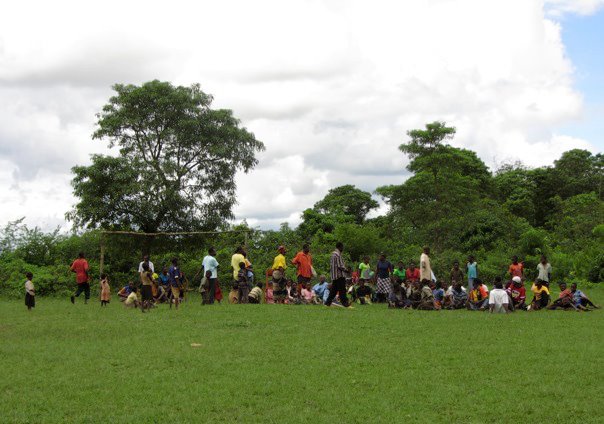
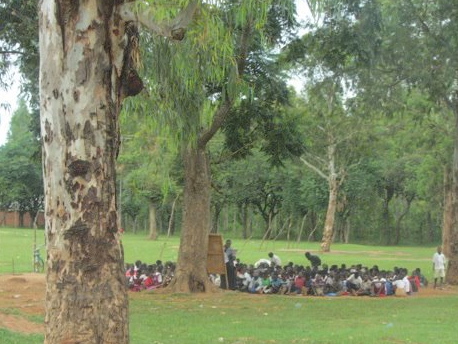
Classes that are too big for the classroom are taught outside
The average child in Malawi can expect to attend school for just nine years (Central Intelligence Agency, 2012). 62.7% of the total population is functionally literate, although only 49.8% of women can read compared to 76.1% of men (Central Intelligence Agency, 2012). Lillian Sankhulani (2007) attributes this to the hardships Malawian youth face when trying to pursue their education. She argues that familial responsibilities compete with academic obligations and that household chores often win out. This friction is heightened for females because girls “were considered a source of domestic labor” (Sankhulani: 102). Furthermore, boys often felt entitled to more resources than their sisters because they were the future inheritors of the family fortune (Sankhulani). As a result, boys had access to more financial support, food, and academic resources while girls were expected to spend more time doing domestic housework, which made them late to school in the morning and required their attention after school, eliminating the possibility of completing homework.
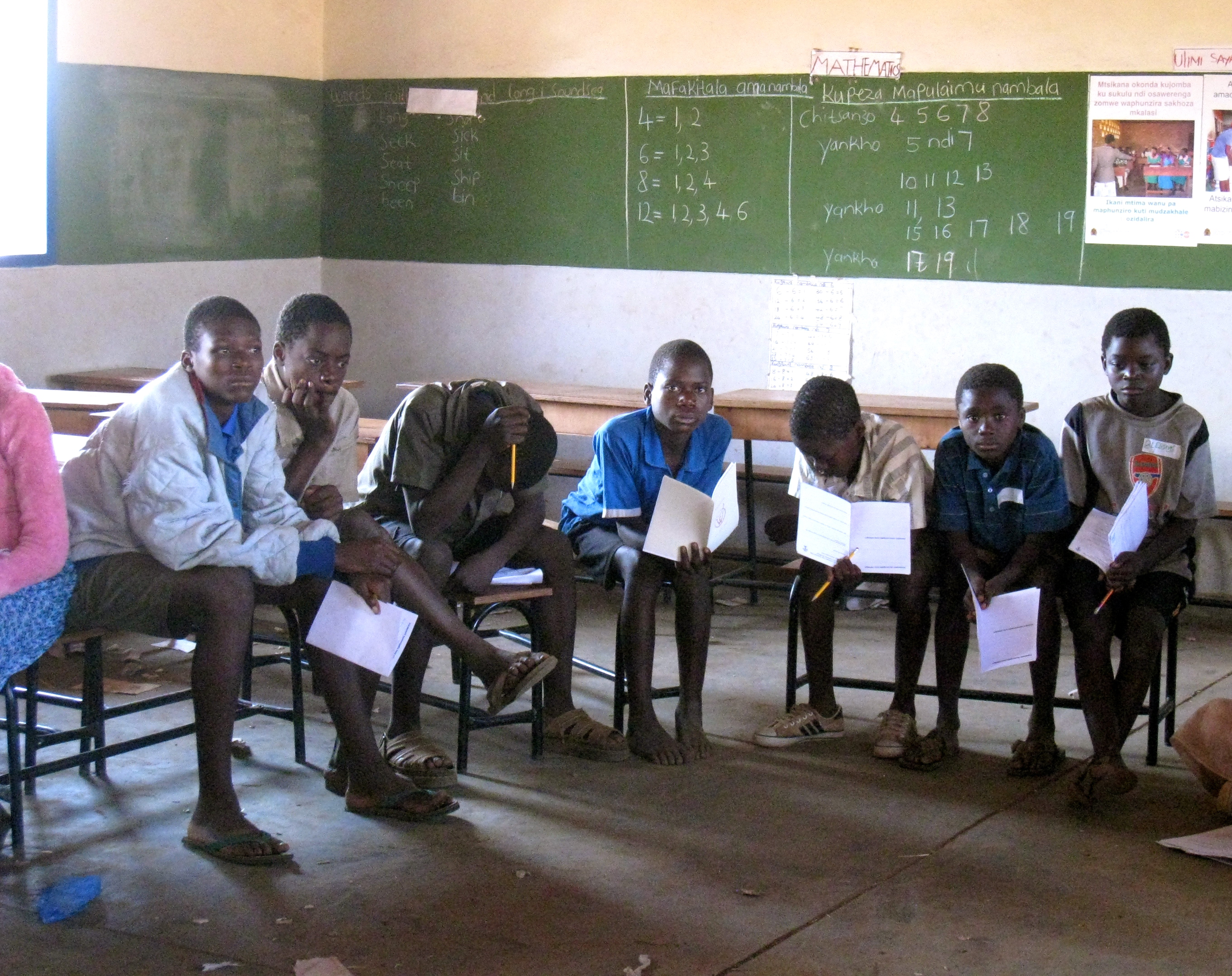
Standard 8 students listen to a health lesson in class
Sankhulani goes on to describe a cultural practice called gowelo where young women move out of their parents house after beginning puberty. The reasoning stems from a belief that a menstruating daughter can poison and kill her father if she prepares salt for him to eat. As a result, many girls live in houses separate from their family compounds and find themselves with new freedoms and liberties that can distract them from their education.
Click here for the Ministry of Education’s webpage.