Did fake news really help Trump win the election?

December 3rd, 2019 2 comments

As the 2016 election drew closer, headlines such as “Pope Francis shocks world, endorses Trump as president” or “WikiLeaks confirms Hillary sold weapons to ISIS…Then 

Fig 1. An example of a fake news headline

drops another bombshell”. There was even a scandal insinuating that in Hillary’s leaked email, “pizza” was just a cover up for a possible human trafficking scheme or child sex abuse ring. In actuality, these events never took place, and several reputable news sources, such as the New York Times and Fox News debunked any criminal activity involving “pizza”. So how did so many people fall victim to the headlines and why were these false memories so wide spread? Is there a possibility they could have helped Trump win the election?

Memory is a system that is important to our day to day lives. Without it we wouldn’t know where to go for food or water and we have to relearn basic tasks, like driving, every day. If memory is so important, how could our brains twists our memories, falsify them, and change our truths? 

Memory is made up of three processes: encoding, storage, and retrieval. Encoding allows us to take in sensory information from our environment before we store it in our short term or long term memory during the process of storage. Retrieval is then where we go to reassess that information. One example could be as simple memorizing vocabulary words for an exam. When you first learn the words, your auditory processes recognize the words, where they are stored into your short term memory. When you study those words at home, they are then stored into your long term memory. During the actual exam, the words are retrieved from your long term memory in order to ace the exam. While our memories decay over time, most false memories are a product of failure to encode or a failure to store information properly.


Read more…

Categories: Memory Tags: ,

It was him! He committed the crime! So I thought….

November 27th, 2019 5 comments

Imagine that you have witnessed a crime where a burglar broke into your neighbor’s home and committed assault on the people present in the home. As the burglar left your neighbor’s house, you catch a quick glimpse of the burglar’s face. You are brought in the following week to choose from a list of suspects who potentially committed the crime. You notice that the suspects are all the same race as the burglar from last week, and to you, these suspects all look the same. As you are examining all the suspects in the room, you believe that suspect #3 committed the crime; Suspect #3 is then taken into custody.

No one is safe from the cross race effect.

You leave the police station thinking that the person you identified was the criminal. Justice has been served to the burglar, and he will pay for his crimes. Without your help, the law enforcement would have never caught the criminal. Well, Surprise! The actual criminal was actually absent from the police station and was never taken in as a suspect. The person responsible for the crime is still out there somewhere roaming the streets as an innocent person How could this be? (If you want to try to see if you can beat the effect, watch this video.)
This phenomenon is known as the cross-race effect, which has been notoriousfor convicting innocent people through both false memories of the description of the person and the failure to recognize other races’ faces. Read more…

I’m Not Biased… You Are!

November 26th, 2019 3 comments

Us vs. Them

Think about the last time you immediately doubted someone’s actions or statements. Maybe you thought they were only doing it for their own self-interest. Perhaps they stated a political opinion that opposes your own beliefs, or they agreed to complete a survey but only to be compensated with money, at least that’s why you think they did it. Let’s say you and a fellow classmate were talking about whether the new $200 million Colby College athletic complex is reasonable. You say no! The college could spend that money on so many other more beneficial things. However, your classmate says they are all for the new athletic center. You know they’re part of an athletic team so you think to yourself, “Yeah you’re in favor of it because you’re on a team and it would benefit you.” But did you actually take time to think about that person’s reasoning or did you just assume that they were biased and believe that you were the one being objective in the situation? We all may not be aware of it, but we usually expect others to have more personal bias and believe that we are able to judge situations objectively even though that may not be the case, and this is called naïve cynicism. Although this bias may seem really similar to naïve realism, they have some differences. The cognitive bias of naïve realism is the belief that a person can view the world objectively, and so can all the other people who agree with them and are “reasonable”, in their opinion. Naïve realism states that people believe everyone else who disagrees with them can’t help being subjective because they are all biased. Both of these biases are also clearly related to the bias blind spot, which is a phenomenon in which we are able to recognize how other people’s judgments are affected by their biases but fail to see those effects in ourselves. Even though we may be educated on these cognitive biases, we remain susceptible to them and are unable to recognize our personal biases.

Read more…

You Should Be Paying Attention(al) to this Bias 

November 26th, 2019 2 comments

Putting all of your attentional resources towards studying!

You rush into a library late on a rainy night, toting all your calculus notes with you. In just a few days, you have the biggest exam of the semester, and you know you have to do well to keep up your grades. As you walk in, you are greeted by an extensive number of stimuli, the warmth of the library, the smell of coffee floating through the air, the sound of pages rustling. You head to your favorite spot in the cubicle section of the library, pull your books out of your backpack, and get ready to start studying for your exam. Before you do though, you take a quick look at the people around you. You notice a person in a bright red rain jacket about 20 feet away from you, sitting on a chair reading a book. You also notice a group of students huddled around a table, and a man in a suit typing away on his laptop. But that’s enough of observing people, you are here to work on calculus! You really immerse yourself in the math, reading your textbook, reviewing notes, and solving problems in your notebook. You check the clock on the wall every once in a while and after a solid hour and a half of intense studying, you decide to take a break. You feel proud of what you’ve accomplished and decide to go to the next door cafe to get yourself a treat. As you stand up you scan the environment around you – to your surprise, you don’t see the group of students, the businessman, or the woman in the bright red raincoat. Instead there are new people around you that you don’t recognize – How did this happen? You weren’t asleep and you didn’t leave your spot in the library, yet you didn’t notice people leave or enter the space. This is an example of attentional bias, which causes people to pay attention to certain things while ignoring other stimuli. In this example, your attention was directed to the task at hand – so much so that attention was not paid to your surroundings.

Now, imagine you are in a classroom where a professor is going through a lecture with slides. You start to zone out, thinking about something completely unrelated to the class, while staring at the floor. You snap back to reality, look at the slides, and don’t recognize what your professor is talking about. Despite being in the closed classroom without distractions, you can’t remember what your professor was talking about, or what the past couple slides covered. This once again is attentional bias allowing you to ignore certain stimuli in your environment.

Read more…

Rhymes and Reasons, why Poetry is Treason

November 26th, 2019 5 comments

Tale as old as time, why we believe rhymes. Does the truth reside or it is a lie? From childhood to adulthood,

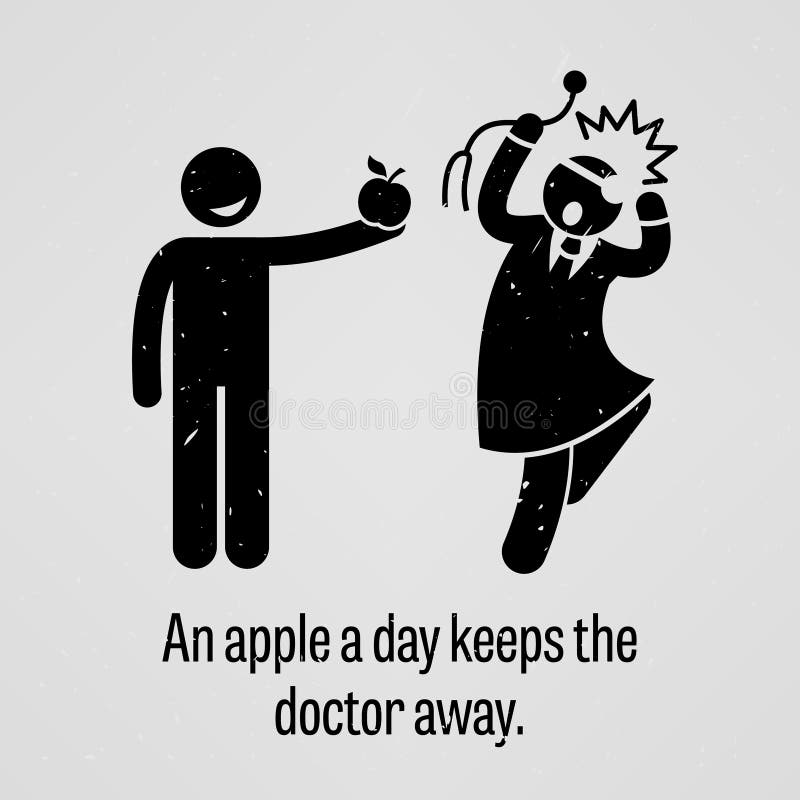
Apples are good for you, but that doesn’t mean that you can avoid going to the doctor altogether! (https://www.dreamstime.com/stock-illustration-apple-day-keeps-doctor-away-funny-version-proverb-motivational-inspirational-poster-representing-sayings-simple-image49903569)

we are surrounded by rhymes of all kinds. First, they were nursery rhymes and now they take the forms of aphorisms and commercial slogans. Though we might not realize it, these rhymes have the ability to affect how we perceive the world. Given the choice between “woes unite foes” or “woes unite enemies,” participants generally found the former more accurate although the two phrases have similar meanings (McGlone & Tofighbakhsh, 2000). Why is that? The answer lies in a phenomenon called the Rhyme as Reason Effect, which means that we are more likely to believe something to be true if it rhymes. Think about it, how many times have you been told “i before e except after c” or “an apple a day keeps the doctor away” and thought that they were sound advice? Though these phrases are not necessarily correct, they are often repeated and believed to be true.

Read more…

Categories: Uncategorized Tags: , ,

Face it, You are Not THAT Important: The Spotlight Effect

November 26th, 2019 5 comments

Have you ever eaten alone in your college dining hall?

Now picture this: You walk into the dining hall alone, and you realize that most of the seats are already occupied by those sports teams, girls’ squads, and study groups… Everyone seems to be around with a bunch of people, except for you. You walk into this situation as if you break the “harmony”, and you feel like that everyone is staring at you or even secretly laughing at you — “Oh, she/he eats alone? Pathetic!” “Poor thing.” … But in reality, probably no one is actually watching you. They may not even notice that someone just came in. The feeling of “all eyes on you” occurs in other scenarios as well: when you answered a question wrong in your class, when you had a bad hair, or when you got a zit on your nose tip, etc. If you find these situations familiar, please don’t worry — you’ve just run into the Spotlight Effect! Read more…

Glory Days and Faded Heartbreaks: How Assessments of our Past Shape and Reflect Psychological Well-being in the Present.

November 26th, 2019 No comments

Peaked in High School or remembering it better than it was?

Before I present you with a base level summary of our current understanding of the psychological phenomenon known as Fading Affect Bias (FAB) and its relation to the conceptual system of autobiographical memory–complete with the associated empirical support, of course–I would first like to overanalyze some Bruce Springsteen lyrics. Don’t worry; it will all make sense soon enough. Read more…

Why You Should Take the Time to Rhyme: The Rhyme As Reason Effect

November 26th, 2019 2 comments

We’ve all been here…

Think back to your time in elementary school: you are having a running competition with your friends, and you have just won first place. However, your best friend, who got second place, is unhappy with the outcome and blurts out: “First is the worst, second is the best, third is the one with the treasure chest!” Immediately, any feelings of pride or accomplishment from winning the race vanish from your mind, and all you can think about is your friend’s outburst. You even start to believe that she is right… maybe getting second place really is better than getting first place.


Why do the presence of rhyming words in a sentence or phrase change our perception of the information received? Is it possible that we are more likely to believe information when it is presented through a rhyming aphorism, or concise statement, rather than when there is no rhyming at all? The Rhyme As Reason Effect seeks to answer this innate yet captivating phenomenon by suggesting: yes, using rhymes in sentences and phrases actually increases their perceived accuracy and trustworthiness when compared to sentences with the same semantic meaning, but without rhyming words.

Read more…

If You’re Reading This You’re Still Biased

November 26th, 2019 2 comments

But you might not be by the time you finish reading this blog post. As you probably know just from the existence of this blog, there has been a lot of talk lately about how biases affect us, and how we can educate ourselves to mitigate the effects of them. Across the internet, you can find countless articles about how to avoid biases in the workplaceclassrooms, job interviews, politics, and the mountains of information on biases continues to rise as more research is published and more psychology students write blog posts about them. Without a doubt, efforts to educate ourselves on biases is more than warranted given the effects they can have on us. The other race effect, for example, makes people less likely to remember faces belonging to people of a different race, and can have serious consequences when using eyewitness testimony to identify suspects of a crime. Further, the illusory truth effect causes us to view information that has been widely circulated and repeated as more truthful, and likely had a major influence when the rate of MMR vaccines to plummet when news outlets spewed out false information about a link between vaccines and autism. And if you want to know about other biases and how they affect behavior, just keep scrolling.

Before we can mitigate our biases, we need to acknowledge the bias blind spot and how it affects our cognitions.

Before you do that, though, I have some bad news.

As research has shown, becoming aware of biases doesn’t actually make you any less susceptible to them. This phenomenon is a result of the bias blind spot, which is our inclination towards identifying how biases affect others, while simultaneously maintaining an inability to recognize how our own judgement is affected by biases. In other words, educating ourselves about biases does not mean we can use this knowledge as a lens granting us unwavering vigilance for all the biases out there which may affect us. Read more…

Why we overlook our own shortcomings: a description of the Actor Observer Bias

November 26th, 2019 5 comments

Picture this: you are running late to drop your kids off at school in the morning and your children are having a fit in the back seat. On top of this, it is pouring rain outside. While you are driving down the highway, another car abruptly cuts you off as they are merging. As a result of your frustration, you begin to think of how they must be a rude person who is also a terrible driver. You assign internal (personality) traits to this person based on their action of cutting you off. You do not take into account the situational factors that were affecting their driving ability, like the fact that they were late for an important meeting, or they were driving their sick pet to the vet. You automatically attribute their actions to internal factors without even thinking about what else could have caused them to cut you off. A couple of minutes later, you, yourself accidentally cut off someone while trying to take the exit off the highway to your child’s school. Instead of reacting in the same way you did to the previous person who carried out the same action as you did and automatically telling yourself you are a bad driver and rude person, you inform yourself your action is a result of the fact that you are late for your child’s dropoff at school and you cannot see well as a result of the heavy rain. You tell yourself that on a normal day you would be much more careful. You do not think of yourself as a bad driver and rude person, as you thought of the other person, even though they did the same thing that you did. Why is it that we automatically assume others’ negative actions are a result of who they are as a person while being sympathetic and giving ourselves excuses? The actor-observer bias is an explanation for this confusing phenomenon. Read more…

Categories: Uncategorized Tags: , , ,