In book 8 of the Aeneid, Vergil references the mythical stories of Hercules and Saturn. Vergil presents altered versions of the traditional myths that highlight migration in both instances. The inclusion of these mythological models of migration in the Aeneid brings up questions like…
- What were the well-known myths of Hercules and Saturn?
- How did Vergil change these stories in the Aeneid?
- Why did Vergil present these stories the way he did?
- How do Vergil’s renditions relate to migration?
Hercules
Traditional Myth
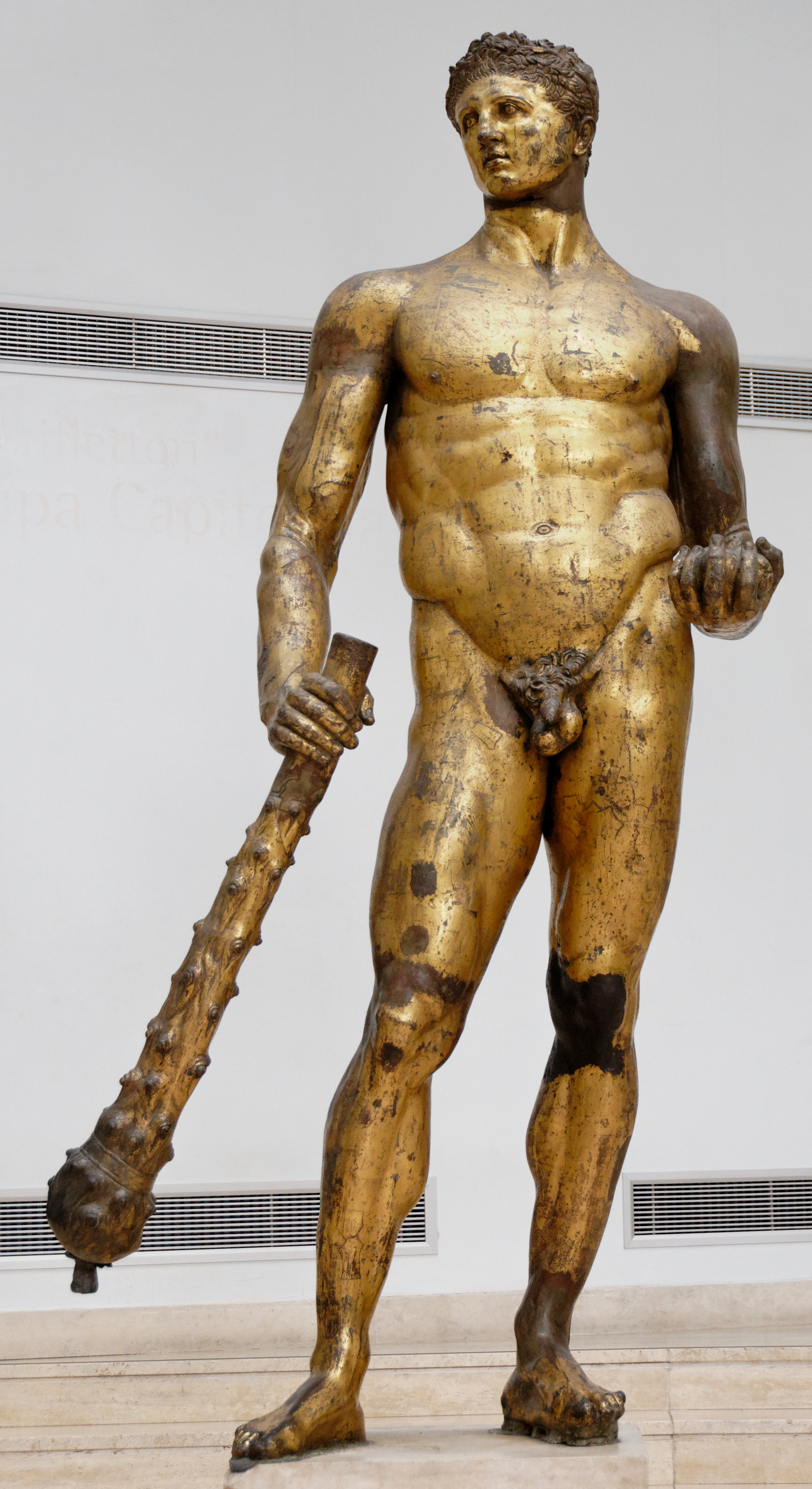
, was the son of Jupiter and .  Juno was incredibly jealous that Jupiter had cheated on her with Alcmena and she took out her anger on Hercules. Juno made Hercules crazed and in this state he killed his own children and the children of his brother Iphicles. According to the , Hercules then had to complete twelve tasks assigned to him by in order to repent for these atrocious actions. His tenth task was to “acquire” Geryon’s cattle from and bring them back to Eurystheus in Greece. Hercules violently killed Geryon in addition to stealing his cattle. Apparently, the way he got the cattle didn’t matter.
Vergil’s Version
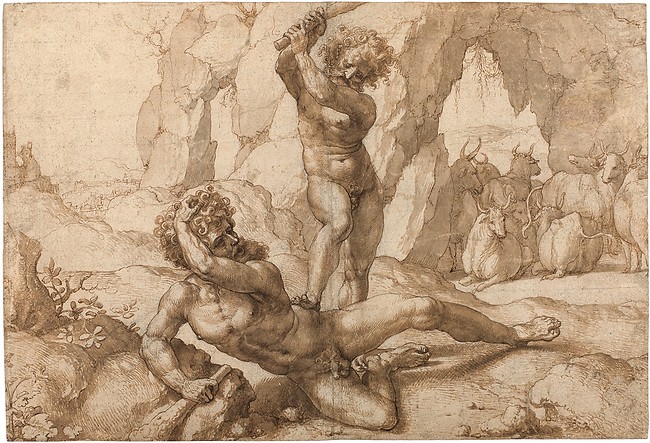 Vergil probably didn’t come up the myth of Hercules and Cacus entirely on his own. However, there is no convincing evidence that this story existed before the time he was writing. Vergil certainly popularized this story and his version of the myth ultimately became pretty widely accepted. This story adds an additional episode to Hercules’ return to Greece. In this version, steals Hercules’ cattle while he is traveling back to Tiryns through Italy.
In the Aeneid, tells Aeneas that Hercules realized that the monster Cacus had taken four bulls and four heifers from him when he was about to continue on his journey. But before Hercules left:
reddidit una boum vocem vastoque sub antro
mugiit et Caci spem custodita fefellit. (Aeneid 8.217-218)
One cow responded to the voice of the [other] cows and it lowed within the massive cave and [although] guarded it deceived the hope of Cacus.
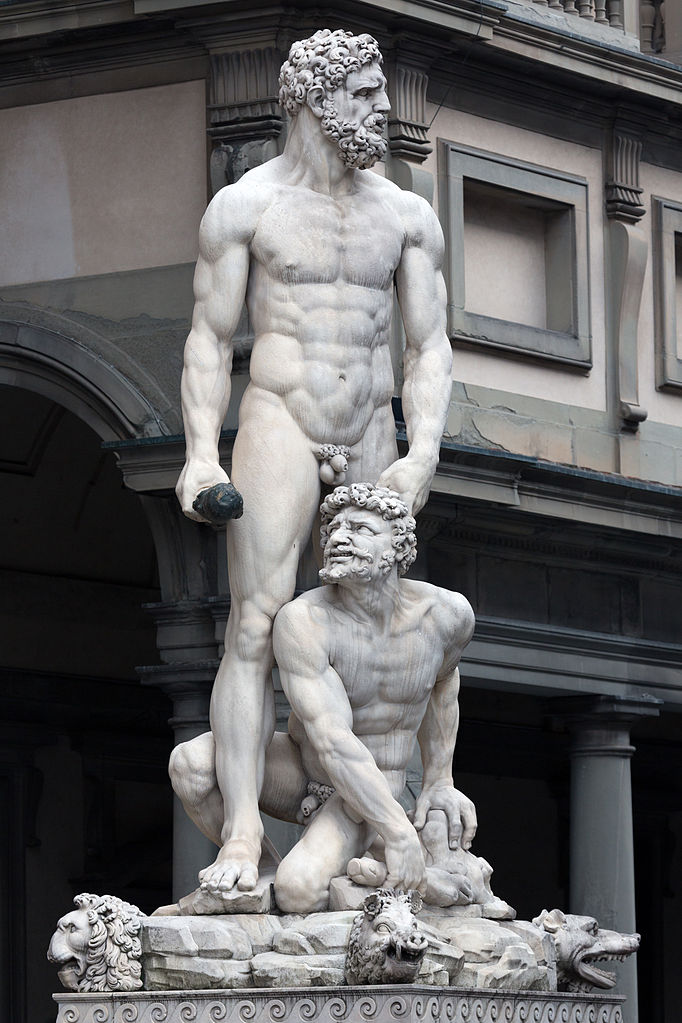
After this revelation, Hercules siezed his weapons and viciously attacked Cacus’ cave. He tore apart the roof of the cavern exposing Cacus to the daylight, and Cacus responded by belching out flames from his mouth. Cacus was the son of after all. Ultimately, Hercules strangled Cacus to death as Vergil described pretty graphically:
angit inhaerens elisos oculos et siccum sanguine guttur. (Aeneid 8.260-261)
Hercules clinging on [to Cacus] squeezes [him until his] eyes [were] bulging and his neck [was] dry [without any] blood.
 Cacus had previously terrorized the local people ruled by King Evander and they greatly benefited from Cacus’ elimination. Although Hercules killed Cacus for his own purposes,preserving his (well, really Geryon’s) cattle, Evander’s people were willing to overlook that and praise Hercules as if he actually cared about their well-being. So, to thank him for his assistance, they established an altar to Hercules, which they called the “greatest,” and a yearly celebration to worship him. That festival just happened to be going on when Aeneas arrived in prompting Evander to relate the story. Vergil likely included this story to explain the origin of the in the and the annual ritual centered around it to honor Hercules.
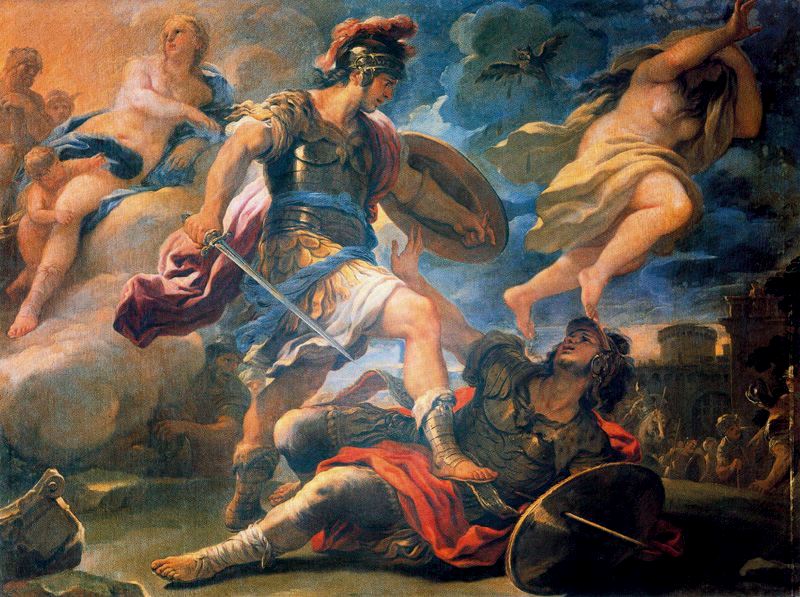
Vergil constructed the Aeneid in such a way that framed Aeneas as a cultural hero for the Romans as Hercules was for the Greeks. Vergil seemingly attempts to elevate Aeneas’ status in Roman society by associating him with Hercules on many occasions. Vergil both changed Aeneas’ story to make it fit the model of Hercules and he modified the myth of Hercules to fit Aeneas’ story, as is the case for the Hercules and Cacus episode. The story of Hercules killing Cacus very strongly mirrors Aeneas’ struggle against . One convincing, though gruesome, example of this parallel is that Cacus nailed the head of his victims around his cave and Turnus displayed the heads of his enemies on his chariot. Many of the associations between Hercules and Aeneas are fairly subtle. But, Vergil really seems to make this one obvious just in case readers had somehow missed the message thus far.
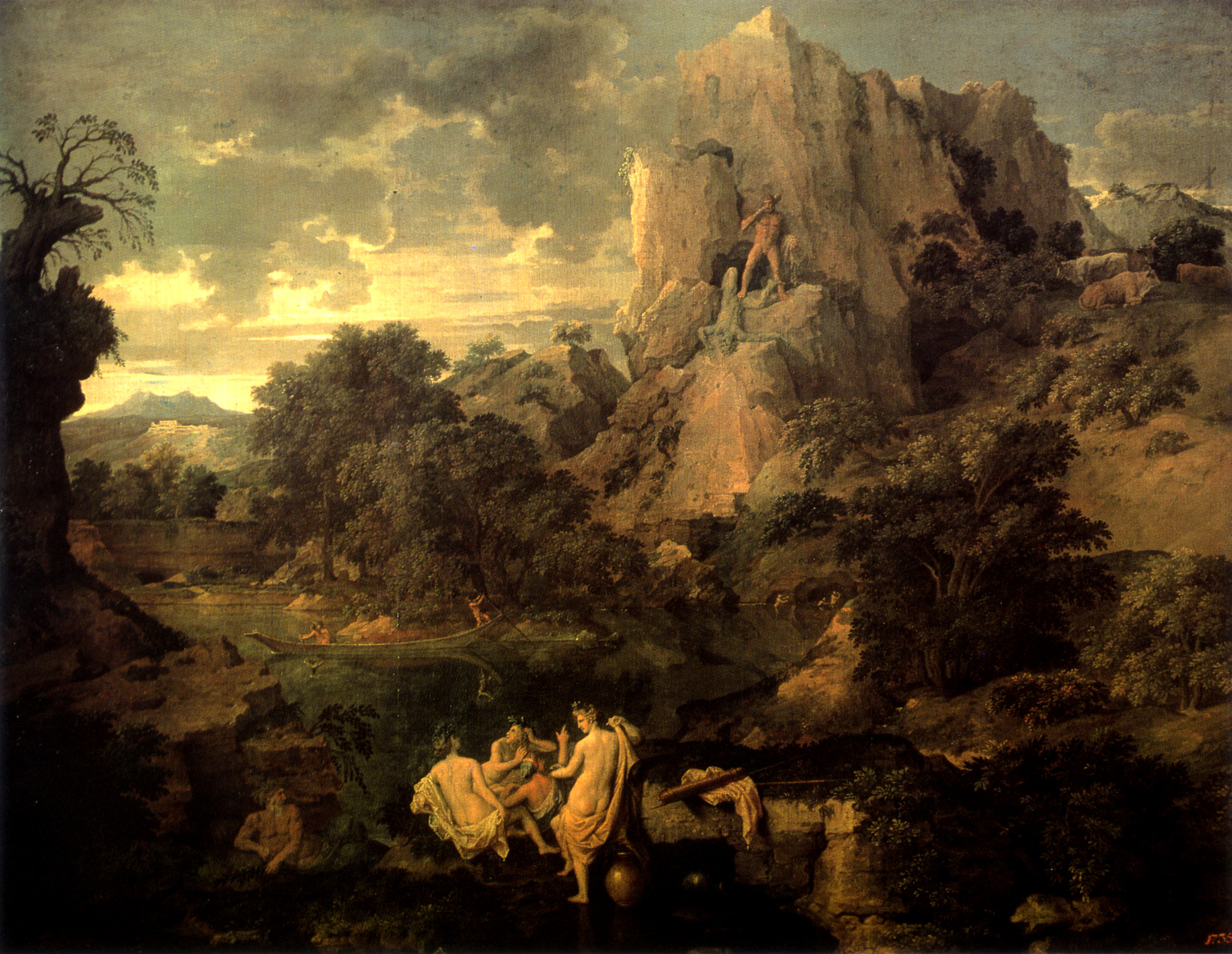 Vergil most likely was the one who transformed Cacus from a local fire god into a superhuman monster. Vergil moved the location of his cave from the Palatine to the Aventine, which helped solidify Cacus’ status as an evil figure since the Aventine was originally the domain of . By making Cacus a demonic monster against the divine Hercules, Vergil set up a battle between good and evil. Through their association with Hercules, Aeneas and Evander are also on the positive side. The names Evander and Cacus make this contrast very clear because they are derived from Greek terms meaning good and evil respectively.
Migration
In this story of Hercules and Cacus, Hercules himself is a migrant. Hercules was on his journey back to Greece with Geryon’s cattle when all of this went down. Vergil aligns Hercules and Aeneas as both are on long journeys and arrive at the site of Rome to do good for the people of the region. Also, Hercules acts on behalf of an immigrant people, even if his reasons for killing Cacus were more about personal gain than altruism.
Furthermore, King Evander was a migrant from Arcadia that settled in the region of future Rome and established a prosperous city. Aeneas too was a migrant that would settle in the same place and establish the greatest city ever (as far as the Romans were concerned). Evander’s story strongly foreshadows Aeneas’. This passage shows migrants in a positive light. If a demi-god and a well-respected king can be migrants to Italy that do good things, then it must alright for the Romans to be descended from migrants.
Saturn
Traditional Myth
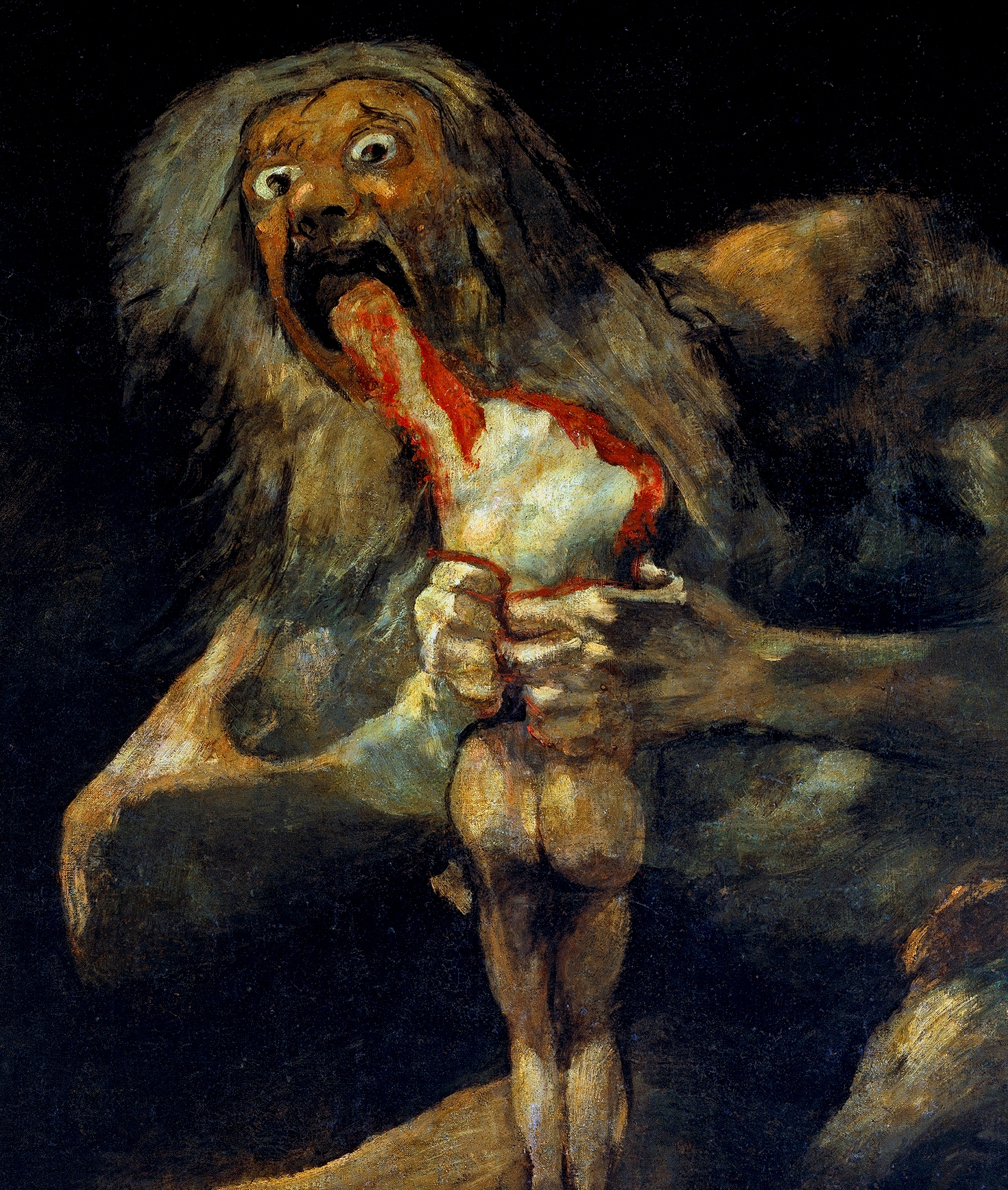 preceded Jupiter as the ruler of the gods. His reign was thought to be an especially peaceful and prosperous time for humans and it was often referred to as the golden age. Saturn had six children, including Jupiter, with . According to a prophesy, Saturn would be overthrown by one of his children. In order to prevent this, he swallowed all of them as they were born. (A pretty extreme form of birth control, but power over the entire universe was at stake!) Ops tricked Saturn by giving him a stone disguised as a baby instead of Jupiter when he was born. As a result, Jupiter was Saturn’s first child to escape being imprisoned in his stomach. Jupiter then lead the against Saturn and the in a ten year battle for control over the universe. Upon his victory, Jupiter exiled Saturn and the Titans to . According to the original myth, the golden age for humans ended when Saturn was overthrown and exiled by his son.
Vergil’s Version
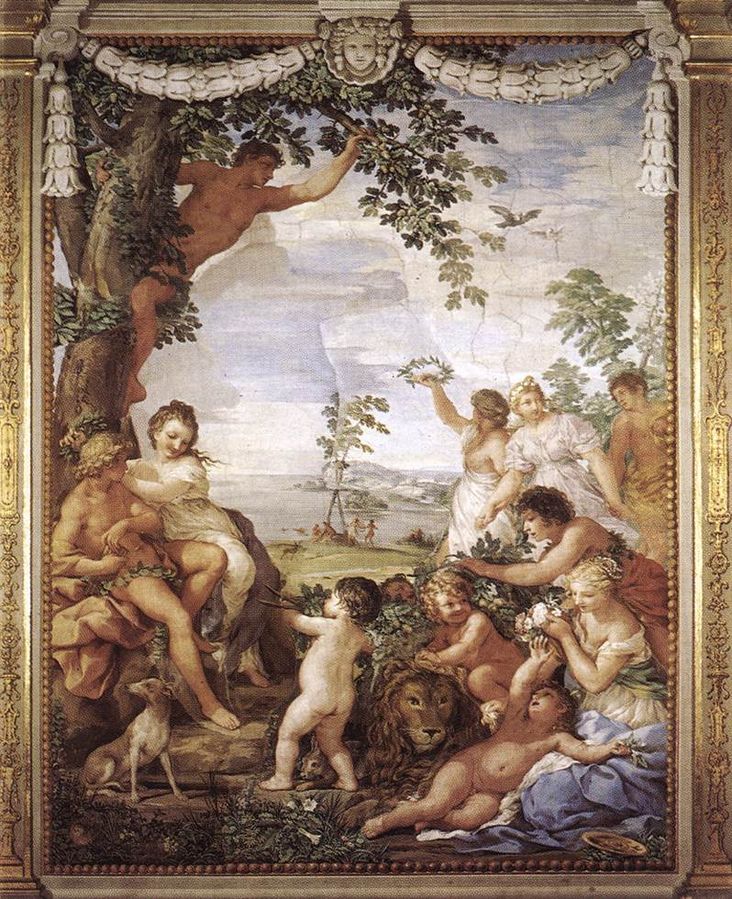
Vergil’s rendition of Saturn’s myth changes the timing of the Golden Age to occur after Saturn had been banished from heaven. Vergil also made the golden age specific to Italy. After relating the story of Hercules and Cacus in book 8 of the Aeneid, King Evander also tells Aeneas about Saturn’s experience as a migrant:
 primus ab aetherio venit Saturnus Olympo
arma Iovis fugiens et regnis exsul ademptis.
is genus indocile ac dispersum montibus altis
composuit legesque dedit, Latiumque vocari
maluit, his quoniam latuisset tutus in oris.
aurea quae perhibent illo sub rege fuere
saecula: sic placida populos in pace regebat (Aeneid 8.319 -325)
First Saturn fleeing the weapons of Jupiter and as an exile with his kingdoms taken away came down from heavenly Olympus. He gathered together the race untaught and scattered on high mountains and gave laws (to them), and he preferred (this place) to be called Latium, since he had safely lain hidden on these shores. The ages which they called golden were under that one (Saturn) as king: thus he was ruling the people in calm peace.
Evidence suggests that Vergil himself changed the timing and location of Saturn’s Golden Age. By making these changes, Vergil set up an obvious parallel between Saturn and Aeneas. As an exile Saturn established an excellent civilization in central Italy in a time of great peace, which bears a striking resemblance to Aeneas’ experience of . Also, by making Saturn’s reign over the golden age to be specific to Italy alone, instead of the entire universe, Vergil seems to suggest that site of Rome was a special place from the most ancient times. Saturn seemingly could have picked anywhere in the world to establish a golden age, but obviously central Italy was the best choice.
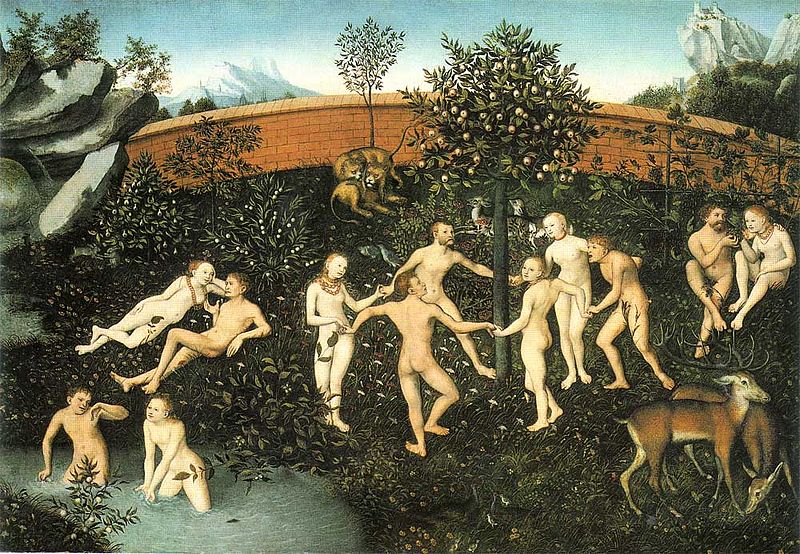
As all good things must come to an end, Vergil also addresses the end of Saturn’s reign. In Vergil’s version of the story, the golden age under Saturn in Italy disintegrated as people became more belligerent and concerned with possessing stuff. Consumer culture was apparently already a serious concern! While it was only after internal troubles had weakened the Golden Age, Saturn’s reign was finished off by new waves of migrants who changed the name of the land.
 deterior donec paulatim ac decolor aetas
et belli rabies et amor successit habendi.
tum manus Ausonia et gentes venere Sicanae,
saepius et nomen posuit Saturnia tellus. (Aeneid VIII 326 – 329)
(Times were good) until little by little an age worse and tarnished and a madness for war and a love for having (things) followed. Then the Ausonian band of men and the Sicanian tribes came, and the Saturnian land lay (aside) its name more often.
Migration

In this story, Vergil shows migration in a largely positive light. This episode shows that from the most ancient of times central Italy was a welcoming place for exiled people (or gods) to settle and reign over wonderful times. Saturn himself is a migrant who establishes a time of great peace and prosperity in central Italy. Evander and Aeneas both follow his example.
But Vergil also shows a more negative view of migration in this episode than is predominantly seen in these mythological models of migration in the Aeneid. Incoming migrants are blamed for finishing off the Golden Age under Saturn. Perhaps Vergil had to explain why the present day was less than ideal, and of course it couldn’t be the fault of the Romans or their ancestors. Whether migration is good or bad seems to depend a lot on who’s doing it.
Vergil’s Purpose
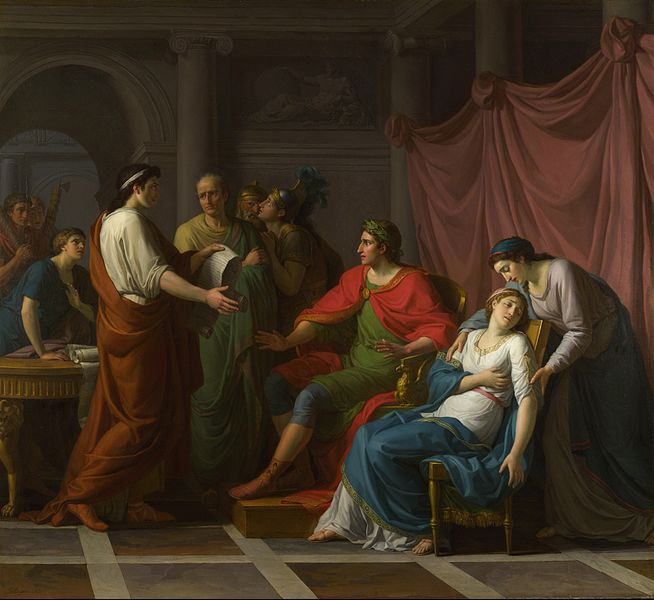 Vergil and the Emperor Augustus Caesar are thought to have had a pretty complicated relationship. Even so, many scholars think that Vergil wrote the Aeneid to some degree with the idea of supporting Augustus’ political agenda. A new national epic in which Augustus was linked to Rome’s founder, and his rule was compared to a great age of peace and prosperity, certainly would have helped him to win over the Romans who had recently endured many years of civil war. Vergil’s versions of Hercules’ conflict with Cacus and Saturn’s golden age serve as overwhelmingly positive mythological models for the migration and foundation myth Vergil was promoting in the Aeneid.
It was important that the Romans had positive associations with migration in order for them to buy into this concept of Aeneas as the original founder of Rome. The Romans would have had to accept that they were not an indigenous people, even though their ancestors had been living in central Italy for thousands of years. Presenting two gods as migrants that did good things in central Italy, too, should have helped make it easier for the Romans to identify with their “new” status as immigrants in a positive way.