Category: Project Proposal (Page 1 of 2)

Internationals on Hill, a Multimedia Collection of a Group Memory

Project Description

Colby has struggled consistently at addressing the issues of peoples from marginalized identities, but what about those who don’t fall into traditional special interest backgrounds. Recognizing the lack of focus, in this case International Students, Reggie and I would like to propose to create, curate, and refine the existing multimedia collection that would document and chronicle the memories of international students at Colby College by collecting and organizing existing materials including multimedia assets, print documents, objects from their home countries.

Over the past couple decades, the presence of International students on campus has shifted dramatically. Colby is currently recruiting a more diverse international student body with particular focuses on nationality, race and social class. Although this push for increased diversity is definitely beneficial for Colby’s creation of a more inclusive community, the stories and struggles of international students seem to fade after 4 years. These stories, containing the struggles, the joys, the moments of growth, even the moments of calm, are all valuable and integral in the documentation of students on this campus, and more broadly, US post-secondary schooling systems in general. Thus, both Reggie and I see immense value in creating an anthology of experience, if you will, depicting “internationals on the hill.” We also foresee this project as a topic of interest that directly appeal to past international alumni, current international students, and even perspective international applicants.

Historical References

Due to the fine scope that Reggie and I have chose to adopt for this project, the brevity of historical resources on the subject matter is indeed limited. At the moment, there are a plethora of groups currently expressing interest and conducting projects all about the international student community. More specifically,. Although these materials may be unable to individually depict the story of international students on campus, we foresee that through weaving these stories together using a documentary style video as our glue, we can begin painting a more complete picture. Additionally, we plan to meet and talk with Qiam Amiry ’09 and his other colleagues in Advancement Office, who are currently working on fostering the relationships with many international alumni. Lastly, we plan on integrating Sue McDougal’s, who has been working as the Dean for International Students for a long time at Colby, story. Thus, we intend to communicate between all of these parties to collect the multimedia resources necessary. Also, we wish to give credit to some past students works that inspired this project including Uzoma Orchingwa ’14’s film Black on the Hill, Annie Lee ’20’s film Popul[asian].

Technical Difficulties

As we continue to refine our focus, we envision that this project will exist in the intersection between a documentary style video and a digital published multimedia website. More specifically, we hope that this Frankenstein creation between the resources procured from special collections, including pictures, recordings, and publications, and a short documentary-style video on Dean Sue McDougal will create an interactive and extensive story that anyone with internet can access. Additionally, we foresee that procuring a technical resource that can combine the elements of an animated storyline and more manual solution will be slightly more challenging. However, if there is still great difficulty with procuring a tool that can accomplish this, we have been thinking about using a storyboard/interactive map model that can accomplish something closely resembling an animated timeline.

Current Achievements

At this moment, we have begun to initiate contact with individuals in the Advancement office and have already had the chance to sit down with some international students and hear their stories. Additionally, we anticipate having a sit down meeting with Sue McDougal expressing our vision for this project and gauging her interest. Furthermore, we have coordinated with the Office of Communications to use their photo studios as a place to conduct any interview or more formal video B-Roll. With all of this, we have had our fair share of challenges. One of the hardest thing with this project is addressing our technical conundrum. Although there are a bunch of alternative solutions that might be able to produce content, our vision requires something extremely specific. Furthermore, reaching out to Alumni and garnering their support for this project is also becoming more of an issue than anticipated. In order to document a holistic experience of as many international students as possible, we require interviewees from all walks of Colby; those who valued their time here, those who never want to step foot on campus again, and those who are still unsure about their sentiments.

Existing and Anticipated Content

  • Special Collections – Maggie Libby, Mansi Hitesh ‘19
    • Graduating International Seniors’ Oral History
    • Photo Archives built by self-submitted photos, Sue McDougal’s album
  • Colby Echos
    • Digital/Print Stories from Colby Echos
  • Colby Magazine – Gerry Boyle
    • The coverage of International students and alumni
    • Stories of achievement, experience, or research
  • Admission Office
    • The admission stats of where students were from
  • Advancement Office
    • The data of International Alumni
  • In-depth Interview with Sue McDougal, Director of International Student Programs
  • Partnering with Special Collections on curating and organizing the existing contents

Singularity? A true History of Computing

Many believe that computing power will soon reach a point where humans create an AI that spawns runaway technological progress. This idea coined the “Singularity” by Ray Kurzweil would cause an unimaginable change to society. Given Kurzweil’s reputable position as the “head of engineering” at Google, many have accepted this idea as truth, which has caused much fear of the future. My site, through simply explained and visually appealing animations and graphs will provide background information to explain how Kurzweil’s idea is more based on faith than fact.

There are countless sources, texts, and graphs on the history of computing and algorithms, but none that quickly and visually portray just how fast technology has advanced in a beautiful way on a single site. My research project will consist of a website full of captivating content for the 21st-century user. As long texts and technical graphs only engage the researcher, my digitized content will take 50 years of historical data and boil it down into short, less than a minute long animated clips and graphs. Not only will the clips simply describe the incredibly fast pace of technological change, but they will also help to debunk certain myths surrounding the future of computing.

Final Proposal

I have always had a fascination with family history, I am lucky enough to have a well documented timeline of my family on my mothers side.  In World War II my great grandfather Sydney Williams joined the 10th Mountain Division.  In 1939-40 was the first discussion of creating a military division meant for fighting in the mountains.  After training in the Colorado mountains in preparation they fought their way through the Italian alps during the war.  While Sydney was at war he sent letters home to his wife, his children later created a book with all these letters put together.  What I would like to do is create an interactive map that shows the route that he took through the alps during the war, while also digitalizing the letters.  With dates on all the letters, I would be able to show where the letters were written (generally) along the route.  

Bringing my Great Grandfathers letters to to a digital interface will allow more people to read and discover his story in a new and interactive way.  In addition, people will see and read a story about that war that is portrayed through letters to a soldiers wife, rather than the brutality of the war.  Letters being sent home could not give away any tactical moves that the division was planning, locations and more. It will interesting to see the change in tone of his letters sent in the days before a battle.  

Coupled with several more outside sources, such as “Climb to Conquer: The Untold Story of WWII’s 10th Mountain Division,” by Peter Shelton. Shelton does extensive research and interviews to write that follows the unique division from its conception on a Vermont ski hill, through its dramatic World War II coming-of-age, to the ultimate revolution it inspired in American outdoor life.  In addition “Chronology of The 10th Mountain Division in World War II: January 1940 — 30 November 1945,” compiled by John Imbrie, has an in detail time line of where and what the 10th Mountain Division did during the war.  

On the technical side I would need to plot the routes on the map and create an interactive interface for the user to navigate.  To digitize any text from the book containing my great grandfathers letters, I found apps such as Finescanner that allow you to take photos of text and convert that into a document.  There is also a program that is used by Colby that transcribes scans of documents into a word doc that I can manipulate as well.  

The technical support I will need is troubleshooting any problems and brainstorming ideas for the programming side of the project.  In addition, I am planning on using a Google maps API to implement the map.  Initially I wanted to be able to change the boarders of countries to that which represented conquered German land at the time of the 10th Mountain Divisions invasion into Italy, as well as Italy’s boarders through the war.  This is only possible if I manually plot the boarders from another reference, however, I am not sure how clean this will look.  Unless there is another solution, I am very happy to leave the boarders as they are in the current day and age, portraying where the 10th Mountain Division trekked through modern day Italy. 

Up to this point, I have reached out to my Grandfather who said he will look for a copy of the book this week when he returns to his house in Massachusetts, and overnight me a copy by the end of the week.  I have started research on maps, dates, and sources that will help determine where key battles took place.  I have also started to gather the proper resources to set up the Google Map API through research of Googles documentation around their map API.  

This project would create a tool that members of my family could use to interact with what my great grandfather experienced during WWII.  With only a finite number of copies of “Dear Mary: Letters Home from the 10th Mountain Division (1944–1945)” it would be an interesting digitalization of his experience that would allow easy access to his story.  

Final Project Proposal: Breaking down the Colby Echo

For my final project proposal, I have decided to break down the Colby Echo during certain time periods of Colby’s past. I plan on choosing my time periods after reading “The History of Colby College” by Marriner and “Mayflower Hill: A History of Colby College” by Earl Smith. Once I do so, I will go into the Colby Echo archives thanks to Erin Rhodes and the special collections librarian team. I will then use Adobe premier to use the Adobe Acrobat Pro DC function which will let me make the scanned images into text documents. Once I do so, I will use the Voyant tools introduced by the ITS team which will allow me to analyze the words that come up in each Colby Echo and the frequency of them. Not only will this let me analyze the text more closely, but it will give me more context as to what was going on during the time period in which the Colby Echo was published. Since there are so many words that will come up, I plan on using specific words such as ‘scandal, conflict, protest,’ and any other words that symbolize disagreement. The reason why I want to search these words is to see how Colby has endured hard times during their past and how they grew from it. I want to see the growth of Colby College and analyze the different building blocks that have created Colby College today.

1. Significance:
     – I would like to understand and recognize what opinions and events are being recorded during specific time periods of Colby’s history.
2. Historical sources
     – The Colby Echo archives through this website:  http://digital.olivesoftware.com/Olive/APA/ColbyCollege/default.aspx#panel=home
     – “The History of Colby College” by Ernest Cummings Marriner
     – “Mayflower Hill: A History of Colby College” by Earl H. Smith
3. Technical requirements
     – Adobe Acrobat Pro DC with the Adobe Premier
4. Achievements to date (with examples)
     – Working alongside and multiple meetings with Erin Rhodes and Special Collections librarian team
     – Getting comfortable and familiar with Voyant Tools
     – Finding ways to translate scanned images into text documents (OCR, Adobe Acrobat)
5. Challenge
     – Finding an efficient way to translate these documents in a timely manner
     – Have realized that the OCR tools I’ve used so far all take too much time to translate or translate too little at once

The History of Hip Hop Music and its Implications

Stendhal’s quote “a novel is a mirror carried down the street” is oddly applicable to the history of hip hop music and it’s implications in the social sphere in America. At one moment the mirror reflects the blue skies as you see them but at another, it reflects the puddle at your feet. The person who carries that mirror is always the first to be blamed for what the mirror reflects, instead of the people who are actually responsible for the puddle in the first place. The artists who pioneered this music largely inherited the role of the person holding the mirror while simultaneously creating a culture and a movement towards an understanding of life for inner-city African American communities.  Throughout its’ lifespan in popular culture hip hop music has been largely misunderstood because of its’ answer to no one antics. This startled the music world because it told a story foreign to anyone who had been part of the industry leading up to the birth of hip hop music. For the first time, people heard not only what it was like to live in inner-city African American communities but also why things were that way. For many, the music represents crime, poverty, anti-establishmentism, and flat out the vulgar language. What many have neglected to try and understand are the conditions that made life the way it was for people in the communities this music originated in and continues to live today. Hip hop music offered these communities a conduit for talking about the daily struggle of living in impoverished and still largely segregated communities.

For this project, I will first offer an abstract or overview of the music as a whole. I have separated hip hop music into five different generations based on style, themes, and chronology, and influence and then put them on a map of America for organization. The viewer will be able to choose one of these offered generations and in response, the important artists of that generation will pop up on the part of the map that they come from. Much like chronology plays an important role in the creation and importance of this music location largely influences an artist’s sound and the themes they choose to deal with in their music. Further, they will be able to click on each individual artists and see their discography, listen to and learn about their most famous and most influential songs and how the offer to a cultural movement. Hip hop music is often defined by four key elements: 1. Rapping 2. DJing/Scratching 3. Sampling 4. Beatboxing, these elements will play a large role in my analysis of each individuals talent and influence as each artist grew on the last and the way in which the music was produced was constantly changing and improving. This may seem like a very large scale project but in total it will look at around thirty artists briefly while giving the two or three most influential artists of each generation a much more in-depth analysis. It will assess the role of the more influential artists in contributing to a new industry and the importance of the messages that shine through their work in a larger context, this effort will be aided with the inclusion of embedded youtube interviews of these artists and some of the more renowned people who have studied the industry. For the artists who I have deemed less influential, I will offer their discography and a very brief biography. This project will offer an overview of hip hop’s rise to popularity as well as a deeper look into its implications in empowering a marginalized community and forcing a country to see things the way they are not how they want them to be.

A lot of my sources will be online interviews as most of the story of the hip hop industry has been told by its major players instead of popular historians. Rapworld.com offers a great overview of the history of hip hop in its many different stages and will contribute a lot to the overarching themes that appear throughout the website. Spotify and Billboard offer insights into the success of individual artists and songs now and during the time of their release. Rap Genius discusses the meaning of individual songs by breaking them down into individual lines and explaining their significance which will play a large role in looking at some of the more important artists and explaining the message they were trying to get across. Vox discusses the lyrical progression of the music and can separate individual artists by talent. I do need to find more scholarly pieces that deal with the social implications of the music as that is a large focus of my project but truthfully a lot of this history is told through its artists in documentaries and interviews rather than written work.

There are not many technical requirements for this project other than finding the map making software that makes it easiest for me to organize these artists by location while offering embedded sources and written information once you clock on an artist.  I think this will only require a couple of meetings with IT to find the right software and then get comfortable using it.

So far I have chosen the artists I would like to focus on and divided them into 5 different generations. I then went on to pick the more influential artists within each generation to further discuss. Currently, my primary focus has been to find sources that discuss these artists I have deemed more influential artists and their role in the industry. I have yet to title these generations but chronology is the most important piece in their organization because this music largely reflected the time it was released at and was heavily influenced by the others to do it at the same time because it is still a relatively young genre of music. The next step is to pick and familiarize myself with a mapping software that makes it easy to sift through the information I will provide.

Some of the challenges I have faced are finding scholarly sources dealing with this subject matter. But most importantly, I must keep the notion that, just because I listen to this music does not mean I understand the struggle that created it, with me throughout my observations.

Snappy Title

For my final project, I want to create a timeline/map that will show visually how our consumption of music and music media have changed over time. With the invention of so many different ways to distribute, listen to, and create music over the last century or so, I want to research this topic more and learn how we got where we are in the mass streaming era.

There is historical significance when we try to determine who the most popular artists and “biggest names” of all time are, and thinking about how musical tastes have shifted through the years. Music is a very important part of culture, and when music changes gradually, so does our culture.

Some historical sources I plan to use are lists of the most popular genres, songs, and artists during each year since musical popularity has been documented. I also plan to use online or text sources to compile a timeline for certain inventions that transformed music or were revolutionary in their time. These will range from synthesizers in the 60’s and 70’s, to the internet and computers for music in the 80’s and 90’s.

I am unsure precisely what I will need to carry out this project, but most likely a WordPress site or arcGIS site would suffice. I am mostly unfamiliar with the creation process of these sites, so some guidance from ITS will definitely be needed, but the bulk of this project will be the research itself.

I have already begun collecting sources and compiling lists of data I can use to draw conclusions for the final timeline. I am reading two books currently about the history of the relationship between music and both culture and technology.

  1. The Story of Music: From Babylon to the Beatles: How Music Has Shaped Civilization by Howard Goodall
  2. Music and Technology in the Twentieth Century / Edition 1 by Hans-Joachim Braun

The challenges associated with this project will mainly come on the technical side, so I plan on spending ample time with ITS when creating the site itself. I have some, yet minimal, experience with programming and website creation from my time at Colby, but a project like this I cannot do without guidance through the more technical pieces.

timeline java script
tableau public


Project Proposal

  1. The Madawaska region has a rich heritage of Brayon-Acadian culture that spans for hundreds of years. Now, due to the areas dying economy and the desire of young people to be part of the “modern world”, the culture and history is dying along with the aging population. While early on just a safe-haven for Acadian’s fleeing British aggression and defectors of a New France, the geographic isolation of the region served to incubate a rich way of life unique from the rest of the continent. Through the centuries of surviving and entertaining themselves in One of America’s least habitable climates, this group developed unique food, art, dialect, music, dance, folklore, religion and common values, all underlined with a spirit of freedom, self government and independence. At one point to attempt to remain neutral from North American geo-politics the region even declared itself a separate nation entirely, and to this day the region still has an officially elected president of the Madawaska Republic, and flies the nations flag at the mayors office along with the flag of Acadia, the former independent nation destroyed by the British where many members of the region settled after fleeing from. I’m the first generation on my Mom’s side to grow up outside of this region but grew up surrounded by the culture both at home and in the frequent trips I have made to the area throughout my lifetime. The culture is part of who I am but very few people understand anything about it, it is very important to me that this heritage not only be preserved, but made accessible and exciting through a digital medium so that more people can learn about it, and maybe can even encourage it’s continued development through interest in the region. I would love to attempt to write a screenplay about one of the more thrilling periods of the regions history, bootlegging during the prohibition, and present the story in a way that is seeping with the unique culture and way of life as a backdrop. My focus will be on the folktales surrounding Maxime Albert, the regions most notorious figure during this period. I have not checked the genealogy but he is from the same parish with the same last name as my great-grandmother so I also like the potential local/personal aspect of his stories.
  2. Resources
    1. Maxime Albert Complex- https://www.lieuxpatrimoniaux.ca/en/rep-reg/place-lieu.aspx?id=12406
    2. Religious archives
      1. http://umce.ca/hoteldieustbasile/en/s4w_pic/maxime-albert-1871-1954-ph_4040-2/
      2. http://umce.ca/hoteldieustbasile/en/s4w_pic/maxime-albert-and-fortunat-pelletier-am_2116/
  1. Government Sources
    1. MaineDOT project on the history and culture https://www.maine.gov/mdot/sjvreview/ (includes section on bagasse and smuggling) (also everything from history of oppression to social structures and food and music)
    2. Acadian culture in Maine http://npshistory.com/publications/acadian-culture-in-maine.pdf
  2. Arts
    1. https://internal.umfk.edu/archives/findingaids/mcc15.pdf -song sung by Maxime Albert
  3. Academic resources
    1. Prohibition history in Madawaska- http://www.demelerlespinceaux.umce.ca/fresque/prohibition/maxime-albert-en
    2. http://www.edieclark.com/along_the_border_108237.htm
  1. Book, Bootleggers and Beer Barons etc https://books.google.com/books?id=QEZXAwAAQBAJ&pg=PA58&lpg=PA58&dq=madawaska+prohibition&source=bl&ots=wUxNYJBuVI&sig=ACfU3U23HpbB5lPZeyyRIm4gZf-YY84zrQ&hl=en&sa=X&ved=2ahUKEwi7n4uNx6_hAhUw11kKHUlTBJ44ChDoATAFegQICBAB#v=onepage&q=madawaska%20prohibition&f=false
  2. https://books.google.com/books?id=QEZXAwAAQBAJ&pg=PA58&lpg=PA58&dq=madawaska+prohibition&source=bl&ots=wUxNYJBuVI&sig=ACfU3U23HpbB5lPZeyyRIm4gZf-YY84zrQ&hl=en&sa=X&ved=2ahUKEwi7n4uNx6_hAhUw11kKHUlTBJ44ChDoATAFegQICBAB#v=onepage&q&f=false
  3. Rum Running in Madawaska http://fosterville.ca/anne_articles/rum_running(3).html
  • Personal Resources, Mother, Grandmother, family friends
  • Acadian Archives at UMFK
  1. Technical Requirements will be limited
  2. Compiled resources and have done a vast amount of reading about the topic. Made plans to visit the archives and some historical sites the weekend after next.
  3. The biggest challenge will be finding enough time to block out a long enough trip to access all the necessary resources. It is a 5 hr trip so I will have to do at least one overnight.


Project Proposal: Colby’s Buildings

Topic: History of Colby’s buildings

Significance:

The significance of this project is that it can help add context to a lot of what we see on campus today. When using the current campus map, there is a small description and maybe when the building was built and a fairly updated photo. I would like to provide a similar, but much more in depth description of some of the more relevant buildings and in a visual, easy to understand way. I think this could add a lot to the knowledge on campus about where our campus has come from, and where it is headed.

Historical sources:

I will use a variety of sources to do the research needed for this project. Google searches, public records and resources that I can get from Special Collections like historical photographs, videos and documents that the school has saved from the time. Photos of the buildings during construction would be ideal, as well as photos from over time to see how they have or haven’t changed visually.

Technical requirements:

All I will need help with is getting a website. Once I have a place that I can put all of the information I plan to collect on, I can get started with the design and getting going.

Achievements:

  • I have been experimenting with different forms of presentation
  • Read parts of Mayflower Hill: A History of Colby College by Earl Smith
  • I have setup a time this week to speak with Erin Rhodes from Special Collections who has offered to show me the variety of collections that have been kept over the years.
  • https://juxtapose.knightlab.com/#examples
    • Now and then
    • Juxtapose

Challenges:

The challenge for my project will be displaying the information and resources I collect in an intuitive, user friendly way that will allow it to be seen by many people. I think the best way to do this would be by a campus map that I can have sub links to reveal more information.

Updated Project Proposal

The topic I am proposing is a visual biography of my Grandfather, Dana Walker Mayo. During his lifetime, he made enormous impact to the liberal arts scientific community and the environment. His career path and achievements are something that more of the scientific community should understand and be inspired by. Using documents and video I will concisely and creatively present his revolutionary work to allow his legacy to live on.

Background on Dana Walker Mayo:

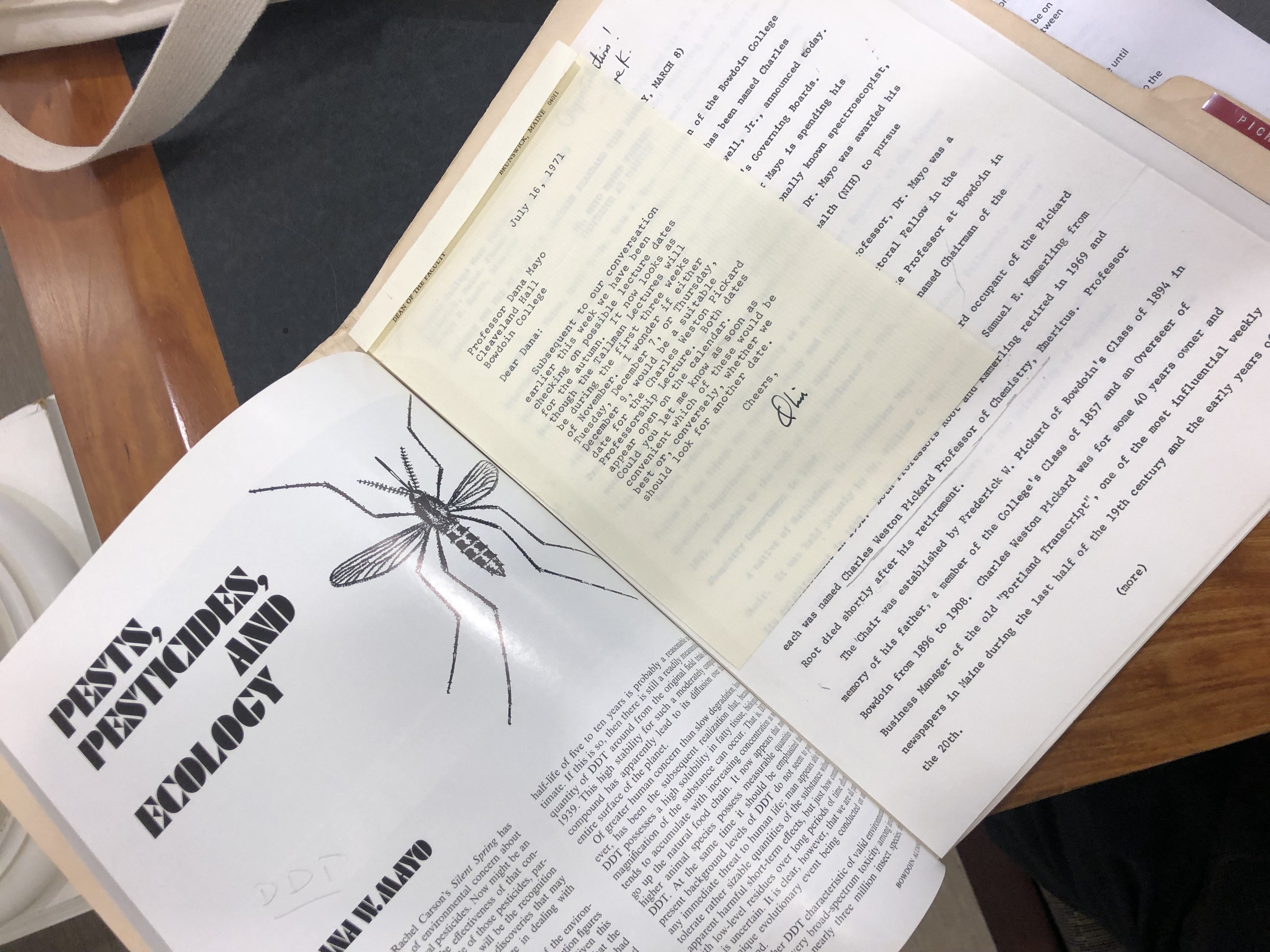
He began his career as Assistant professor chemistry Bowdoin College, Brunswick, Maine, 1962-1965.  He was associate professor chemistry, 1965-1968, then professor chemistry, 1969-1970, Charles Weston Pickard professor chemistry, 1970-1991, Charles Weston Pickard research professor chemistry, 1991—2007, and Charles Weston Pickard professor chemistry emeritus, since 2007. In addition, he was President Microscale Organic Laboratory Company, New Castle., New Hampshire, 1985-2007.

The website I will be creating will highlight four main parts of his life that have contributed to increasing study of the sciences and reduction in the environmental effects of laboratory practices. First, I will be digitizing documents my family has from his time as a captain in the United States Airforce (1957-1961). He was a project engineer in the polymer and materials physics branches at Wright-Patterson Air Force Base in Dayton, Ohio.

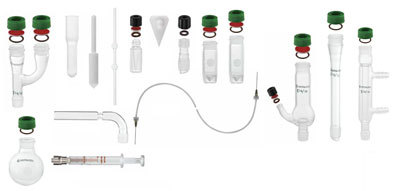
The second part of his life I will focus this website on is his creation of was his invention of Microscale Organic Laboratory practice. He converted the conventional introductory organic laboratory instruction to microscale revolutionizing organic chemistry laboratory instruction. Not only did this new instructional method change instructional practices, but it also resulted in significant reductions in laboratory hazardous waste by-products and laboratory expense as well as producing significant increases in student lab proficiency. The microscale organic chemistry curriculum was adopted by more than 400 colleges and universities throughout the country. In l986, Dana Mayo was the recipient of the first Charles A. Dana Award for Pioneering Achievement in Higher Education and were cited for “revolutionizing undergraduate instruction in chemistry.” In l987, he also received an award from the American Chemical Society Health and Safety.

I will be digitizing drawings of the first ideas of this invention as well as letters with his collaborators. Furthermore, I will try to scan the Microscale products into a 3D visual on my website and incorporate data that shows the environmental impact of this change in chemistry equipment. I will also be creating an interactive map to show all of the colleges and universities that adopted Microscale. In addition, I hope to interview the remaining survivors who worked on this project with him to add a visual component to the story.

The third part of this website will highlight his contributions to the ways the sciences are taught at liberal arts schools. He pioneered the STS program at Bowdoin College and increased the scope of what it meant to study science. My family has letters of his works to start the first STS program at Bowdoin.

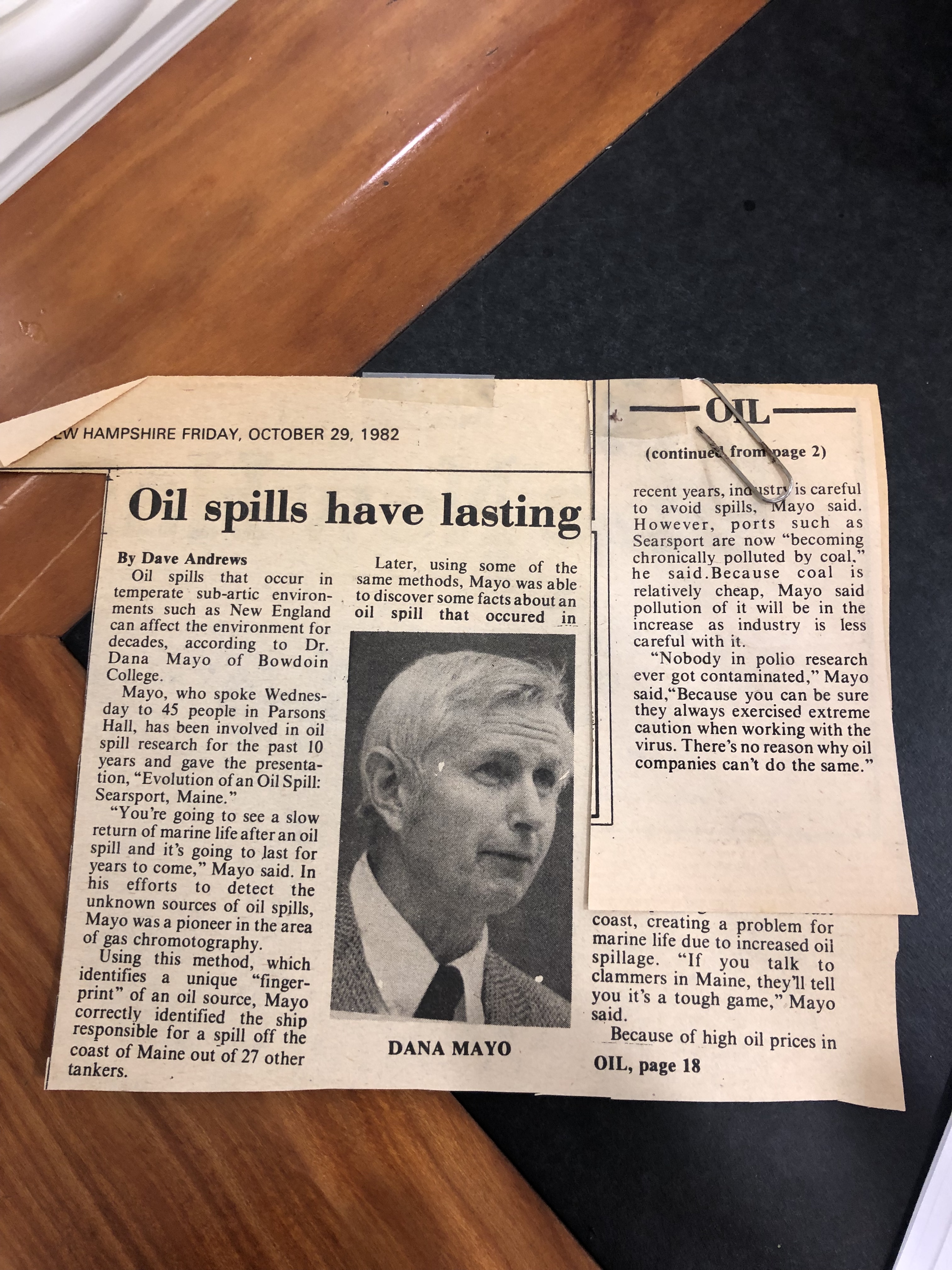
The fourth element of his life I will highlight is his work bringing IR spectroscopy to Bowdoin. I have photos and documents that I will digitize for the website. He played a key role in the development of a number of research and educational programs during his tenure at Bowdoin including bringing the longest continuously running IR course in its field to Bowdoin College in 1972. This course, which continues today, has trained over three thousand scientists working in education, industry and government. Under his leadership the course was taught over two dozen times internationally. Following a 1972 oil spill in Portland Harbor from a leak on the Norwegian tanker Tamano, He and his students took and analyzed samples of oil, sediments, water, and organisms from the affected area. Their analysis confirmed that a unique chemical “fingerprint” could be identified for oil from a single cargo ship, even after weathering and complex chemical interactions with ecosystem components. This research (and Dana’s testimony) led to an award to the State of Maine for damages and to subsequent legislation for an oil conveyance bill, which generated funds for cleaning up future oil spills. I will be recording some quotations from his acceptance speeches and award ceremonies to further reflect his accomplishments and illustrate how his colleagues thought of him.

Materials

I will be traveling to Brunswick, Maine to get the documents and videos for this project. The documents are at my Grandmother’s home in Topsham, ME as well as in the chemistry department at Bowdoin college. In terms of aid from the IT department, I will need help creating the visual timeline I am envisioning for this website. I am familiar using WordPress, but will need some coding assistance to produce the visual path I’m envisioning.

Conclusion:

Project Proposal

For my research project I plan to do a comprehensive history of Colby Fraternities describing each Fraternity and what activities these Colby students used to perform as members of Greek Life. The significance of this project is dual in nature because it is extremely relevant to us as Colby Students in our contemporary age but it is also a relevant topic for millions nationwide. Over nine million people nationally are a part of Greek fraternities and 85% of executives for fortune 500 companies are fraternity men.

For historical sources I will be using the Colby Archives and Special Collections to search for records on activities and events the Fraternities used to partake in at Colby. I will also use these resources to get more personal sides to these fraternities and hopefully be able to hear some reflections from prior fraternity members on what their experience was like and whether or not they think it has helped them on their career paths.

In terms of technical requirements I would like to make a map of Colby’s campus with the fraternities labeled based on where they were located on the campus before they were abolished in 1984. I need help creating this map as I have never done this before but I think this would be a really cool way to show how the campus used to look in comparison to how it looks now without fraternities. I also want to pair descriptions of each individual fraternity with a picture of the members of that fraternity on the website to make it a more personal account for Colby. If there was archival footage of Greek life members available that would be super interesting and useful to look at and include in the website as well. It might also be interesting to compare what Greek life was like at Colby with another school but this will be time dependent.

So far I have found a list of all Colby fraternities and sororities and when they were established and abolished. This includes a list of Academic Fraternal Societies, which I found particularly interesting, as I hadn’t heard of these societies before. An example of these academic societies was Sigma Pi Sigma, which is an academic recognition society that was focused on acknowledging academic excellence in Physics. There is also the Beta of Phi Beta Kappa which recognizes students in the top 20% of their class. These academic societies are the only remnants of Greek life at Colby and I found it particularly interesting I had never heard of these until I began researching this topic.

Challenges remaining include collecting a lot more research and hopefully getting some more personal accounts of fraternity experiences at Colby. Also the challenges of creating an appealing and informative webpage with all of the moving pieces I want such as an interactive map, archival photography and video.

« Older posts