

Donations From the Wealthy
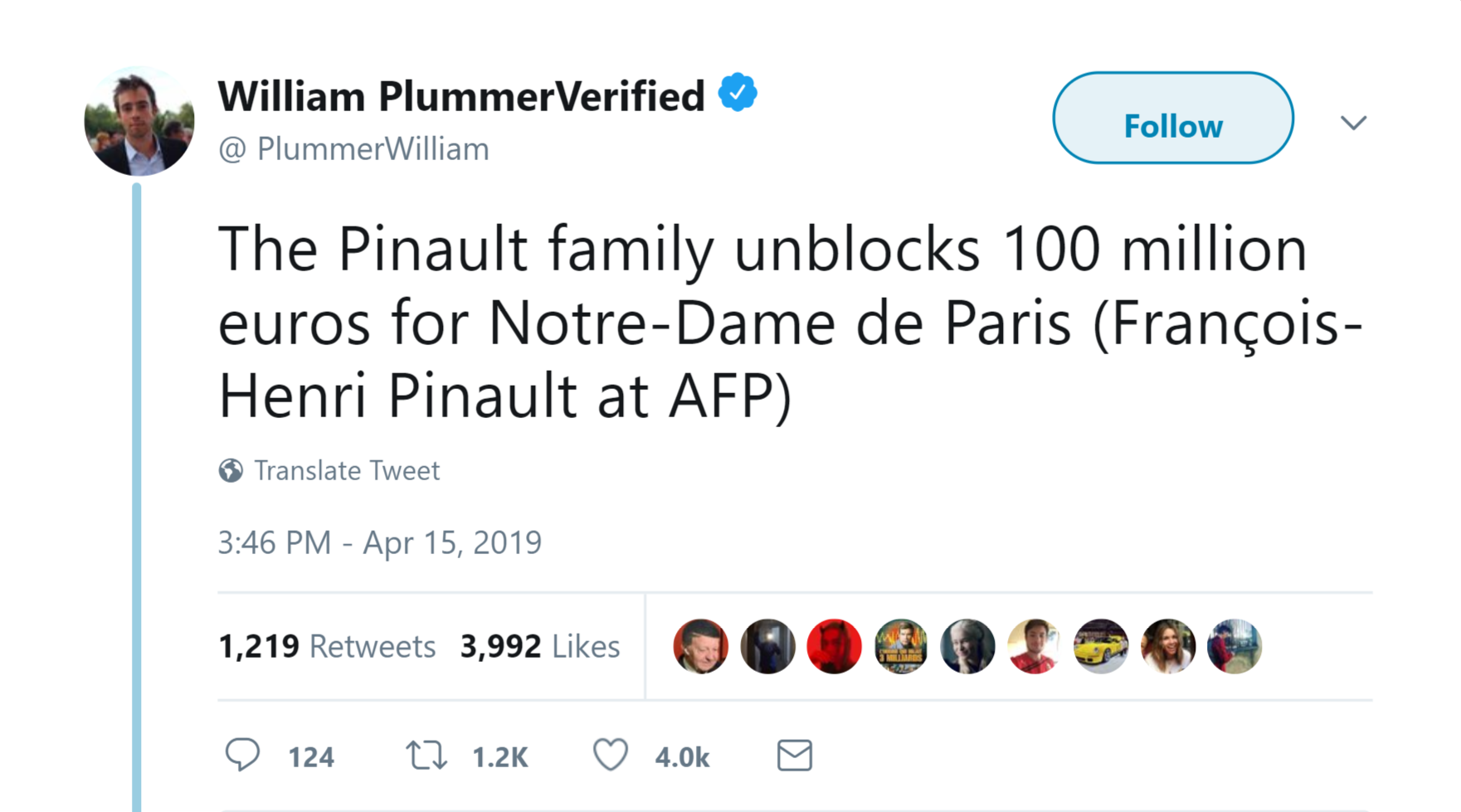
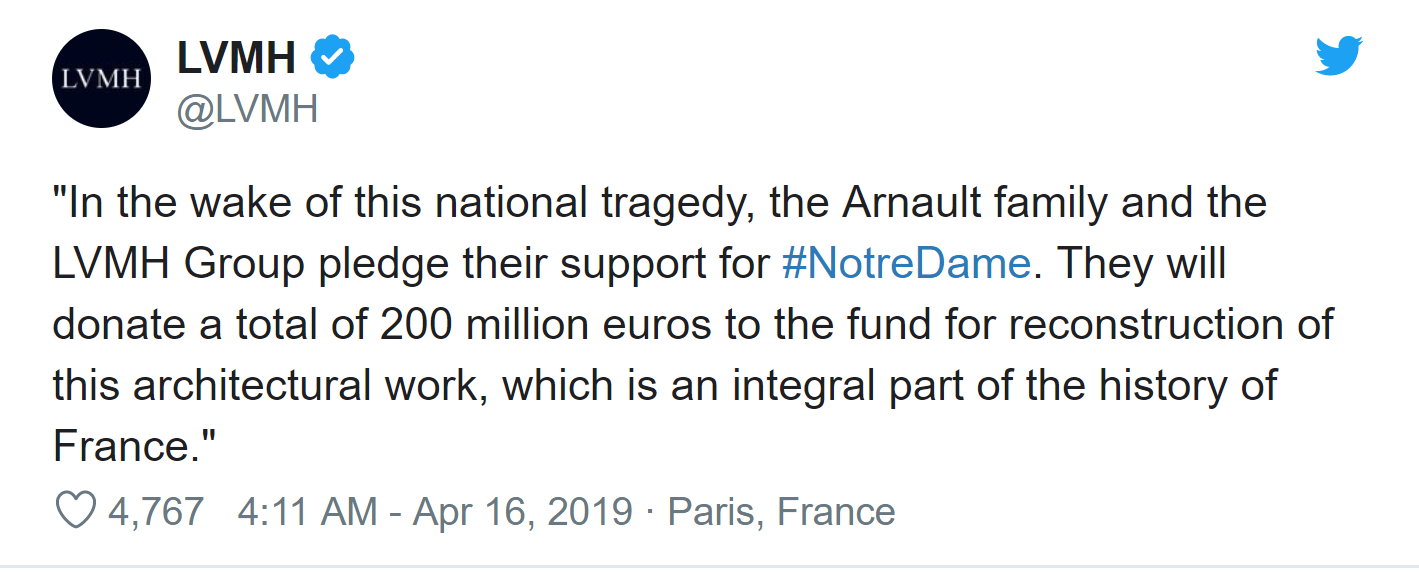
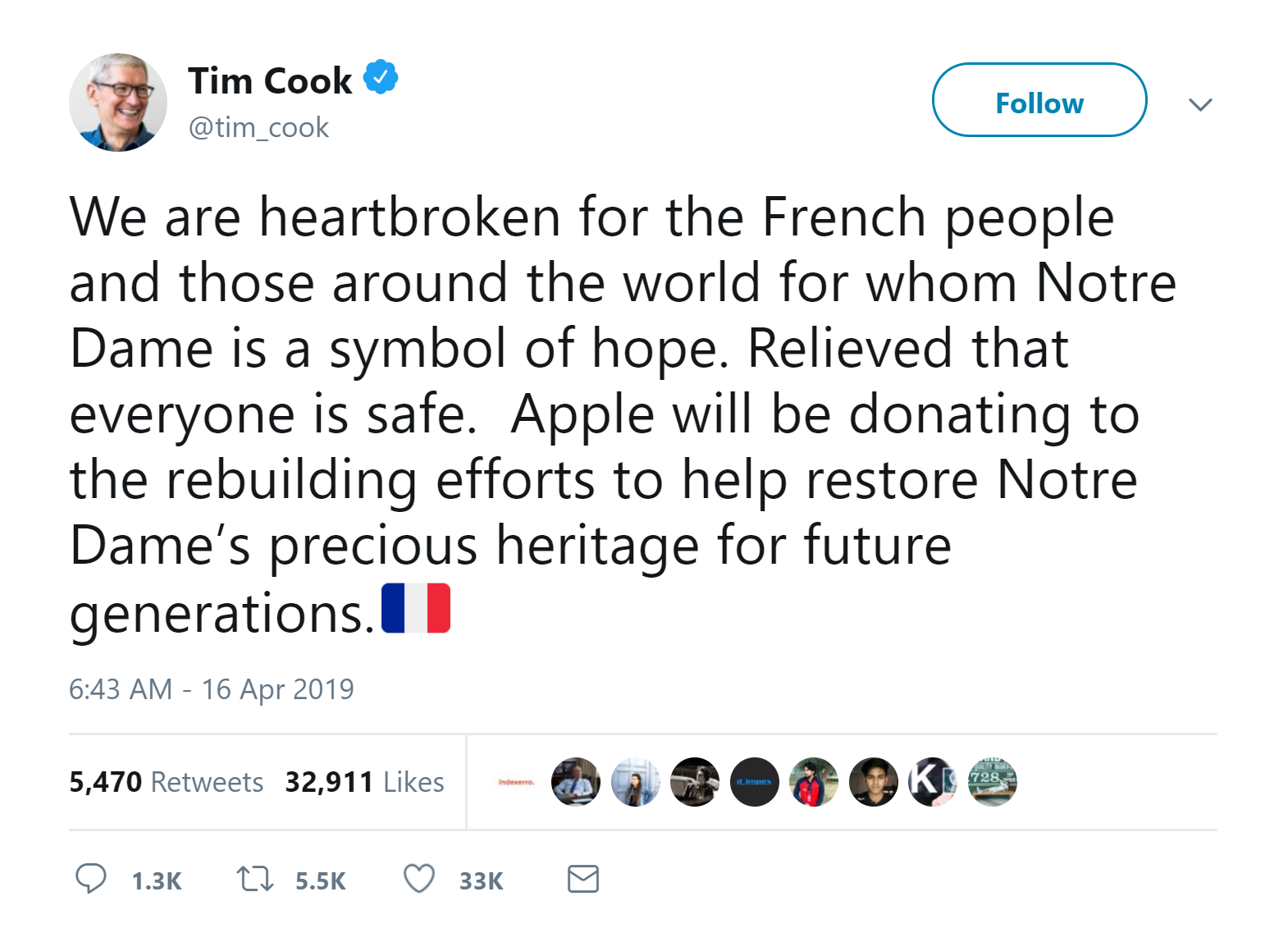
Even if the Notre Dame Cathedral as it once stood cannot be recreated, there is nevertheless a driving force behind the calls to build a faux-Notre Dame. Within hours of the initial coverage of the Notre Dame fire, affluent persons donated hundreds of millions of Euros to fund the reconstruction of Notre Dame. Many (if not all) of the major donators announced their pledges publicly, indicating that they desired to make news of their generosity well-known. Although the donators may not have explicitly asked for anything in return for these donations, they certainly profit. President Macron had announced that Notre Dame would be rebuilt prior to the proclamations of philanthropy. When deciding to contribute publicly, the donators most definitely reasoned that doing so would serve as positive publicity: in essence, advertising through charity. Tragedy presents economic opportunity, and donations act as investment.
In a society where the appearance of donating money signifies how much an individual or corporation cares about an issue, charitable causes that are more likely to garner greater positive publicity receive greater amounts of money than those that are less camera-friendly. The Notre Dame Cathedral dominated both social and traditional forms of media the day of and the days following the fire. By pledging money to rebuild while the media concentrated on the Notre Dame Cathedral, donators promising large sums of money ensured that their actions were covered by different outlets of media; companies pounced on the most opportune time to invest.
Why Fund Notre Dame Specifically?
Donating specifically to rebuild Notre Dame is an ideal form of philanthropy for these companies; as far as charitable causes are concerned, the Notre Dame fire provided the highest return on investment. The Notre Dame fire is (likely) a one-time occurrence; these companies need not donate additional funds to continue the appearance of their caring about the cathedral. The Notre Dame Cathedral is a holy structure associated with the history and religion of France; by linking themselves with the construction of Notre Dame, donating companies attempted to associate themselves with this history and high culture of France, increasing the status of their own brands. When construction concludes on the new Notre Dame Cathedral, there will be an impressive visible manifestation in the center of Paris of the investments made by these companies. There is a concrete end to the process to which these companies have donated–an end that these companies can again easily point to as proof of their philanthropy. Finally, this end will almost assuredly be achieved. President Macron had already assured the French people that the Notre Dame Cathedral would be rebuilt, thus guaranteeing investing companies that they would be donating to a successful project. These are the economical benefits experienced by companies that participate in high-culture philanthropy.
The profits attained from donating to the Notre Dame rebuilding do not present themselves when donating to causes that more directly affect the health and well-being of individuals in need. That is, cancer research has no clear, definite end; the inaccessibility to education around the world does not dominate the news cycle as the Notre Dame fire did, failing to ensure donations to such a cause receive substantial advertisement-as-coverage; and guaranteeing clean drinking water in Flint, Michigan, provides no clear physical manifestation that lends itself to constant re-advertising as would a popularly visited icon in the center of one of the major metropolitan areas of the world.
The Image of a Kinder, Gentler Corporation
Again, appearances dominate reality. When deciding to donate to the Notre Dame Cathedral, companies reasoned that doing so would create an image of a philanthropic company when, in reality, these donations constitute a fraction of these companies’ profits. The image of a philanthropic company that does not focus on profit is created with the intention of improving public perception of the company, thus increasing profit. In the case of the Notre Dame fire, the donations have an artificial significance, as President Macron had already promised a rebuilt Notre Dame. In short, the need to gain the most economical return from donating to charitable causes dictates which of these causes gain funding in the neoliberal capitalist system.