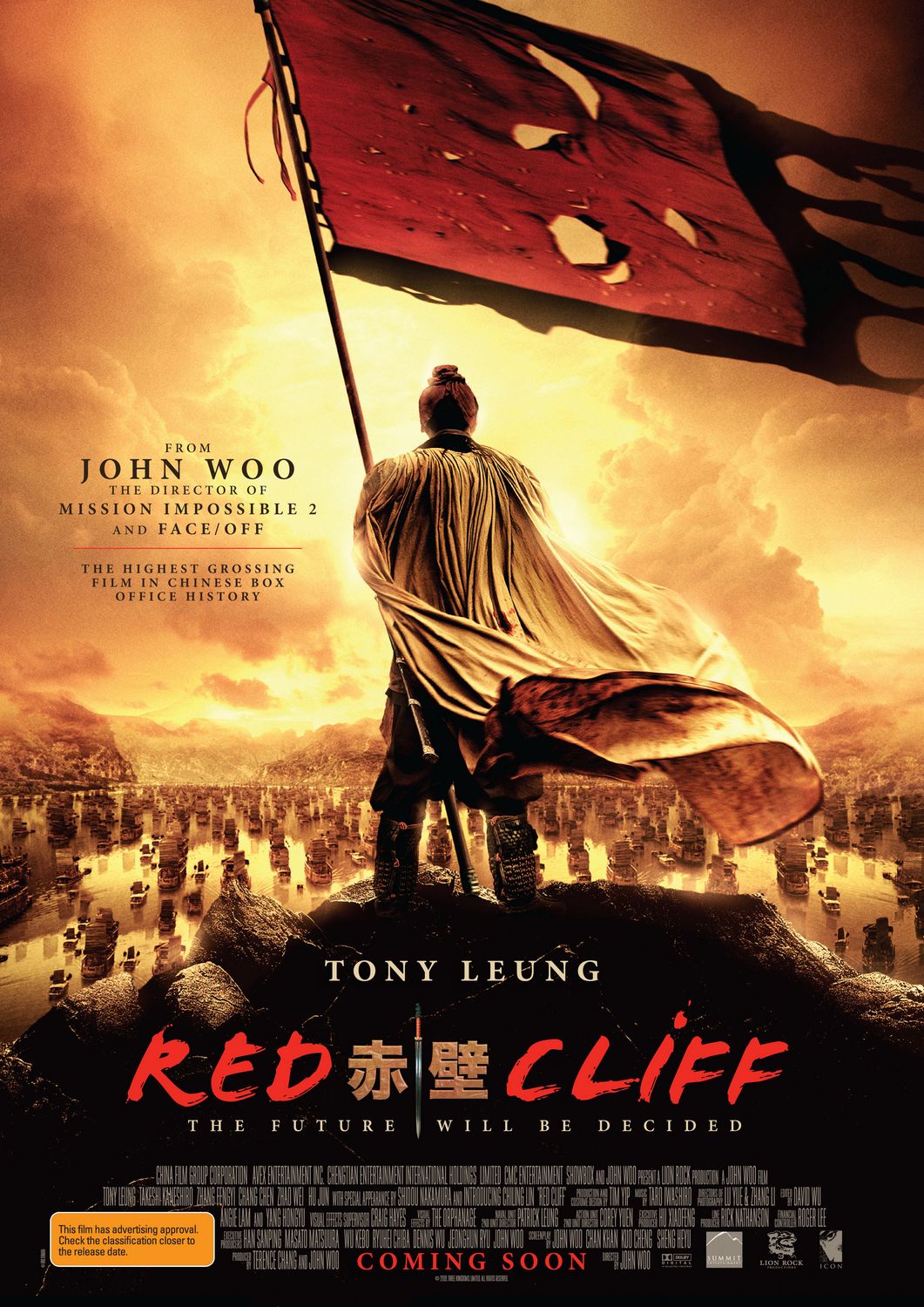
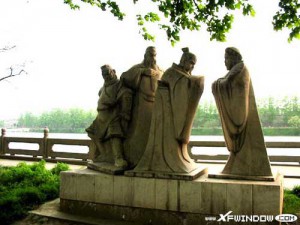
Welcome to EA 253! This course is a survey of Chinese literature through the lens of the Three Kingdoms story cycle. China’s Three Kingdoms Period (220-280 BCE) was a period of great unrest in Chinese history, as the great Han empire, which had been in existence for over 400 years, fell apart and fractured into numerous warring camps led by warlords
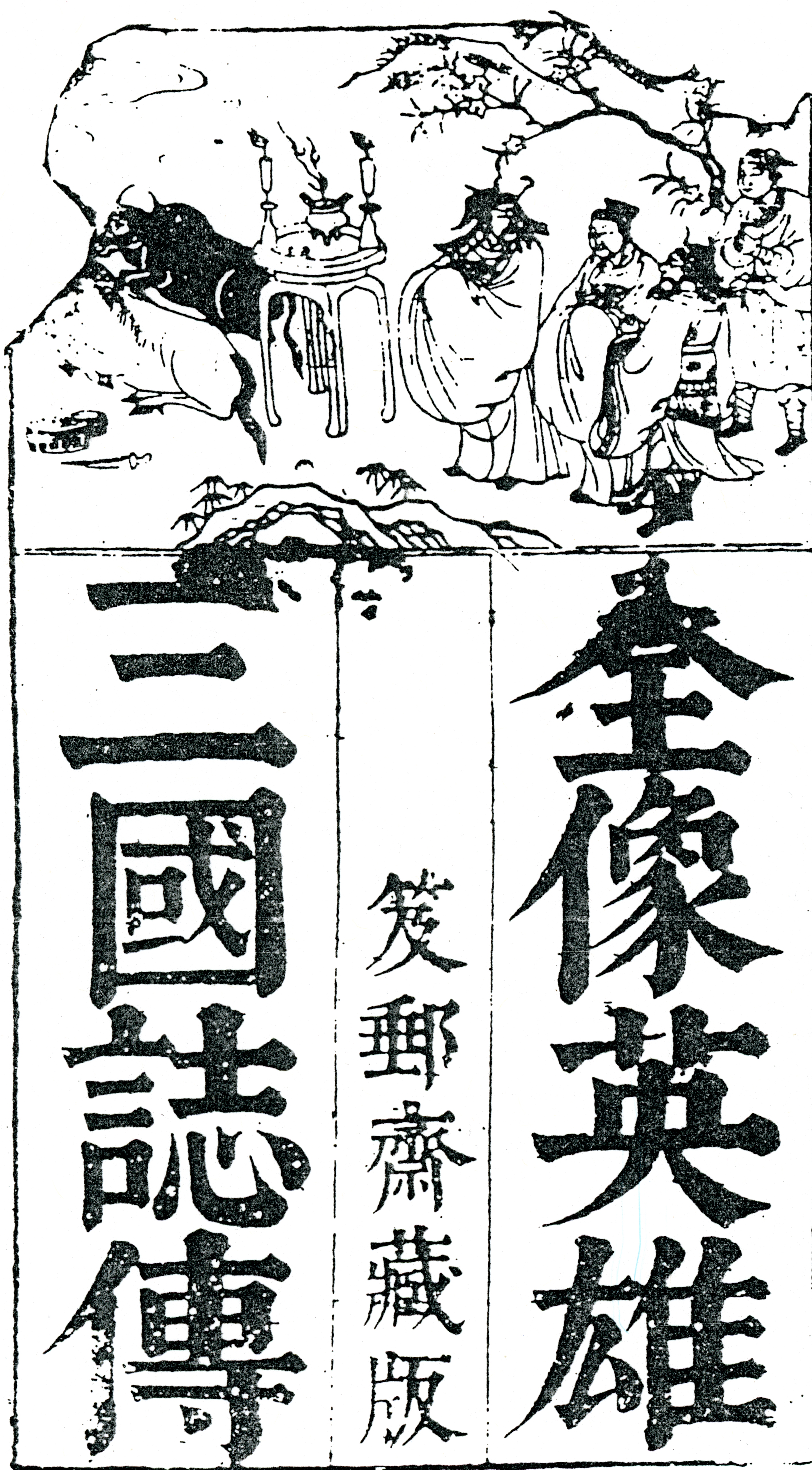
Title Page from Ming Edition of Novel
aspiring to re-unite the empire under their rule. This was a time of pitched battles and political intrigue which inspired thrilling stories that were told and retold during the following centuries, in China and throughout Asia. We will begin by reading an abridged version of the most completely realized and best known account of the Three Kingdoms story cycle, the Ming novel Sanguo Yanyi translated by Moss Roberts as Three Kingdoms: A Historical Novel. After reading the novel, we will go back in time and explore the various iterations of the story which played a part in the development of the story cycle; we will also examine where and how characters and events from the story cycle appeared in literature and popular culture after the novel was published. Throughout the course readings will be supplemented by examination of visual depictions of Three Kingdoms characters and events in a variety of different media. By tracing the migration of the Three Kingdoms story cycle over time and space students will acquire an understanding of the continuing legacy of traditional Chinese culture up until the present, and will become familiar with the defining characteristics and formal requirements of the major genres within Chinese literature. We will also be able to explore how values related to masculinity, such as leadership and heroism, and concepts connected to the human condition such as what constitutes a meaningful life, and fate versus human will, change over time and space.
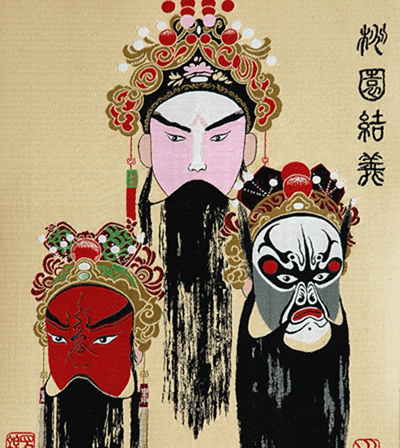
Liu Bei, Guan Yu and Zhang Fei in Peking Opera
Learning Goals:
- Acquire an understanding of Chinese history, culture, and society, as well as how Chinese culture has been received throughout Asia, through an exploration of the development of the Three Kingdoms Story Cycle in Chinese and other Asian literatures from around the third century BCE to the present.
- Become familiar with the defining characteristics and formal requirements of the major genres within traditional Chinese literature including philosophical and historical prose, poetry, drama and fiction, as we read works related to the Three Kingdoms Story Cycle.
- Reflect critically on the capacity of literature and visual art to reflect and shape values within Chinese and other Asian societies and our own.
- Learn to constructively share insights on literary works, visual art, and interactions between these two forms of creative expression.
- Hone analytical skills through close readings of literary texts, and works of visual art and popular culture.
- Improve ability to construct a clear, coherent, and compelling written discussion of research and analysis based on primary texts in translation and related secondary scholarship.
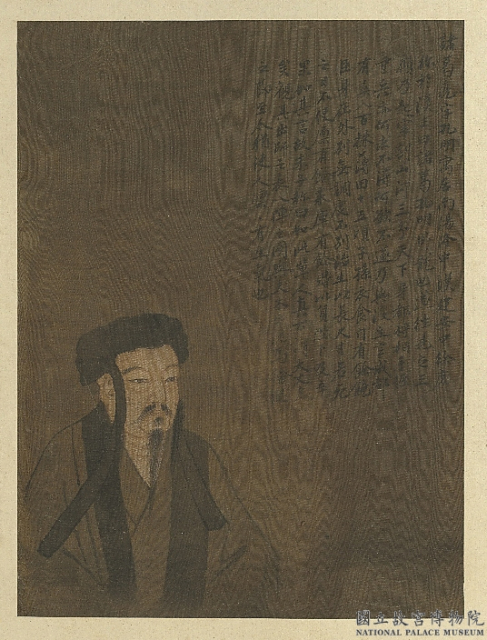
Portrait of Zhuge Liang
Required Texts:
Moss Roberts trans. Three Kingdoms: A Historical Novel by Luo Guanzhong. Berkeley, CA: University of California Press, 1999.
Wilt Idema and Stephen West ed. & trans. Battles, Betrayals and Brotherhood: Early Chinese Plays on the Three Kingdoms. Indianapolis, IN: Hackett Publishing Company, 2012.
The 2 books above are available at the bookstore.
Readings will also be assigned from:
Kimberly Besio and Constantine Tung, ed. Three Kingdoms and Chinese Culture. Albany, NY: State University of New York Press, 2007. (e-book can be accessed through the Colby Library: http://site.ebrary.com.colby.idm.oclc.org/lib/colby/detail.action?docID=10575943)
Robert Joe Cutter and William Gordon Crowell, trans. and annotated. Empresses and Consorts: Selections from Chen Shou’s Records of the Three States with Pei Songzhi’s commentary. Honolulu: University of Hawaii Press, 199.
Rafe De Crespigny trans. & annotated. To establish peace : being the chronicle of Later Han for the years 189 to 220 AD as recorded in chapters 59 to 69 of the Zizhi tongjian of Sima Guang. Canberra, Australia : Faculty of Asian Studies, Australian National University, 1996.
Victor Mair, ed. The Columbia Anthology of Traditional Chinese Literature. New York, NY: Columbia University Press, 1994.
David Rolston, ed. How to Read the Chinese Novel. Princeton: Princeton University Press, 1990.
Xiaofei Tian. The Halberd at Red Cliff: Jian’an and the Three Kingdoms. Cambridge: Harvard University Asia Center, 2018.
Shuhui Yang and Yunqin Yang, trans. Stories Old and New: A Ming Dynasty Collection. Seattle, WA: University of Washington Press, 2000.
With the exception of the first item, the assigned selections in all of the above can be downloaded from our course Moodle site as pdf documents.
William H Nienhauser, ed. The Indiana Companion to Traditional Chinese Literature. Bloomington: Indiana University Press, 1986.
The above work is available in Miller Reference, call number Reference Z3108.L5 153 1986
See our course Moodle site for the course schedule, readings, and writing assignments.
Internet Resources:
- Chinese Belief Systems from Past to Present Provides a good overview of China’s three
 major belief systems–Confucianism, Daoism and Buddhism written by Geoff E. Foy
 - Confucianism An Introductory Essay written by Judith Berling
- Dao/Daoism An Introductory Essay written by Judith Berling
- Buddhism in China A Background essay written by Geoff E. Foy
- Buddhist Studies WWW Virtual Library Links to academic sources on Buddhism
- The Chinese Text Project Includes digitized versions of many of the classic texts, some with English translation
- Chinese History For a timeline and some other interesting links.
- A Visual Sourcebook of China Includes a timeline of Chinese history along with maps of China at various points in its history, interesting illustrated discussions of various aspects of Chinese culture including calligraphy, painting, furniture, gardens and clothing
- Asia for Educators See especially the units on classical Chinese literature
- Summary of the History of the Three Kingdoms Period
- Online Novel in Traditional Chinese
- Three Kingdoms Podcast web site This is a project by a private individual to retell the novel in an accessible and interesting way. He is working through the story episode by episode with a new episode uploaded every couple of weeks.
- 2010 television series with English subtitles (Can be watched on the LRC Chinese VLL Site)
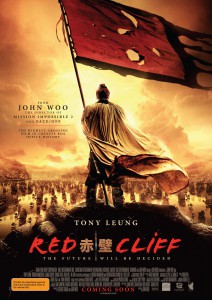
- Red Cliffs Cao Cao’s Bad Day (Part of a Series on Famous Military Debacles) https://colby.kanopy.com/video/red-cliffs-cao-cao-s-bad-day-208-ad