“Tuo-de-li, I invite you to visit me in Peking two years from now.”
—Chairman Mao, March 1947, Before Retreating from Yanan



After six months in Kunming, Roderick turned down the OSS’s offer to move with it to Shanghai. Intelligence work had never suited him. He cabled Kent Cooper at AP New York, and by October 1945 was reassigned to Chungking as a foreign correspondent.
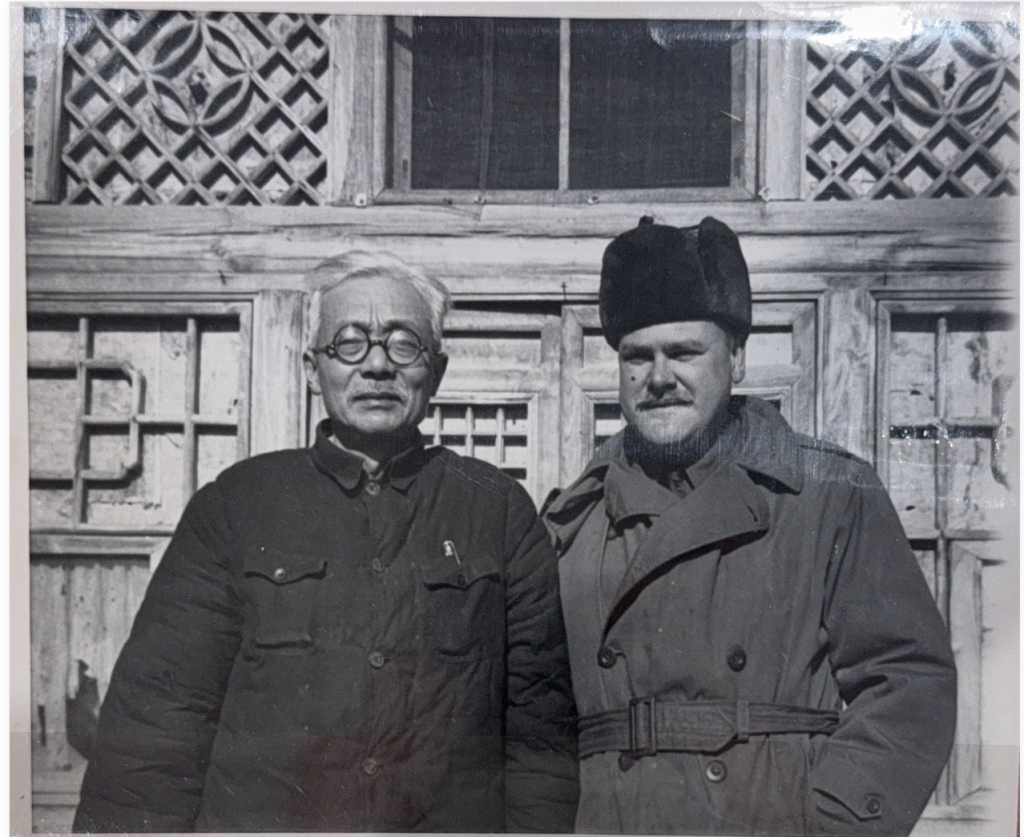
A month later he was in Yenan. He arrived on November 28, 1945, with three more senior correspondents for what was meant to be a two-week visit. When the others returned to Chungking to cover General Marshall’s arrival, Roderick stayed — and returned again from December 1946 through early March 1947, making him the only AP correspondent to provide sustained daily coverage from the Communist capital across the Marshall mediation period.
He lived in a cave at the Dixie Mission, filed stories by military radio, and interviewed the men who would soon govern China. Mao received him in a sparsely furnished mud-and-wattle house — physically soft, mentally electric, cold and calculating beneath a surface of courteous hospitality. Chou En-lai was urbane and graceful, always available. Chu Teh was humble and warm, an old warlord turned revolutionary. Liu Shao-chi was shadowy and whispering, a pragmatist whose quiet advocacy for gradual reform would eventually cost him his life under the Cultural Revolution.
From Yenan, Roderick ranged across the country — to Manchuria for the decisive battles at Szepingkai, Changchun, and Mukden; to Peiping for a year of residence in a walled compound off Morrison Street; to Nanking and Shanghai as Nationalist China collapsed under corruption, inflation, and military catastrophe. By the time Communist troops entered Shanghai in 1949, he had spent four years watching the outcome become inevitable — not from ideological sympathy but from clear-eyed observation of what the Nationalists had squandered and what the Communists had built.
Of the Yenan leadership Roderick wrote: “It was hard to believe these were the same ‘red bandits’ accused by Chiang of so many unspeakable crimes.” And of Mao’s parting words at the Yenan airfield in March 1947, as three Nationalist armies closed in: “Tuo-de-li, I invite you to visit me in Peking two years from now.” Mao was in Peking within two years. Roderick, by then, was no longer surprised.