“Like a scar on my subconscious.” “The pain, the drama, and the tragedy of China”.
John Roderick ’36
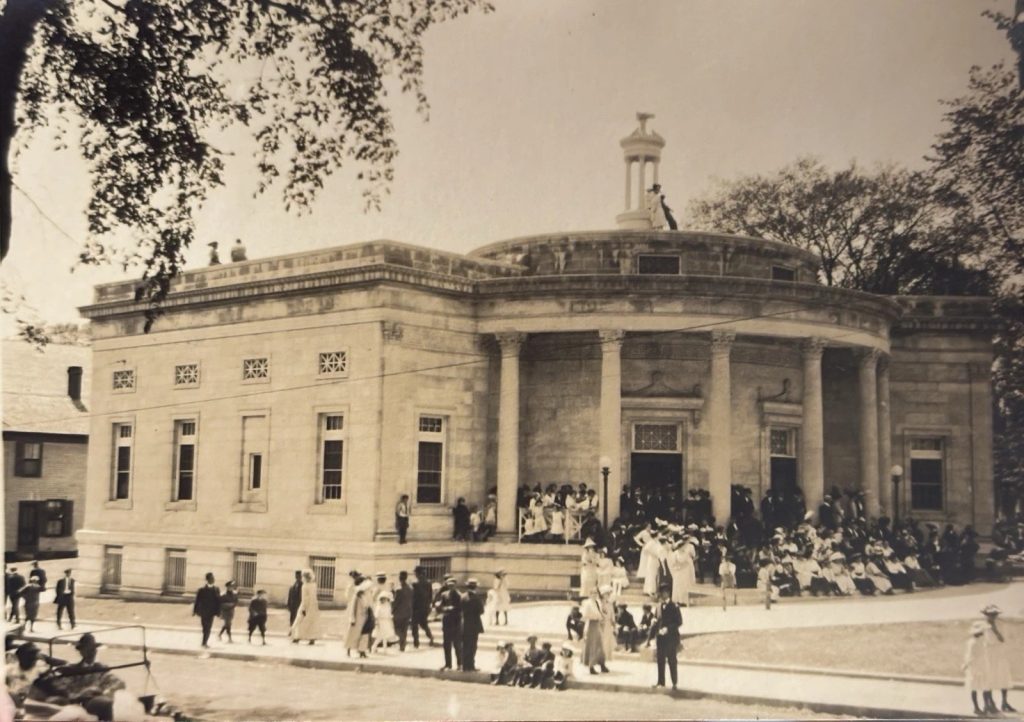
Roderick was born in Waterville, Maine, which he describes as “a mill and college city of 15,000 on the Kennebec River.” He grew up in what he calls an “elm-shaded community of Yankees and French immigrants.” The town’s only Chinese presence consisted of “two families, one running a hand laundry, the other a Chinese restaurant whose chicken chow mein and chop suey were prized by the after-the-movie-crowd as the definitive Chinese cuisine.”
His early life was marked by absence and self-reliance: his father abandoned the family for Alaska when Roderick was barely a year old and returned only in his coffin fifteen years later, leaving behind, in Roderick’s own dry phrasing, a pair of new brown shoes and a love of travel and adventure.
However, in 1927, an accidental encounter on a Maine golf course in 1927 set in motion a lifelong reckoning with China — one that would take a boy from Waterville to the caves of Yan’an and back again. A golfer who just returned from Shanghai showed him photographs of young Communists being executed in the aftermath of Chiang Kai-shek’s purge in that year, commonly known as the “412 Shanghai Massacre.”

The photographs lodged permanently in his memory, recurring throughout his life as a haunting symbol of China’s pain and tragedy. He could not have known then that many of the survivors of that same massacre — Zhou Enlai among them, who had narrowly escaped with his life — would one day be his interview subjects in a cave city on the edge of the Gobi Desert.
By age fifteen, he was already an intern reporter working for the Waterville Morning Sentinel.