“I am not going to exchange the life I have right now to anyone of you.”
This letter, written in 1934, presents Chester Wood’s sincere love of China and his insights of China’s development and traditional ideas. He sent the letter to all the Colby students to encourage them broaden the horizon of their worldview.
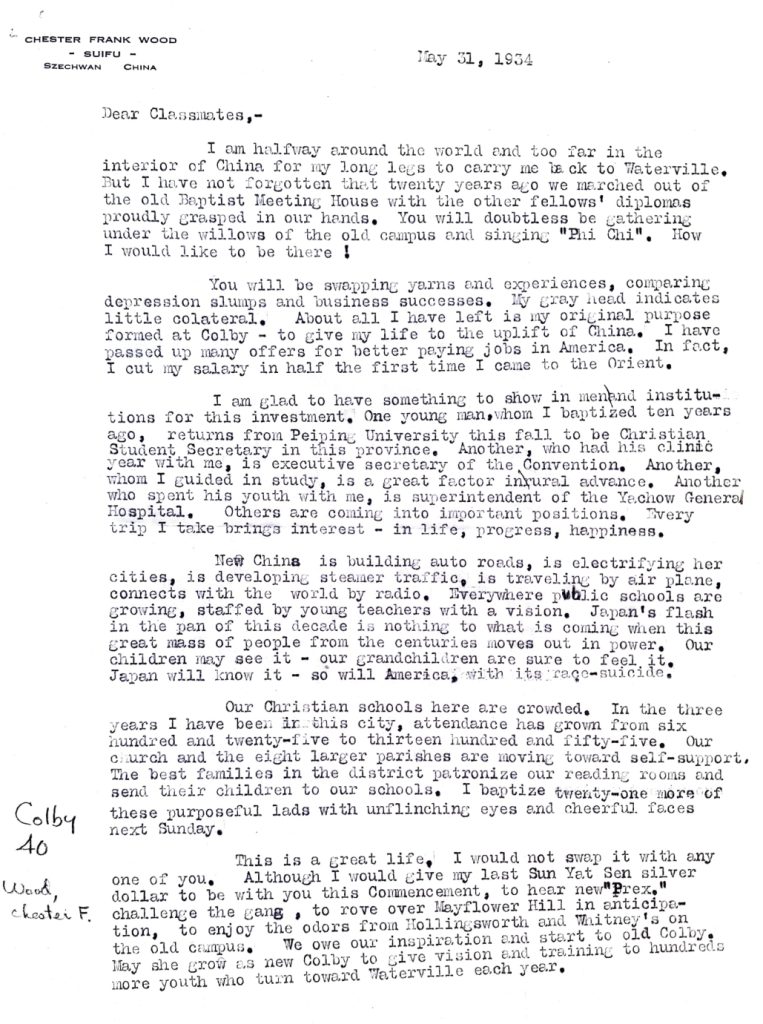
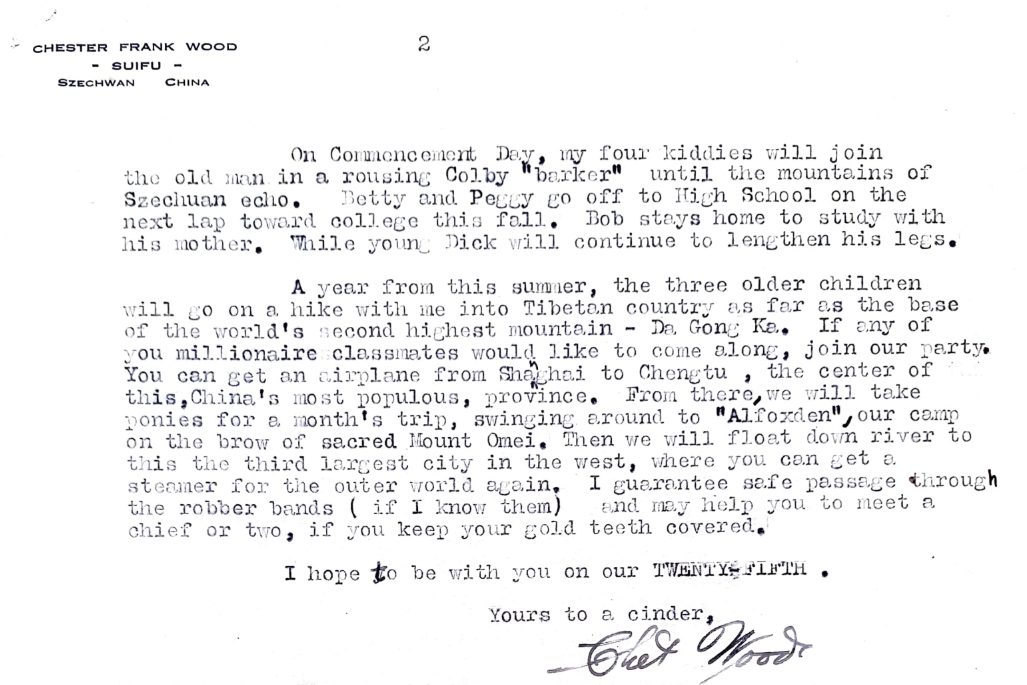
Instead of saying that “Chester Wood changed Chinese people’s mind about religion”, it is more obvious, according to the letter, that a growing China changed his view about Chinese society and culture. This aspect is important in terms of further research of Wood’s work in China and his attitude towards the ancient, “mysterious” giant country, especially in the central part of it.
Wood was also an impressive painter, since he sketched a lot of pictures when travelling around China. Here are some pictures that he collected during his research of Buddhism and the research in Chinese folk culture and architecture. These sketches provide important implications of his work and experience in China and his observation of the particular region in western China.
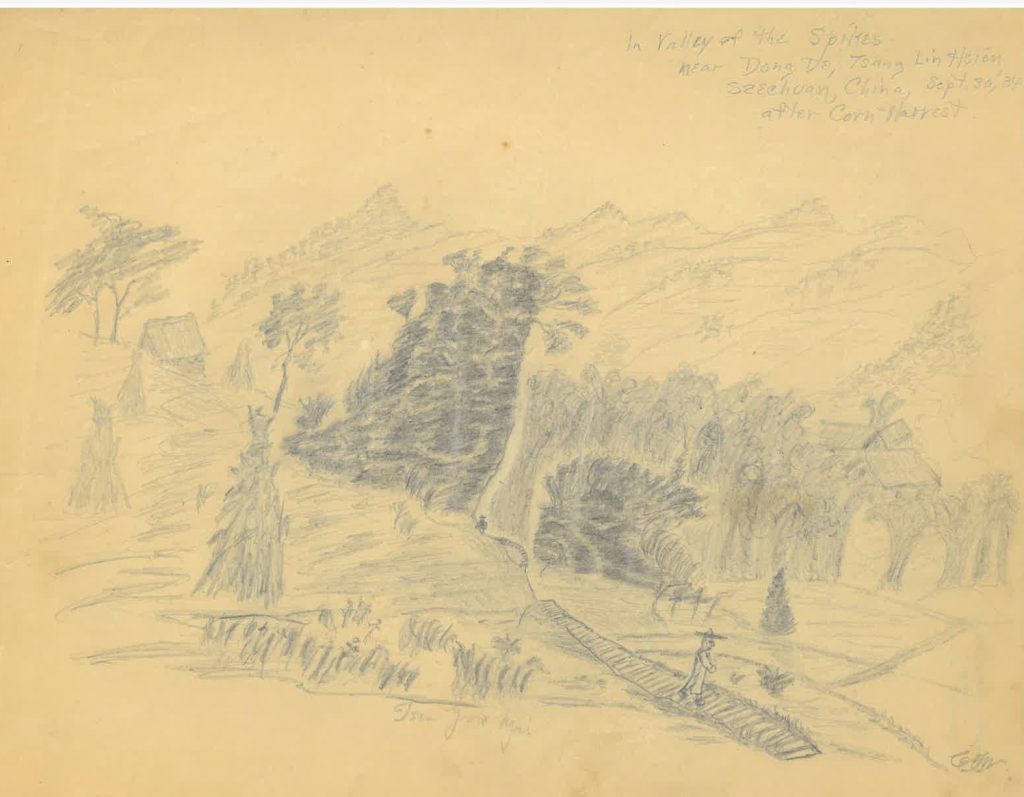
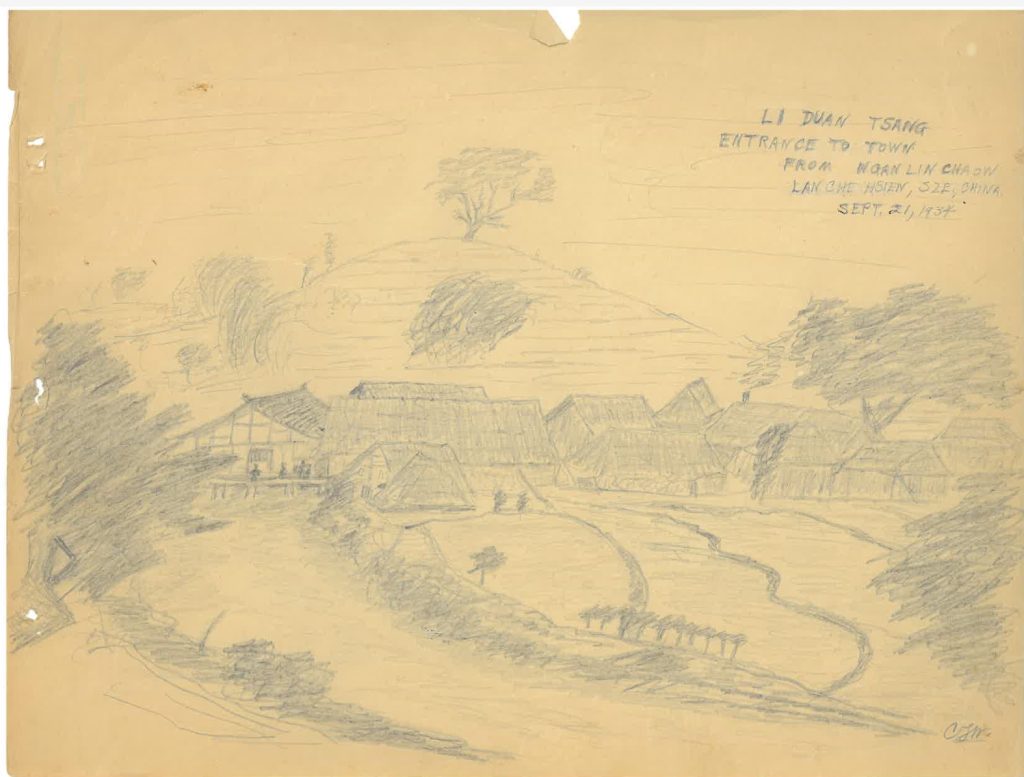
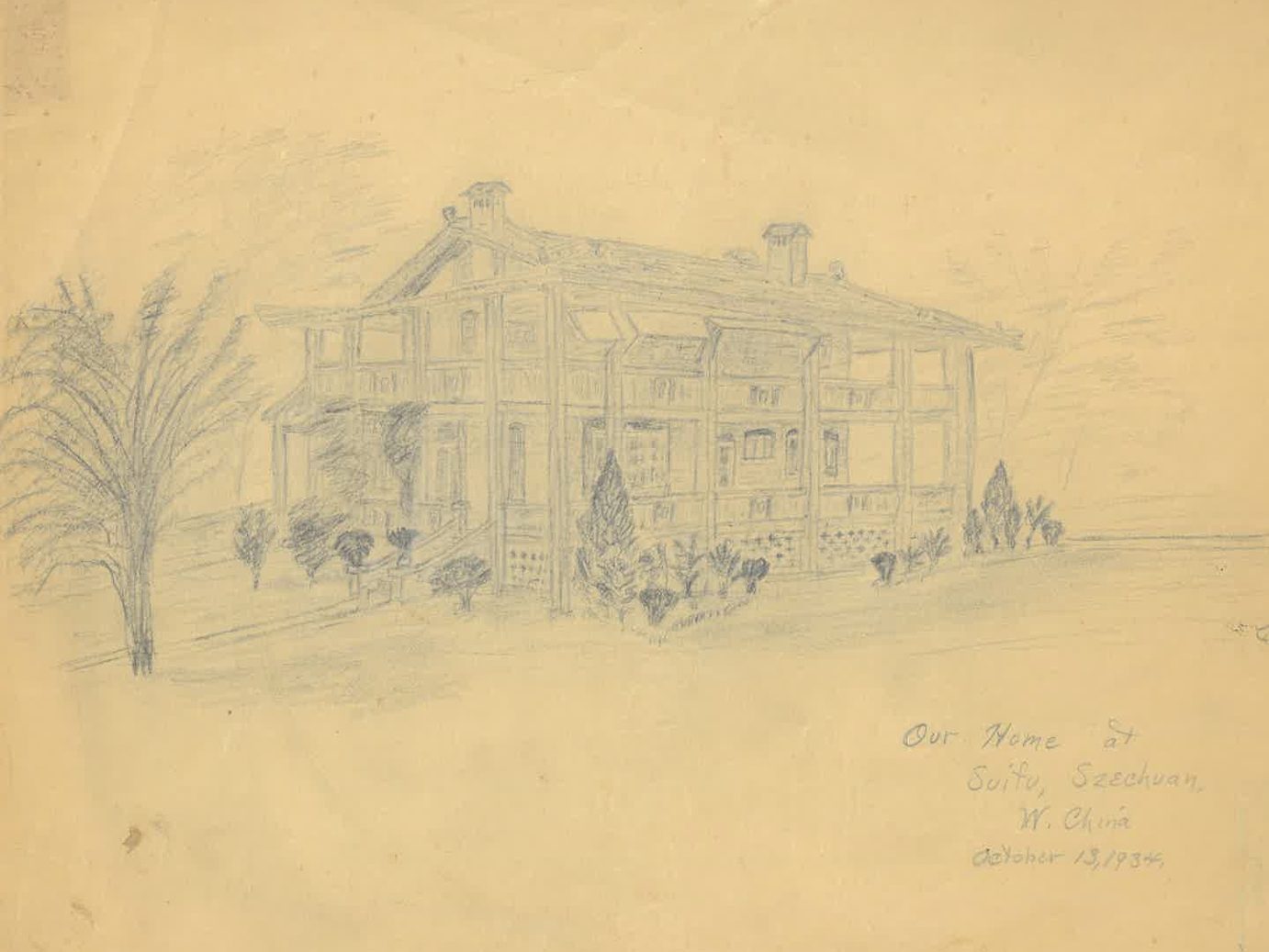
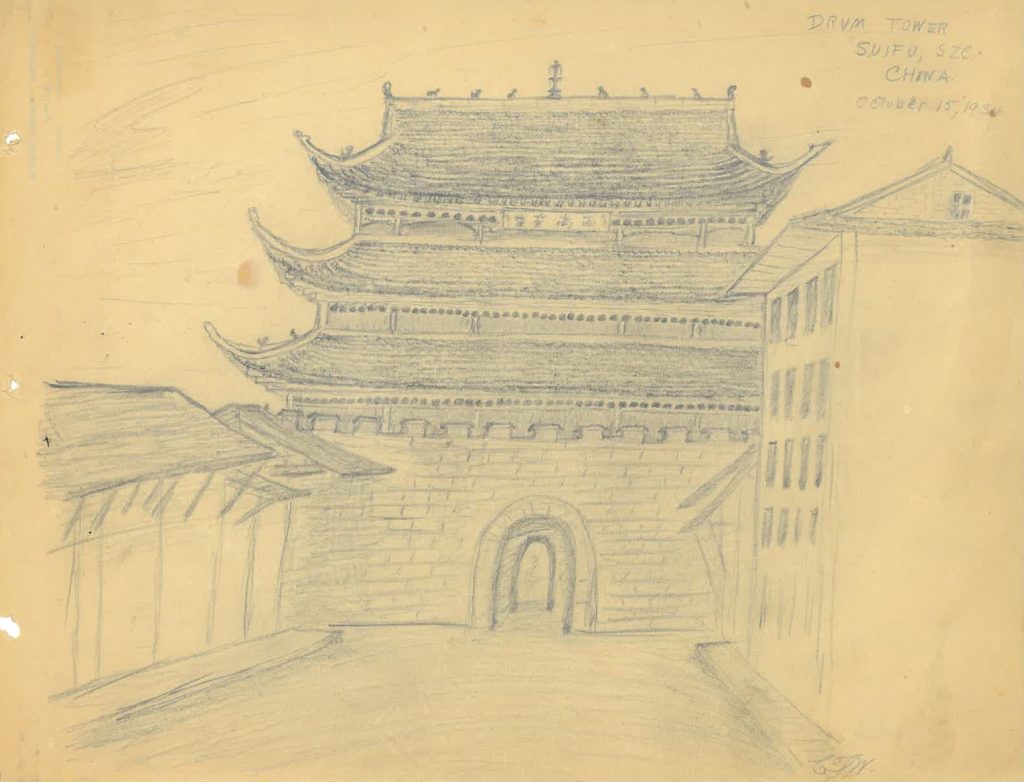
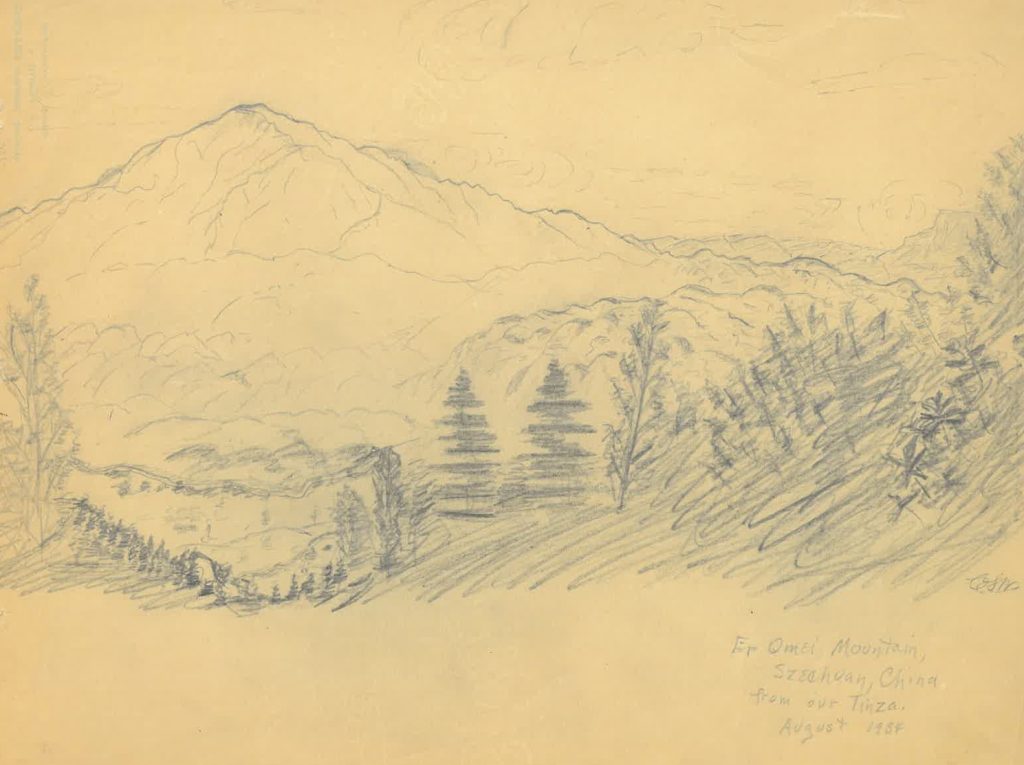
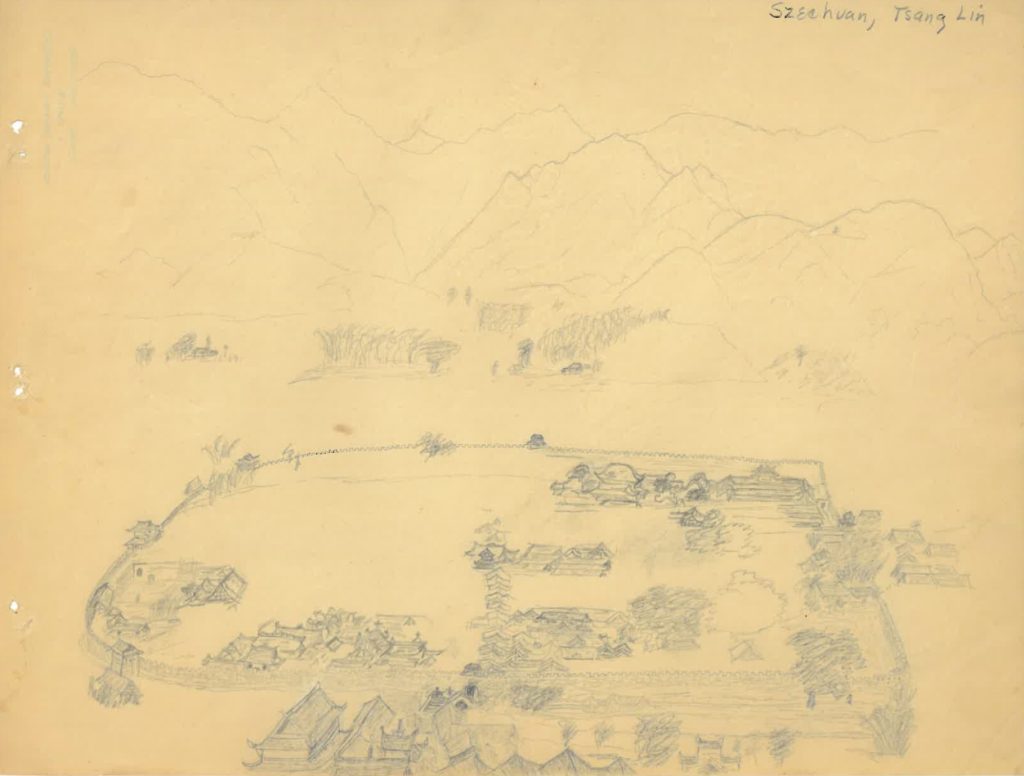
From these pictures and the notations, it is clear that Chester Wood spent most of his time in 1934-1935 travelling around in Suifu (Xufu, 叙府), modern Yibin (宜宾) in Szechuan (四川) Province. Chester Wood’s sketches from are significant not simply as travel drawings, but as visual records of a local world in transition. Executed in pencil with a documentary sensitivity, these works preserve landscapes, temple compounds, village entrances, domestic architecture, city gates, and missionary residences across southern Sichuan. Their value lies in the way they capture ordinary built environments and rural scenery that were rarely treated as subjects of formal historical documentation, yet formed the texture of everyday life in Republican-era southwest China.
The drawings are especially important because they register place at multiple scales. Some images focus on broad natural settings—mountain valleys, terraced slopes, bridges, and roads—while others attend to specific human spaces, such as temple courtyards, town entrances, schools, and homes. Taken together, they reveal how settlement, religion, education, and movement were embedded within the Sichuan landscape. They also preserve older romanized place-names such as “Suifu” and “Tsang Lin Hsien,” offering evidence of how foreign travelers and missionaries encountered, heard, and recorded local geography.