Selected Chronology
1898: Born in Kovno (now Kaunas), Lithuania (formerly a province of czarist Russia), to Joshua Hessel and Gittel (Lieberman) Shahn on 12 September 1898.
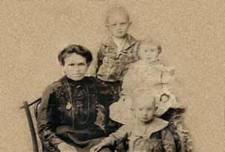
1902: At age four, Shahn moves to Vilkomir (now Ukmergė) with his mother, younger brother Phil, and sister Hattie after their father was exiled to Siberia for alleged revolutionary activities.
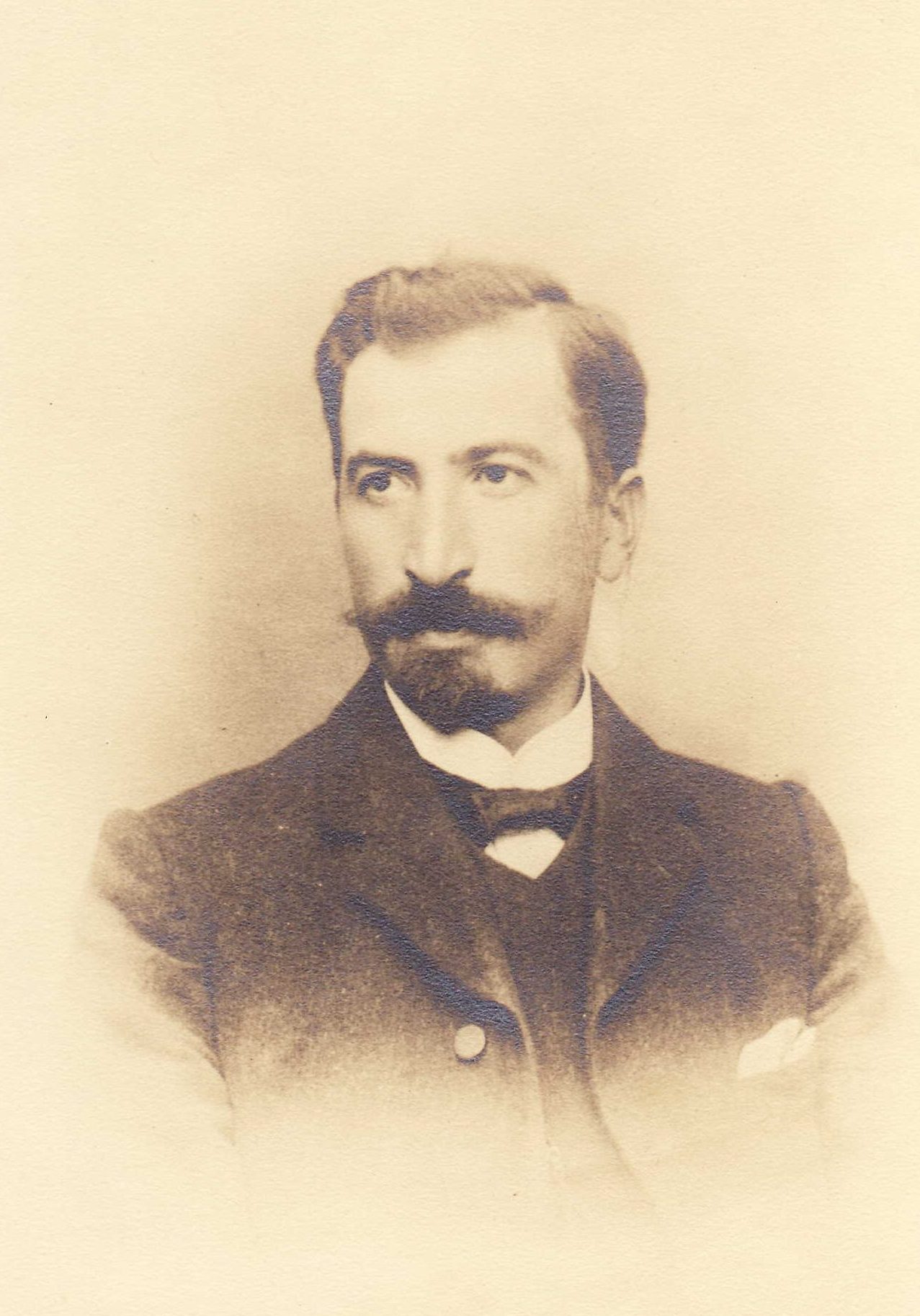
1906: Moves with family to Brooklyn, New York, where their father had recently relocated after having fled Siberia. The family settles in Williamsburg, a section of Brooklyn, where they live on Moore Street, Lorimer Street, and various addresses on Walton Street.
1913–17: Taken out of school to support the family, becomes an apprentice at Hessenberg’s Lithography Shop, where he falls in love with letterforms. Attends high school at night. In 1917, Shahn attains the status of journeyman lithographer, an activity he practices for the next few years.
1919–21: Attends New York University, City College of New York, to study zoology. Spends three summers at the Marine Biological Laboratory in Woods Hole, Massachusetts. Shahn ends up relinquishing biology, feeling that he was out of his depth, and starts pursuing a career as a visual artist.
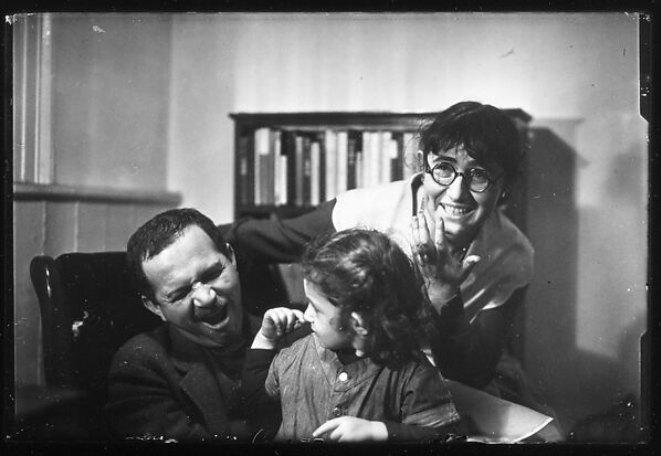
1922–26: Marries Tillie (Ziporah) Goldstein, has two children with her, named Judith and Ezra. For the next few years, the couple travels to North Africa and Europe, spending four months in Paris, where Shahn studies fine arts and learns French. In 1926, during his stay in the French capital, Shahn encountered German poet Rainer Maria Rilke’s 1910 book The Notebooks of Malte Laurids Brigge, a text he will interpret visually in his book For the Sake of a Single Verse (1968).
1930: Paints The Dreyfus Affair, a series of eight watercolors that depict various characters of the highly-publicized French case of the same name. Alfred Dreyfus, a military officer of Franco-Alsatian origin and Jewish identity, was accused of treason during the Third Republic due to the antisemitic tendencies of the time.
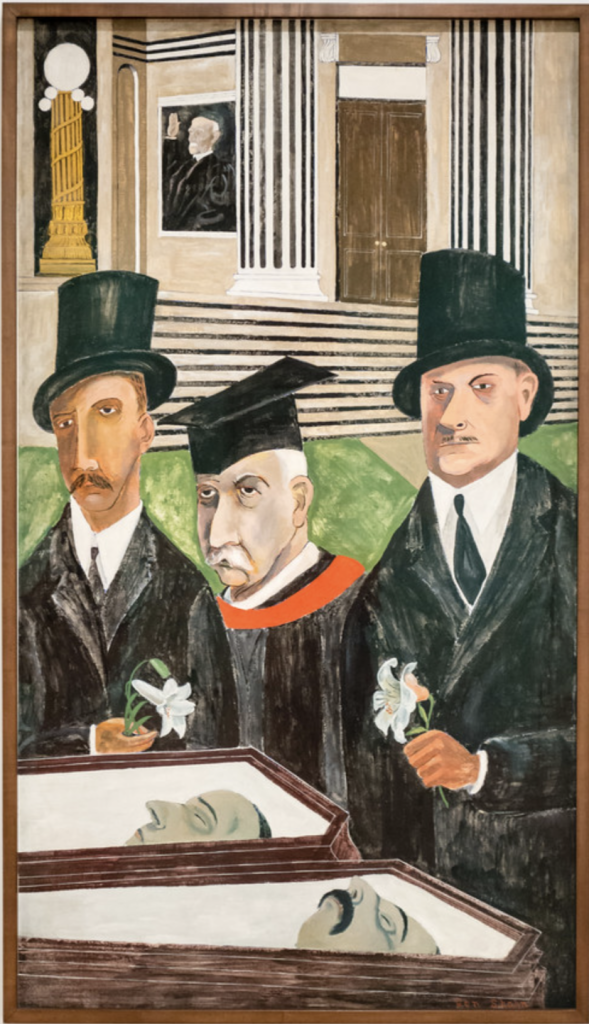
1931: Paints the Sacco and Vanzetti series, which consists of twenty-three gouache paintings on the trail of Nicola Sacco and Bartolomeo Vanzetti. Sacco and Vanzetti were Italian immigrants convicted in 1921 for the 1920 murder and robbery of two paymasters at the Slater and Morrill Shoe Company in Braintree, Massachusetts. Shahn also creates his illustrated Haggadah.
1932: Displays his work on the Sacco-Vanzetti series at the Downtown Gallery, April 5–17, 1932. The show, The Passion of Sacco and Vanzetti, receives favorable reviews from artist and journalist Bernarda Bryson. Shahn separates from his wife, Tillie, in the fall of 1932, and proceeds to take a job with the Resettlement Administration (RA) in Washington, D.C.. Assigned to photograph the conditions of the rural South during the Great Depression, Shahn invites Bernarda Bryson to accompany him.
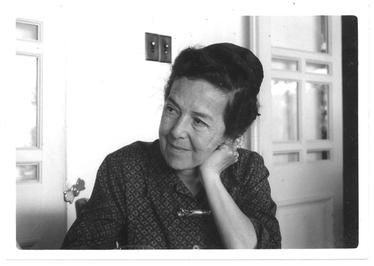
1935: Marries Bernarda Bryson. They have three children together–Susanna, Jonathan, and Abigail.
1936–38: Shahn maintains employment at the Farm Security Administration as a designer, photographer, and artist, completing the fresco mural for the Jersey Homestead community center and taking approximately 3,000 photographs for the Library of Congress.
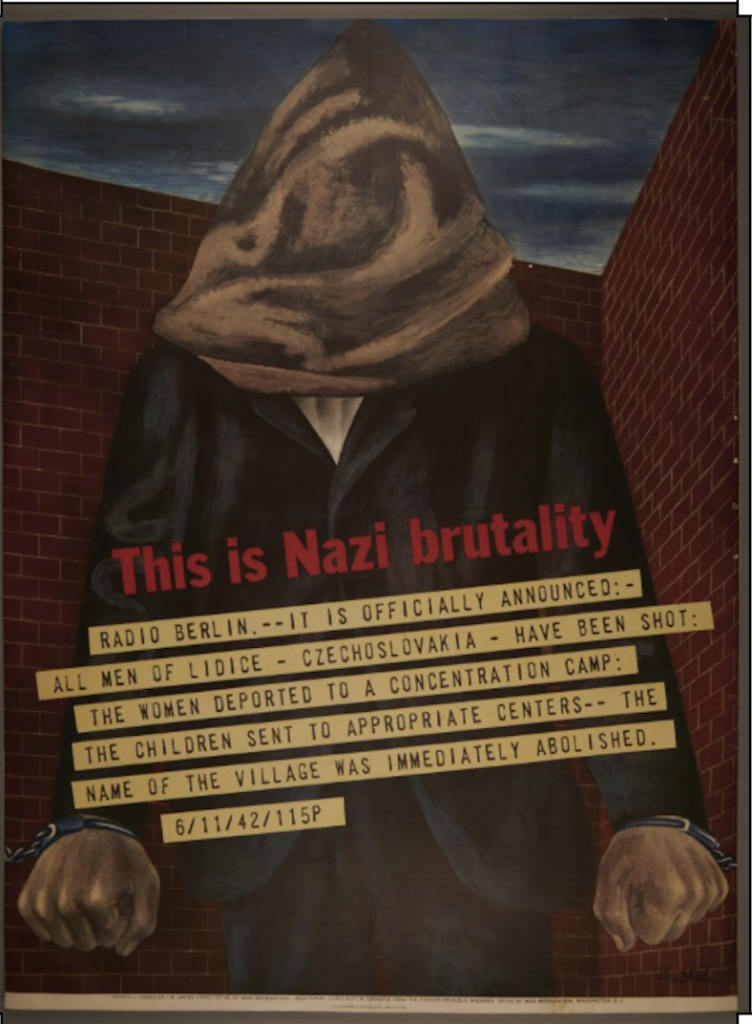
1942–43: In August of 1942, Shahn joins the Office of War Information (OWI) to design posters and pamphlets in order to explain the importance of U.S. military involvement in World War II. Notable posters include This is Nazi Brutality (1942), They Can Take Only Our Bodies (ca. 1942-5), and The Nature of the Enemy series (1942-3). Shahn ultimately resigns from the OWI the following year.
1947–48: Large retrospective of his visual work, including paintings, drawings, posters, illustrations, and photographs at the Museum of Modern Art (MoMA), New York, which spanned from 30 September 1948 to 9 January 1949.
1952: Privately prints The Cherry Tree Legend.
1954: Publishes The Alphabet of Creation for Pantheon Books. That same year, Shahn was chosen, along with Willem de Kooning, to represent the United States at the 27th Venice Biennale.
1955–56: Shahn delivers six lectures at Harvard University, where he serves as Charles Eliot Norton Professor of Poetry during the 1956–57 academic year. The lectures were subsequently grouped and published by Harvard University Press under the title The Shape of Content. Shahn also produces two other books, Sweet was the Song (published independently) and The Biography of a Painting, a visual rendition of one of the lectures, for the Fogg Museum in Cambridge, Massachusetts.
1957: Shahn privately prints I Sing of a Maiden. Designs and produces Thirteen Poems by Wilifred Owen with Leonard Baskin, visual artist and founder of The Gehenna Press.
1960: Shahn makes various visits to East Asia, where he is particularly moved by Japanese calligraphy and art he encounters in Kyoto, Japan.
1967: Prints Ecclesiastes in Paris, France, with the Trianon Press. Publishes a version of The Cherry Tree Legend in collaboration with the Museum of Modern Art.
1969: Shahn passes away on 14 March 1969 at the age of 70.
Sources Cited
Ancestry.com. “Joshua Hessel Shan,” https://www.ancestry.com/genealogy/records/joshua-hessel-shan-24-1nfc2md [Accessed 3 December 2024].
Shahn, Ben. The Passion of Sacco and Vanzetti. 1931–34. Tempera on canvas mounted on composition. https://whitney.org/collection/works/1022 [Accessed 3 December 2024].
—–. This is Nazi Brutality. 1942. Offset lithograph, 38 5/16 x 28 1/4 in. Art Institute of Chicago, Chicago. https://www.artic.edu/artworks/194744/this-is-nazi-brutality [Accessed 3 December 2024].
Stephens, Lannyl. “Social Realism in Greenwich Village: The Work of Ben Shahn.” Village Preservation [Accessed 4 December 2024].