Sweet Was the Song that Ben Sang: Ben Shahn’s Interpretation of an Elizabethan Carol
Hannah Rosenberg
Description
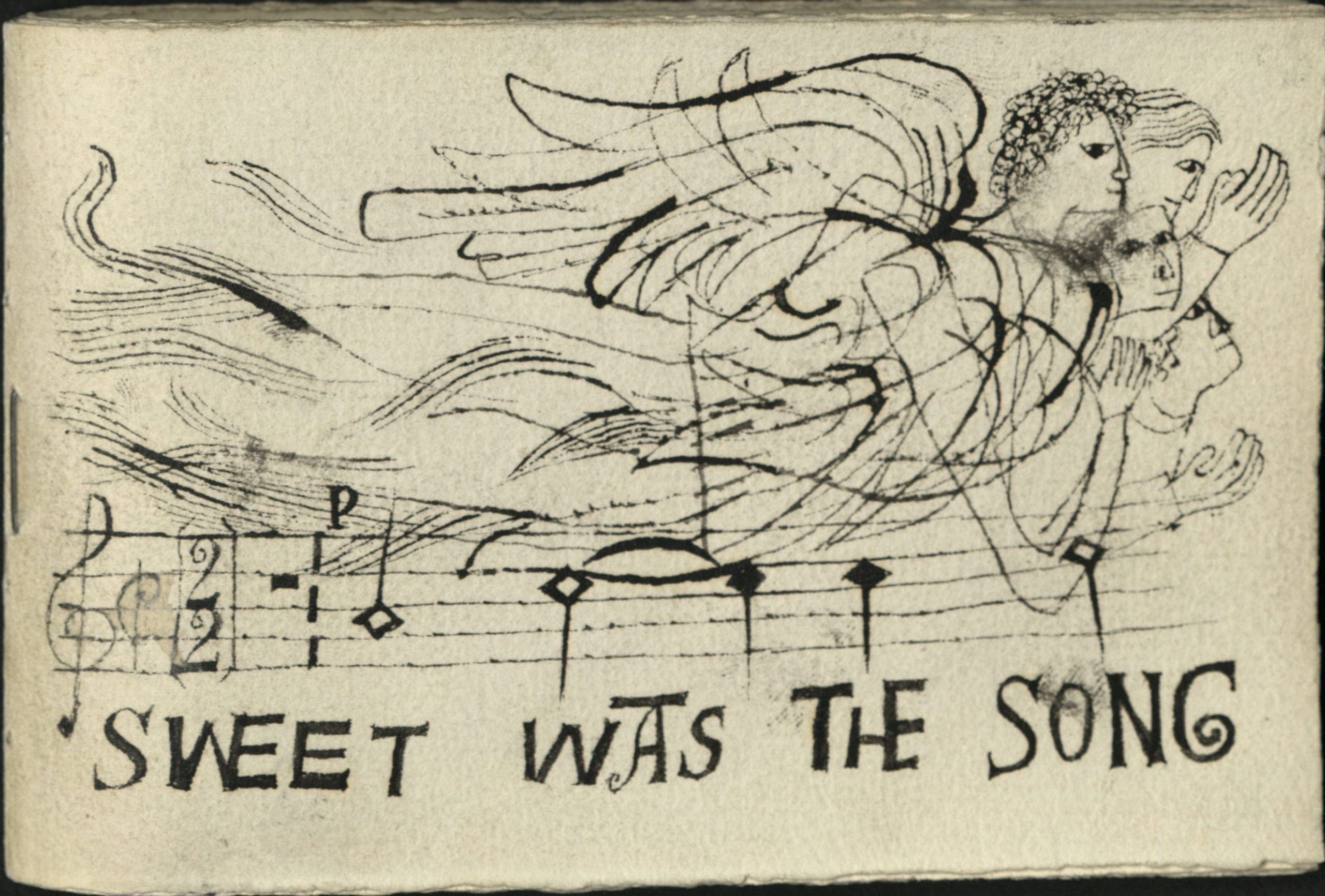
Ben Shahn’s Sweet Was the Song recreates the 16th-century English carol by the same name. The maquette, measuring 3 1/16 by 4 13/16 inches, arrived at the Colby College Museum of Art in a custom slipcase measuring 5 1/16 by 3 1/2 by 3/4 inches. Spanning twenty-eight pages, the book features Shahn’s calligraphy and pen-and-ink illustrations to accompany the carol, in which the Virgin Mary sings to the newborn Jesus. Consisting in a single quire in a single staple binding, the maquette embodies the provisional quality of such objects created for replication.
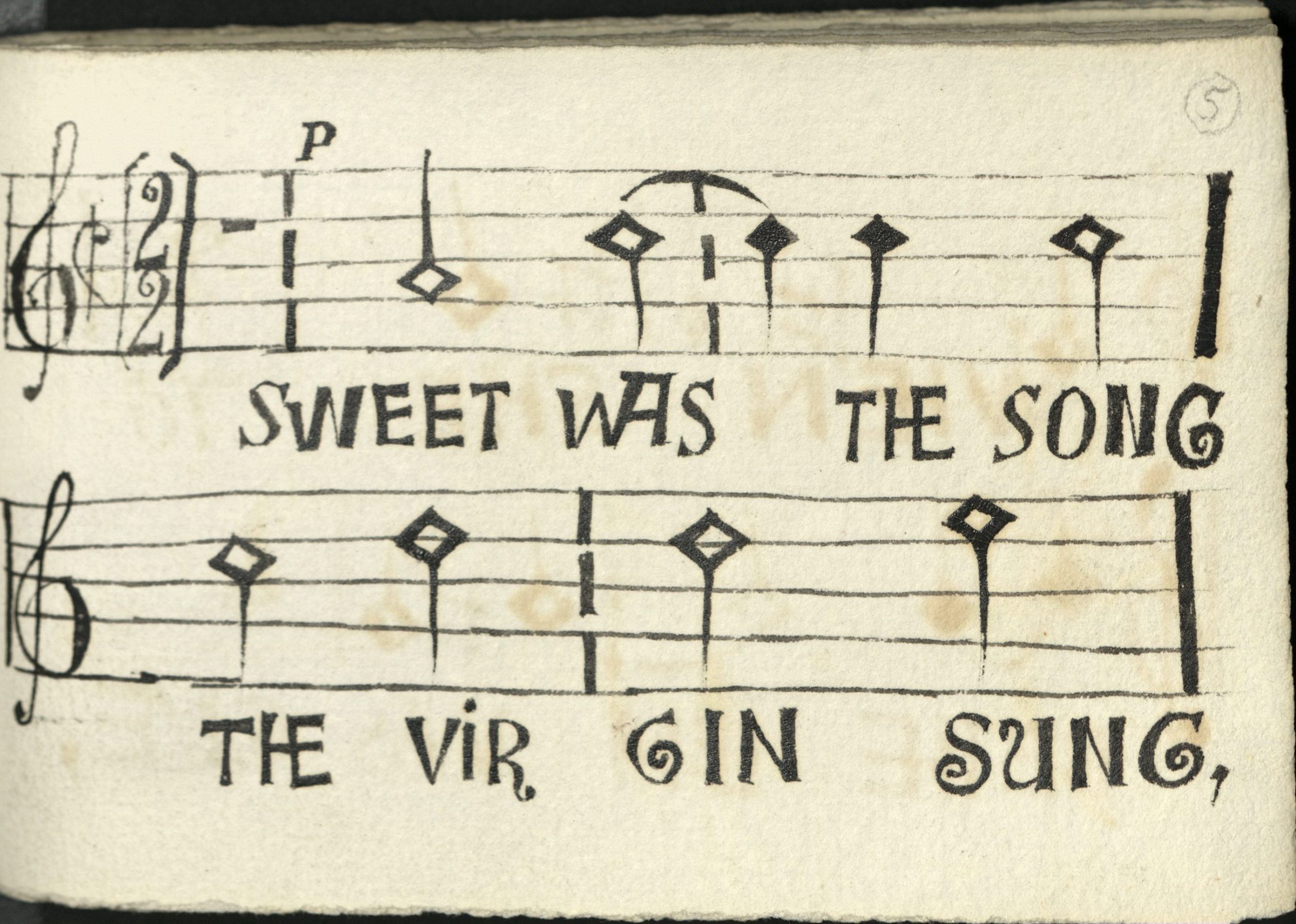
Imperfections in the materials reveal the maquette’s draft-like nature. For example, on the fifth page, we see some of the darker areas in the musical notes on the page’s verso.
Sweet Was the Song was first privately printed in 1955, then the Museum of Modern Art issued in 1956 a limited edition of 275 numbered and signed copies, and finally the Odyssey Press published a trade edition in 1965.
The Source of the Carol
The text for Sweet Was the Song originates from William Ballet’s Lute Book, a collection of Elizabethan songs with lute accompaniment compiled around 1600. However, the term “book” is misleading, as Ballet’s Lute Book consists of two separate manuscripts that were not combined until the 18th century and that are today in the library of Trinity College, Dublin. The first manuscript (MS 408/1), copied in 1590, contains the more popular Ballet songs, all composed for lute accompaniment, including the text and notation for Sweet Was the Song (Spring 125). The second manuscript (MS 408/2), compiled after 1610, focuses on pieces for lyra (Spring 126).
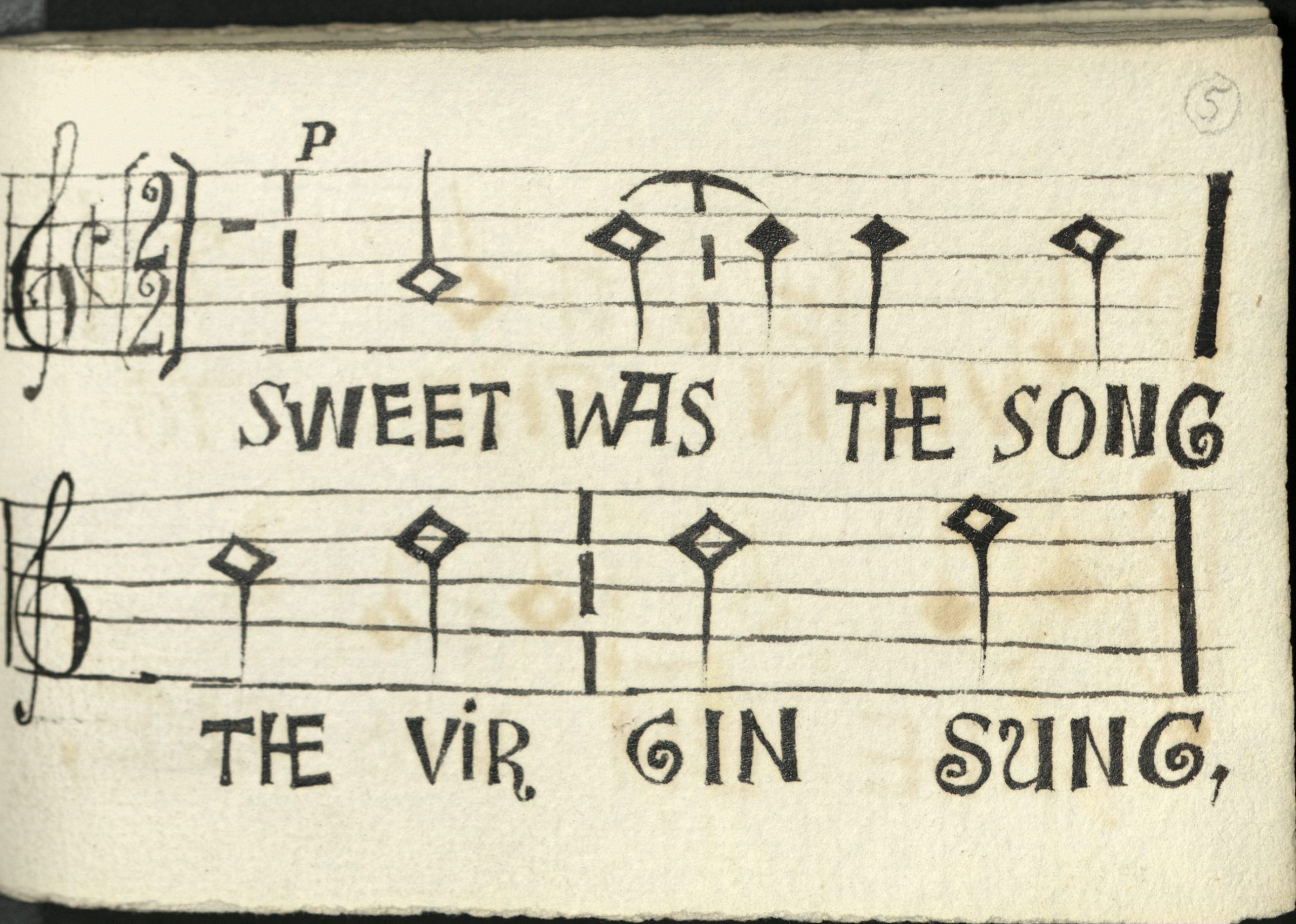
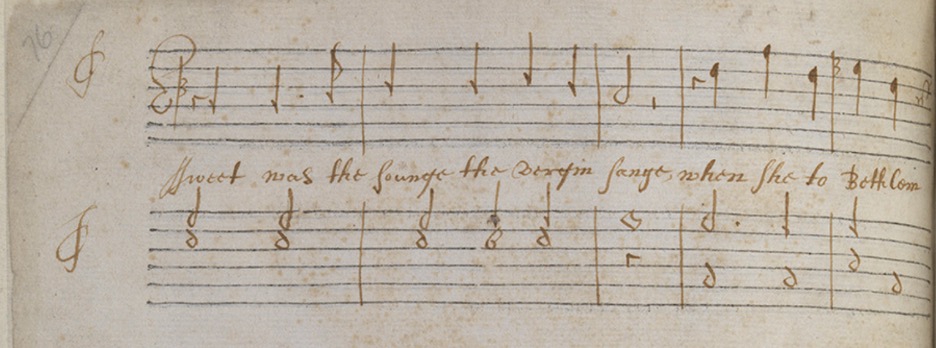
Ballet employed mensural notation in Sweet Was the Song, a system of notation commonly used in the 15th and 16th centuries. Distinguished by its diamond-shaped note heads on a staff, mensural notation was central to late medieval and early Renaissance music (DeFord 9–32). In Ballet’s original setting of Sweet Was the Song, the score is presented on a six-measure staff, a format uncommon today but reflective of the period’s conventions in music notation. Shahn echoes this historical style in his maquette using sharp, stylized diamond note heads but adjusts the staff to five lines as in modern scores, instead of the six in Ballet’s manuscript.
Calligraphy and Lettering
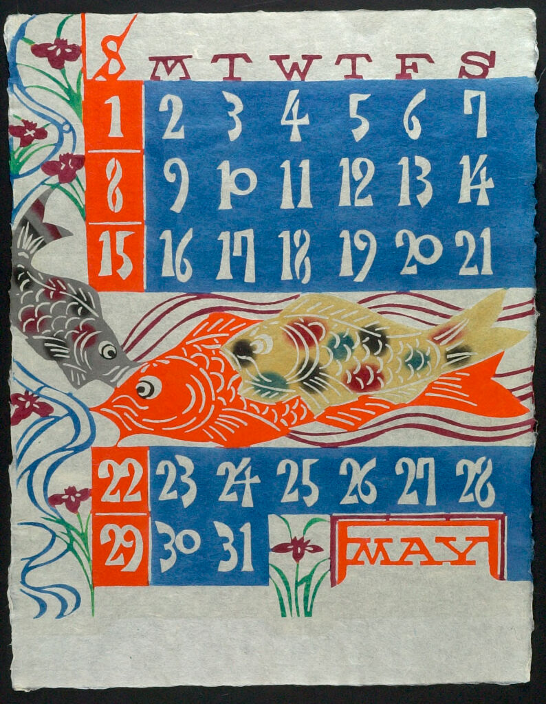
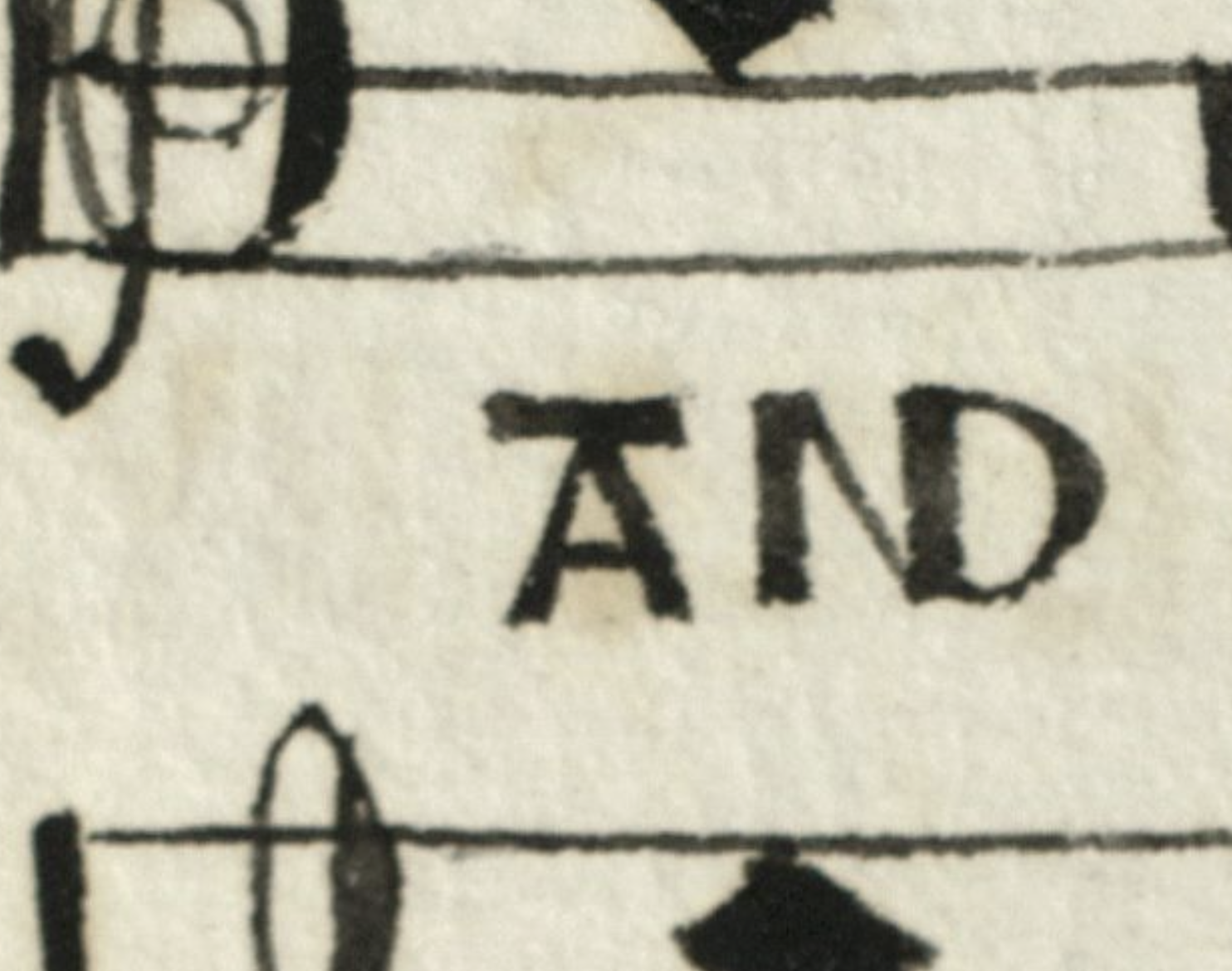
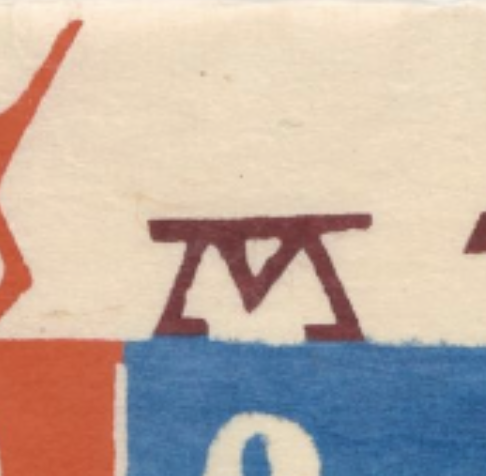
In Sweet Was the Song, the text is written solely in capitals. Some letters stand independently, while for others ligatures are used to tie letters together. We see Shahn drawing from a source in his life, as demonstrated in the similarities between Shahn’s lettering and Keisuke Serizawa’s Calendar for 1955, which the Shahns owned (Rago 52). Serizawa (1895–1984), who was a Japanese textile designer, printed wood engravings on textured rice paper that feature distinctive curved lettering. The fluidity of Serizawa’s letters is evident most in the curve at the end of the stroke, resembling Shahn’s letterforms, such as the S present throughout Sweet Was the Song. Another example is the arm of certain letters. The arm of a letter is a stroke that does not connect to a stem on at least one side. Seriwaza puts an arm over the letter M in his calendar for May 1955. A similar calligraphic arm can be seen in Shahn’s letter A throughout the maquette. Shahn first spent time in Japan in 1960 during a trip to Kyoto (Chevlowe 188), and his interest in the art of the region is well-documented in the auction catalog of the Shahn estate.
Horizontal Format and Design Choices
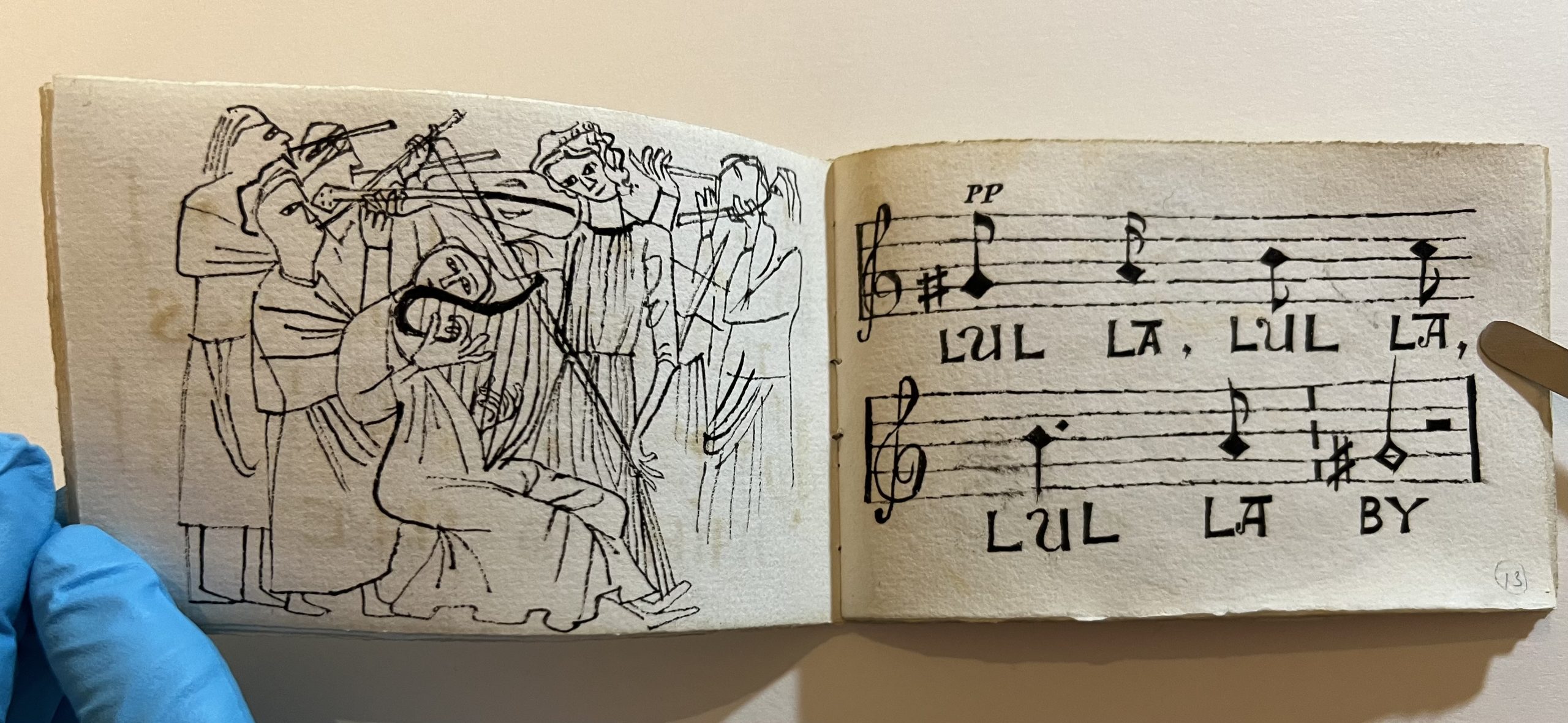
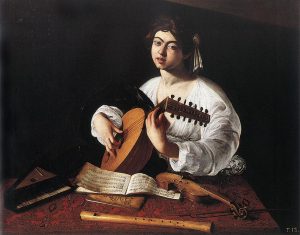
The maquette has a distinctive small format and horizontal orientation that alludes to early modern scores as can be seen, for instance in Caravaggio’s musical painting, as in his Lutenists (1). Each of the openings in Shahn’s maquette juxtapose illustration and text on facing pages (with a preference for images on the verso with 8 of them versus 5 on the recto). Shahn created a layout where text and image share space across the horizontal format. For example, the lyric “lul la lul la lul la by” appears alongside an illustration of figures playing various instruments. The linework in these illustrations also has a loose quality typical of sketches.
Iconography and Symbolism
Religious themes are present throughout Sweet Was the Song, reflecting Shahn’s engagement with religious art. Although Shahn distanced himself from formal religious practice in adulthood, his later works often engaged with spirituality. Bernarda Bryson Shahn notes that in his later years, Shahn revisited the religiosity of his childhood, finding inspiration in its symbols and narratives (Bryson Shahn 217–18). Although Sweet Was the Song is based on a Christian theme, we see Shahn incorporating religious motifs to deepen the carol’s visual and thematic resonance. For example, the illustration that accompanies the lyric “lul la lul la lul la by” features figures playing pipes, trumpets, and harps (12–13). This imagery recalls Psalm 150, which extols the use of music to praise God. Bernarda describes Ben’s love for the Psalms and Psalm 150 in particular (Bryson Shahn 217–18). By integrating these instruments into his design, Shahn links Old and New Testament and connects biblical traditions of worship through music. In so doing, he displays both his depth of knowledge on religion and his ecumenical approach to spirituality.
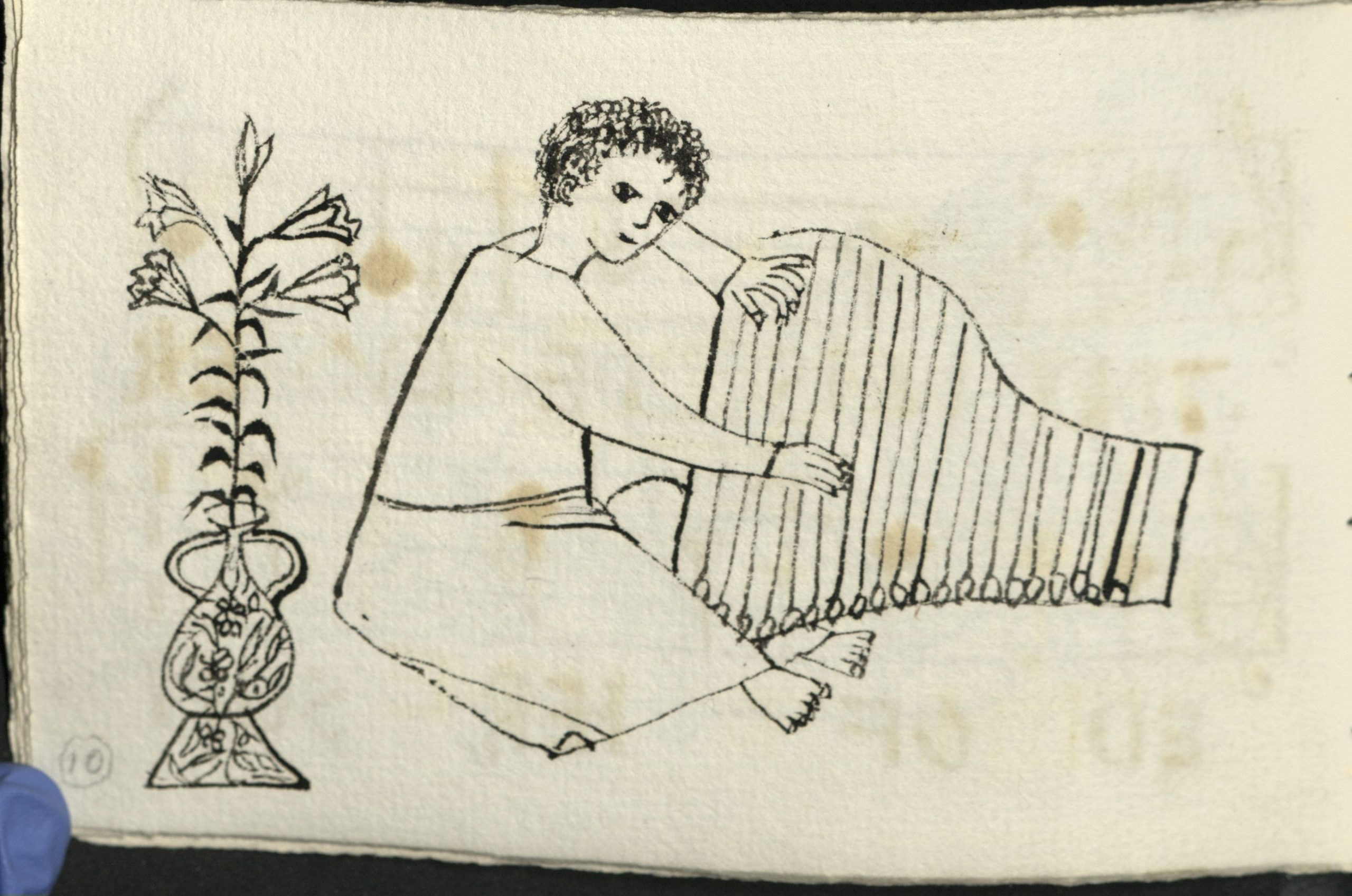
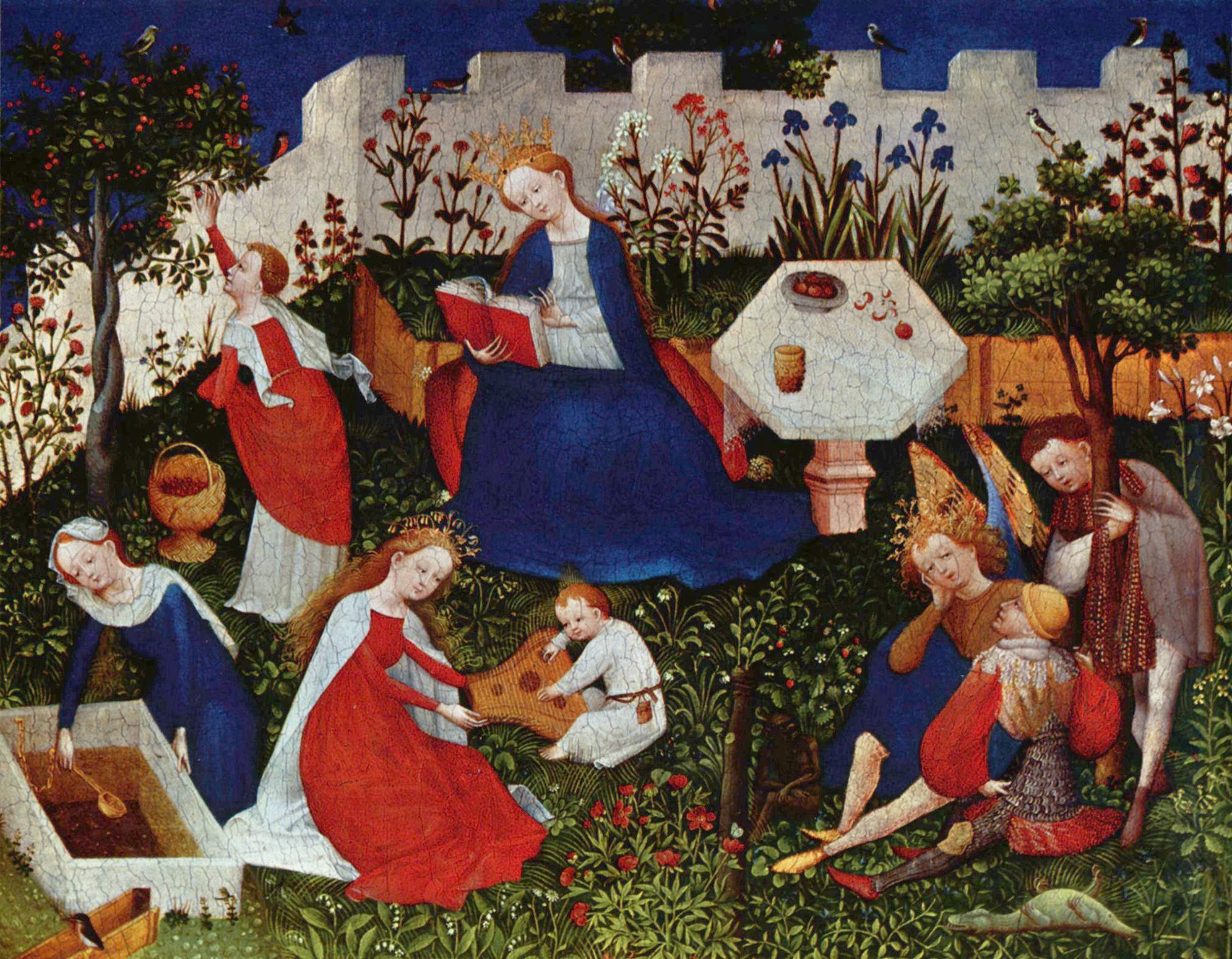
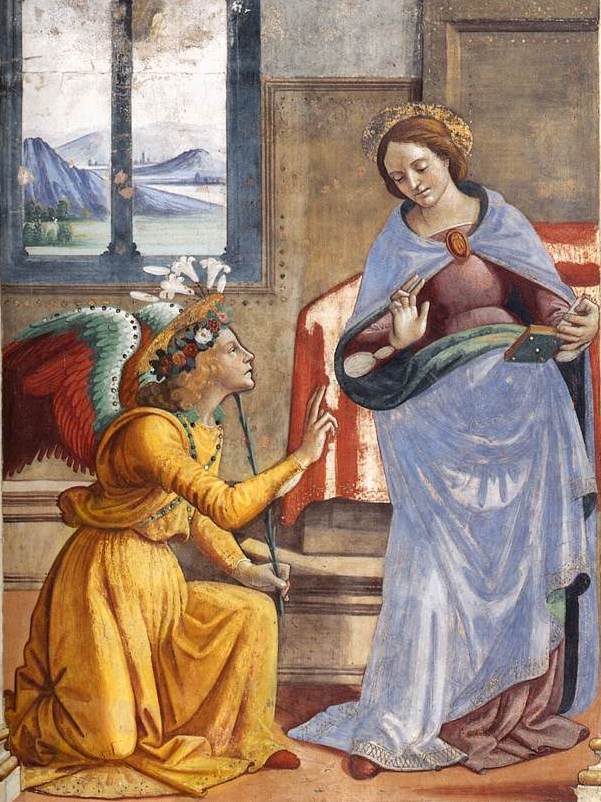
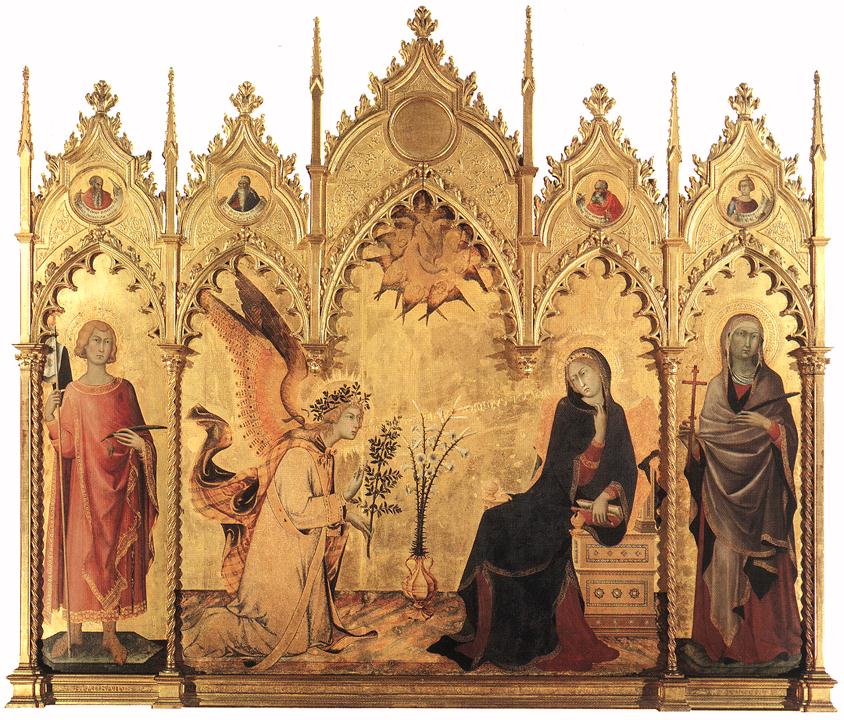
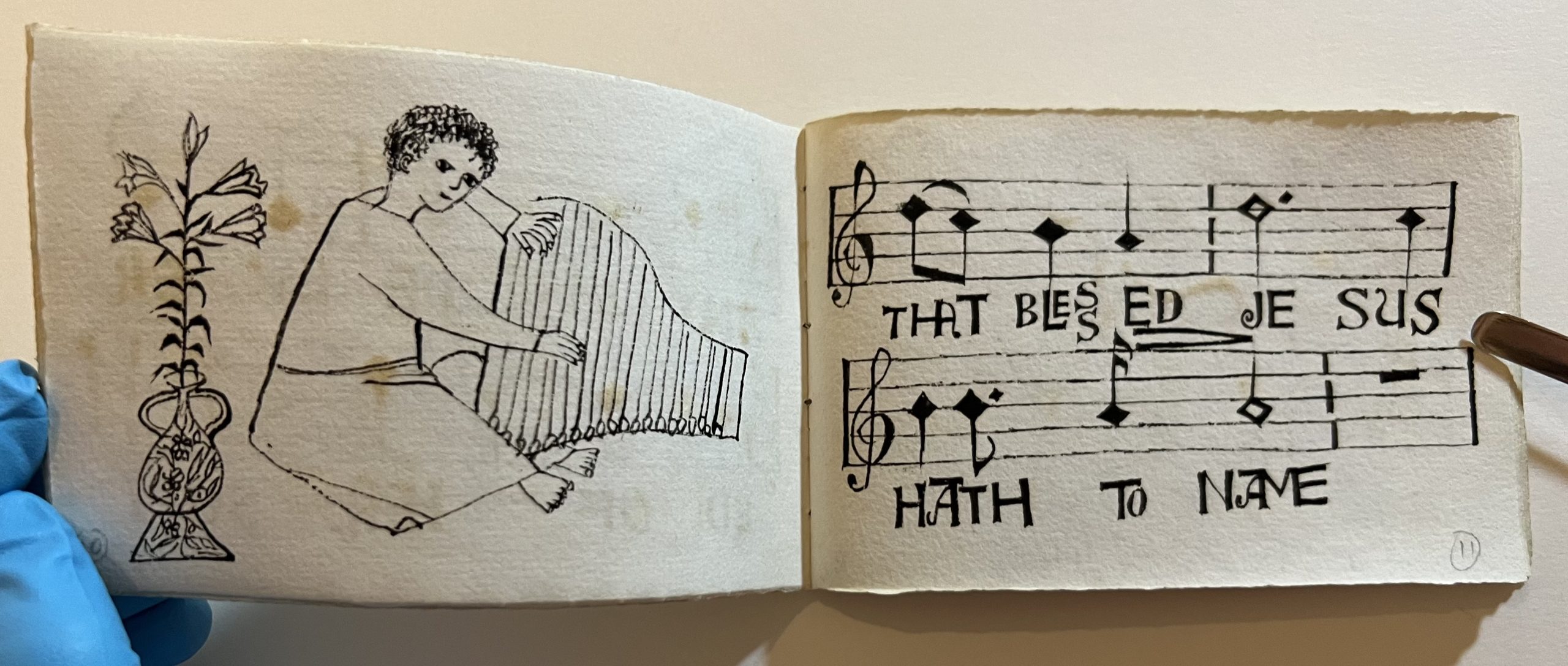
Page ten of the maquette features a drawing of a young boy playing a stringed, harp-like instrument. The image recalls a detail in the early-15th-century Little Garden of Paradise (2). In the foreground of the painting, we see a small child, widely interpreted as baby Jesus (Städel), who plays a stringed instrument. Despite being turned to the opposite side, Shahn’s young boy (Jesus?) very closely mirrors the figure in the Städel’s painting, in both garb and pose. To the left of the child Shahn adds a vase that holds a long stem with five lilies, a flower traditionally associated with the Virgin Mary to symbolize purity and virginity that also appears in Little Garden of Paradise. This stem of lilies appears in many well-known depictions of the Annunciation, in which the angel Gabriel tells the Virgin Mary she will bear a child by the Holy Spirit (3). For instance, Domenico Ghirlandaio’s depiction in the Cappella Tornabuoni in Santa Maria Novella, Florence shows Gabriel kneeling in front of the Virgin Mary with a stem of lilies in his hand, while a vase with lilies appear in Simone Martini and Lippo Memmi’s Annunciation with St. Maxima and St. Ansanus.
Image, Score, and Text
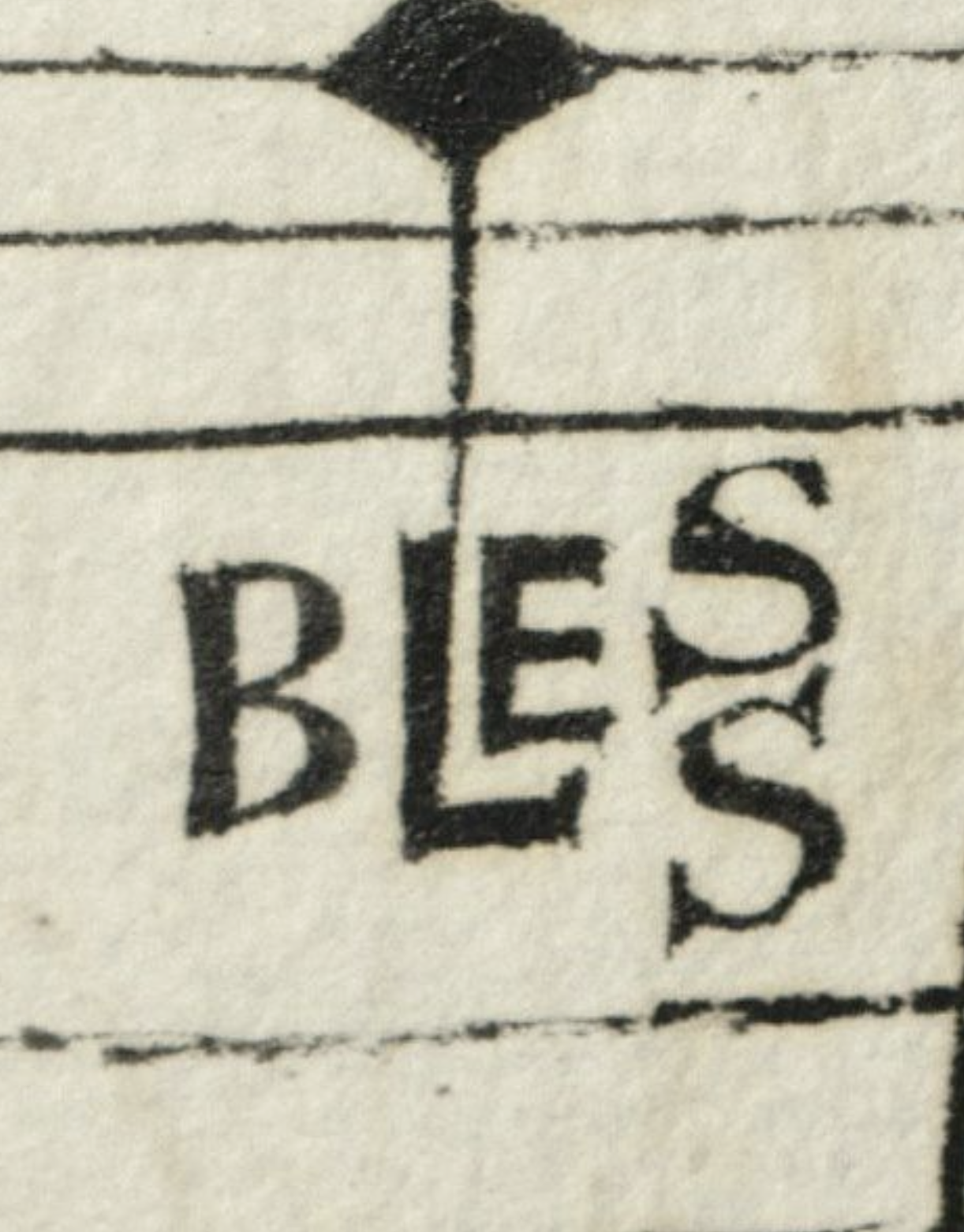
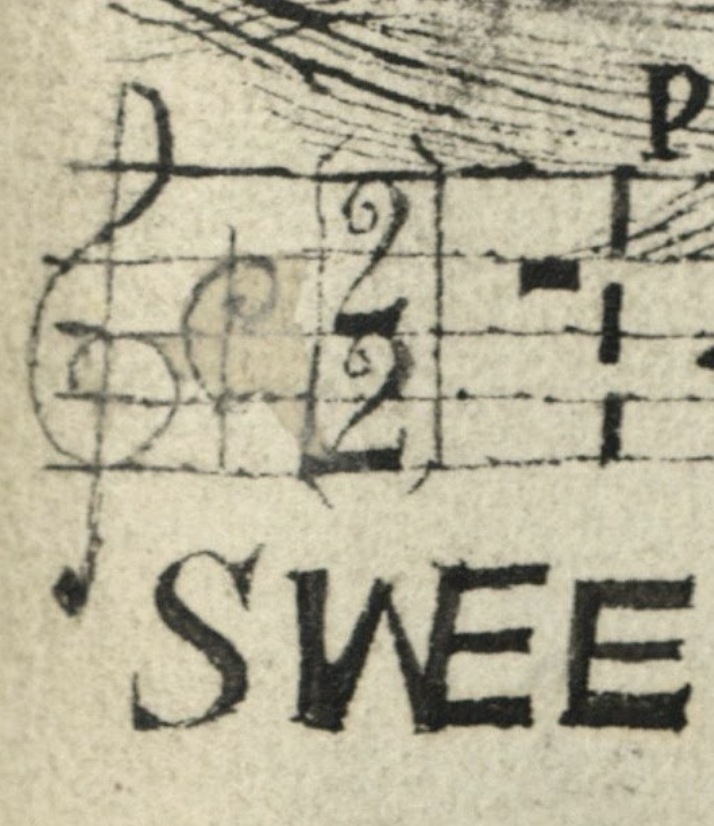
The relationship between text and image is a defining feature of Shahn’s maquette. For instance, the verse facing the image of the young boy playing music, “that blessed Jesus / hath to name” on page ten is paired with a stacked S in “blessed” that resembles a 2/2 cut time signature. Ballet’s score to “Sweet was the Song” sets the carol to 2/2 cut time, as demonstrated by the C with a vertical line through it at the beginning of the measure (the time signature) on the cover of the maquette. Cut time indicates two half notes per measure (also known as alla breve, or “on the breve” in English, referring to the beat being counted on the breve), as opposed to common time which uses four quarter beats per measure. This reference reinforces the connection between the carol’s musical origins and demonstrates Shahn’s attention to detail.
Conclusion
The maquette for Sweet was the Song tells us not just about Shahn’s artistic and historical influences, but speaks to the evolution of Shahn’s religiosity. The maquette provides insight into the artist’s personal life and shifting perspectives. His decision to reinterpret an Elizabethan carol reflects his interest in historical traditions, and his growing focus on spirituality in the later years of his life. While much of Shahn’s earlier work centered on social justice and political themes, this maquette shows his interest in more universal ideas about faith and human experience.
The maquette also reflects Shahn’s belief that art should be accessible to everyone, a principle that shaped much of his career. Shahn often sought to create works that connected with a broad audience rather than a select few. In the maquette, Shahn’s use of religious imagery, such as the Virgin Mary and infant Jesus, draws from shared cultural traditions,.
You can listen to a choir version of Sweet was the Song here.
Notes
- Reference courtesy of Professor Plesch.
- I owe this suggestion to Professor Plesch.
- Reference courtesy of Professor Plesch.