Reimaging the Annunciation: Ben Shahn’s I Sing of a Maiden
Victor Sabbatini
Introduction
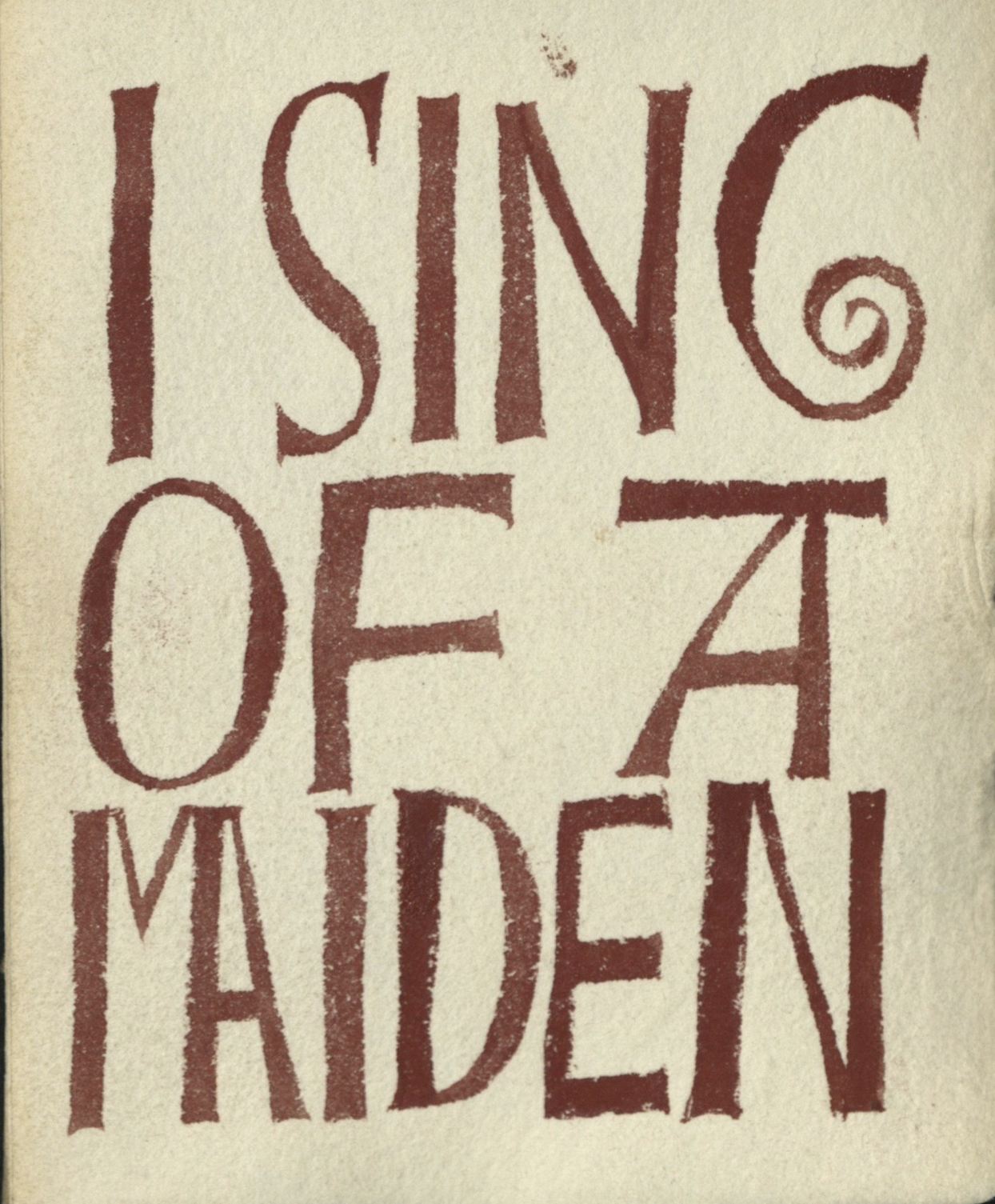
In the latter part of his artistic production, Ben Shahn created a series of three books in which he rendered visual interpretations of traditional English carols (Bryson Shahn 237). Shahn’s interest in these texts, which all reference the Old Testament, aligns with his desire to create a visual language that employed “allegory, symbolism, and myth—secular and religious—in search of universal expressions” (Katzman 16). One such book is I Sing of a Maiden, whose meticulously handcrafted maquette illustrates the importance of preliminary models in Shahn’s bookmaking process. Moreover, the care and attention with which the painter fashioned the maquette, painstakingly copying out the text in hand-drawn, complex letterforms, attest to the almost talismanic quality the objects embodied for him.
Visual Description
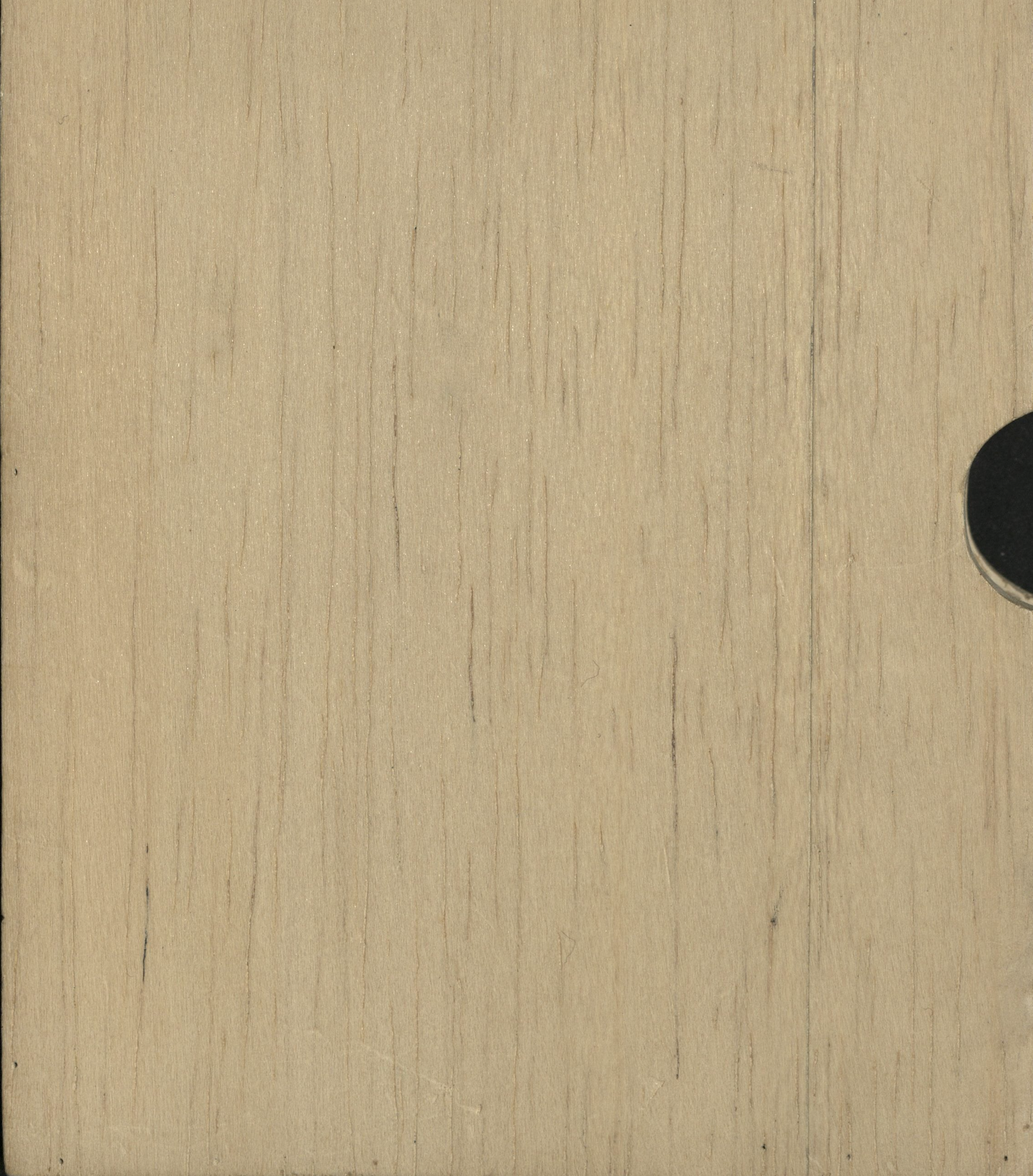
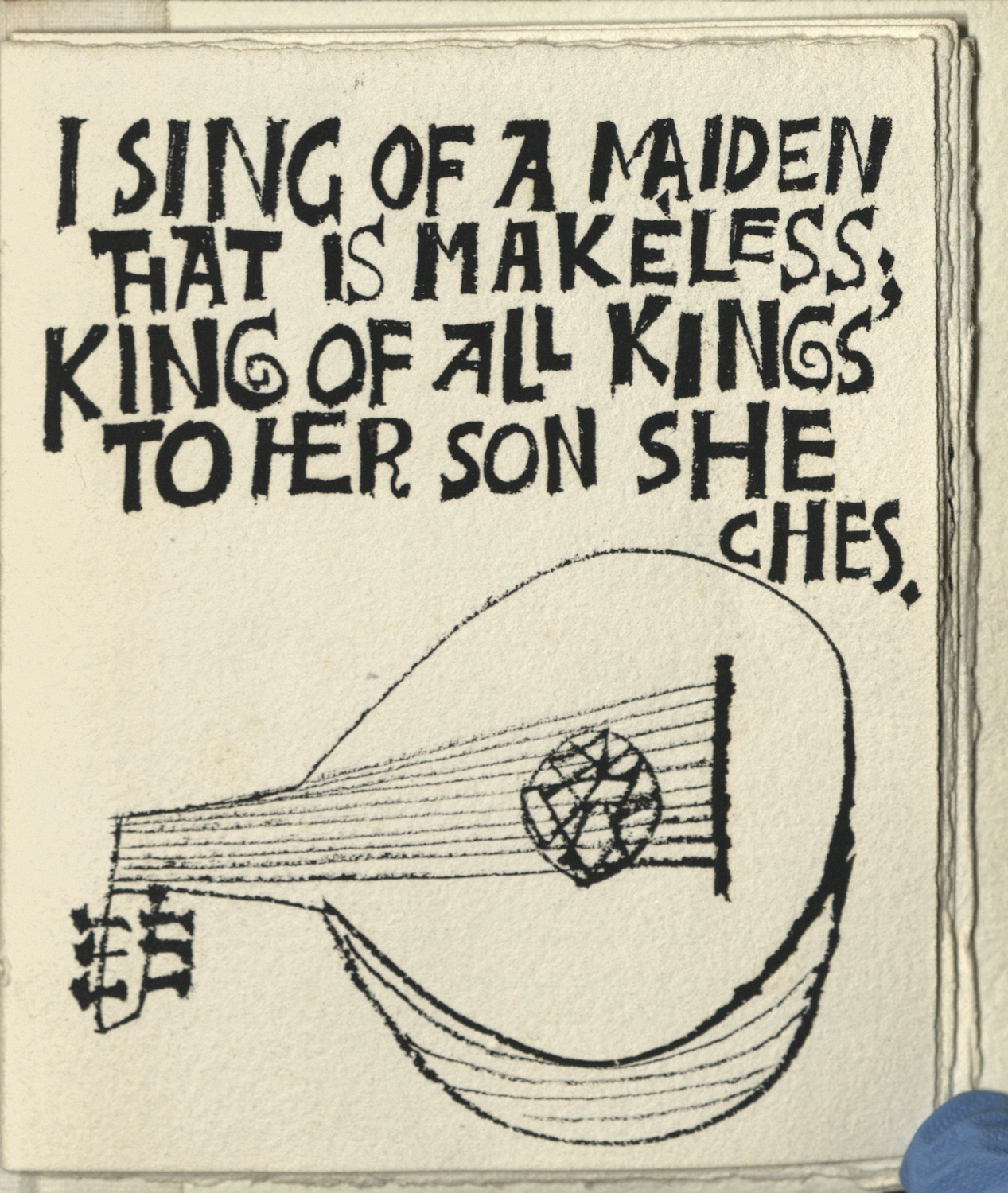
The maquette is a small, cream-colored book measuring 4 5/16 by 3 1/2 by 1/4 inches (approximately 11 x 8.9 x 0.64 centimeters). It is composed of ten pages, the layout of which follows a distinctive pattern: all versos have been left blank, and all rectos contain one of the carol’s quatrains and an accompanying drawing. The text is written on the upper part of each recto, with the drawing on the lower part. The book’s cover page and back matter are made from thick Arches paper, while all internal pages are made out of thinner paper. The internal pages are a fourth of an inch smaller than the cover and all have deckled edges—characteristics that emphasizes the maquette’s artisanal nature. The maquette is composed of three quires meticulously hand-bound using the pamphlet stitch technique and is accompanied by a wooden slipcase made of pale wood. The slipcase, which Abby Shahn believes was made by her father, testifies to how important the maquettes were to his bookmaking process, as well as how much he valued the objects themselves. The book produced from this maquette, a facsimile, was privately printed in 1957.
Letterform Analysis
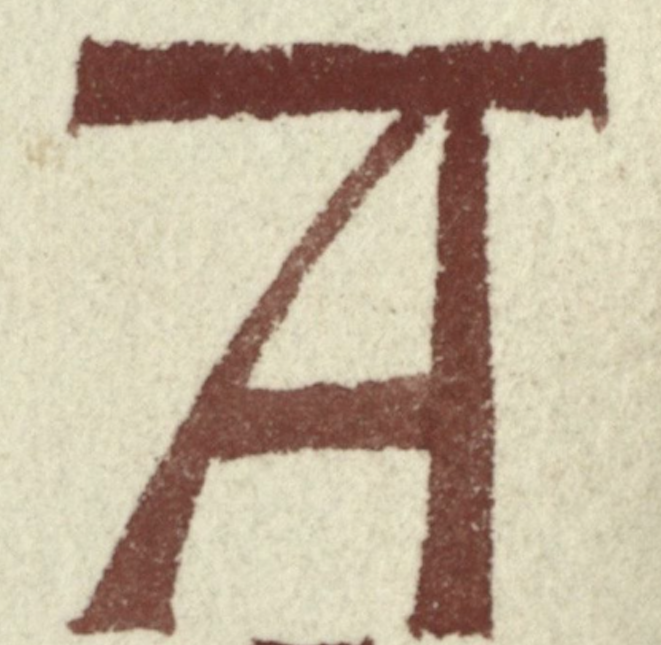
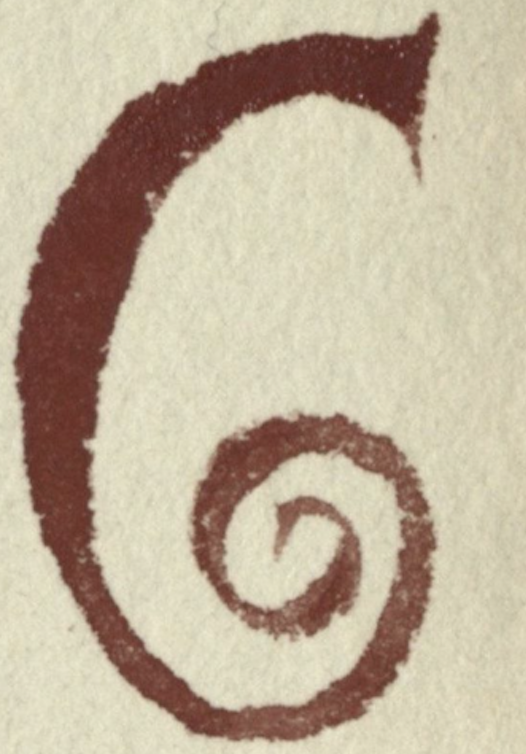
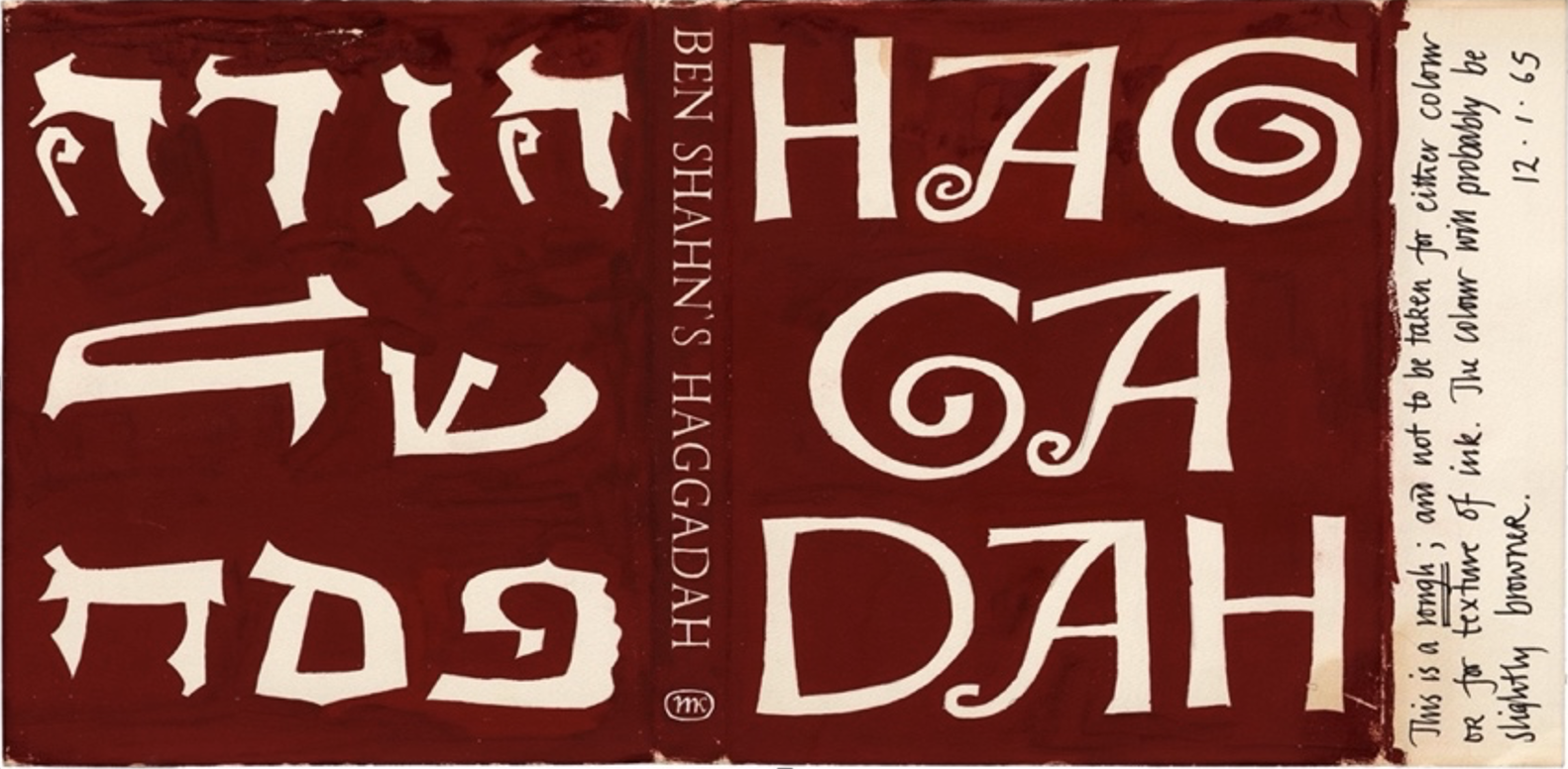
The book’ text—rendered in red ink on the front cover, as opposed to black India ink in the rest of the maquette—seems to have been created by combining stylistically different letterforms. The cover page’s font appears to be a mixture of various calligraphic styles, which range from Semi-formal Swash (1) capitals to modernized versions of Carolingian majuscules. The letter A on the cover page is a notable example of Shahn’s merging of various letterforms to create his stylistically bold interpretation. The A’s thin oblique, hyperbolically convex, is reminiscent of serif script, as opposed to its protruding serifs and thick horizontal apex. One could even make a connection with Albrecht Dürer’s monogram, which bears typographic similarities the letter. Another example is the letter G, whose inward-curling crossbar is a direct reinterpretation of its Carolingian majuscule variant. It is notable that Shahn used a similar font for the cover title of his book Haggadah for Passover (1965), thus inferring that the typeface became an intrinsic motif in his artistic practice.
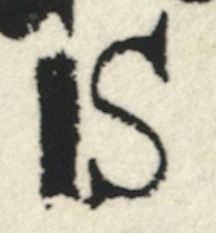
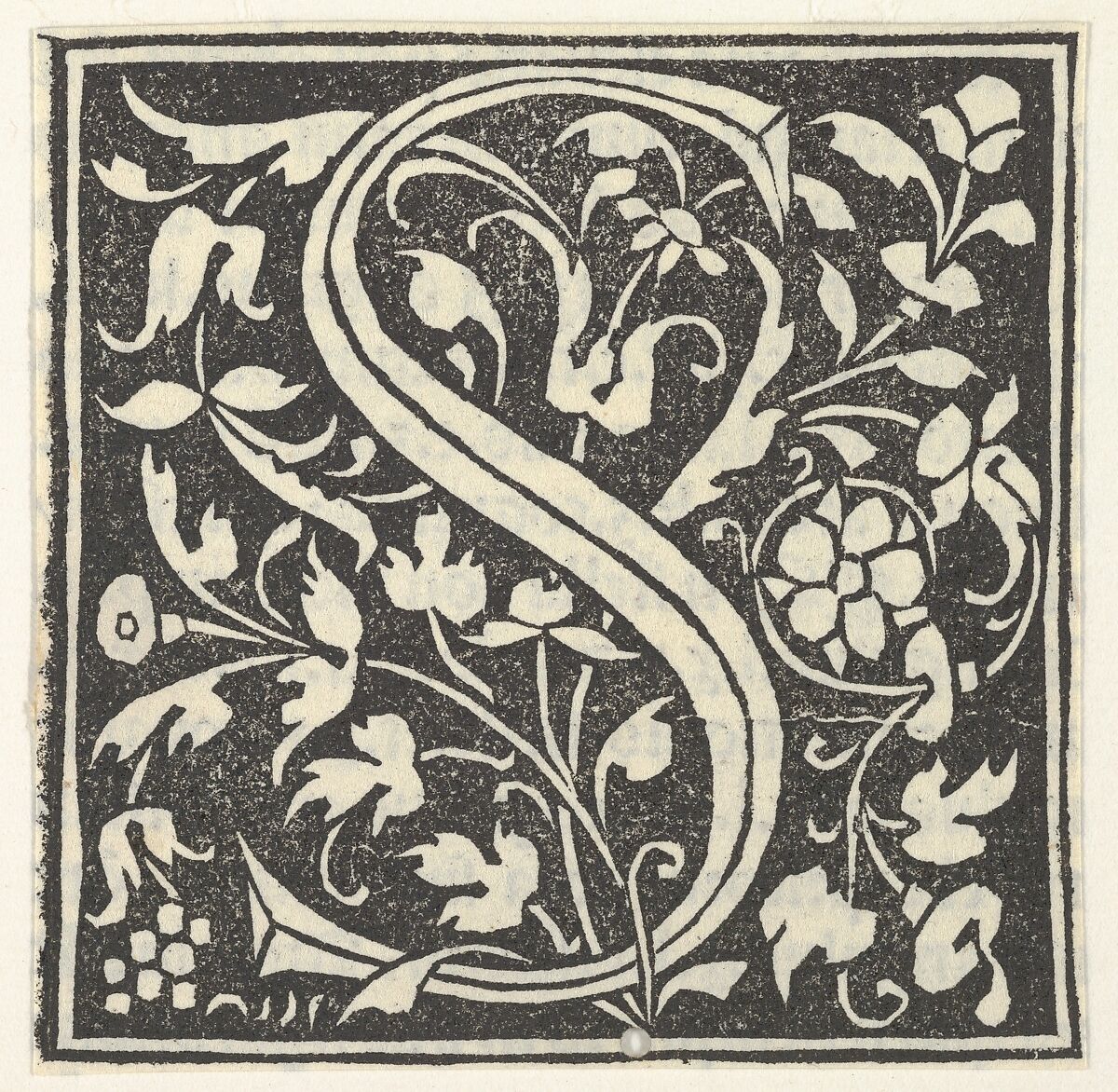
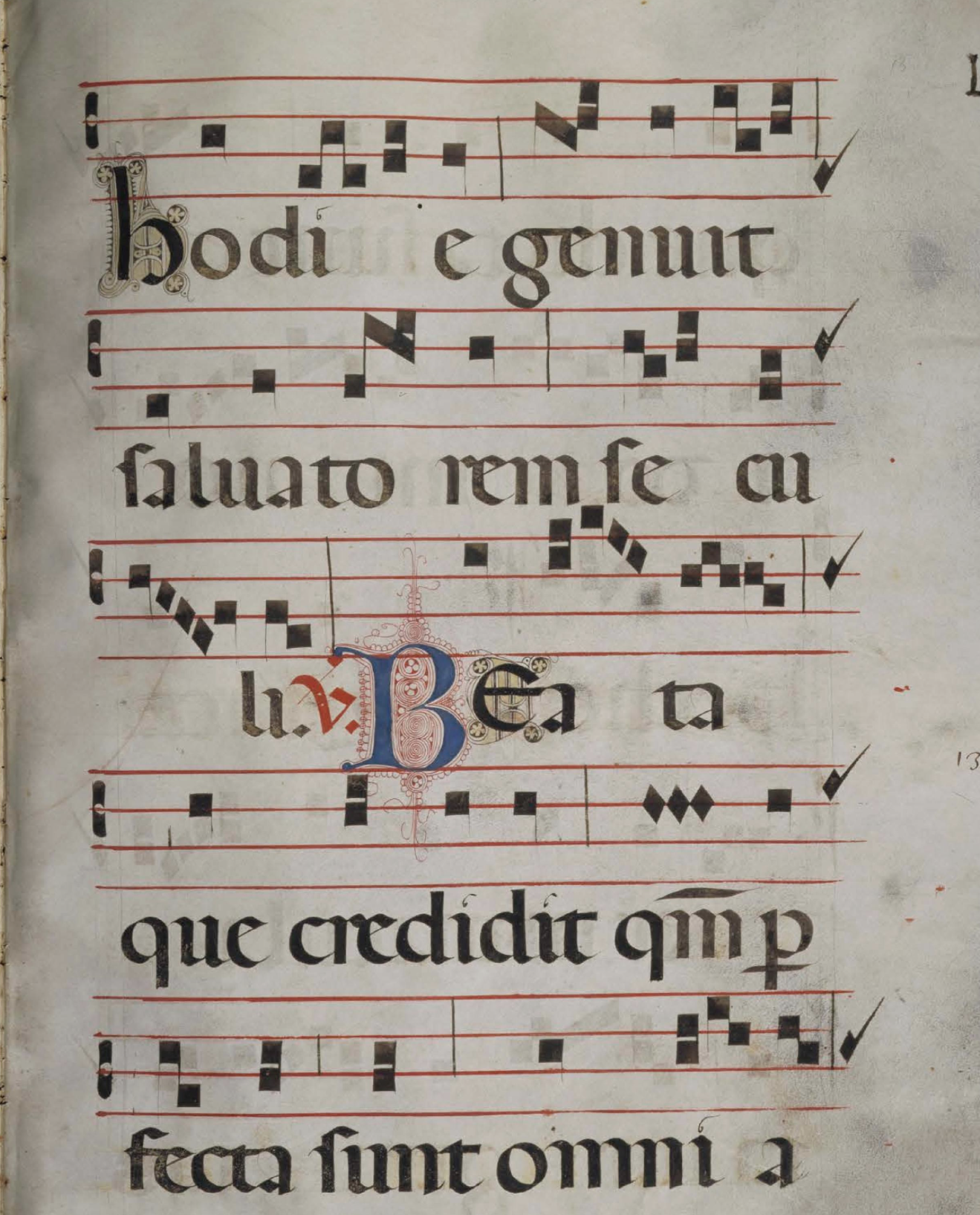
The font used inside the book is blockier than the one that graces the cover, and all words are written in capital letters. Some letters appear disjointed, and several have been fused together to add a calligraphic aspect to the text. Nevertheless, the letter S is distinctively thinner than all other letters, and its exaggerated stencils are reminiscent of 15th-century decorative letters. The diamond-shaped punctuation used by Shahn throughout the maquette is stylistically similar to the one found in Medieval illuminated manuscripts.
History of I Sing of a Maiden
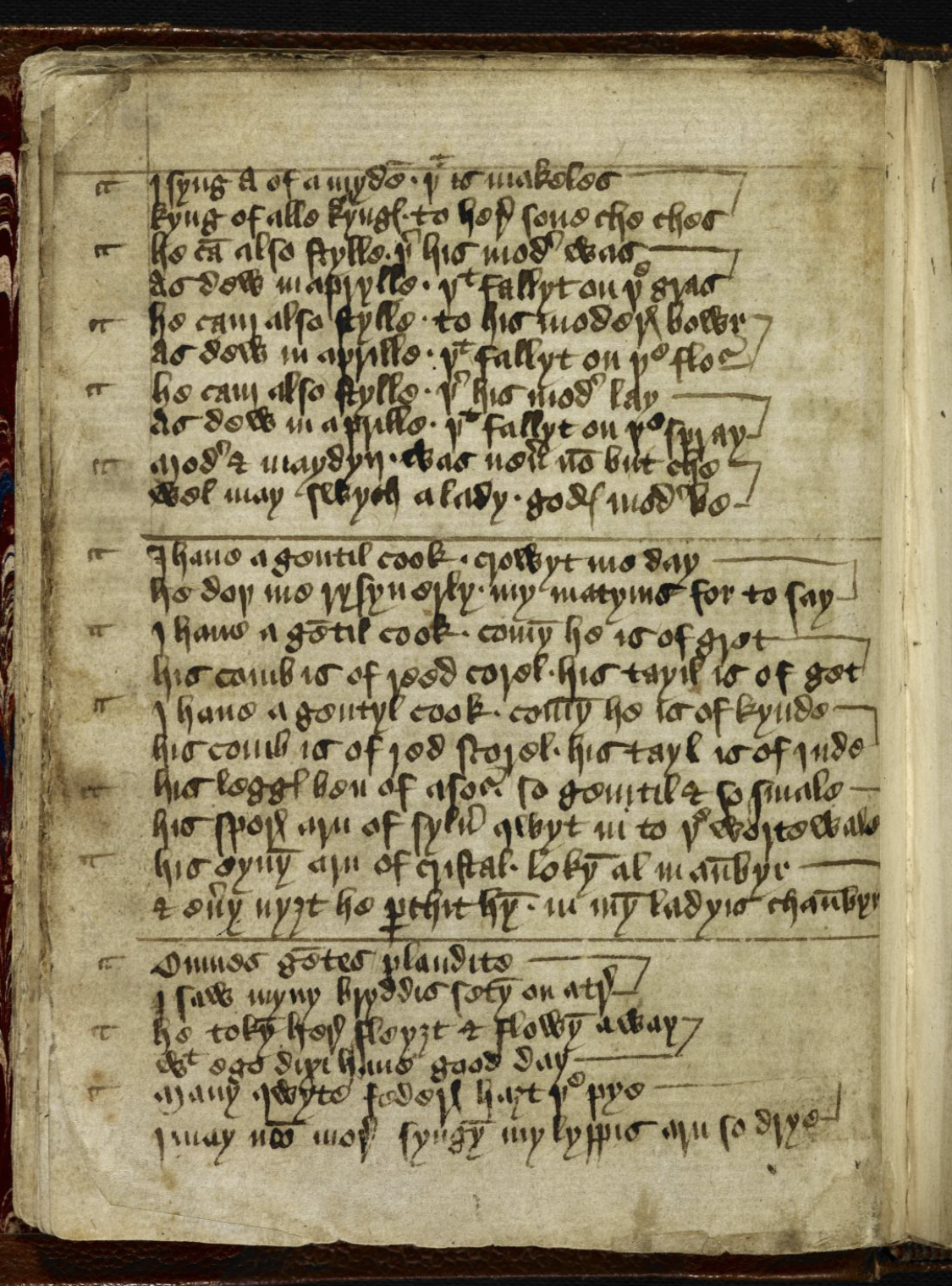
The book is based on the 15th-century carol “I Syng of a Mayden,” also known as “As Dew in Aprille,” a Middle English lyric poem composed by an anonymous writer (Spangenberg). The carol is a “meditation on the inward aspects of the Annunciation [and] the . . . consequences of Mary’s acceptance of Gabriel’s message” (Steffes 67) and largely references scenes and imagery from the Old Testament. The carol was very popular in the 15th century; however its original text can only be found in the manuscript from the collection of English physician Sir Hans Sloane today in the British Library (Sloane MS 2593). Although the carol was originally written in Middle English, the version transcribed in the book is a rendition that blends both old and new versions of the text. The carol is composed of five quatrains, which were separated and transcribed on different pages (the carol’s punctuation has been altered in order to adhere to the book’s layout).
Iconographic Analysis
Throughout the book, Shahn uses his distinctive blotted line style to depict various musical instruments that appear in the Old Testament, specifically in the Psalms. The instruments are represented by themselves, one at a time or several clustered together—in a style that evokes Medieval art. Interestingly, many of the drawings present in the maquette were reused in subsequent publications of Shahn’s, such as Maximus of Tyre (1964) or Hallelujah (1970–71), a book containing a series of twenty-four lithographs. In “Ben and the Psalms,” Bernarda Bryson Shahn discusses her husband’s love for biblical texts and more specifically for Psalm 150, stating that “[h]e was deeply affected by its running cadences, its majesty, its vivid imagery” (Bryson Shahn 217–18). She adds that Ben “had done some small pieces around the musical instruments and figures of the Psalms, then conceived the idea of producing the book Hallelujah” (Shahn, 217–118). One could infer that I Sing of a Maiden consists of one of the “small pieces” alluded to by Bryson Shahn, which would thus cement the book as being propaedeutic for subsequent work.
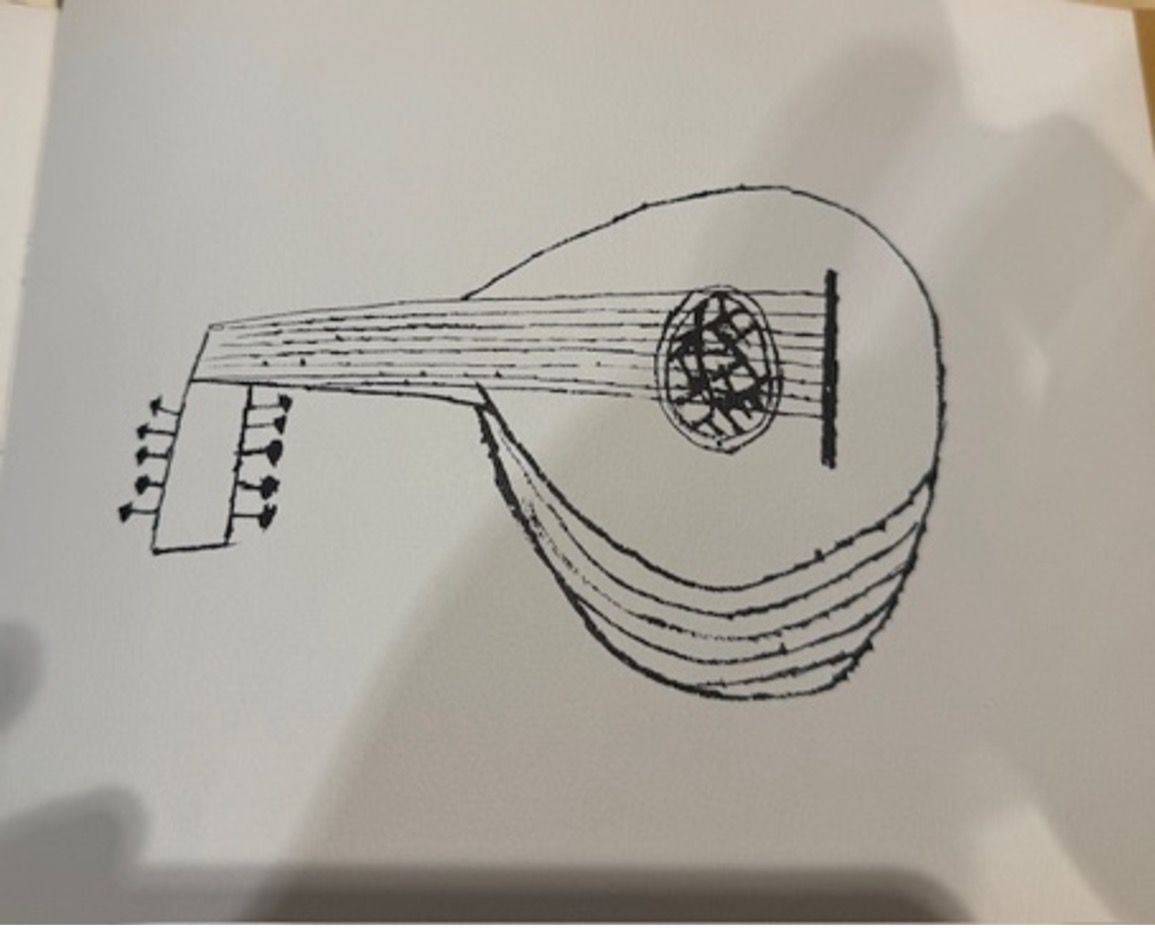
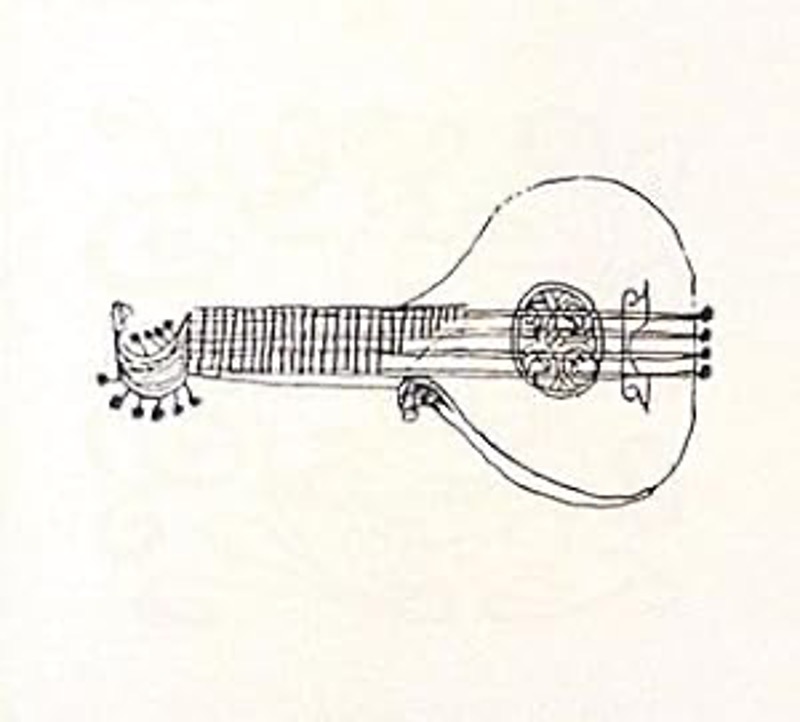
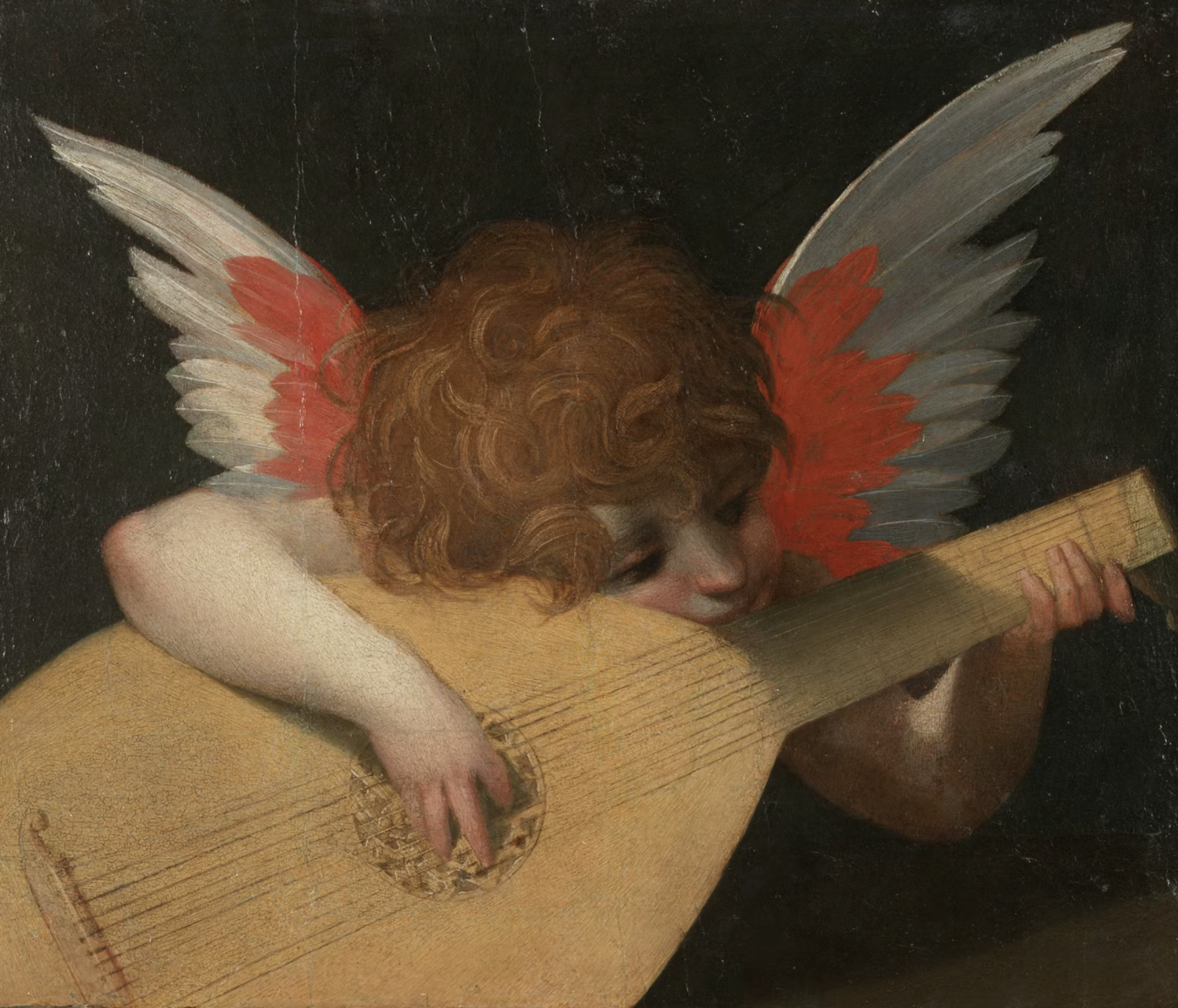
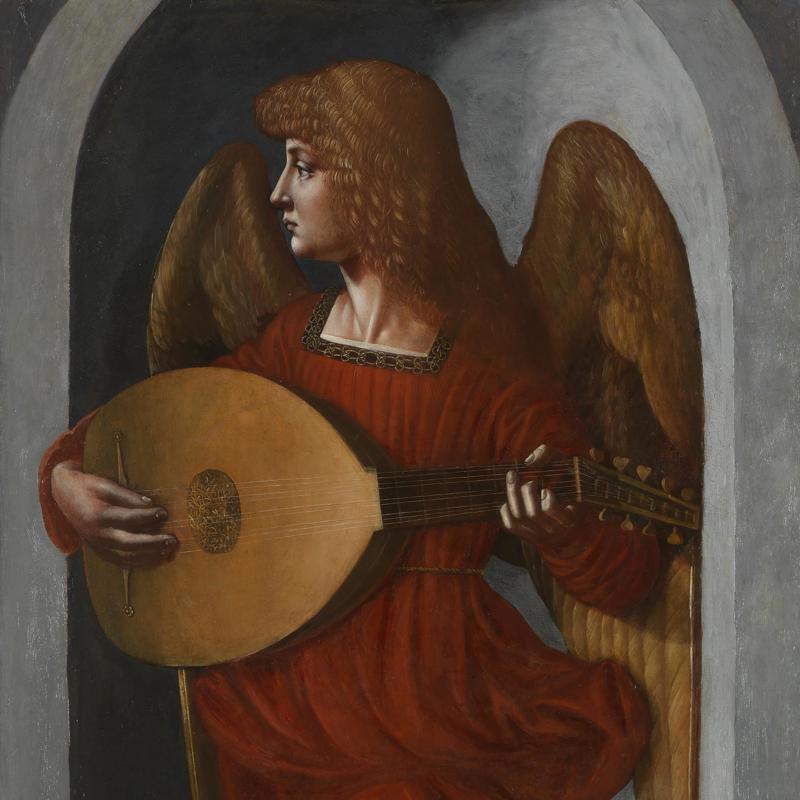
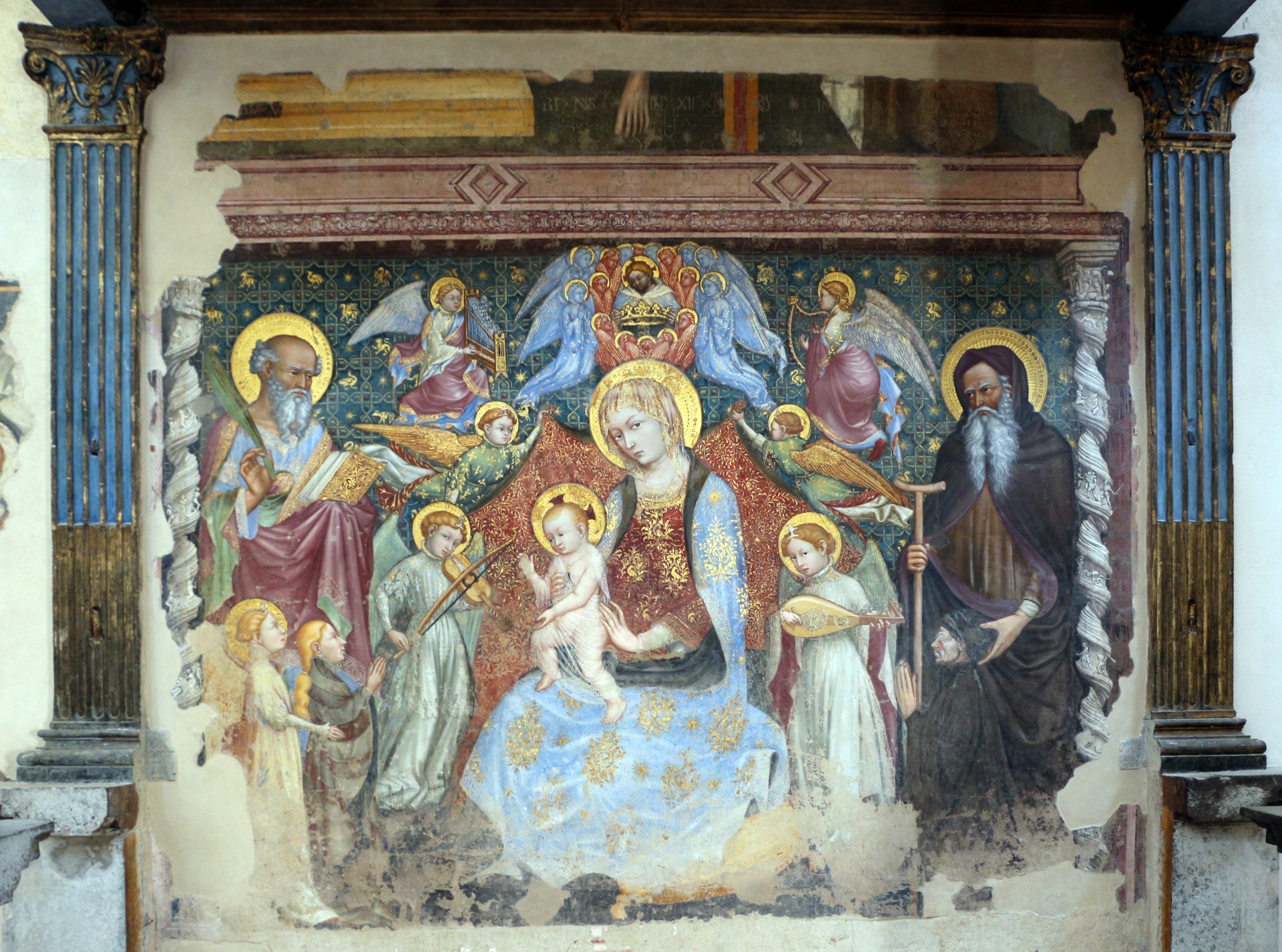
The first drawing encountered by the reader is of an antique-looking string instrument, most certainty a lute or an oud—the former’s Middle Eastern ancestor (2). It is depicted head-on, but seems to have been tipped on its side. Its details are characteristically Shahnian, such as its haphazardly drawn soundboard which implicitly maps out a star-shaped motif. Iconographically speaking, lutes are an omnipresent motif in religious imagery and are generally depicted in the hands of Angels (3) as they hold particular allegorical significations in Christian symbolism. One could even perceive a religious allusion to the number of strings of the lute depicted in the book, as there is a mention of an Asōr, referred to as “an instrument of ten strings,” in various Psalms of the Old Testament (Psalms 33:2 and 144:9 ) (Hinks) (4). Interestingly, an exact version of the drawing was reproduced on the second to last recto of Shahn’s book Maximus of Tyre (1964). It is worth mentioning that lutes reappear in Shahn’s subsequent work, as in the 1958 screenprint Lutes and Molecules or the lithography Lute from the Hallelujah Miniatures series (1970–71).
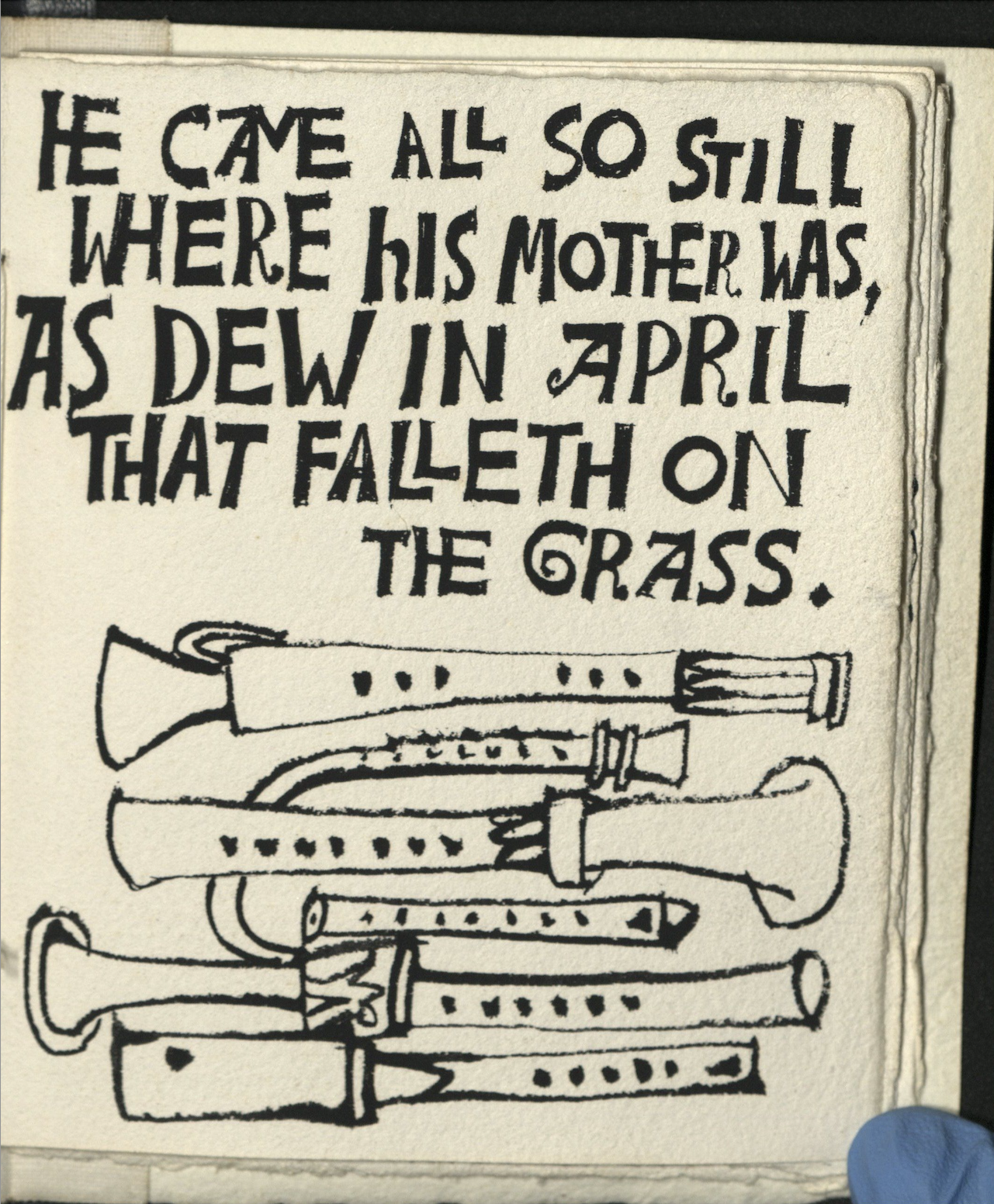
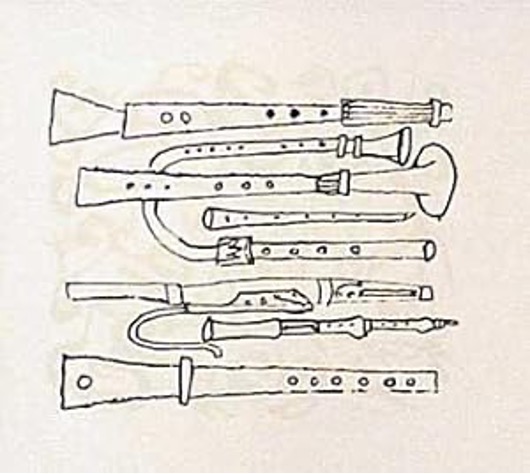
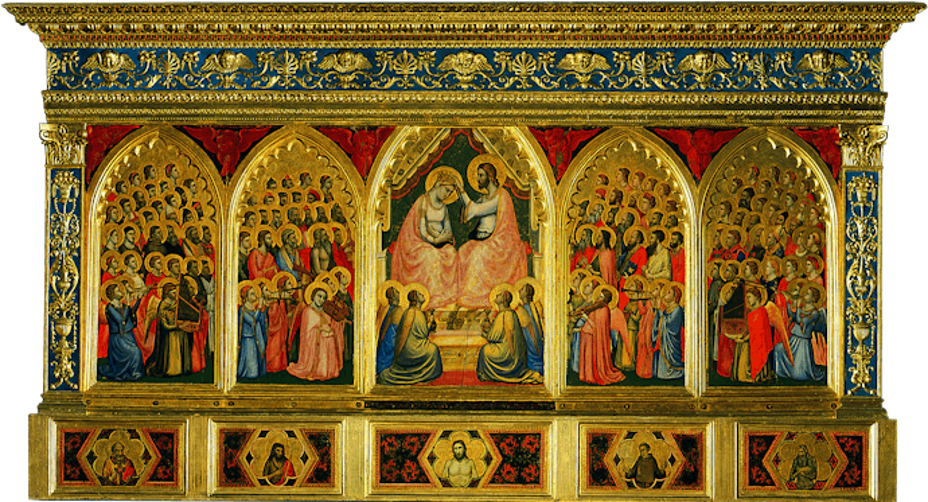
The image on the maquette’s third recto is a particularly interesting image, not only because of Shahn’s rendition of wind instruments, but because it was reproduced nearly exactly in Hallelujah Miniatures. The drawing itself depicts an assemblage of different wind instruments—clarinets, bassoons, flutes—clustered into an eye-catching composition. Wind instruments have an important theological dimension in religious imagery, as they appear frequently in the Old Testament. They are often depicted being played by angels, like in Giotto’s Baroncelli polyptych—an artist whom Shahn consistently cited as one of his most important influences. Moreover, wind instruments, specifically clarinets, are an inherent part of Klezmer music, the musical tradition of Ashkenazi Jews (Slobin). Yet, what is most striking is how, compared to all other drawings here, this image seems to be the most modern visual interpretation made by Shahn in the maquette; the composition retains a jazz-like quality, in complete contrast with both the text and the pictorial style of all other drawings in the book.
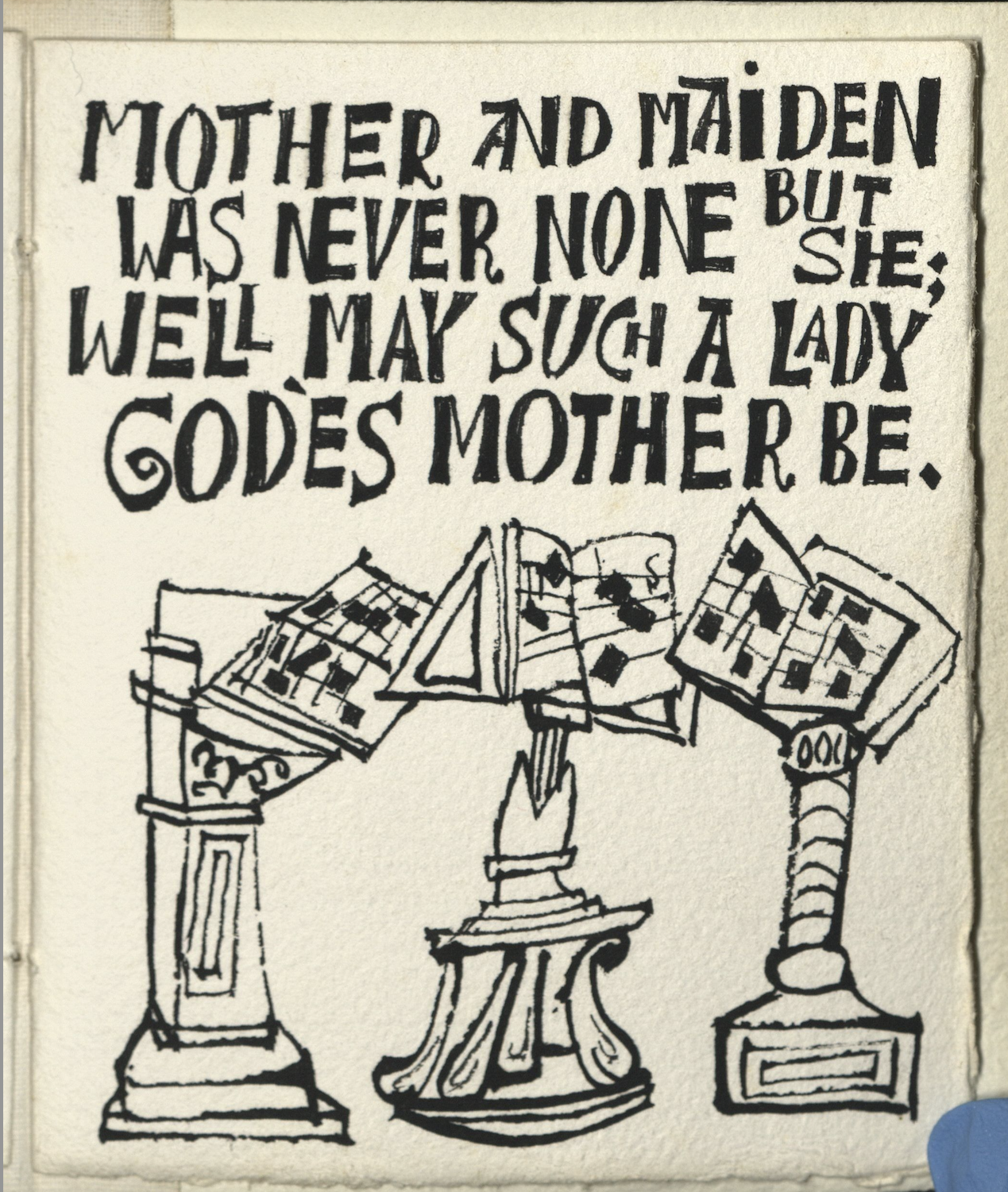
The concluding illustration, located under the carol’s last quatrain on the book’s fifth recto presents musical scores instead of instruments. We see three ornately decorated music stands that hold Medieval scores. With this image, the reader is made to imagine the music that accompanies the lyrics. Interestingly, no original transcript of the carol’s score sheet has survived. By concluding I Sing of A Maiden with scores, it is as if Shahn is inviting all readers to pick up the instruments depicted throughout the book and to start playing!
Conclusion
Shahn’s maquette of I Sing of a Maiden attests not only to how essential preliminary models were in his bookmaking process, but its visual content and subsequent book form bears witness to the democratic nature of his artistic process. The artist’s visual translation of the carol’s religious text into simple imagery accessible to all, regardless of any prior artistic or theological knowledge, testifies to his intrinsic desire to make work that spoke to anybody. I Sing of a Maiden, although based on deeply allegorical text and imagery, bears unmistakable Shahnian characteristics such as his distinctive blotted-line, experimentation in letterform, and socially conscious ethos.
Note on the printed copy purchased by the Colby College Libraries.
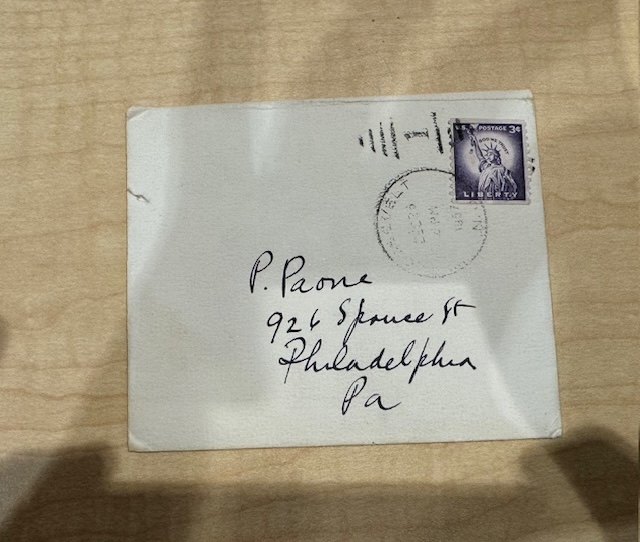
The trade edition of I Sing of A Maiden purchased this summer by the Colby College Libraries came with an envelope addressed to the Italian-American painter Peter Paone, to whom Ben Shahn had sent the book. The envelope, which bears the return address “Shahn Roosevelt N.J.,” testifies to the rich cross-artistic provenance of the library’s copy, and signals the close relationship and respect the two men had for each other.
In his essay “Ben Shahn: A Master Artist Accepts A Young Apprentice,” Paone, reflecting on his relationship with the late painter, wrote that “[M]y friendship with Ben Shahn only lasted a short ten years before he died. But his presence in my life is still a current event” (Paone 139). Such a statement testifies to the lasting influence the painter had on his pupil, and asserts Shahn’s broader impact on the artistic production of our times.
You can listen to a version of I Sing of A Maiden here
Notes
- All letterform names are taken from Catich.
- Although I believe that Shahn intended to depict a lute, his instrument bears more resemblance to its ancestor, the oud, which is characterized by “a pear-shaped body with a bowled back, made of numerous ribs (thin strips of wood), a wooden soundboard, rosettes (decorative soundholes), plucked gut strings, and a peghead that is bent back in a curved shape” (Santa Maria Bouquet). While lutes have fifteen stings (and Baroque lutes have thirteen), ouds have ten to eleven strings. Compared to the lute, the oud has a shorter neck and a pear-shaped body.
- See Ottaviano Nelli, Madonna del Belvedere (1403, fresco, 188 x 250 cm, Santa Maria Nuova, Gubbio), Rosso Fiorentino, Angel Playing the Lute (1521, oil on wood panel, 39.5 x 47 cm, Galleria degli Uffizi, Florence), or Giovanni Ambrogio de Predis, An Angel in Red Playing the Lute (c. 1445–after 1508, oil on poplar, 118.8 x 61cm, National Gallery, London).
- All biblical citations are taken from the King James Version.

Sources Cited
Bryson Shahn, Bernarda. Ben Shahn. New York: Harry N. Abrams1, 1972.
—–. “Ben Shahn and the Psalms.” In John D. Morse, Ben Shahn. New York: Praeger, 1972. 217–18.
Catich, Edward M. Reed, Pen and Brush: Alphabets for Writing and Lettering. New York: Hasting House, 1981.
Hinks, David. “Musical Instruments of the Old Testament.” 1976, https://www.journal33.org/other/html/otinstr.html. [consulted on 28 October 2024]
Peter Paone, “Ben Shahn : A master artist accepts a young apprentice.” Catamaran Literary Reader, 135-39.https://static1.squarespace.com/static/50a3e7b0e4b0216a96954b82/t/5adf94c5758d46bed0902ad5/1524602056207/Paone-Ben+Shahn.pdf [Accessed 1 December 2024].
Santa Maria Bouquet, Jonathan. “The Lute.” In Heilbrunn Timeline of Art History. New York: The Metropolitan Museum of Art, 2000–. http://www.metmuseum.org/toah/hd/lute/hd_lute.htm (April 2010) [accessed 28 October 2024].
Shahn, Ben. Maximus of Tyre: On the Dispute About Images. New York: Pantheon Books, 1964.
—–. Haggadah for Passover. Boston: Little, Brown and Company, 1965.
Slobin, Mark S. “Klezmer Music.” Encyclopedia Britannica, 7 November 2023. https://www.britannica.com/art/klezmer-music. [accessed 12 November 2024].
Spangenberg, Lisa. “I Syng of a Mayden.” Celtic Studies Resources 21 December 2020. https://www.digitalmedievalist.com/2020/12/21/i-syng-of-a-mayden/ [accessed 28 October 2024].
Steffes, Michael. “’As dewe in Aprylle’: ‘I syng of a mayden’ and the liturgy.” Medium Aevum 7.1 (2002): 66–73