

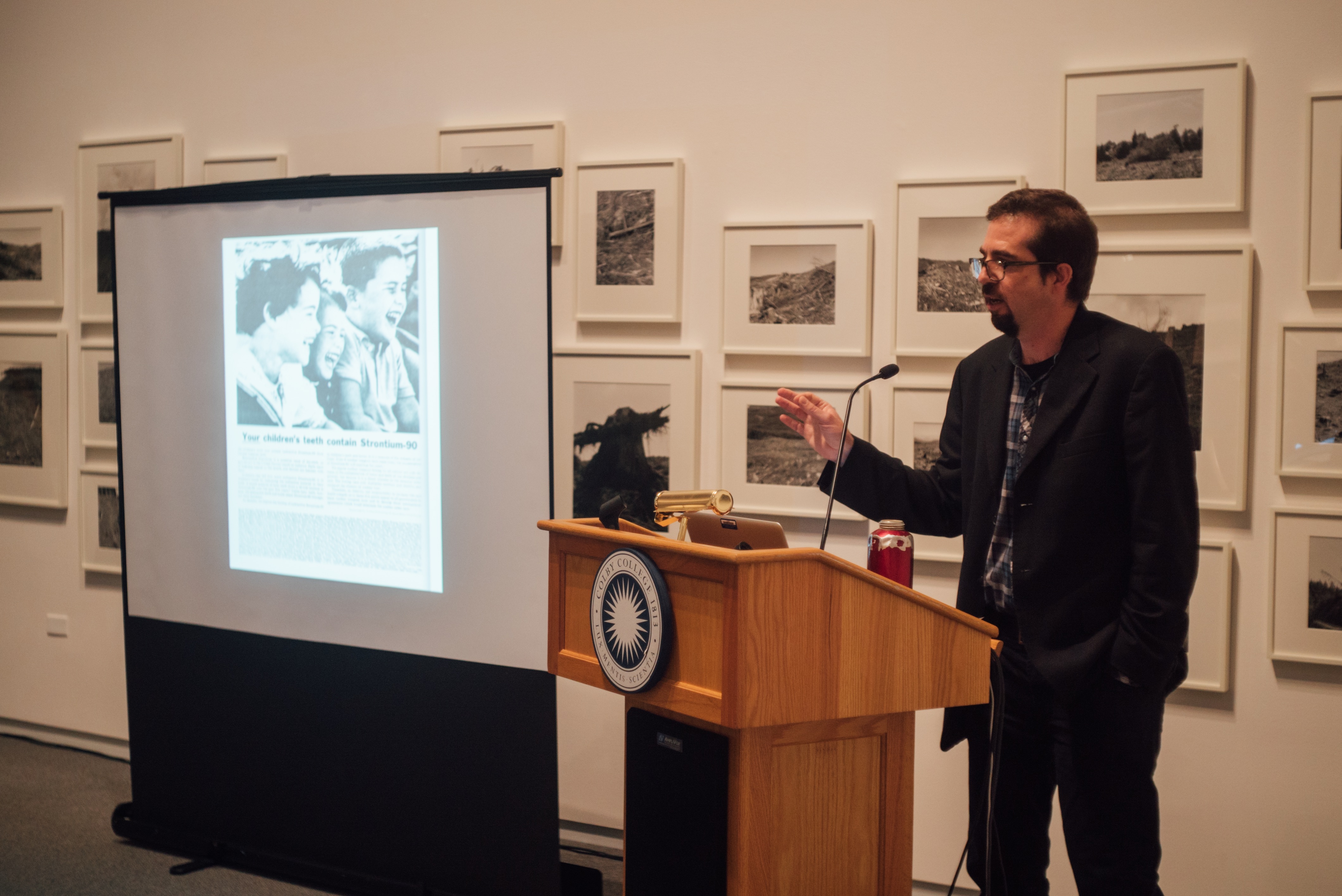
Last month, Finis Dunaway, Associate Professor of History at Trent University, visited the Colby Museum to discuss his recent book, Seeing Green: The Use and Abuse of American Environmental Images, in conjunction with the special exhibit Robert Adams: Turning Back. The book examines the role that mass media images have played in forming a popular environmental consciousness in America and the simultaneous limitations of these images and won the John G. Cawelti Award for the best scholarly book in popular culture and American culture from the Popular Culture/American Culture Association as well as the AEJMC History Division Award for the best book in journalism and mass communication history from the Association for Education in Journalism and Mass Communication. On his visit, Dunaway sat down with curatorial intern Esther Mathieu for a conversation on environmental justice, NASA photographs, and the future of the Arctic.
Esther Mathieu: In your investigation of media depictions of the postwar American environmentalist movement, you observe that the movement tended to focus predominantly on white, middle to upper-middle class individuals and often ignored large, structural environmental problems in favor of proposing low-impact, individual actions as a way for the public to participate? Do you think that problem still exists?
Finis Dunaway: There’s a continuing problem with the environmental movement’s focus on white, middle- or upper-middle class Americans. Though there are exceptions to that – I’ve recently come across a group called Outdoor Afro, which connects people of color to organizations and experiences that are often seen as primarily white. They’ve become a big supporter of the campaign to protect the Arctic National Wildlife Refuge in Alaska, and are part of the multicultural coalition that’s formed around it.
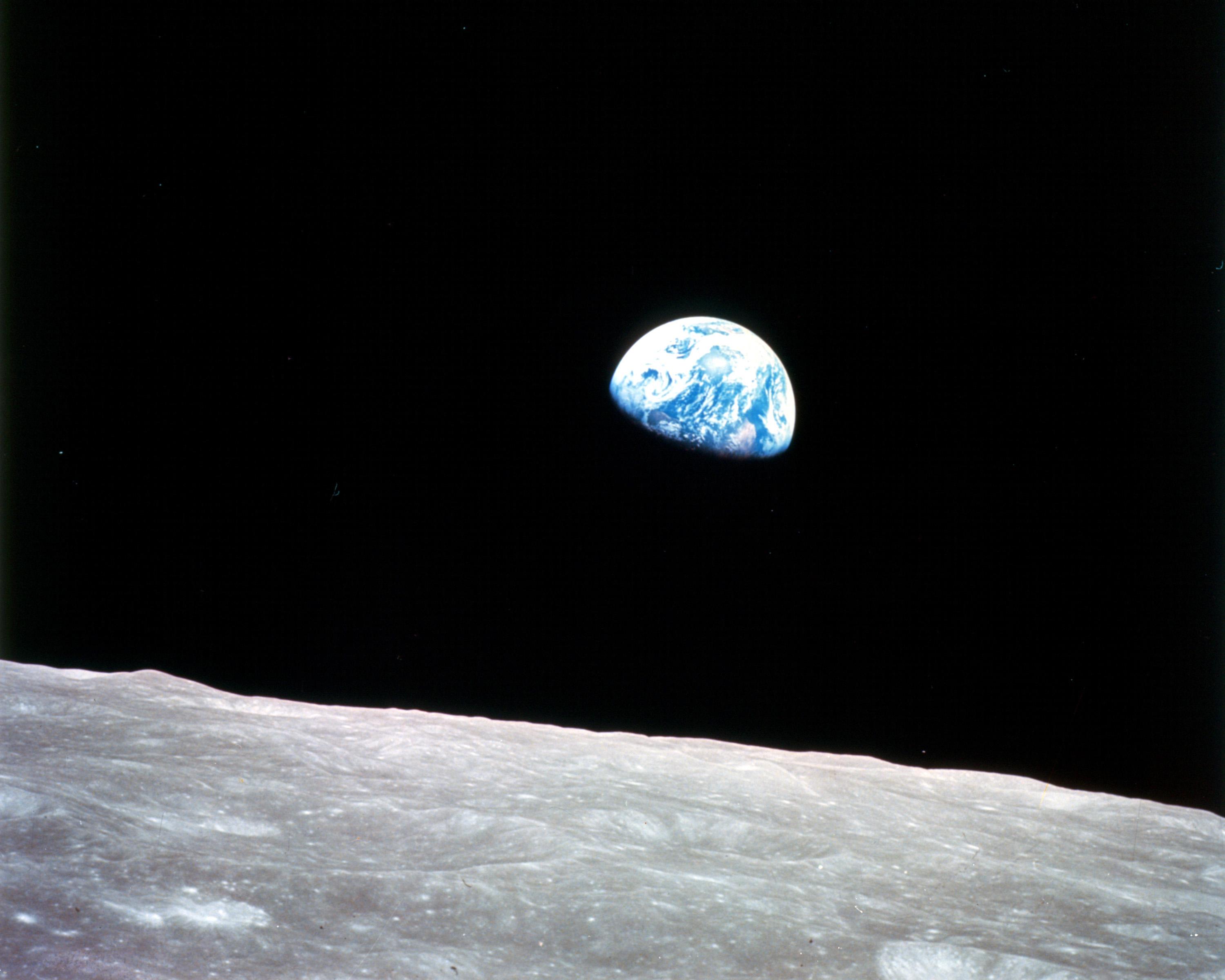
Beginning early in popular environmentalism there’s a tendency to see environmental problems as universal. Some of the whole earth imagery that becomes popular after NASA photographs from 1968 and 1972 gives a sense of an entire planet that is equally susceptible to environmental danger, and that makes it harder to see the inequities that exist, both socially and ecologically between certain communities around the world. The sense that we’re all equally responsible leads to the frequent appeals to individual action and individual responsibility, which have an important intellectual, moral, and pedagogical component to them, but can be very limiting because they ultimately help deflect attention from more powerful agents than individual consumers.
EM: Do you think there’s a dominant voice in the environmental media, whether it’s moral appeals for the sake of the earth, or on behalf of disenfranchised groups, or Americans as a national?
FD: Now I’m looking at the history of the Arctic National Wildlife Refuge, which has been subject to decades of debate over whether it should be opened for oil drilling or preserved for wilderness. I’m struck by the multiplicity of issues and voices that are brought together, more so than I think is common in environmentalism. Indigenous land rights have always been an important part of that campaign, which surprised me, because you think about wilderness preservation mostly being about upholding an idea of sacred untouched nature, and that’s been a dominant form of American wilderness action that some have critiqued. But in this place that’s very remote from most people’s geographic experience, people have formed an imagined connection, which is partly about its beauty, but I think it’s much more about the biological and human life that is present. So I’m looking into these campaigns that have brought indigenous voices, particularly of the Gwich’in people, into the conversation around wilderness preservation in Alaska.
EM: Was there anything you found in your research that was either particularly interesting to you or particularly surprising?
FD: I was surprised to see that some of the motifs in the 70s and beyond have precedence early on, and that despite the fact that the issues, science, and understanding have changed, there are some very similar patterns. I find it fascinating to take a familiar image and explore where it came from and how it continues to recirculate. So one of the chapters that I probably enjoyed writing the most was the one on Pogo the Possum, a character from Walt Kelly’s comic strip. One of Pogo’s quotes, “we have met the enemy and he is us,” becomes the most widely cited phrase to discuss the environment during the period surrounding the first Earth Day in 1970, and people still use it today.
This conversation has been condensed and edited.