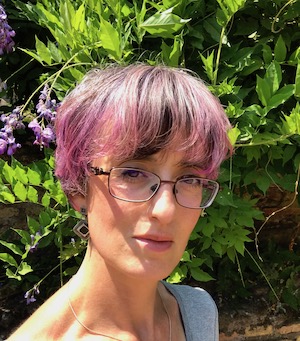
Jen Coane is an associate professor of psychology at Colby. She did not always know she was interested in psychology, graduating first from drama school in Italy. It was her job as a therapeutic horseback riding instructor that got her interested in the mind. Moving back to the states, Professor Coane obtained both her undergraduate and graduate degrees in psychology from Illinois State University. As she worked in a lab during that time, she fell more in love with psychology and her curiosity of false memory led her to pursue a PhD in cognitive psychology at the Washington University at St. Louis. Her daily work routine includes teaching and working with students in her research lab, and “can’t imagine doing one without the other.” Currently, Professor Coane’s research focuses on false memory, investigating how false memories change, and how they are a function of the type of information people are exposed to. The use of a list-learning methodology helps her team understand how humans create knowledge, and not just memories. As the only cognitive psychologist on campus, Professor Coane has a broad range of interests. This unique perspective is the most interesting yet challenging thing about her work, as she is able to support her students’ research interests. What makes science at Colby stand out in Professor Coane’s opinion is the true curiosity of students. On campus, Professor Coane likes to visit the art museum, spend time in her office and lab space, and teach in the Davis Science Center third floor classrooms. Her favorite things about Maine are the close location to the coast, great food, and farm to table culture. Lastly, some advice Professor Coane has for aspiring scientists, having received it herself, is to stay true to yourself, and focus on the knowledge.
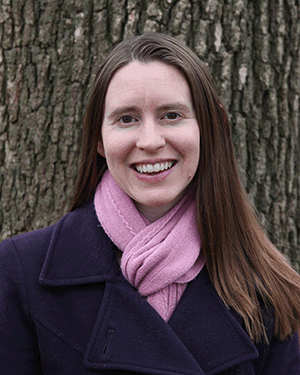
Elizabeth McGrath is an associate professor of physics and astronomy at Colby. She always knew she was interested in astronomy, and attended Vassar College for its strong history of women in astronomy. From there, she went on to do her graduate work in Hawaii, and after completing her research postdoctoral work, she joined Colby’s faculty. Her daily work routine at Colby focuses on how she will impart knowledge in the classroom, and how she can help students advance in the field. On the other hand, she sees doing research as a break from teaching, when she can focus on one specific problem. Currently, Professor McGrath’s research focuses on galaxy formation and evolution, looking at galaxies in the early universe that have stopped forming stars. Her team’s goal is to find the first galaxies that have shut down their star formation in the universe and determine whether their structure provides clues about their star-formation history. During the year, several students work with her in the lab. The most challenging yet interesting thing about Professor McGrath’s work is making her research accessible for students. Colby students can contribute to the production of knowledge in the field, and partner with her to present that work. What makes science at Colby stand out in Professor McGrath’s opinion is the opportunity to get involved with a professor’s work. The smaller classroom sizes facilitate more interaction with professors, leading to research experiences later on, which can really bring all types of students into her lab. Her favorite aspect of the intersection between teaching and research is that since scientific discoveries are constantly changing how we think about the world, she can incorporate the latest research findings into her lectures. On campus, Professor McGrath spends a lot of time in the observatory, but her favorite space is her lab in Mudd. Her favorite thing about Maine is being able to do things outdoors like hiking and kayaking in the summer. Lastly, a piece of advice she has for aspiring scientists is, as they continue on in their careers, to make sure they focus on picking good mentors who will guide them in achieving great things.

Ron Peck is an associate professor of biology at Colby. He has been fascinated by biology since his sophomore year of high school, when he encountered genetics and the ability to predict the genotypes and phenotypes of organisms using Punnett Squares. After majoring in Biology at Linfield College, Professor Peck completed his Ph.D. in Biomolecular Chemistry at the University of Wisconsin-Madison. There, he researched microbes, and organisms that live in extreme environments. His postdoctoral work focused on the study of trypanosomes, the organisms that cause African sleeping sickness. He taught at Lawrence University, before coming to Colby in 2012 and has been here ever since. His daily work routine includes teaching and working with students in his laboratory. Currently, Professor Peck’s research focuses on microbes in the Archaea domain that live in high salt concentrations like the Dead Sea. His team studies how they survive and thrive in these environments, in particular, how their pigment molecules’ production is regulated. Professor Peck guides his students through problem solving and towards independence in the lab. The most interesting yet challenging thing about his work is adapting to different students’ learning styles, and being able to help all alike. What makes science at Colby stand out in Professor Peck’s opinion is the college’s active research programs. Undergraduate students can be involved in every step of the research process, as their ideas are valued and appreciated. On campus, Professor Peck likes to walk his dog in the Arboretum, and foster collaborative learning in Olin 019B. His favorite things about Maine are the close proximity to natural environments, and the ability to enjoy the quiet. Lastly, some advice Professor Peck has for aspiring scientists is to always be willing to communicate with others.

Kevin Rice is an associate professor and department chair of chemistry at Colby. As a Colby alumnus, Professor Rice intended to be a mathematics major, and didn’t initially consider a career as a professor. However, after conducting research in the chemistry department, and finding the subject fascinating, he went on to get his Ph.D. in biochemistry. After graduating from the University of Wisconsin-Madison, he completed his postdoctoral work at Yale. Ready to accept a position in industry, Professor Rice found out about a visiting professor position at Colby, and his career trajectory changed. Today, he finds the scientific freedom of being in academia “intoxicating.” It is working with students in small groups, and helping Colby students realize how terrific they are that excites him about his daily work routine. Currently, Professor Rice’s research focuses on an experimental anticancer drug, studying how the drug works and its effects. During the year, students work with him in the lab, as he guides them through the learning process. The most challenging yet interesting thing about Professor Rice’s work is balancing his teaching, research, and faculty responsibilities, while maintaining the excitement of it all. What makes science at Colby stand out in Professor Rice’s opinion is the true sense of community among people. The collaborative spirit in labs and classrooms allows Colby students to accomplish more during their time here and once they leave Mayflower Hill. On campus, Professor Rice likes to go to the Mary Low coffeehouse, and teach in Keyes 104 or Keyes 105, having taken many classes himself in those classrooms. His favorite things about Maine are the authenticity of its inhabitants and the close proximity to nature. Lastly, some advice Professor Rice has for aspiring scientists is to never let an opportunity go unexplored, don’t be afraid of following your own path, and embrace the liberal arts philosophy in life.
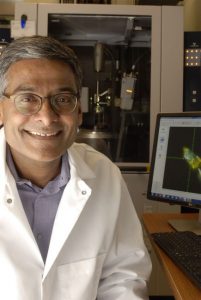
Dasan M. Thamattoor is the J. Warren Merrill Professor in Chemistry and Natural History at Colby. After receiving his undergraduate and master’s degrees from India, and having worked in the chemical industry, Professor Thamattoor had no intentions of teaching when he came to the U.S. to undertake work for a Ph.D. degree. However, after teaching throughout his graduate career at Vanderbilt and Princeton, he knew that teaching was something he must pursue. He took a one year temporary faculty position at Oberlin College after graduate school and had a transformative time there. He then went on to complete his postdoctoral work at Notre Dame. before joining the Colby faculty in 1999 where he has been ever since. He finds the college’s heavy emphasis on undergraduate research a vital part of engaging students as partners in scientific discovery. It is those engaging relationships with students, and watching them grow into sophisticated people that excites him about his daily work. Currently, Professor Thamattoor’s research focuses on physical organic chemistry, investigating the properties of light activated compounds, and reactive intermediates. The projects are designed in a way that addresses important questions in contemporary chemistry, but are still accessible to undergraduate students. During the year, he works with students on conducting organic synthesis and reminds them to not be afraid of making mistakes. The most interesting yet challenging thing about his work is positioning his students in a place where they can be successful after they leave Colby. What makes science at Colby stand out in Professor Thamattoor’s opinion is the unique, yet common, interaction between professors and students. As he observed, when the professor and a student are sitting side by side trying to figure out a problem that neither one knows the answer to, a lot of teaching and learning happens. On campus, Professor Thamattoor likes to watch baseball games, and teach in Olin 001, where he best engages with his students. His favorite things about Maine are the proximity to the coast, small town life, and four seasons. Lastly, some advice Professor Thamattoor has for aspiring scientists is to always be curious!

Andrea Tilden is the Leslie Brainerd Arey Associate Professor of Biology, and director of the Pulver Science Scholars program at Colby. She started her undergraduate career at Alma College as a biology and art double major, thinking she would take more of an art path after graduating. The lifestyle and culture of being a professor resonated with her, and she always knew she would be a professor. After taking an animal physiology class, Professor Tilden was captivated by the subject matter, so she went on to conduct summer research in the biology department. She completed her graduate degree in animal physiology at the University of Oklahoma, where she studied how animals respond to changes in their environment by observing circadian rhythms and hormone levels in water snakes. Now a biology professor of twenty two years who came to start the neuroscience program at Colby, Professor Tilden is excited by her daily work routine of preparing for class, finding new examples to include in class discussions, and interacting with students. Currently, Professor Tilden’s research focuses on studying the evolution of the eukaryotic genome and how introns arose in the genome. Her team approaches these questions with a computational biology and bioinformatics lens. Professor Tilden works directly with the students in her lab, addressing the biological component while they work on the computational components. The most interesting yet challenging thing about her work is finding the time to fully invest herself in bioinformatics and genomics. What makes science at Colby stand out in Professor Tilden’s opinion is the students’ willingness to collaborate, curiosity, and engagement in new subject matter. On campus, Professor Tilden likes to meet students in the Spa, and teach in Kassman Auditorium. Her favorite thing about Maine is the coast. In her free time, she likes to sea kayak and draw with an Etch-a-Sketch. Lastly, some advice Professor Tilden has for aspiring scientists is to be open and curious about projects, because involvement in research is the process of discovering something that interests you.