
 by Avery Munns ’21
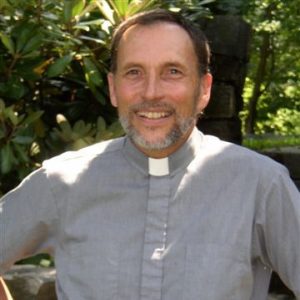
When walking out of St. Mark’s Episcopal Church, it’s impossible to miss the brightly colored sign that reads, “You Are Now Entering The Mission Field.” Rev. John Balicki, the Rector of St. Mark’s Episcopal Church, instructed me to pay careful attention to it as I exited the church after our interview, and he speaks proudly of this sign’s connection to his faith. “We’re part of a faith community that’s part of a bigger community, and any kind of barriers or walls are a little artificial. We’re not just here for ourselves.”
Rev. Balicki has made it his mission to be there for others in the Waterville community through his work as the moderator of the Waterville-Winslow Interfaith Council for the past seven years. He says the goal of the Interfaith Council is to answer the question, “How can we both support each other in our missions, but also provide maybe some assistance to the community that’s needed that might even be beyond what any one of us could do?” This financial assistance has become a crucial piece of Waterville and Winslow’s poverty relief efforts.
The Interfaith Council provided $19,441 to 72 recipients this year (as of mid-December) through its Interfaith Resource Fund. The fund began as a result of discussions among council members about their experiences supporting community members’ financial need. Rev. Balicki says they noticed the trend that people “would either call here or come here in person. They tell us a story, and we might give them a little bit of money, and then they go up the street to the next church, and then they go over to the synagogue, and then, you know, it was exhausting for them. And we were also spending quite a bit of our own time doing that.”
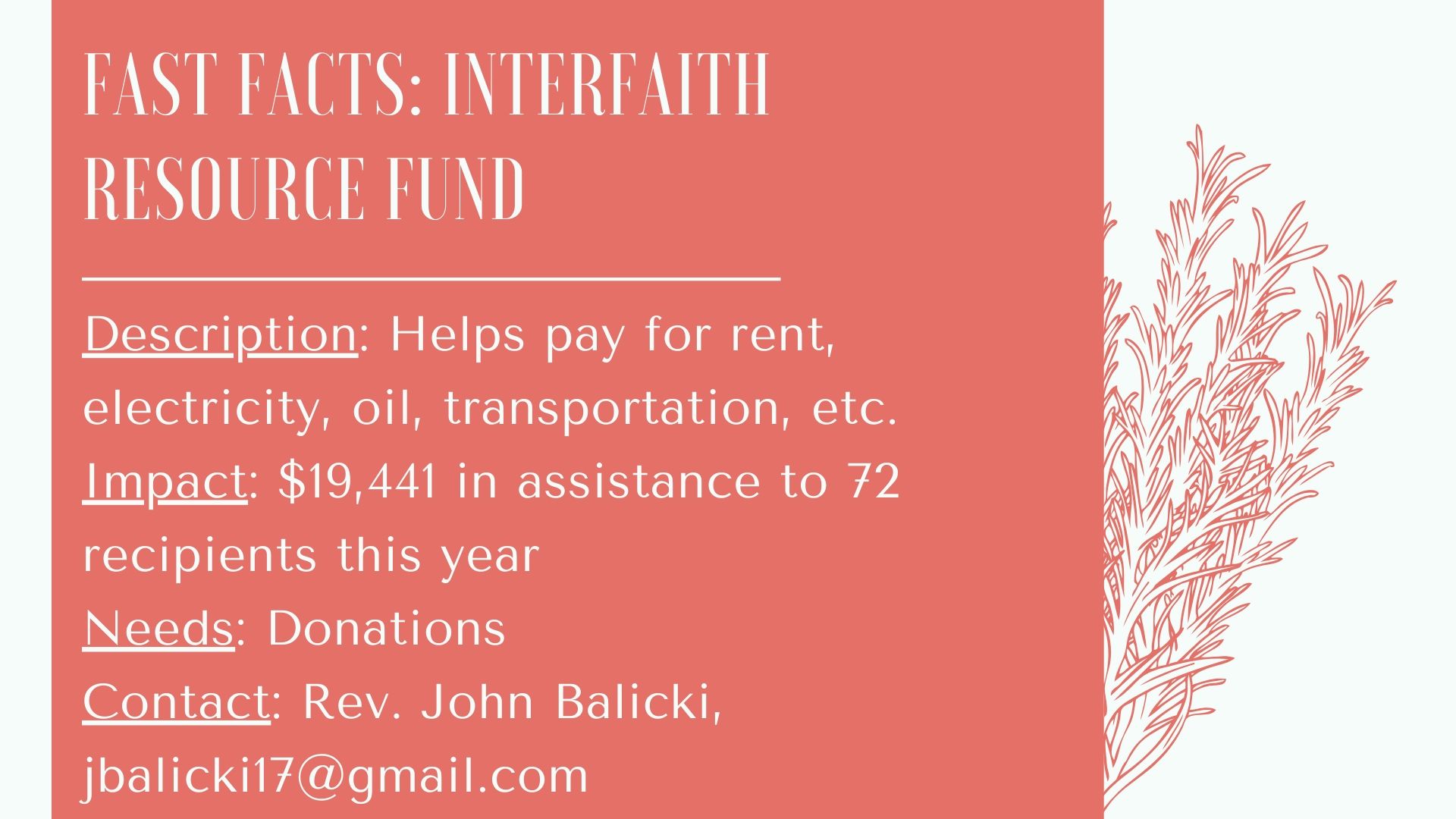 The Interfaith Resource Fund is a more efficient way to provide assistance for those in need. Now, when someone requests financial assistance from one of the congregations within the Interfaith Council, the council as a whole provides assistance to the individual. Recipients must live in Waterville or Winslow and may only receive support from the fund—up to $300—once a year.
The Interfaith Resource Fund relies on donations and receives a grant to support heating assistance from United Way. The fund also helps people with rent, security deposits, electricity, and transportation. “We’re simply here trying to help what we call the people in the cracks, people who don’t meet criteria always for social services but are experiencing hard times,” Rev. Balicki says.
Even though the Interfaith Council does its best to support community members, Rev. Balicki says that the fund still cannot meet all of the need in the community. He believes one of the greatest challenges for the Interfaith Council is finding consistent sources of funding. It is hard for churches to meet community needs when they have little staff and funding, so “we do a little bit here and there what we can but we’re not really addressing the problem as a whole.” In order to really address the problem of poverty, Rev. Balicki says, he would love to see social services improve. But he sees a “bigger, broader challenge, which isn’t unique to Waterville: How do we as a community, as a state, become more responsive to people in need and develop a better system?”
Rev. Balicki also attempts to tackle issues surrounding poverty through his congregation. St. Mark’s Episcopal Church sets aside $2,500 each year in their annual budget, and a group of congregants gather to decide on a poverty-related agency to receive those funds. Additionally, Rev. Balicki fosters a sense of volunteer service in his congregation. St. Mark’s sends volunteers to the Evening Sandwich Program at the Universalist Unitarian Church as well as to the July Lunch Program, an effort of the Interfaith Council to provide lunch five days per week while the Sacred Heart Soup Kitchen volunteers take a month of vacation.
St. Mark’s is the only Episcopal church in the Waterville/Winslow area. Although St. Mark’s is doing important work on its own to combat poverty, Rev. Balicki also stresses the importance of the Interfaith Council: “We’re important for each other, and we do an important service in the community because almost all of us are here by ourselves without any other members of our denominations present.”