 by Alecsandria Davis ’20
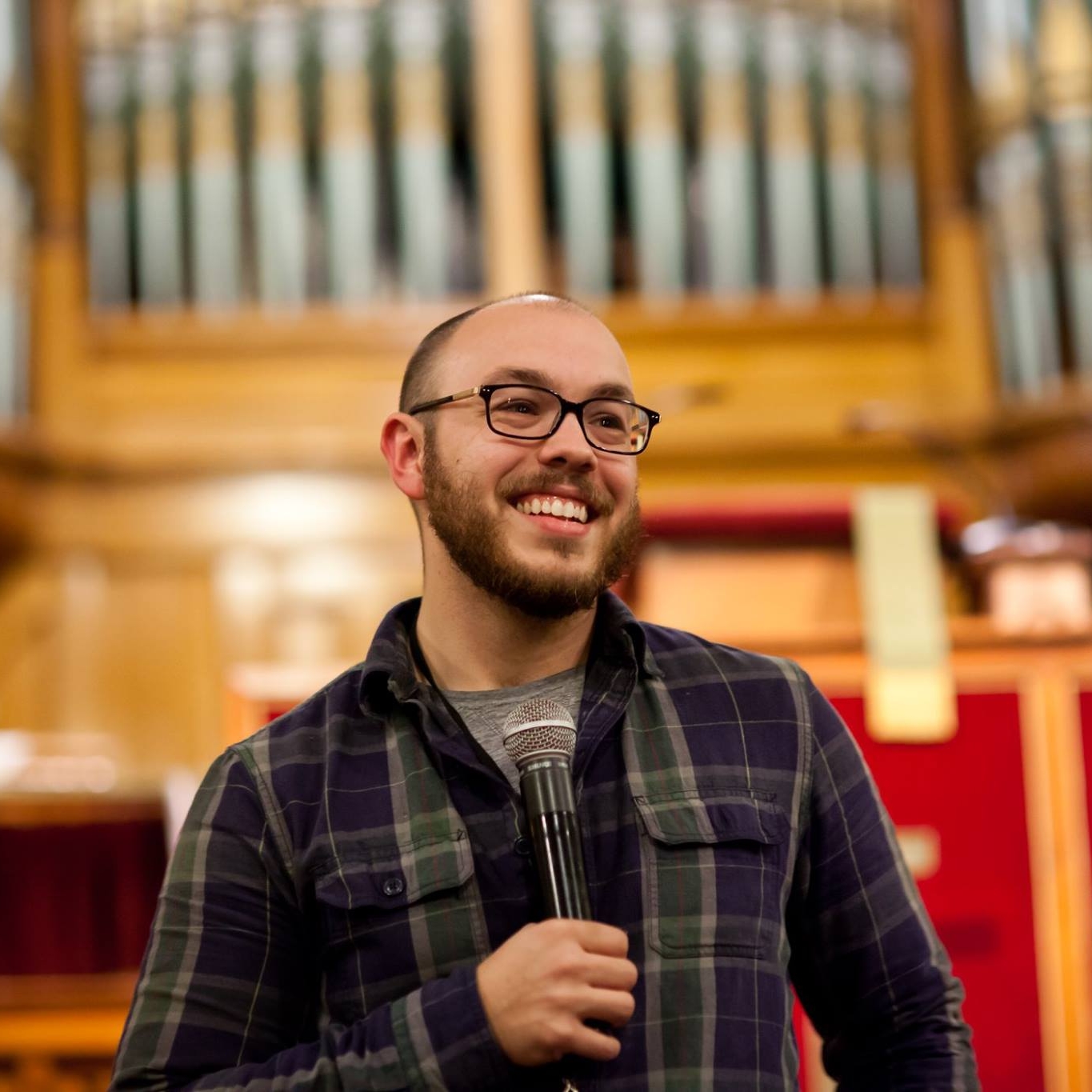
“If you remove taking care of your neighbor out of Christianity, I would contend that it’s not Christianity.” This belief is what motivates Pastor Jamie Dickson, pastor of Kingdom Life Church (KLC), to respond to poverty. Jamie is one of the younger pastors in the area, and serves his non-denominational church with his own unique style. He preaches with no pulpit in black jeans and a denim jacket, cracking jokes throughout his sermon and keeping his congregation engaged with his excitement about Jesus.
When Jamie first became a pastor in the area and led a smaller congregation, he modeled this care of neighbor on the streets of Waterville. But as his congregation and responsibilities have grown, Jamie now operates as a facilitator for his community. “We have bodies, we have resources, we have energy, and we have heart, [it’s my job] to take a group of people and meet the needs that we see.” This desire to facilitate is what connected Jamie to one of KLC’s members, Michelle Franzose. They were sitting at a table in Big G’s as she told him through tears her story of homelessness, and her deep desire to be a part of others’ journeys out of poverty. In the beginning, they weren’t sure what the partnership would look like, but Jamie knew “as a pastor… I have to do whatever it takes to help you fulfill that dream of your heart. It didn’t start off with oh, we could do so much it was just Michelle, I’ll do whatever it takes.” His job is now twofold: to see, encourage, and facilitate the dreams in people’s hearts, and to motivate his wider congregation to get involved.
 When Jamie engages with people, he wants to meet their physical and spiritual needs. “My hope is that they would feel a love that reaffirms that they’re valuable. I want every person to actually experience a sense of worth.” Jamie talks about the need beyond the need, and what he calls a “poverty mentality” that affects self-worth and attitude. At the center of Jamie’s desire for poverty ministry at KLC is love, and “love has no agenda.” As the church is trying to get involved, Jamie is aware of some of the obstacles that come from years of people experiencing Christian organizations that require them to have some sort of belief or conversion in order to receive assistance.
Jamie wants to combat this narrative and build partnerships in the community, but he often feels “like the last kid picked on the basketball team.” In the future of Waterville, this is one of the biggest things he wants to see change. He is working to build trust between the faith-based and secular groups, and across the wider community as a whole. “I would love for the community to say oh, there’s a need, the church would be so good at nailing this need.” He considers it the church’s responsibility to change this narrative, and he is building this rapport through relationships and having a positive presence in the community. Kingdom Life Church has hosted clean-up days and town-wide events for families to create this deeper level of trust. Jamie is committed to these relationships, and he believes that this will be where the real difference gets made.
In his personal life, Jamie talks about the effect his five-year-old daughter has had on his response to poverty in Waterville. When she started noticing people who were homeless on the street, and he had to explain to her the realities that people live under, “Her little mind was just like, That’s not allowed.” Now anytime they pass somebody asking for help, she isn’t willing to move on until they respond in some way. Jamie talks about striving to have the same level of sensitivity to the brokenness around him.
“As much as I love facilitating programs, I would really love it if we didn’t have to have them… In my utopian, idealistic worldview, I imagine a grassroots, authentic heart movement that’s on a people [level], not an organization level, where people’s minds and hearts are turned to the needs all around them—and not only provide resources, but provide community, relationship, and connection. So if somebody came to me and said I really want to do it, I would say, then do it.” For Jamie, the foundation of it all is his faith, and the idea of being unable to turn a blind eye to those in need.