There are two main scenarios in which a work of art’s authenticity is questioned: 1) when there is a newly surfaced work of art outside the supposed artists’ catalogue raisonné; and 2) when evidence emerges that makes an authenticated work suspected to be a copy, fake, or forgery. An investigation into the authenticity of a work of art may result in either an addition to or removal from an artist’s oeuvre, affecting the value of the work in the art market and potentially altering art historians’ understanding of history—the business of art authentication has high stakes. Three different processes may be undertaken when attempting to validate authenticity or expose a forgery: examination by a connoisseur, investigation into provenance, and/or forensics testing.
Connoisseurship
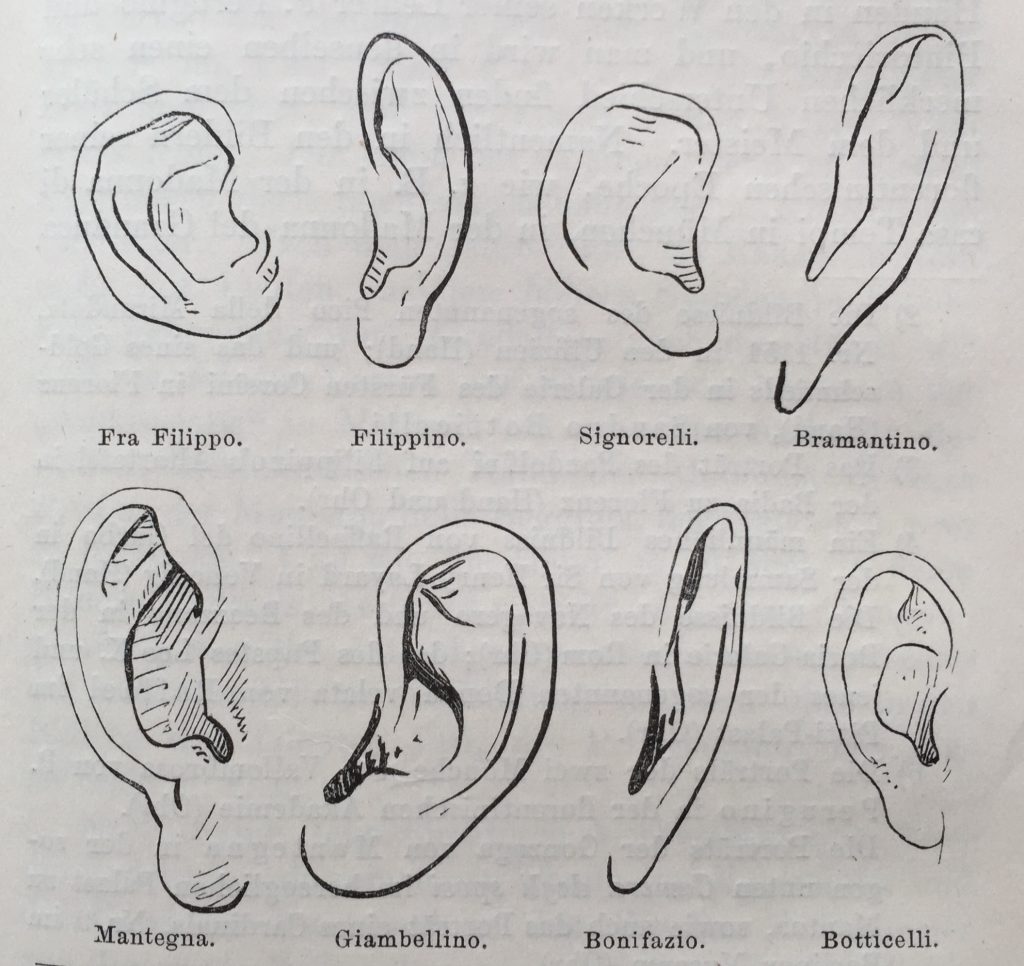
Connoisseurship is a type of expertise in a particular subject, most of the time regarding art. Connoisseurship depends on stylistic analysis. Oftentimes, the expert is trained for years studying the artist’s technique—for instance, the brushwork and paint application—to gain an understanding of the artist’s working methods and an ability to attribute works of art to a specific artist. A connoisseur uses their eyes and gut feeling to determine the authenticity of a work. Like everybody else, connoisseurs seek to make sense of a work of art and form patterns using their prior confrontations with an artist’s oeuvre.
“The connoisseur of art must be able to appreciate what is simply beautiful, but the common run of people is satisfied with ornament” –Johann Wolfgang von Goethe
By Caroline Scarola
Source:
Castelnuovo, Enrico, Jaynie Anderson, Stephen B. Little, Christine M. E. Guth, S. N. Chaturvedi, Anna Tummers. “Connoisseurship.” Grove Art Online, 9 November 2018.
For more information, see “Connoisseurship” section of the bibliography
Provenance
Provenance is the term used to refer to the ownership background of movable art. This background includes the locations and the owners of a work of art from the moment it was made. However, most provenances are not complete and accurate: the more substantial and authentic they are, the more constructive and crucial they become in studying works of art.
To evaluate and understand an object, it is critical to research its provenance. The information derived from the records dictates the authenticity of the object, but evidence can be forged. When connoisseurship reaches its limit in determining the authenticity, study of provenance provides more precision. The research methods are the studies of physical records which include inventories, wills, appraisals and financial documents, records of sales, correspondence, and photographic or other visual evidence.
When records indicating the provenance are lacking, suspicions are raised to challenge the authenticity of a work of art. In numerous cases, it is either the lack of information or the abundance of background that reveals the inauthentic works. The most basic application to detect forgeries through provenance is to study the accordance of the physical evidence of the object and its recorded history. This is why archival information is more favorable as they are considered authentic. However, this practice of deeming archival documents with an object being authentic can be wrong as it is possible that the documents are forged. In this sense, the study of provenance reaches its limitation in deciding the authenticity and detecting forgeries.
By Howie Gao
Source:
Reed, Victoria. “Provenance.” Grove Art Online. 26 May 2016.
Forensics Testing
As the most expensive and time-consuming of the three processes of authentication (requires outside professionals, expensive resources, and often export to a lab), forensics testing is typically the last-resort for art galleries, museums, buyers, or historians.
Forensic testing of art may include non-invasive or invasive processes. Non-invasive methods enable close examination of the surface (via visible or ultraviolet light) and beneath the surface (via x-ray or infrared light) of a work of art. Each light source utilized reveals something new about the condition of the work of art which can be compared to what is expected of an authentic work.
- Visible light: examine craquelure (the natural web-like cracking of paint)
- Ultraviolet light: examine the varnish layer and any overpainting
- X-ray light (from behind painting): examine graphite underdrawings
- Infrared light (from in front of painting): examine graphite underdrawings
Invasive techniques require small samples for analysis and are used to reveal the chemical composition of the work of art. These techniques include: polarized light microscopy to analyze ink and pigments, X-ray diffraction to determine crystalline structures of pigments, neutron activation to determine elemental composition; carbon dating to estimate the age of organic compounds (some pigments, wood panels, etc.), among many others. The chemical composition found for the work of art supports its authenticity if the materials used correspond to what was available to the supposed artist of the work. For example, titanium white should not be found in a work of art dated before 1921 when the pigment was first manufactured. Misused titanium white is what led to the downfall of art forger Wolfgang Beltracchi (for more information see Wolfgang Beltracchi and Beltracchi: The Art of Forgery).
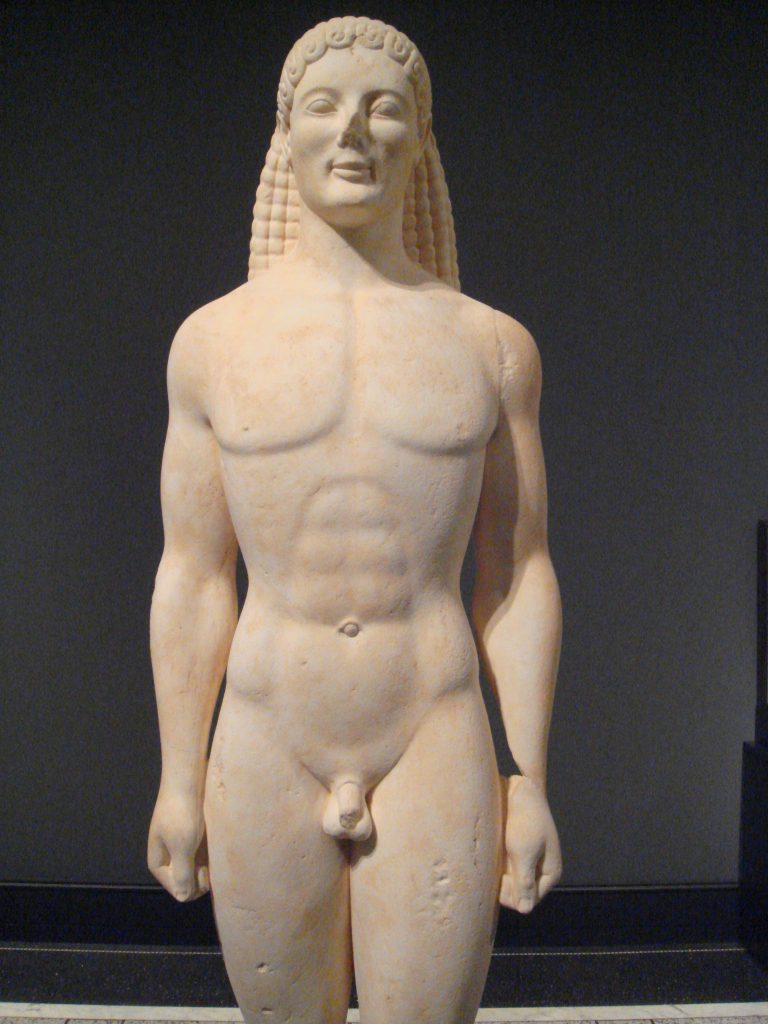
Despite the objectivity and validity associated with scientific analysis, forensic testing can be inconclusive or falsely support authenticity. When forgers use authentic materials as a base or manipulate the chemistry of their forgeriers (see Eric Hebborn and The Getty Museum’s Kouros), forensic testing is incapable of exposing the fraud and may falsely perpetuate false notions of authenticity.
