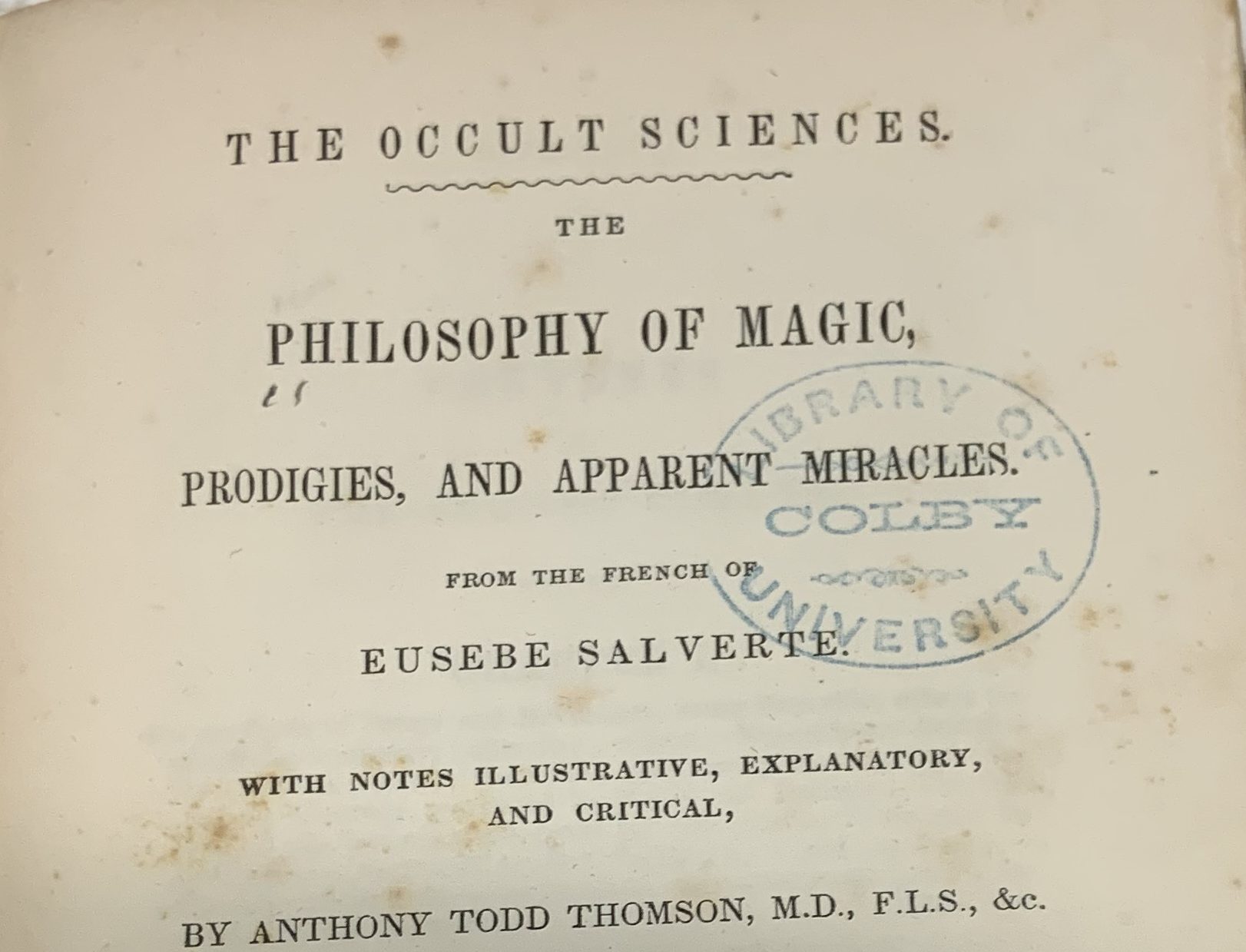
The Occult Sciences: The Philosophy of Magic, Prodigies, and Apparent Miracles Volume II is a title that I find quite interesting. Without any context, one might assume that the book is a work or fiction, fantasy, or at the very least something that has to do with what we typically associate with magic. While after my deeper investigation into the author and translator, it has become increasingly clear that this book is not what the title may make it appear to be. Obviously I can read the contents of the book to really get a full understanding of what it is about, but there are also other clues that can provide more information on what The Occult Sciences: The Philosophy of Magic, Prodigies, and Apparent Miracles is really about. I find the paratext in this book to be especially interesting in the quest of deciphering its purpose.
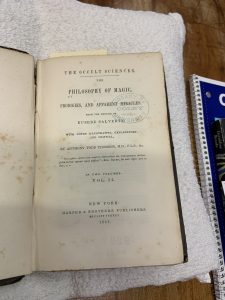
The first interesting example of paratext has to be the title page. Although it is not filled with a lot of information, it does include the title, the original french author, the translator, and the publisher. What I personally find to be the most interesting part of the title page is that there is a latin quote. I have touched upon this in a previous blog post, but I needed to do more research to figure out its meaning. Unfortunately, my research hasn’t yielded a lot of results. Based on the information I could find it seems that it is very difficult to find an online translator for latin that is actually accurate. Many people recommend asking an expert in latin to weigh in rather than relying on the internet. I couldn’t help but agree with that notion after seeing the many rough translations of the quote. The quote itself states “non igitur oportet nos magicis illusionibus uti, cum potestas philosophica doceat operari quod sufficit”. Luckily, I was able to find a book online that has a sort of rough idea of what the quote is referring to. The book Tales from Blackwood: The Haunted and the Haunters states (in reference to my book): “In that remarkable volume, M. Salverte proves that natural phenomena are more startling than necromantic tricks”. You can check out the book and this quote here. (Although I am not exactly positive if this translation counts as paratext I wanted to just update on my new discovery with it!)
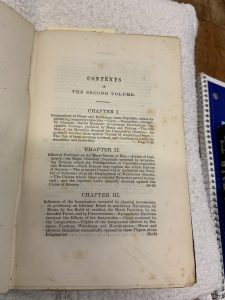
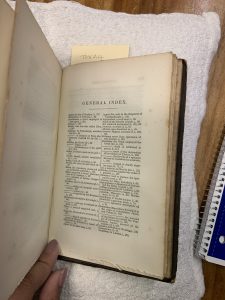
The next example of paratext is the table of contents. There are twelve chapters in The Occult Sciences: The Philosophy of Magic, Prodigies, and Apparent Miracles Volume II. Each chapter has a description of what the chapter is about. What I find interesting about these descriptions is how lengthy they are. They’re not necessarily a summary of each chapter as much as a list of all of the topics. The way that the descriptions of each chapter are laid out appears to be more formal than say chapters in a book made purely for entertainment. The fact that there are twelve of these chapters all with large descriptions leads me to believe that the content is meant to be educational. The book also includes an index. This index is very extensive, which I attribute to the many references that the text makes. This tells me that a lot of research went into the creation of this book to make sure that what was included was accurate (more proof to me that this is an educational book). There are many types of interesting references within the index. Many of which are references to people (like “Alexander the Great employed the Greek fire” or “Abaris, the son of Seuthes” for example). But there are also some more general ideas as references (like “Alchemy arose from ignorance of true science” for example). Overall, the majority of the references in the index appear to have latin origin. What I consider to be even more proof that this work is educational is that there are advertisements in the book from the publishing company. These advertisements include titles such as: Elements of Morality and Polity, The Philosophy of Mystery, The Life of Mozart: Including His Correspondence. I feel that while these titles are a slightly similar to The Occult Sciences: The Philosophy of Magic, Prodigies, and Apparent Miracles. The titles all appear to philosophical and they all seem to be educational in nature. Because these are the advertisements in the back of this book, I assume that the publishing company is trying to target a certain audience: people who are in the pursuit of knowledge.
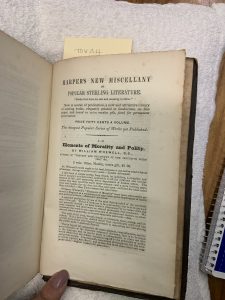
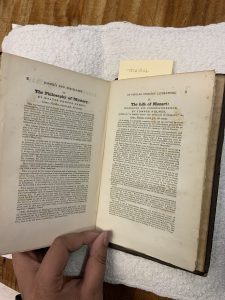
Before this class, I am not sure if I would have ever paid much attention to how the title page, table of contents, and other examples of paratext would play a role in the meaning of the book. But as told by D.F. McKenzie, “Forms affect meaning”. The form/paratext in this case has caused me to believe that the “meaning” of this book is an educational one. Therefore, I believe that it is safe to assume that the audience for this book would be maybe scholars or people looking to be educated on this topic.