|
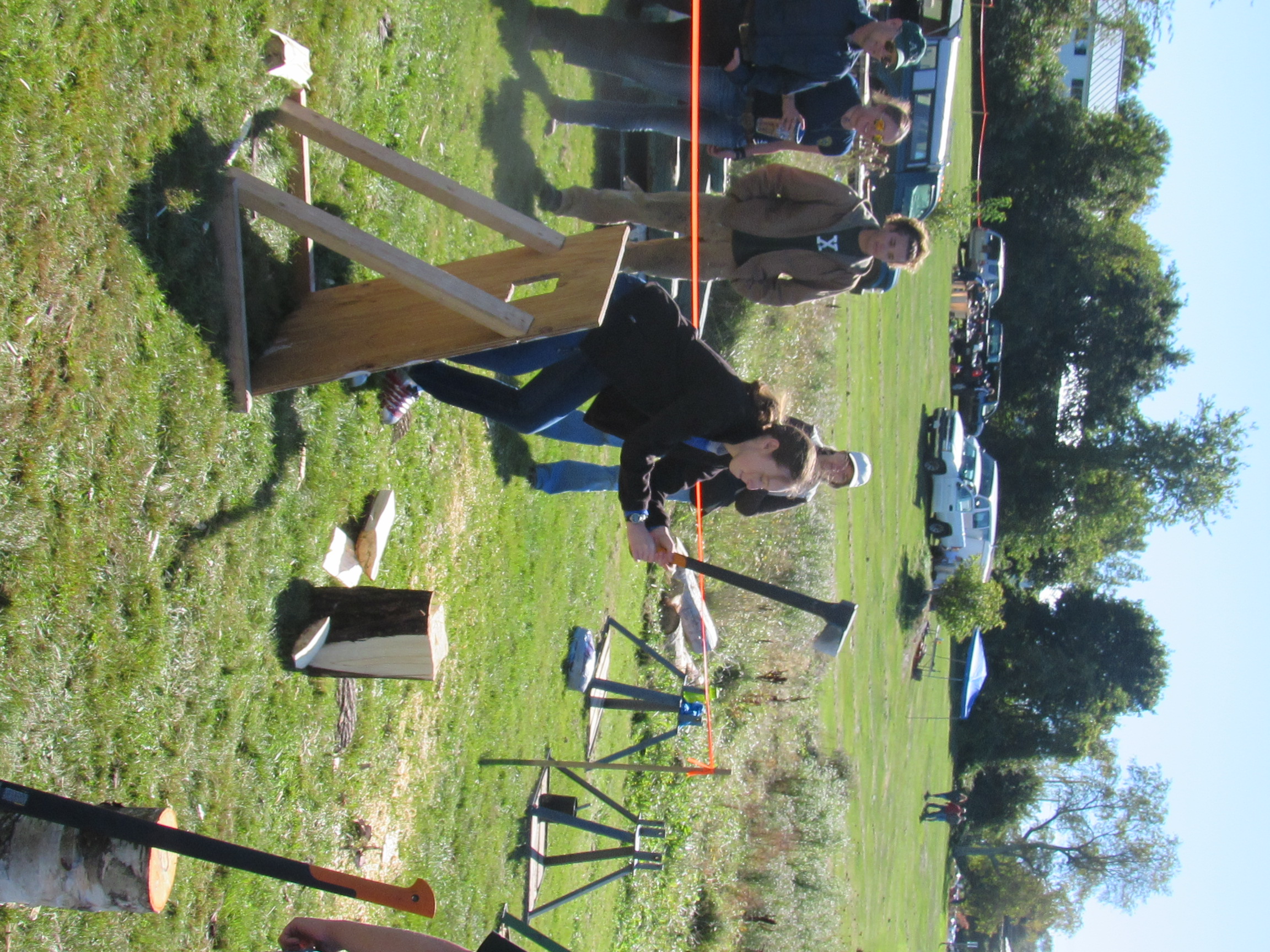
Axe Throw: The objective is to hit the bull’s eye on a target about fifteen feet away with a double headed axe. In competition, the thrower is typically given one practice throw and then three more that count. The closer your axe is to the bull’s eye, the higher your score on each throw. |
 |
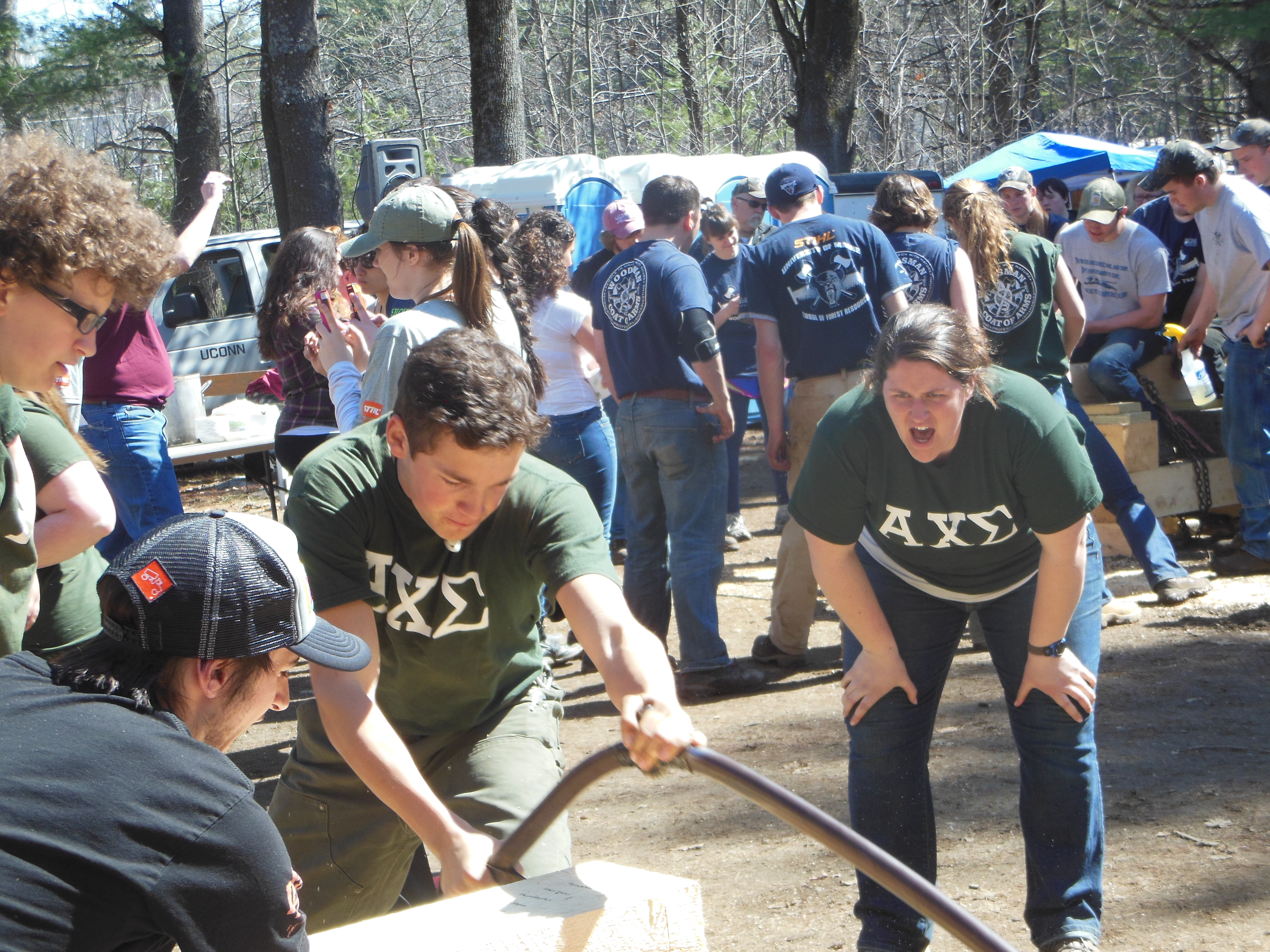
Bow Saw: Bow saw is both a team event and a singles event. When it’s a singles event, it is also known as “super swede.” Super swede asks for a competitor to cut a number of cookies (normally 2 for women and 4 for men). This requires a mastery of sawing technique, as well as strength, and the ability to efficiently set the saw on the wood. Team bow saw asks for each member of the team to cut one cookie each. |
 |
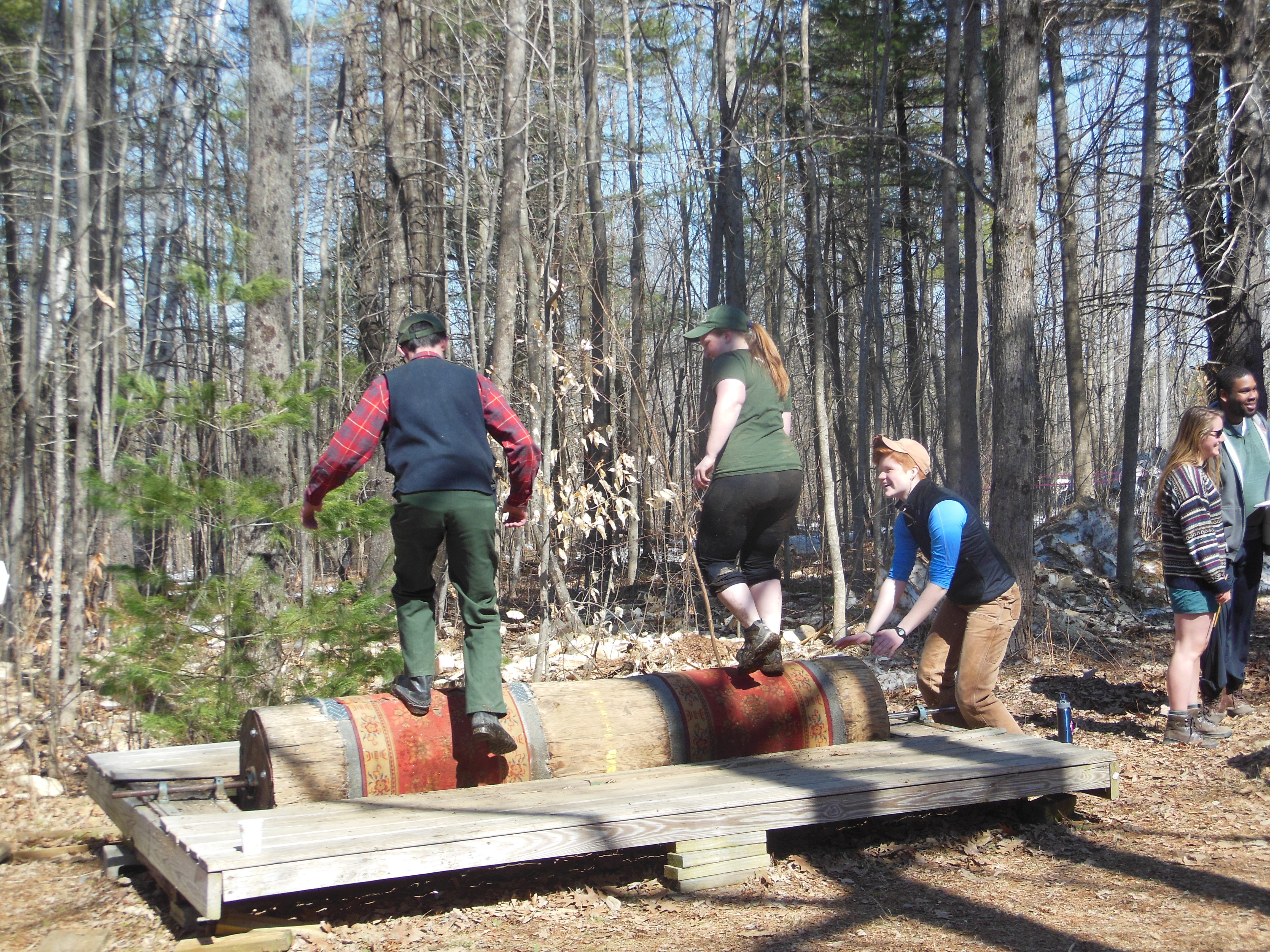
Birling: This can take many forms, there is usually dry land birling or water birling. In dry land birling two competitors try to run the other person off the log in a double elimination competition. In water birling one competitor runs on the log either for time or rotations. |
 |
Crosscut sawing: This is one of the classic lumberjack events, where speed, concentration and strength all come together. In the crosscut (or two-person) saw event, competitors must use the saw to cut two cookies from a mounted log. Good communication with your partner is crucial, though a sharp saw will also help. Competitors lose time or risk disqualification if they “cut out” (i.e. having the saw exit the log at an angle, without having cut all the way down it.) |
 |
Single Buck: Another critical lumber-jacking skill, single buck requires strength, endurance and technique. One competitor says through a mounted log with a single buck saw, their score is based on time. |
 |
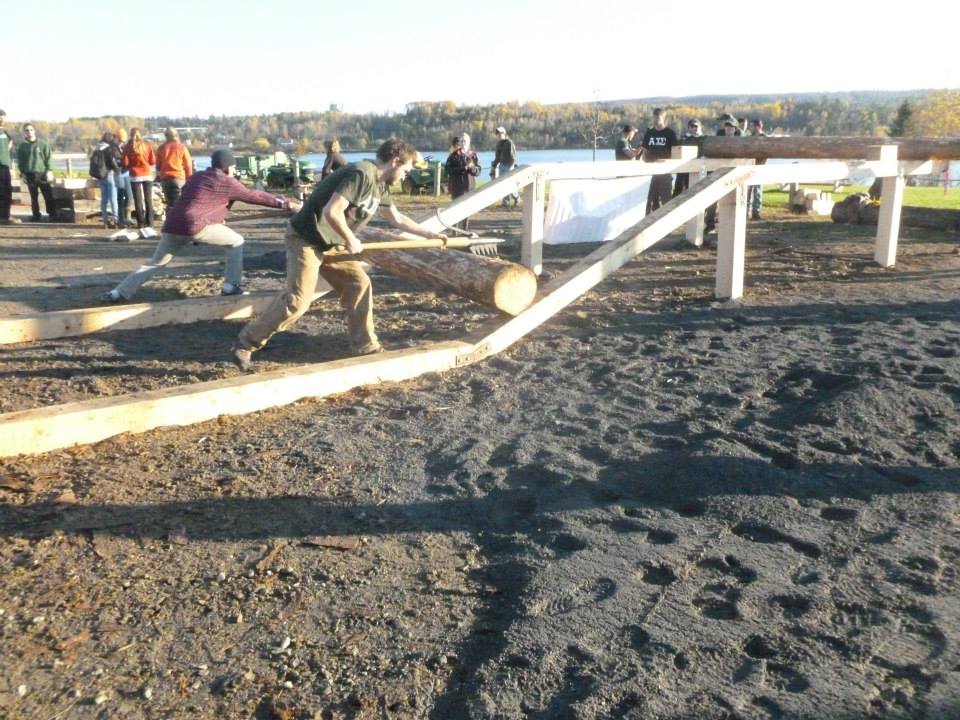
Decking: Decking uses a tool called a peavey, a stick with a poker at the end of it. A log begins at the top of a stanchion and is then rolled down a ramp by a pair of competitors. Once on the ground, the log must be rolled to touch two pegs. After the pegs are touched, the process is reversed and the log must go back up the ramp. No part of the competitor’s body can touch the log at any time. Once the log is returned to the beginning, the peaveys are handed to the next pair and it is repeated. |
 |
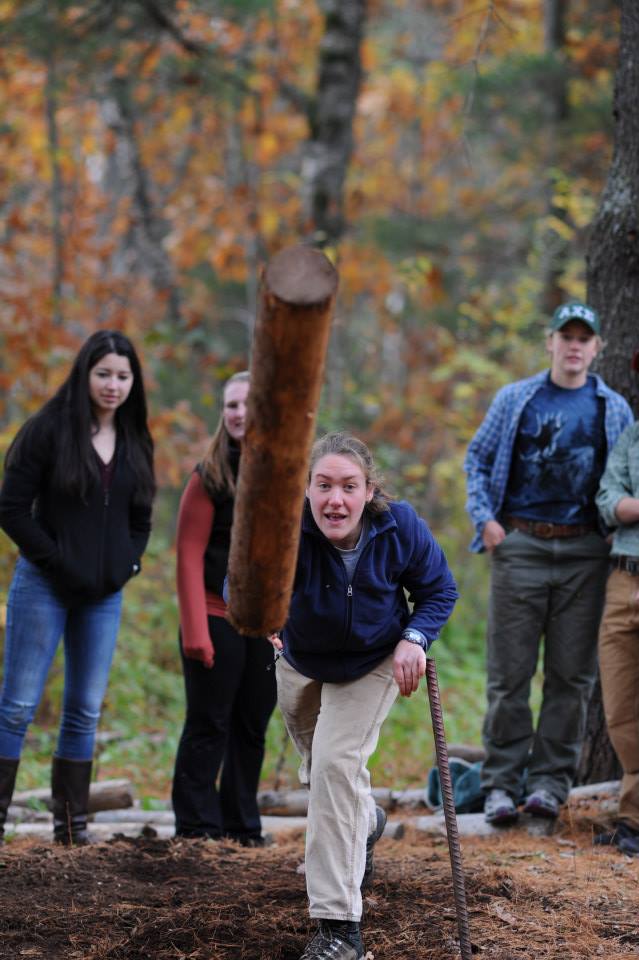
Pulp Toss: The goal of team pulp toss is to throw 4 pulp logs to a total of 48. This is done with 3 team members on either side of a pit that ranges from 15 to 20 feet long. Each member throws the 4 logs, and they only count towards the total of 48 if the log crosses the plane of the stakes. If it is thrown too far, or not far enough, the throw does not count. |
 |
Horizontal Chop: the goal of this event is to chop a log in half. This is done by placing the log horizontally in a station and chopping in between the feet. The person with the fastest time wins. |
 |
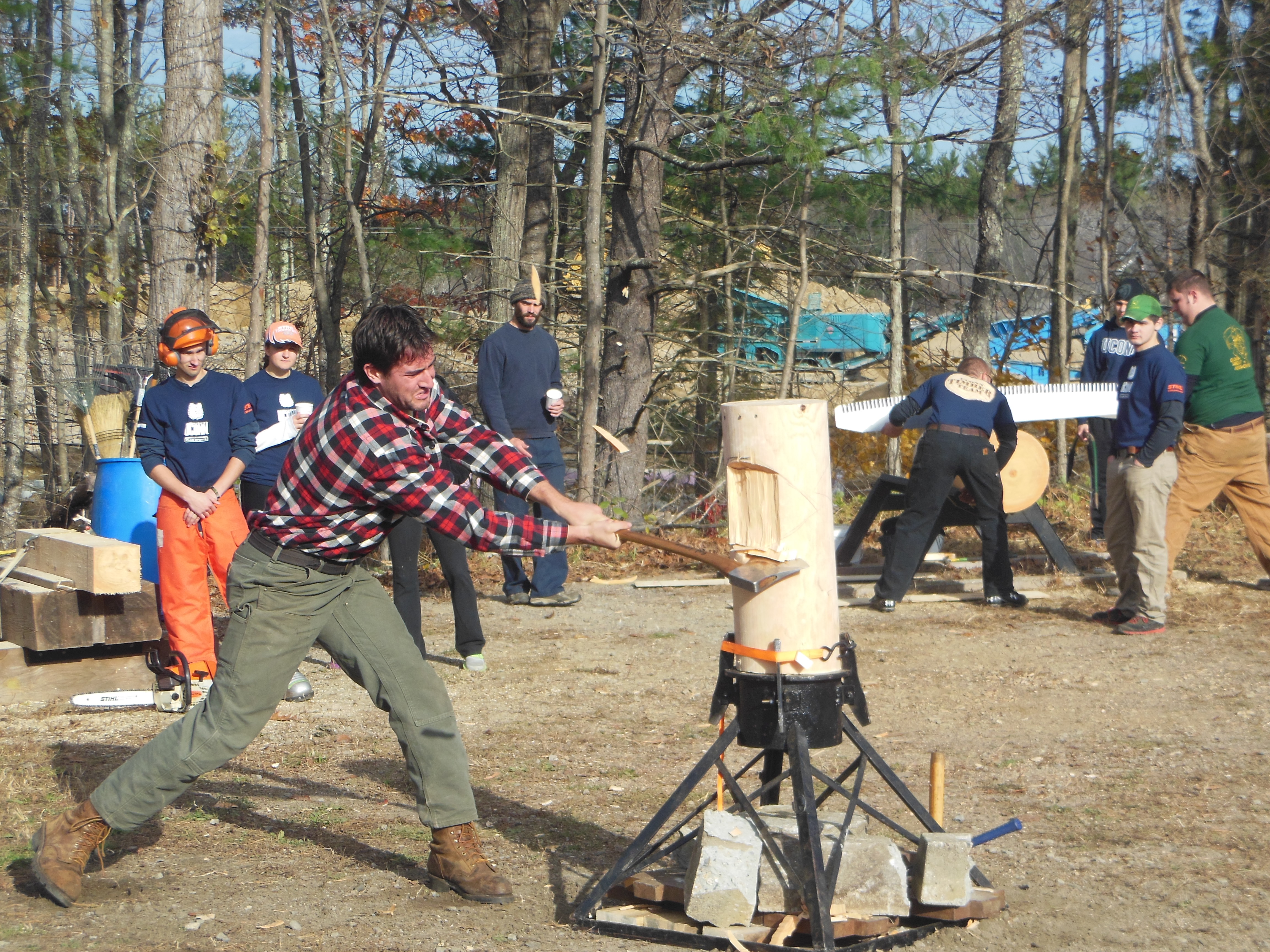
Vertical chop: the goal of this event is to chop a log as fast as possible as if you were felling a tree. Similar to h-chop, the competitor is chopping a log in half, but in this case the log is vertical. |
 |
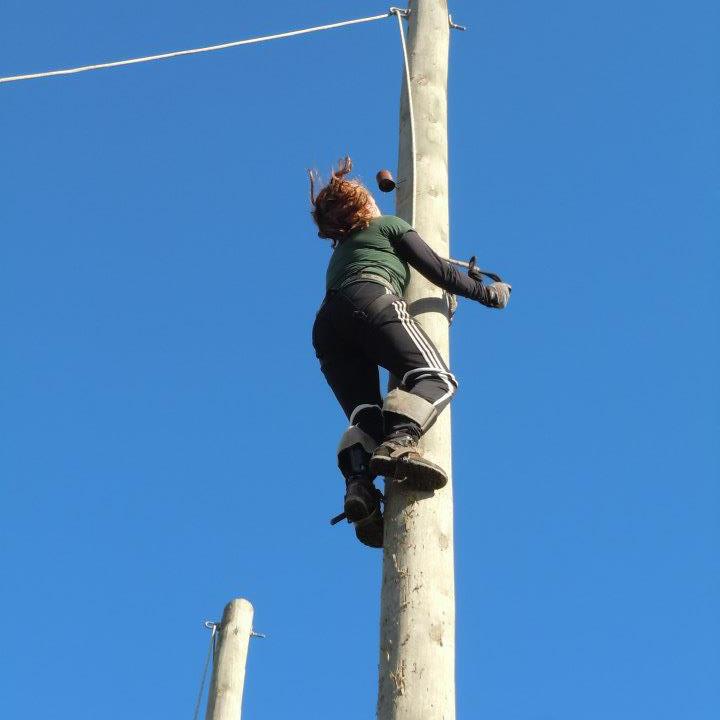
Pole Climb: the goal of this event is to climb a pole as fast as possible. Pole heights range from 28 feet to 40 feet in height. Competitors climb with a rope in their hand and spikes on their feet. |
 |
Stock Saw: the stock saw event uses a chain saw to perform a series of cuts both down through the wood and back up through the wood. |
 |
Disc Stack: the goal of this event is to stack as many cookies as possible using a chain saw. Competitors are given between 16 and 18 inches of 6×6″ wood to balance as many cookies as possible. Top stacks range from 17 to 22 cookies. |
 |
Chain Throw: goal of the event is for the competitor to coil a surveyor’s chain as fast and neatly as they can. |
 |
Fire Build: competitors are given a block of dry cedar, 3 matches, and a can will water and dish soap in it. Using hatchets, competitors build a fire and boil the water in the can as fast as they can. The dish soap in the water causes it to boil over signaling the end of the event. |
 |
Splitting: In competition, this event can take 2 forms. The first is quarter split, in which competitors are given 2 logs each with a spray painted circle in the middle. Competitors must split the logs and finish with at least 4-full length pieces with spray paint on them from each log. The other splitting event is barrel split, in which competitors must split 2 logs to be small enough to fit through a hole in a barrel. The split pieces must be stuffed through the hole in the barrel. |