
Colby Tree Swallow Project!
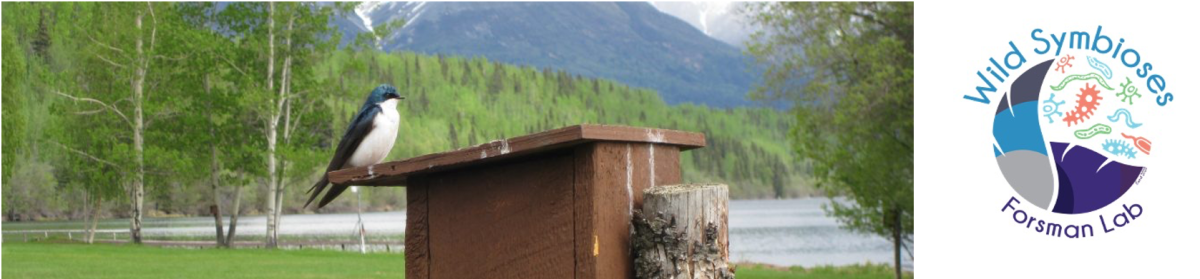
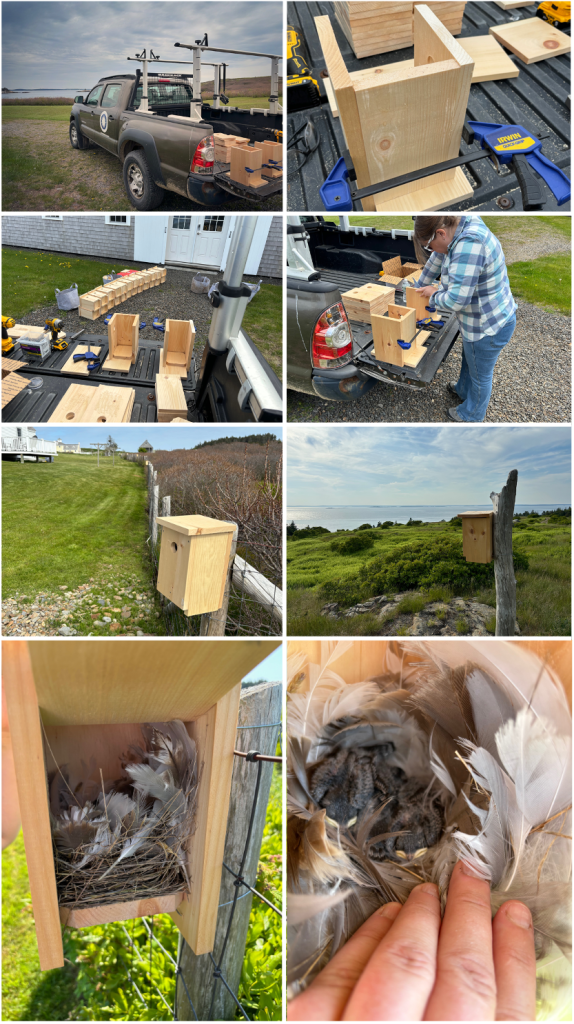
In Spring 2024, we launched the Colby Tree Swallow Project by installing 23 nestboxes on Allen Island. In Spring 2025, we will be adding to this project by installing nestboxes on the main campus in Waterville. In collaboration with Colby’s Grounds Supervisor & Landscape Manager, Matt TenEyck, we plan to install ~60 wooden nestboxes to start. In addition to tree swallows, it is likely that bluebirds will move in also!
Ectoparasites & Immune Development
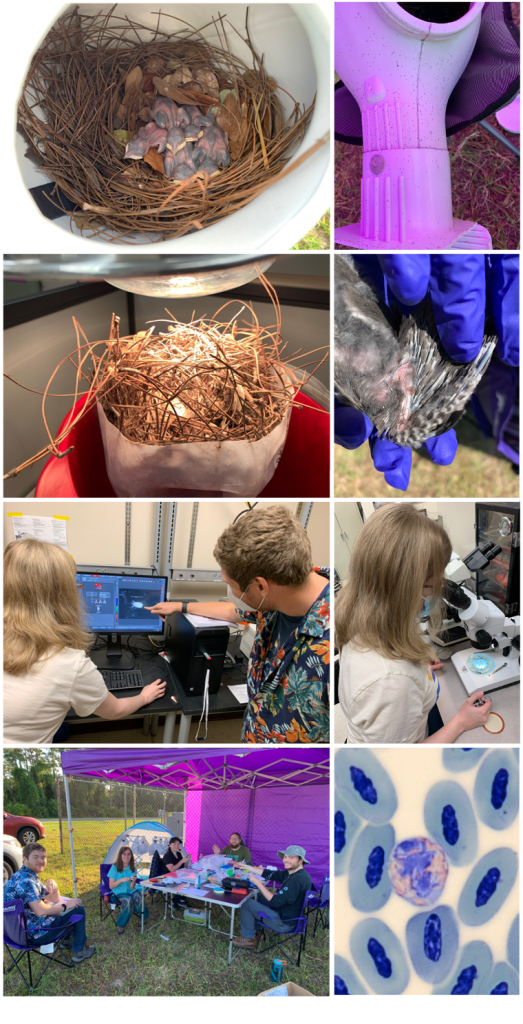
Ectoparasites like hematophagous mites and feather-chewing lice commonly afflict birds, both wild and domestic. The application of carbaryl has become standard practice in the poultry industry. More recently, some well-meaning purple martin landlords have begun adding this insecticide to bird houses to decrease the abundance of mites during the nestling period. Carbaryl is an acetylcholinesterase inhibitor, which kills insects but may also have negative effects on the chicks and adults exposed to this chemical in the nesting environment. To test whether the beneficial effects of mite reduction outweigh any detrimental effects of carbaryl exposure, we conducted an experimental study where half of the nesting cavities at our study site were treated with carbaryl and the other half were left as untreated controls. Students in the Wild Symbioses Lab are currently working on analyzing blood, fecal, and cloacal swab samples in the lab to characterize any differences in the health and growth between chicks hatched and raised carbaryl vs. control nests.
Pooper Snoopers
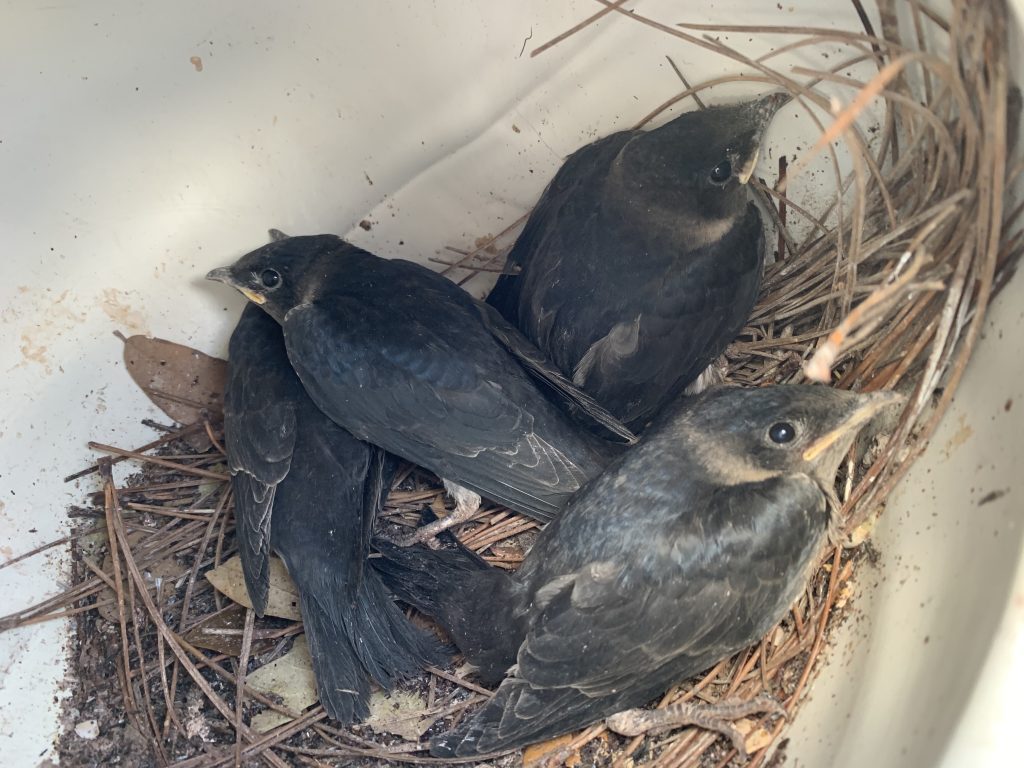
In Spring 2025, we launched Pooper Snoopers, which is a large-scale, community-based science project that has been made possible by the support of our friends at the Purple Martin Conservation Association (PMCA). We will be collecting fecal samples from martins across their North American breeding range to characterize geographic variation in diet using DNA metabarcoding. Purple martins, like other swallows, are aerial insectivores and their populations are sensitive to the insect declines that have been observed globally. Nutritional input is critical for immune system function and diet composition also influences the gut microbiome.
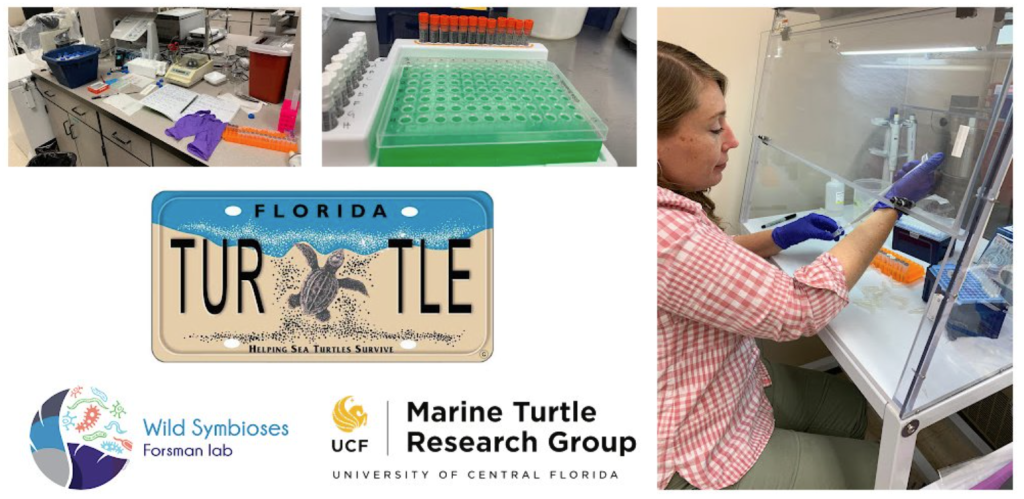
Sea Turtle Microbiome & Disease Ecology
Green sea turtles, especially juveniles, are susceptible to the tumor-forming disease fibropapillomatosis (FP), which is likely caused by the herpesvirus Chelonid Alphaherpesvirus 5 (ChHV5). However, not all turtles that test positive for ChHV5 express tumors. In our research, we are testing the hypothesis that the gut microbiome of turtles interacts with the host immune system to influence the expression (or not) of FP tumors. In addition to characterizing the gut microbiome, we are also using DNA metabarcoding to characterize diet composition. This work is conducted in collaboration with Chris Sarkis (UCF) and Dr. Erin Seney and Dr. Kate Mansfield of the Marine Turtle Research Group at the University of Central Florida (UCF).