
-
Think about yourself first.

When considering Off-Campus Study start by thinking about yourself: your goals for off-campus study (personal, professional & academic goals), your needs (academic or personal), your comfort level, and other considerations or any special needs or physical/mental health needs or conditions. Ask yourself these questions to find which program is right for YOU.
In addition to carefully researching programs and destinations (see tips below), it is important to try to consider or anticipate how you yourself will react to the challenges of study abroad. It is important to be aware that the stresses that often accompany studying abroad may exacerbate ongoing physical or mental health conditions, trigger pre-existing ones, or, in some cases, cause new health conditions to emerge.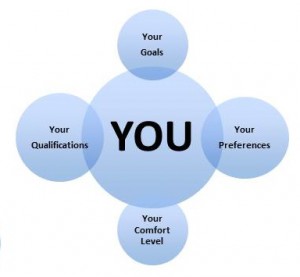
Off-Campus Study programs vary in many ways, especially in the levels of service and support they provide to students. You should not assume that the range of services and accommodations available to you here at Colby will be available while you are abroad.
Please read and complete the Health Self Assessment carefully, even if you currently consider yourself to be generally healthy.
We do not mean to suggest you should not go abroad but we encourage you to help us help you by discussing your plans, conditions or concerns with someone who can advise you about possible challenges, how to prepare, and which programs/locations may be more suitable than others (a Dean, health professional, faculty, OCS staff member). It is especially important to discuss and disclose pre-existing conditions to your program, in order to receive the support you need. Any information you share will remain confidential and you cannot be disqualified for program admission on the basis of this information.
Whatever your situation, don’t hesitate to come in to the OCS office to talk about it.

-
When, where, how and what you can study
When: One of the first decisions you will make is when to study away: in fall or in spring or both (full year in 1 site or 2). (Please note that if you wish to study off-campus during Jan plan or Summer, you will work through the Registrar’s office in consultation with a faculty member . Financial aid is not applicable in those cases).
You should discuss this choice with your major department(s), consider required coursework at Colby, and note the dates of your semester program to see how it may impact your other plans such as summer jobs or internship, honors thesis, or career goals. Unless you are a language/area studies major or are applying to Dartmouth or Bigelow programs you will be required to petition for a full year (later in the process). Majors are encouraged to plan for a full year in order to maximize your language learning. If you later decide to switch semesters or to cancel your full year off-campus, please notify OCS asap.
Where: The over 200 Colby-approved (or petitionable) programs in about 60 countries on Colby’s opportunities list have been carefully selected because of their quality, reputation, and the criteria that they meet these have, in many cases, been “tested” by Colby students before you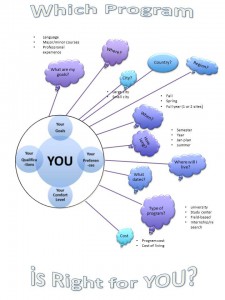 or visited by Colby faculty or staff. In most cases, you should be able to identify a program that suits your needs and goals and, if not, you may discuss your petition for a non-approved program with OCS.
Colby runs its own programs in Salamanca, Dijon, St Petersburg and Bigelow. All other programs are non-Colby Programs which are are approved by Colby.
How: Searching through all these options can seem overwhelming but understanding the differences between the types of programs can help you narrow down your options. The Choosing the Program that is Right for You Worksheet mentioned above can help you figure out if your needs will be best met at a university-based programs (direct enrollment or through a program provider), study center-based programs, or if a field-based programs, internship programs, or language intensive programs is what you should focus on.
What: Programs vary in regards to curriculum, but there are off-campus opportunities for every major.
In addition to the program’s structure, format, location, and course offerings, there are many aspects of an off-campus study program to consider when evaluating whether it is a good fit for you. Before you go ahead and select or apply to a program, check to make sure you have satisfied Colby’s requirements regarding GPA or language (or may petition for a waiver) and that you also meet the program ’s eligibility guidelines such as GPA, language and any other pre-requisites (will you have satisfied the program’s pre-requisites at the time you go?). Consider if housing options, program dates, and cost, meet your needs.
-
Lots of resources available at your finger-tips
Choosing the right program for you requires research. The more research and forethought you put into this decision, the better the fit and the better your experience will likely be.
Take advantage of the many resources available right here on-campus to help you decide and to find information on programs. Use your OCS Handbook and the Getting Started section of the OCS website, access feedback from Colby students , review your major department’s recommendations and other suggestions of opportunities for your major.
You can find lots of in-depth information on all aspects of programs and foreign universities including curricular offerings on their website. Finding information on course offer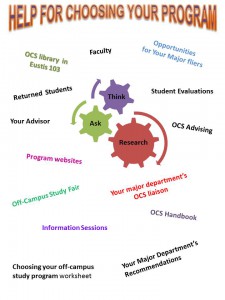 ings can require a bit more digging, but most programs have lists of possible classes on their website. Keep in mind that you must maintain some degree of flexibility since there is no guarantee that the exact courses you find will be available when you arrive on site, so make sure there are enough choices that will work for you.
At any step, you can access advising through information sessions and appointments (walk in or by appointment). The off-campus study office is here to help you navigate the process of studying off-campus for a semester
-
Policies, procedures, deadlines, requirements, and steps…oh my!
Off-campus study at Colby is governed by policies, procedures, deadlines, requirements, and steps voted on by the faculty and overseen by the office of Off-Campus Study. And yes, they are important and you are expected to be familiar with them and follow them!
There are policies and procedures to satisfy before you go, requirements to keep in mind while you are off-campus and each academic department has its own policies as well. Please review these important Colby eligibility requirements and the policies regarding petitions (for GPA, non-approved programs, study off-campus for a year, or study in a country under U.S. State Department Travel Warning).
-
Its all about the credit
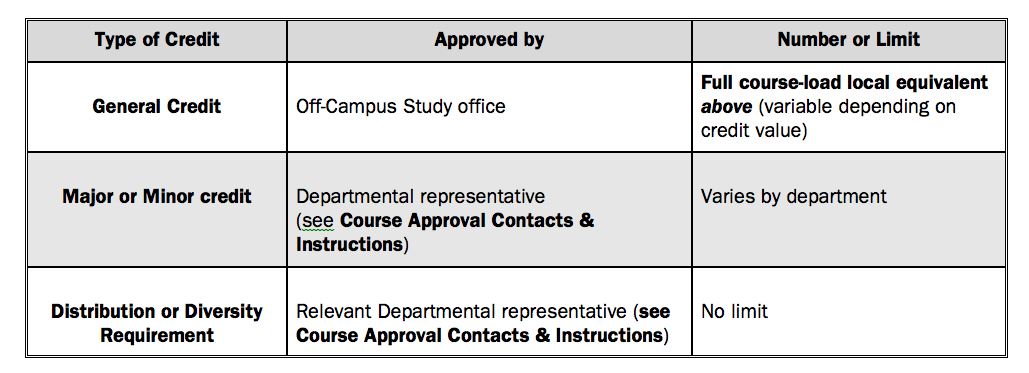
Of course, there’s a lot more to off-campus study then credits and grades (and we do recommend that you make the most of it all) but remember that it is an academic experience which is earning you credit towards graduation from Colby College. All courses you take off-campus, as long as they are approved by
OCS and that you get C- or above, will transfer back to Colby as general credit. With departmental approval, these courses may also be applied to count towards a major or minor or to satisfy a distribution or diversity requirement. Unless you study on a Colby program (i.e. Colby in Salamanca, Dijon, St Petersburg or Bigelow) the grades you earn will not factor into your Colby GPA although they will appear on your Colby transcript.
-
Money matters
Off-campus study is an investment (an opportunity cost) and those costs vary depending on the program, location and the lifestyle you choose while abroad. When studying off-campus at Colby students do not pay Colby’s comprehensive fee (unless studying on a Colby program) but pay the program’s fee directly to the program/universitywith which they are studying and a $1,000 off-campus study fee charged by Colby per semester off-campus.
 Financial aid is portable to approved off-campus study plans, but the amount of aid for an off-campus semester is re-calculated based on the cost of the program and the student must provide budget information to the office of Student Financial Services.
There are many scholarships and fundraising opportunities to help make the experience possible for students. Each scholarship has its own guidelines, eligibility, and deadlines, so be sure to research them early. The OCS website also has some tools and resources to help you estimate a budget of how much money you can expect to need and plan for how you will manage and access your money while abroad. How much money you will spend while off-campus will depend on where you are, how much you travel and go out, and the local financial systems and cost of living in the country in which you are studying.
-
What now?
You are now in Step 1 and 2 of the Colby application process. What you should be doing at this time is spending time considering your goals and needs, exploring your options, researching programs, meeting with your advisors and OCS, declaring a major (s) and then submitting a preliminary proposal for off-campus study by the November 15 deadline for review by your advisor(s) and OCS. You are not expected
to have your plans all figured out or even be sure if you will go abroad but think of it as the beginning of a conversation. There is no commitment. If you are considering off-campus study in either semester of the 2016-17 academic year (even if you are unsure), you must participate in the process, which begins with the online preliminary proposal, due by November 15 of this year.
You will need to decide which semester (s) you plan to study away and provide an academic justification for your choice. If you later need to change your semester of choice, you must notify OCS in writing.
So where’s the application again? You can access the Preliminary application via the OCS website/students/how to apply or via mycolby/academic/off-campus study.
-
What comes next?
After the preliminary proposal, you will continue to research, narrow down your options and submit your Colby application(s) for Approval by the February 20 deadline regardless of which semester of the next year you plan to be away. This step 3 is a program-specific application which your advisor(s) and OCS will approve. Any relevant petition(s) must also be submitted as part of this application and your petition meeting must take place well before the February 20 deadline.
If you will be studying off-campus in the fall semester or full year, you will also begin applying directly to the program/university of your choice that has been approved by Colby (except if applying to a Colby program). Because most Colby students are usually admitted to the program of their choice as long as you meet the program’s eligibility guidelines and as long as you do not apply too late, it is not usually necessary to apply to multiple programs. In cases of particularly competitive programs or universities or in cases where you fall short of the program’s eligibility, a backup is recommended.
We strongly recommend early application (well before the deadline), as some programs fill up because they are small or very popular. Most programs and universities have rolling admissions, so the sooner you apply, the sooner you will know if you are admitted.
FAQs
can also answer many of your questions.
Join the facebook group for students planning off-campus study in 2016-17.
You will receive information, advice,
and reminders there as well as be able to ask questions
We look forward to helping you make your plans throughout the year.
Office of Off-Campus Study