Summary
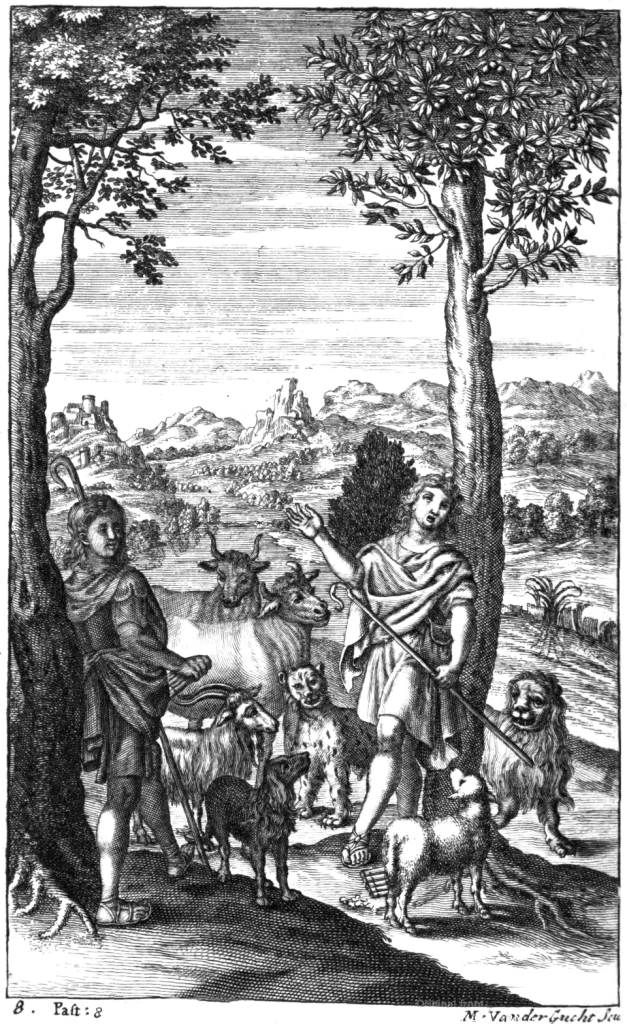
A te principium, tibi desinam, accipe iussis carmina coepta tuis atque hanc sine tempora circum intra uictrices hederam tibi serpere lauros. Vergil Eclogues VIII.11-13
“From you is my beginning; For you I will cease. Accept these songs essayed at your order, and grant that, amid the conqueror’s laurels, this ivy may creep about your temples.”
Mainly based on Theocritus’ Idyll 2, this poem contains an anonymous narrator singing the love songs of two herdsmen, Damon and Alphesiboeus, to an unnamed dedicatee (likely his patron Gaius Asinius Pollio.) Damon’s song is of a young man whose girlfriend, Nysa, is to marry another man, Mopsus. Alphesiboeus’ song, is of a nameless woman who attempts to use a magic spell to attract her beloved Daphnis back home from the city.
Geography
The Timavo River and the Adriatic Sea
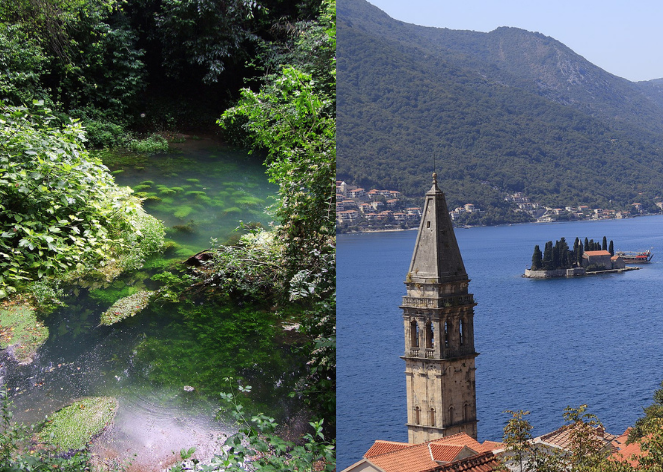
Wistula, CC BY-SA 4.0 <https://creativecommons.org/licenses/by-sa/4.0>, via Wikimedia Commons/ Cropped from original
Tu mihi seu magni superas iam saxa Timaui siue oram Illyrici legis aequoris, en erit umquam ille dies mihi cum liceat tua dicere facta? Vergil, Eclogues VIII.6-8
“But you, whether you are now passing over the rocks of great Timavus or picking your way to the shore of the Illyrian sea – say, will that day ever be when I may speak of your deeds?”
The Timavus river is a stream flowing off the Gulf of Trieste. Its water comes from a subterranean flow from the Reka River in Slovenia. The adjective “magni” refers to its reputation rather than its size as it was known locally as the “source and mother of the sea”. The Illyrian Sea, better known as the Adriatic sea, is the northernmost arm of the Mediterranean, separating the Italian Peninsula from the Balkan Peninsula.
The adverb “iam” here suggests that the dedicatee would be traveling from the Southern coast of Illyria to the North, heading towards Italy. If the dedicatee is indeed Pollio, it would not be surprising for him to make a journey with this itinerary.
Mainalo
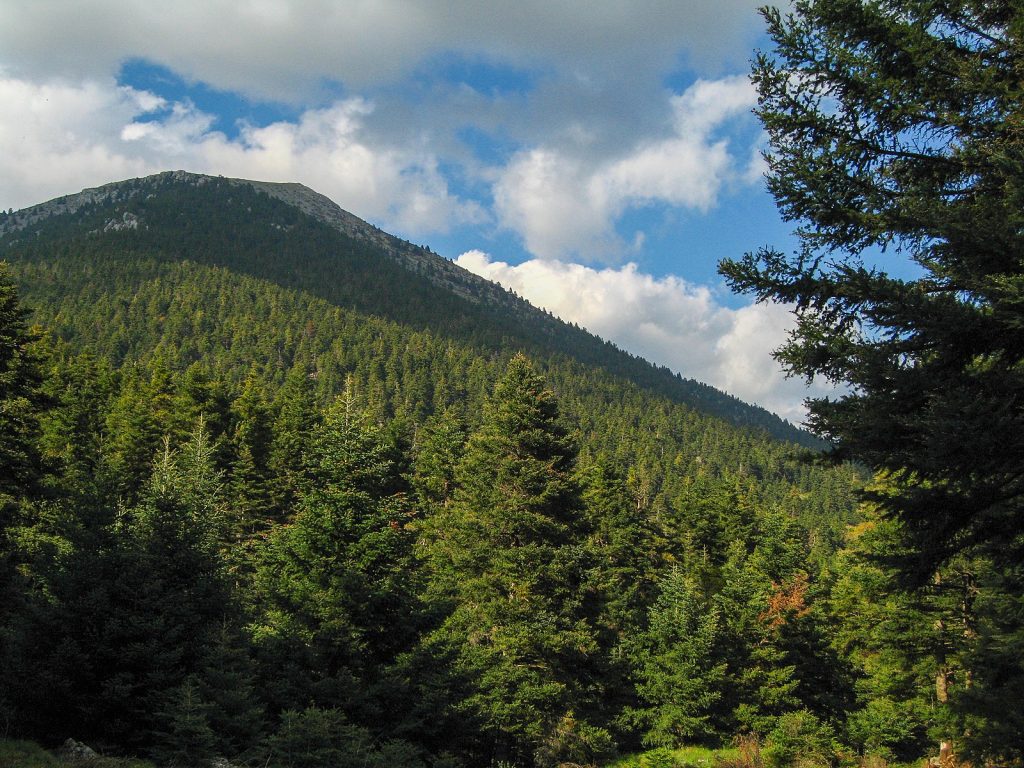
Incipe Maenalios mecum, mea tibia, uersus. Maenalus argutumque nemus pinusque loquentis semper habet, semper pastorum ille audit amores Panaque, qui primus calamos non passus inertis. Vergil, Eclogues VIII.21-24
“Begin with me, my flute, a verse of Maenalus! Maenalus always has lively groves and speaking pines; ever does he listen to shepherds’ loves and to Pan, who first did not endure the artless reeds.”
Mount Maenalus, also known as Mainalo, is the highest point in Arcadia inhabited by the god Pan. The mountain’s name derives from Maenalus, son of Lykaon, the king of Arcadia. In Eclogue 8, Mainalo takes on a “sentient” aspect as its description contains “clear” groves and “speaking” pines.
Mount Oeta
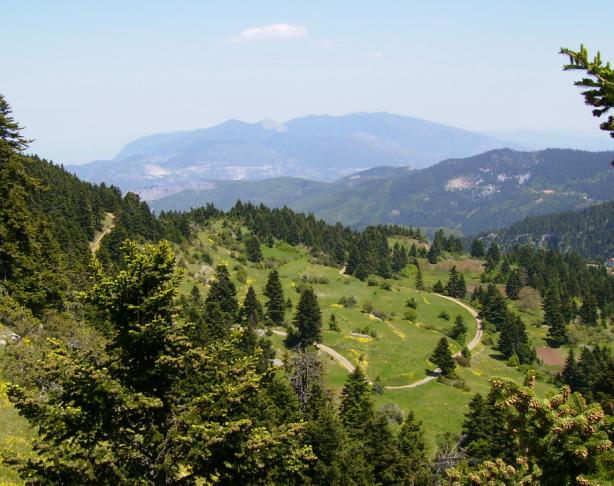
Mopse, nouas incide faces; tibi ducitur uxor. Sparge, marite, nuces; tibi deserit Hesperos Oetan. Vergil, Eclogues VIII.29-30
“Mopsus, cut new torches! For you they bring the bride! Scatter the nuts, bridegroom! For you the evening star quits Oeta!”
Oeta is a mountain in central Greece and a Southeastern branch of the Pindus range. Hesperus, the evening star, is mentioned here rising above Mt. Oeta. This evidence suggests that the song contest occurring in this Eclogue is set in Southern Thessaly. Moreover, there was also a cult dedicated to Hesperus which was located on Oeta.
Tomaros, the Rhodopes, and the Garamantes
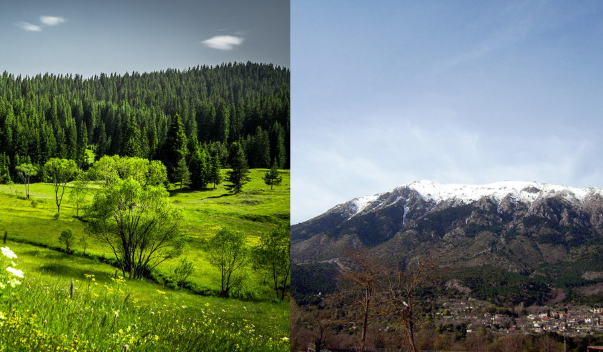
Marcus Cyron, CC BY-SA 3.0 http://creativecommons.org/licenses/by-sa/3.0/, via Wikimedia Commons/ Cropped from original
nunc scio quid sit Amor; duris in cotibus illum aut Tmaros aut Rhodope aut extremi Garamantes nec generis nostri puerum nec sanguinis edunt. Vergil, Eclogues VIII.43-45
“Now I know what Love is; on hard pointed rock Tmarus bore him – or Rhodope, or the farthest Garamantes – a child not of our race or blood!”
Tomaros is a mountain located in the central part of the Pindus mountains of Epirus, Greece, and in the Southwestern area of the Ioannina regional unit. The Rhodopes are a mountain range in Southeastern Europe, stretching from Greece to the Southern part of Bulgaria. They are associated with Orphic and Dionysian cults. Finally, the Garamantes were an African tribe bordering the Gaetuli in the Eastern Sahara. The epithet “extremi” is fitting here as they were long believed to be at the border of the inhabited world.
These three remote toponyms are utilized by Vergil to create an exotic effect. This effect is further achieved through the hiatus between “aut” and “Rhodope” and the four syllable “Garamantes,” making the whole line feel like a translation from Greek.